
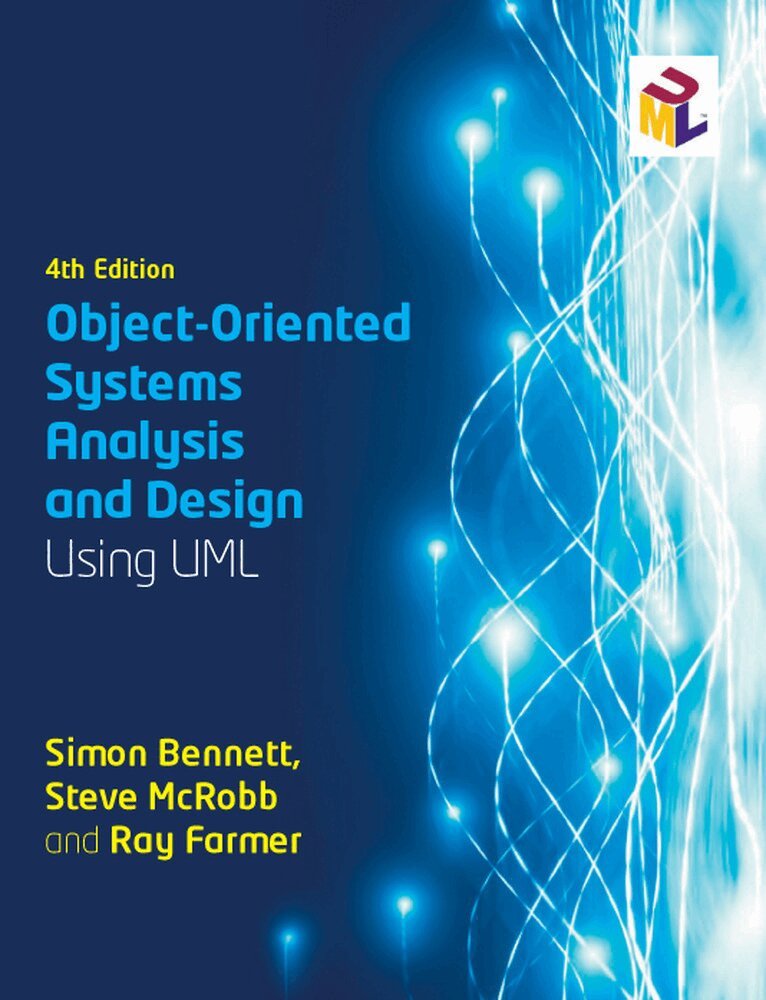
Object-Oriented Systems Analysis and Design Using UML
Simon Bennett, Ray Farmer, Steve McRobb
Häftad, 2010
774 kr
161 kr
Beställningsvara. Skickas inom 11-20 vardagar. Fri frakt över 249 kr.
In 2001 OMG put together a task force to revise UML Version 1.0. In March of 2003, UML Version 2.0 was finalized and rolled out to the 35 major companies participating in the adoption effort and made available to the public.
This book provides a step-by-step guide to the notation and use of UML, one of the most widely used, object-oriented notation systems/programming languages in existence. The outline demonstrates the use of the techniques and notation of UML through case studies in systems analysis, showing the student clearly how UML is used in all kinds of practical situations. This revised edition will discuss the new infrastructure of the latest UML Version 2.0, and will include new examples, review questions, and notations.
Simon Bennett, Ray Farmer, Steve McRobb
Häftad, 2010
774 kr

Simon Bennett, Keith Davids, Geert J.P. Savelsbergh, John van der Kamp
Inbunden, 2002
2 703 kr

Simon Bennett, Keith Davids, Geert J.P. Savelsbergh, John van der Kamp
Häftad, 2002
924 kr

Simon Bennett, Eadaoin O'Brien
Häftad, 2012
427 kr





Simon Bennett, Ray Farmer, Steve McRobb
Häftad, 2010
774 kr

Te Kani Kingi, Mason Durie, Hinemoa Elder, Rees Tapsell, Mark Lawrence, Simon Bennett
Häftad, 2017
465 kr



Simon Bennett, Keith Davids, Geert J.P. Savelsbergh, John van der Kamp
Inbunden, 2002
2 703 kr