Data Mining: Practical Machine Learning Tools and Techniques, 3rd Edition
(häftad)av Ian H Witten, Eibe Frank, Mark A Hall
- Format:
- Häftad (paperback)
- Utgiven:
- 2011-02-15
- Språk:
- Engelska
Data Mining: Practical Machine Learning Tools and Techniques offers a thorough grounding in machine learning concepts as well as practical advice on applying machine learning tools and techniques in real-world data mining situations. This highly anticipated third edition of the most acclaimed work on data mining and machine learning will teach you everything you need to know about preparing inputs, interpreting outputs, evaluating results, and the algorithmic methods at the heart of successful data mining.
Thorough updates reflect the technical changes and modernizations that have taken place in the field since the last edition, including new material on Data Transformations, Ensemble Learning, Massive Data Sets, Multi-instance Learning, plus a new version of the popular Weka machine learning software developed by the authors. Witten, Frank, and Hall include both tried-and-true techniques of today as well as methods at the leading edge of contemporary research.
*Provides a thorough grounding in machine learning concepts as well as practical advice on applying the tools and techniques to your data mining projects *Offers concrete tips and techniques for performance improvement that work by transforming the input or output in machine learning methods *Includes downloadable Weka software toolkit, a collection of machine learning algorithms for data mining tasks-in an updated, interactive interface. Algorithms in toolkit cover: data pre-processing, classification, regression, clustering, association rules, visualization
(Computer Bookshops Limited)
Fler böcker av författarna
The Lewis Chessmen: UnmaskedDavid Caldwell, Mark A Hall, Caroline M Wilkinson (kartonnage) |
Web Dragons: Inside the Myths of Search Engine Techn...Ian H Witten, Marco Gori, Teresa Numerico (häftad) |
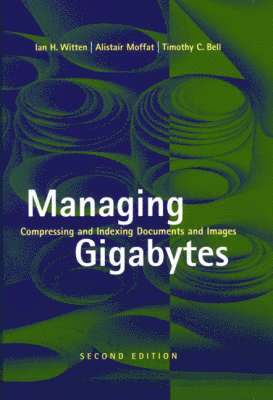
Managing Gigabytes 2nd EditionIan H Witten, Alistair Moffat, Timothy C Bell (häftad) |
How to Build a Digital Library 2nd EditionIan H Witten, David Bainbridge, David M Nichols (häftad) | |||
|
75:- Köp
|
277:- Köp
|
589:- Köp
|
378:- Köp
|
Kundrecensioner
Recensioner i media
"The third edition of this practical guide to machine learning and data mining is fully updated to account for technological advances since its previous printing in 2005 and is now even more closely aligned with the use of the Weka open source machine learning, data mining and data modeling application. Beginning with an introduction to data mining, the volume explores basic inputs, outputs and algorithms, the implementation of machine learning schemes and in-depth exploration of the many uses of the Weka data analysis software. Numerous illustration, tables and equations are included throughout and additional resources are available through a companion website. Witten, Frank and Hall are academics with the department of computer science at the University of Waikato, New Zealand, the home of the Weka software project."--Book News, Reference & Research
(Computer Bookshops Limited)
Bloggat om Data Mining: Practical Machine Learning Tools and Te...
Övrig information
Ian H. Witten is a professor of computer science at the University of Waikato in New Zealand. He directs the New Zealand Digital Library research project. His research interests include information retrieval, machine learning, text compression, and programming by demonstration. He received an MA in Mathematics from Cambridge University, England; an MSc in Computer Science from the University of Calgary, Canada; and a PhD in Electrical Engineering from Essex University, England. He is a fellow of the ACM and of the Royal Society of New Zealand. He has published widely on digital libraries, machine learning, text compression, hypertext, speech synthesis and signal processing, and computer typography. He has written several books, the latest being Managing Gigabytes (1999) and Data Mining (2000), both from Morgan Kaufmann. Eibe Frank lives in New Zealand with his Samoan spouse and two lovely boys, but originally hails from Germany, where he received his first degree in computer science from the University of Karlsruhe. He moved to New Zealand to pursue his Ph.D. in machine learning under the supervision of Ian H. Witten, and joined the Department of Computer Science at the University of Waikato as a lecturer on completion of his studies. He is now an associate professor at the same institution. As an early adopter of the Java programming language, he laid the groundwork for the Weka software described in this book. He has contributed a number of publications on machine learning and data mining to the literature and has refereed for many conferences and journals in these areas.> Mark A. Hall was born in England but moved to New Zealand with his parents as a young boy. He now lives with his wife and four young children in a small town situated within an hour's drive of the University of Waikato. He holds a bachelor's degree in computing and mathematical sciences and a Ph.D. in computer science, both from the University of Waikato. Throughout his time at Waikato, as a student and lecturer in computer science and more recently as a software developer and data mining consultant for Pentaho, an open-source business intelligence software company, Mark has been a core contributor to the Weka software described in this book. He has published a number of articles on machine learning and data mining and has refereed for conferences and journals in these areas.
(Computer Bookshops Limited)
Innehållsförteckning
PART I: Introduction to Data Mining Ch 1 What's It All About? Ch 2 Input: Concepts, Instances, Attributes Ch 3 Output: Knowledge Representation Ch 4 Algorithms: The Basic Methods Ch 5 Credibility: Evaluating What's Been Learned PART II: Advanced Data Mining
Ch 6 Implementations: Real Machine Learning Schemes Ch 7 Data Transformation Ch 8 Ensemble Learning Ch 9 Moving On: Applications and Beyond PART III: The Weka Data MiningWorkbench Ch 10 Introduction to Weka Ch 11 The Explorer Ch 12 The Knowledge Flow Interface Ch 13 The Experimenter Ch 14 The Command-Line Interface Ch 15 Embedded Machine Learning Ch 16 Writing New Learning Schemes Ch 17 Tutorial Exercises for the Weka Explorer
(Computer Bookshops Limited)