Agile Principles, Patterns, Practices in C#
(häftad)av Robert C Martin, Micah Martin
- Format:
- Häftad (paperback)
- Utgiven:
- 2006-08-01
- Språk:
- Engelska
With the award-winning book Agile Software Development: Principles, Patterns, and Practices, Robert C. Martin helped bring Agile principles to tens of thousands of Java and C++ programmers. Now .NET programmers have a definitive guide to agile methods with this completely updated volume from Robert C. Martin and Micah Martin, Agile Principles, Patterns, and Practices in C#.
This book presents a series of case studies illustrating the fundamentals of Agile development and Agile design, and moves quickly from UML models to real C# code. The introductory chapters lay out the basics of the agile movement, while the later chapters show proven techniques in action. The book includes many source code examples that are also available for download from the authors Web site.
Readers will come away from this book understanding
- Agile principles, and the fourteen practices of Extreme Programming
- Spiking, splitting, velocity, and planning iterations and releases
- Test-driven development, test-first design, and acceptance testing
- Refactoring with unit testing
- Pair programming
- Agile design and design smells
- The five types of UML diagrams and how to use them effectively
- Object-oriented package design and design patterns
- How to put all of it together for a real-world project
Whether you are a C# programmer or a Visual Basic or Java programmer learning C#, a software development manager, or a business analyst, Agile Principles, Patterns, and Practices in C# is the first book you should read to understand agile software and how it applies to programming in the .NET Framework.
(Computer Bookshops Limited)
Passar bra ihop
|
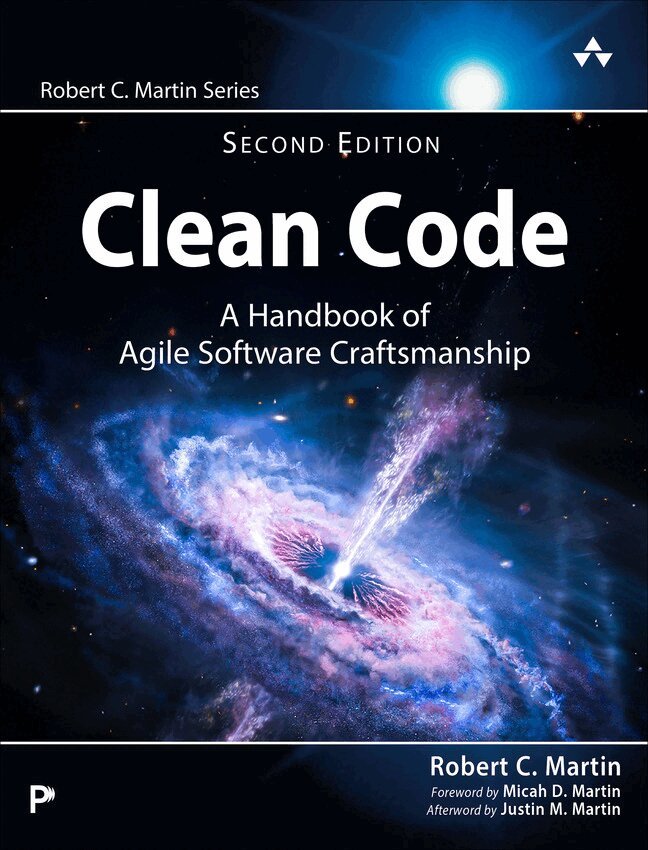
De som köpt den här boken har ofta också köpt Clean Code: A Handbook Of Agile Software Craftsmanship (häftad) av Robert C Martin | |||
|
Pris för båda:
641:-Köp
|
Fler böcker av författarna
The Clean Coder: A Code Of Conduct For Professional ...Robert C Martin (häftad) |
Agile Software DevelopmentRobert C Martin (häftad) |
Agile Software Development: Principles, Patterns, an...Robert C Martin (häftad) |
Clean Code: A Handbook Of Agile Software CraftsmanshipRobert C Martin (häftad) | |||
|
228:- Köp
|
551:- Köp
|
552:- Köp
|
267:- Köp
|
Kundrecensioner
Bloggat om Agile Principles, Patterns, Practices in C#
Övrig information
Robert C. Martin has been a software professional since 1970 and an international software consultant since 1990. He is founder and president of Object Mentor, Inc., a team of experienced consultants who mentor their clients in the fields of C++, Java, OO, Patterns, UML, Agile Methodologies, and Extreme Programming.Micah Martin works with Object Mentor as a developer, consultant, and mentor on topics ranging from object-oriented principles and patterns to agile software development practices. Micah is the cocreator and lead developer of the open source FitNesse project. He is also a published author and speaks regularly at conferences.
(Computer Bookshops Limited)
Innehållsförteckning
Forewords xixPreface xxiiiAcknowledgments xxxiAbout the Authors xxxiiiSection I: Agile Development 1Chapter 1: Agile Practices 3
The Agile Alliance 4
Principles 8
Conclusion 10
Bibliography 11
Chapter 2: Overview of Extreme Programming 13The Practices of Extreme Programming 14
Conclusion 22
Bibliography 22
Chapter 3: Planning 23Initial Exploration 24
Release Planning 25
Iteration Planning 25
Defining Done 26
Task Planning 26
Iterating 27
Tracking 28
Conclusion 29
Bibliography 29
Chapter 4: Testing 31Test-Driven Development 32
Acceptance Tests 36
Serendipitous Architecture 37
Conclusion 38
Bibliography 39
Chapter 5: Refactoring 41A Simple Example of Refactoring: Generating Primes 42
Conclusion 53
Bibliography 54
Chapter 6: A Programming Episode 55The Bowling Game 56
Conclusion 98
Overview of the Rules of Bowling 99
Section II: Agile Design 101Chapter 7: What Is Agile Design? 103Design Smells 104
Why Software Rots 107
The Copy Program 108
Conclusion 113
Bibliography 114
Chapter 8: The Single-Responsibility Principle (SRP) 115Defining a Responsibility 117
Separating Coupled Responsibilities 119
Persistence 119
Conclusion 119
Bibliography 120
Chapter 9: The Open/Closed Principle (OCP) 121Description of OCP 122
The Shape Application 124
Conclusion 132
Bibliography 133
Chapter 10: The Liskov Substitution Principle (LSP) 135Violations of LSP 136
Factoring Instead of Deriving 148
Heuristics and Conventions 150
Conclusion 151
Bibliography 151
Chapter 11: The Dependency-Inversion Principle (DIP) 153Layering 154
A Simple DIP Example 157
The Furnace Example 160
Conclusion 161
Bibliography 162
Chapter 12: The Interface Segregation Principle (ISP) 163Interface Pollution 163
Separate Clients Mean Separate Interfaces 165
Class Interfaces versus Object Interfaces 166
The ATM User Interface Example 169
Conclusion 174
Bibliography 175
Chapter 13: Overview of UML for C# Programmers 177Class Diagrams 180
Object Diagrams 182
Collaboration Diagrams 183
State Diagrams 184
Conclusion 185
Bibliography 185
Chapter 14: Working with Diagrams 187Why Model? 187
Making Effective Use of UML 189
Iterative Refinement 194
When and How to Draw Diagrams 200
Conclusion 202
Chapter 15: State Diagrams 203The Basics 204
Using FSM Diagrams 208
Conclusion 209
Chapter 16: Object Diagrams 211A Snapshot in Time 212
Active Objects 213
Conclusion 217
Chapter 17: Use Cases 219Writing Use Cases 220
Diagramming Use Cases 222
Conclusion 223
Bibliography 223
Chapter 18: Sequence Diagrams 225The Basics 226
...(Computer Bookshops Limited)