
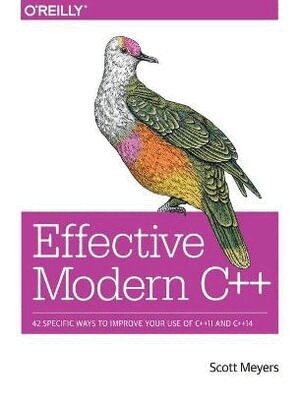
Vi hittar inte den utgåva du söker efter, kanske funkar den här lika bra?
Effective C++
55 Specific Ways to Improve Your Programs and Designs
365 kr
Beställningsvara. Skickas inom 7-10 vardagar. Fri frakt över 249 kr.
Beskrivning
“Every C++ professional needs a copy of Effective C++. It is an absolute must-read for anyone thinking of doing serious C++ development. If you’ve never read Effective C++ and you think you know everything about C++, think again.”
— Steve Schirripa, Software Engineer, Google “C++ and the C++ community have grown up in the last fifteen years, and the third edition of Effective C++ reflects this. The clear and precise style of the book is evidence of Scott’s deep insight and distinctive ability to impart knowledge.”
— Gerhard Kreuzer, Research and Development Engineer, Siemens AG
— Steve Schirripa, Software Engineer, Google “C++ and the C++ community have grown up in the last fifteen years, and the third edition of Effective C++ reflects this. The clear and precise style of the book is evidence of Scott’s deep insight and distinctive ability to impart knowledge.”
— Gerhard Kreuzer, Research and Development Engineer, Siemens AG
The first two editions of Effective C++ were embraced by hundreds of thousands of programmers worldwide. The reason is clear: Scott Meyers’ practical approach to C++ describes the rules of thumb used by the experts — the things they almost always do or almost always avoid doing — to produce clear, correct, efficient code.
The book is organized around 55 specific guidelines, each of which describes a way to write better C++. Each is backed by concrete examples. For this third edition, more than half the content is new, including added chapters on managing resources and using templates. Topics from the second edition have been extensively revised to reflect modern design considerations, including exceptions, design patterns, and multithreading.
Important features of Effective C++ include:
- Expert guidance on the design of effective classes, functions, templates, and inheritance hierarchies.
- Applications of new “TR1” standard library functionality, along with comparisons to existing standard library components.
- Insights into differences between C++ and other languages (e.g., Java, C#, C) that help developers from those languages assimilate “the C++ way” of doing things.
Produktinformation
Utforska kategorier
Mer om författaren
Innehållsförteckning
Betyg & recensioner
5/5
Betyg & recensioner
5/5

Hoppa över listan

Mer från samma serie
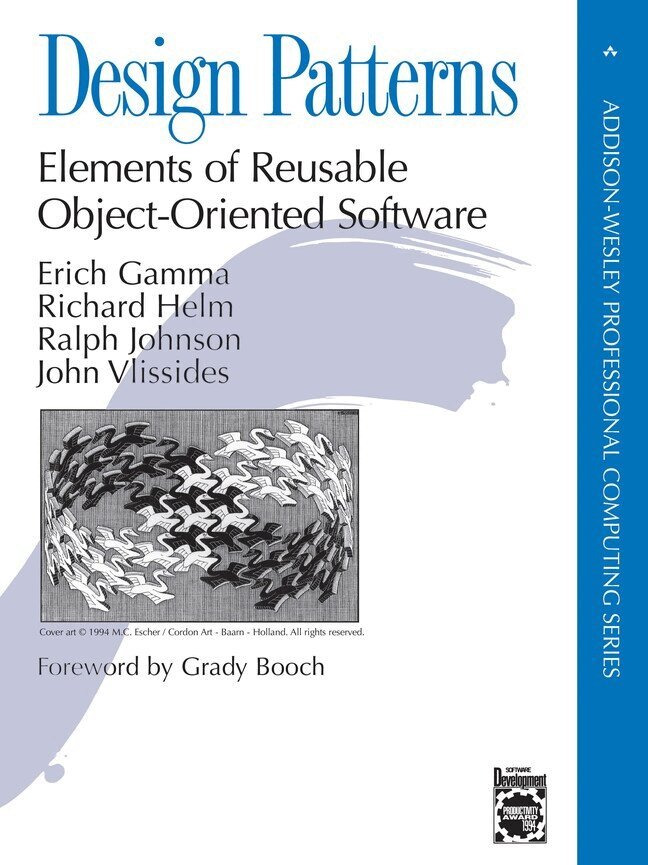
Design Patterns
Erich Gamma, Richard Helm, Ralph Johnson, John Vlissides, Martin Fowler
Häftad, 2026
626 kr
Hoppa över listan
Du kanske också är intresserad av
Design Patterns
Erich Gamma, Richard Helm, Ralph Johnson, John Vlissides, Martin Fowler
Häftad, 2026
626 kr