
Barbara Russano Hanning – författare
Visar alla böcker från författaren Barbara Russano Hanning. Handla med fri frakt och snabb leverans.
4 produkter
4 produkter
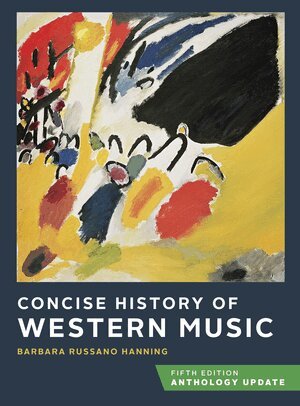
1 570 kr
Skickas inom 5-8 vardagar
This update to Barbara Hanning’s concise survey aligns it with the Eighth Edition of the Norton Anthology of Western Music and supports your students with a more robust media package. New resources include Audio Timelines, tutorials to help build music history skills, and adaptive activities to reinforce concepts.
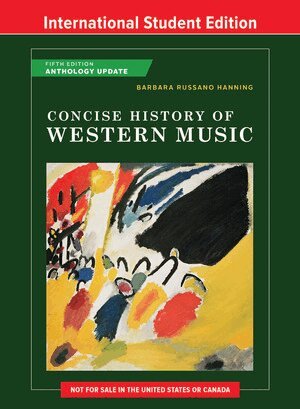
Häftad, Engelska, 2020
918 kr
Skickas inom 5-8 vardagar
Barbara Hanning’s Concise History of Western Music offers students a manageable introduction to the forces that shaped music. Combining concision with the imaginative pedagogy that her text pioneered, Hanning focuses on an essential repertoire of 109 characteristic works—from the Middle Ages to the present—providing students with the cultural and historical context to illuminate the music and remember its significance. The new Total Access programme unlocks a full suite of media resources with every new book, including instant access to streaming recordings of the complete Norton Anthology of Western Music repertoire, an ebook, audio for nearly every short example in the text and stunning Metropolitan Opera video.
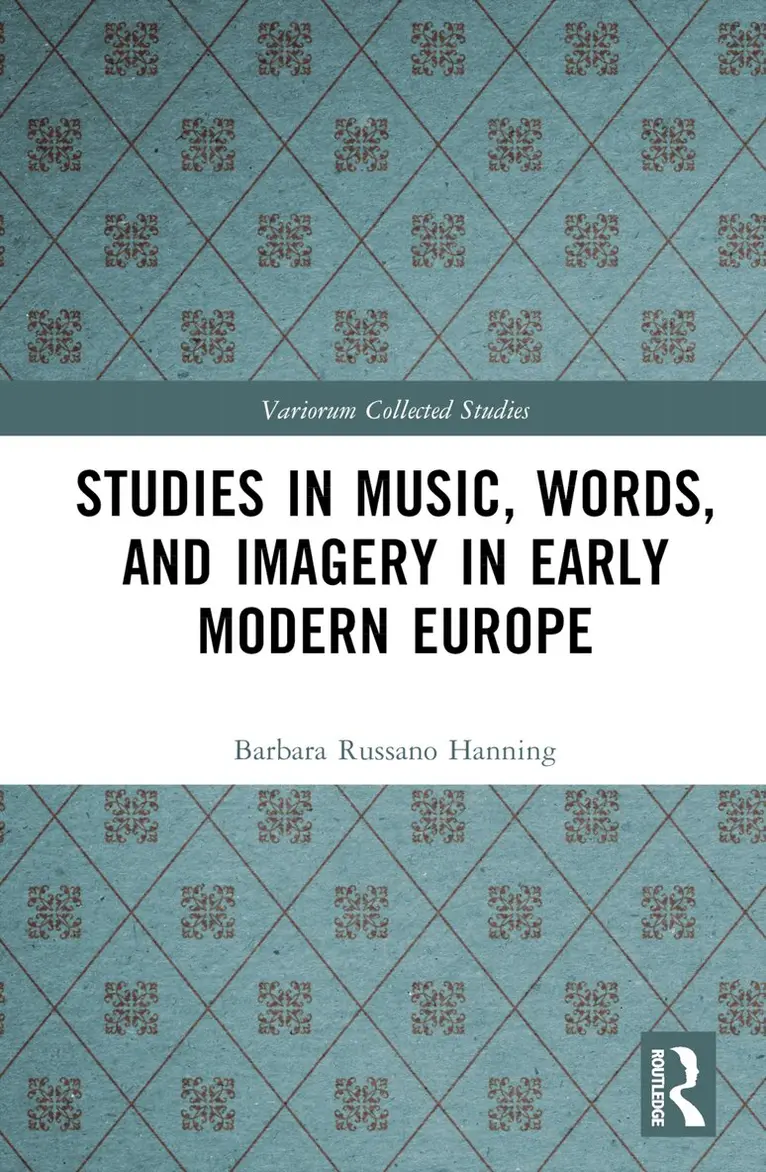
Inbunden, Engelska, 2024
2 201 kr
Skickas inom 10-15 vardagar
Characterized by an interdisciplinary approach, these essays highlight the relationship between music and poetry in Italian secular works of the late sixteenth and early seventeenth centuries, examine the role of images in shedding light on the cultural context in which these and other works came into being (music iconography), and explore the binaries and similarities of the arts in this period. Insights about early opera are complemented by discussions of accompanied solo song, or monody, both genres new to Italian music at the turn of the seventeenth century.Many chapters focus on specific images, ranging from the figure of Apollo and his significance as the earliest operatic protagonist, to an early eighteenth-century representation of a salon concert and its “ensemblisation” of events that likely occurred serially. Others include discussions and analyses of musical poetics, from Tasso’s influence on the Italian madrigal to Rinuccini’s authorship of the earliest opera libretti. Another focuses on history while narrating the circumstances under which opera came into being in late Renaissance Florence.Addressed in large measure to teachers and students, Studies in Music, Words, and Imagery in Early Modern Europe presents a range of subjects that broaden our perspective on the era. Certain essays take a specifically pedagogical approach, while others are more apt to interest music historians or those familiar with Italian versification. All are presented with a view toward making more accessible essays that do not fit neatly into one subject area but cross boundary lines between music, words, and images.
Häftad, Engelska, 2026
685 kr
Kommande
Characterized by an interdisciplinary approach, these essays highlight the relationship between music and poetry in Italian secular works of the late sixteenth and early seventeenth centuries, examine the role of images in shedding light on the cultural context in which these and other works came into being (music iconography), and explore the binaries and similarities of the arts in this period. Insights about early opera are complemented by discussions of accompanied solo song, or monody, both genres new to Italian music at the turn of the seventeenth century.Many chapters focus on specific images, ranging from the figure of Apollo and his significance as the earliest operatic protagonist, to an early eighteenth-century representation of a salon concert and its “ensemblisation” of events that likely occurred serially. Others include discussions and analyses of musical poetics, from Tasso’s influence on the Italian madrigal to Rinuccini’s authorship of the earliest opera libretti. Another focuses on history while narrating the circumstances under which opera came into being in late Renaissance Florence.Addressed in large measure to teachers and students, Studies in Music, Words, and Imagery in Early Modern Europe presents a range of subjects that broaden our perspective on the era. Certain essays take a specifically pedagogical approach, while others are more apt to interest music historians or those familiar with Italian versification. All are presented with a view toward making more accessible essays that do not fit neatly into one subject area but cross boundary lines between music, words, and images.