
D C Phillips – författare
Visar alla böcker från författaren D C Phillips. Handla med fri frakt och snabb leverans.
8 produkter
8 produkter
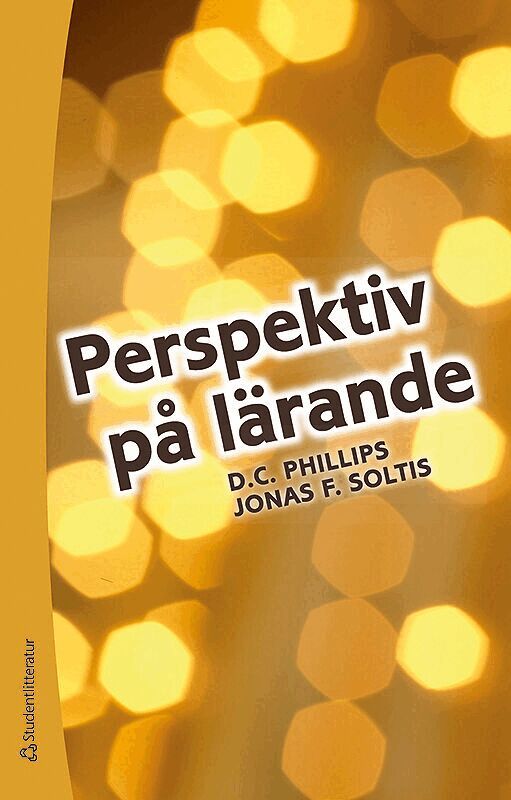
Häftad, Svenska, 2014
330 kr
Skickas
D.C. Phillips och Jonas Soltis, Stanford repsektive Columbia University, är båda mycket respekterade pedagoger. Deras Perspektiv på lärande har redan utkommit i fem utgåvor och är en klassiker i mindre format. Nu föreligger den i en elegant svensk översättning, till gagn för lärarstuderande och verksamma lärare men också andra som är intresserade av lärandets många aspekter. Med suverän överblick och känsla för det väsentliga leder de varsamt in läsaren i en spännande exposé över vårt tänkande om lärandets natur, från begynnelsen till de senaste rönen i forskningen. Boken är hållen i en ledig ton med många pedagogiska liknelser och konkreta exemplel som får läsaren att känna sig smart och delaktig, plötsligt inbegripen i samtal med Platon - eller med moderna pedagogiska tänkare som Dewey, Piaget, Vygotskij och deras efterföljare.Boken har en given plats på lärarutbildningar och pedagogikkurser men lämpar sig också för självstudier. Efersom den innehåller ett stort antal fallstudier och fördjupningsövningar är den också givande läsning för dem som vill utveckla sitt pedagogiska kunnande i praktiken.Perspektiv på lärande ges numera ut av Studentlitteratur AB. Denna andra upplaga innehåller dock inga ändringar av innehållet jämfört med den första upplagan.
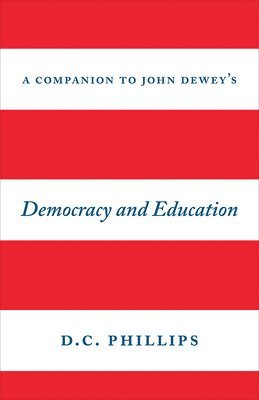
Häftad, Engelska, 2016
211 kr
Skickas inom 5-8 vardagar
This year marks the centenary publication of John Dewey's magnum opus, Democracy and Education. Despite its profound importance as a foundational text in education, it is notoriously difficult and dare we say it a little dry. In this charming and often funny companion, noted philosopher of education D. C. Phillips goes chapter by chapter to bring Dewey to a twenty-first-century audience. Drawing on over fifty years of thinking about this book and on his own experiences as an educator he lends it renewed clarity and a personal touch that proves its lasting importance. Phillips bridges several critical pitfalls of Democracy and Education that often prevent contemporary readers from fully understanding it. Where Dewey sorely needs a detailed example to illustrate a point and the times are many Phillips steps in, presenting cases from his own classroom experiences. Where Dewey casually refers to the works of people like Hegel, Herbart, and Locke common knowledge, apparently, in 1916 Phillips fills in the necessary background. And where Dewey gets convoluted or is even flat-out wrong, Phillips does what few other scholars would do: he takes Dewey to task.The result is a lively accompaniment that helps us celebrate and be enriched by some of the most important ideas ever offered in education.
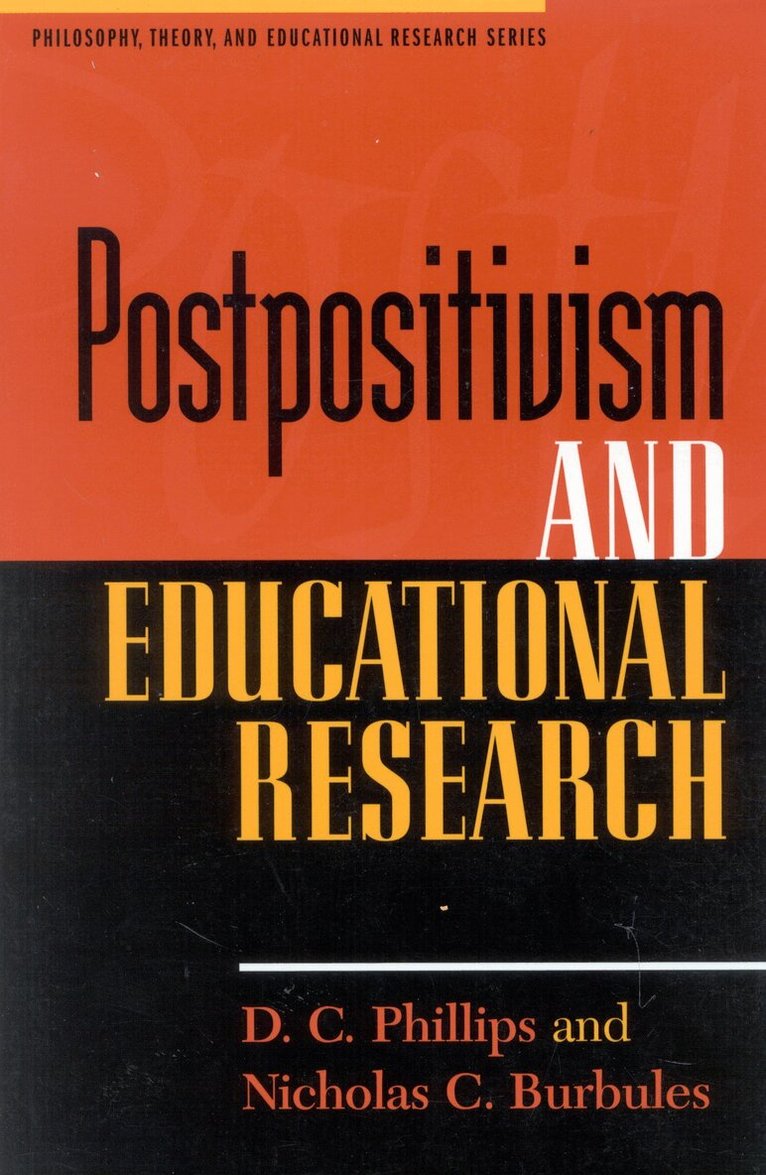
Häftad, Engelska, 2000
440 kr
Skickas inom 10-15 vardagar
This volume presents in a forthright and lively way, an account of the philosophical position generally identified as 'Postpositivistic' that undergirds much of mainstream research in education and the related social sciences. The discussion throughout is informed by recent developments in philosophy of science. Authors D. C. Phillips and Nicholas C. Burbules cite a number of interesting examples from the educational research and evaluation literature to illustrate the value of a scientific approach. Many educational researchers aspire to carry out rigorous or disciplined inquiry aimed at producing accurate (and generally 'truthful') accounts of educational phenomena and the causal psychological or social processes that lay behind them. However, many recent critics have argued that it is a mistake to believe that research can yield theories, or advance claims that are true, objective, and value-neutral. In other words, that researchers always work within frameworks that embody important (and often questionable) assumptions about values and the nature of human knowledge. This book argues that , while there is much to be learned from recent critiques, traditional scientific values and assumptions are not outmoded. The authors show students how to implement and benefit from the scientific method in ways that take into account recent critiques.
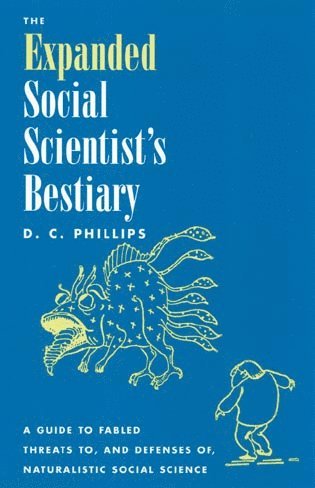
Häftad, Engelska, 2000
819 kr
Skickas inom 10-15 vardagar
The (Expanded)Social ScientistOs Bestiary addresses a number of important theoretical and philosophical issues in the social sciences from the perspective of contemporary philosophy of science. The book discusses and critiques the various arguments that purport to establish that it is a mistake to believe that a naturalistic social science- i.e. social science that in some way resembles the natural sciences- can be produced. It is intended to guide social scientists-researchers, teachers, and students-so that they will not fall victim to the beasts they will encounter in the course of their inquiries. Such beasts include holism, post-positivistic work in the philosophy of science, Kuhnian relativism, the denial of objectivity and value neutrality, hermeneutics and several others, both good and bad. This expanded and revised edition contains four new chapters tackling such contemporary beasts as Popperian rules, narrative research, and various forms of constructivism. The chapters presented in this volume are, as far as possible, self-contained so that each chapter can be consulted without the necessity of having read the others, thus making this volume an invaluable guide for faculty members and graduate students in the whole of the social sciences and related applied fields.
5 886 kr
Skickas inom 11-20 vardagar
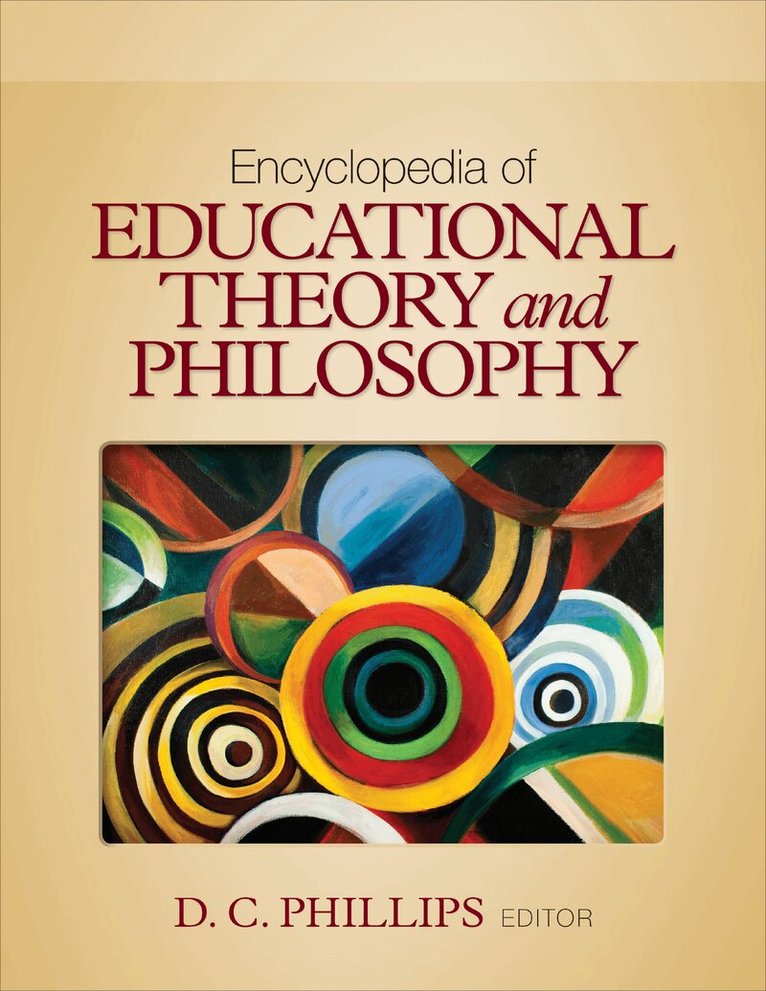
Education is a field sometimes beset by theories-of-the-day and with easy panaceas that overpromise the degree to which they can alleviate pressing educational problems. The two-volume Encyclopedia of Educational Theory and Philosophy introduces readers to theories that have stood the test of time and those that have provided the historical foundation for the best of contemporary educational theory and practice. Drawing together a team of international scholars, this invaluable reference examines the global landscape of all the key theories and the theorists behind them and presents them in the context needed to understand their strengths and weaknesses. In addition to interpretations of long-established theories, this work offers essays on cutting-edge research and concise, to-the-point definitions of key concepts, ideas, schools, and figures. Features: Over 300 signed entries by trusted experts in the field are organized into two volumes and overseen by a distinguished general editor and an international editorial board. Entries are followed by cross references and further reading suggestions. A Reader’s Guide groups entries thematically The Reader’s Guide, detailed index, and cross references combine for strong search-and-browse capabilities in the electronic version. Available in a choice of print or electronic formats, Encyclopedia of Educational Theory and Philosophy is an ideal reference for anyone interested in the roots of contemporary educational theory. Key Themes: Aims of Education Classic Premodern Philosophers, Theories, and Theorists Curriculum Educational Research, Evaluation, and Testing Equity, Rights, Social Stratification, and Citizenship Higher Education Learners, Learning, and Teaching Liberal Education Moral, Religious, Spiritual, and Social/Cultural Values Multiculturalism and Special Populations Organization of Schooling Philosophy of Science, Sociology of Science, and Epistemology Philosophy of Education: Feminist Perspectives Philosophy of Education: Nonwestern Traditions Philosophy of Education: The Analytic Tradition Philosophy of Education: The Continental Traditions Philosophy of Education: The Political Theory Tradition Philosophy of Education: The Pragmatic Tradition Progressive Education Psychological Orientation in Educational Theory Social Sciences Orientation in Educational Theory

Del 2 - Behind the Shadows
Behind the Shadows II
Häftad, Engelska, 2024
258 kr
Skickas inom 5-8 vardagar
Inbunden, Engelska, 2016
653 kr
Tillfälligt slut
This year marks the centenary publication of John Dewey's magnum opus, Democracy and Education. Despite its profound importance as a foundational text in education, it is notoriously difficult and dare we say it a little dry. In this charming and often funny companion, noted philosopher of education D. C. Phillips goes chapter by chapter to bring Dewey to a twenty-first-century audience. Drawing on over fifty years of thinking about this book and on his own experiences as an educator he lends it renewed clarity and a personal touch that proves its lasting importance. Phillips bridges several critical pitfalls of Democracy and Education that often prevent contemporary readers from fully understanding it. Where Dewey sorely needs a detailed example to illustrate a point and the times are many Phillips steps in, presenting cases from his own classroom experiences. Where Dewey casually refers to the works of people like Hegel, Herbart, and Locke common knowledge, apparently, in 1916 Phillips fills in the necessary background. And where Dewey gets convoluted or is even flat-out wrong, Phillips does what few other scholars would do: he takes Dewey to task.The result is a lively accompaniment that helps us celebrate and be enriched by some of the most important ideas ever offered in education.
Inbunden, Engelska, 2000
894 kr
Tillfälligt slut
This volume presents in a forthright and lively way, an account of the philosophical position generally identified as 'Postpositivistic' that undergirds much of mainstream research in education and the related social sciences. The discussion throughout is informed by recent developments in philosophy of science. Authors D. C. Phillips and Nicholas C. Burbules cite a number of interesting examples from the educational research and evaluation literature to illustrate the value of a scientific approach. Many educational researchers aspire to carry out rigorous or disciplined inquiry aimed at producing accurate (and generally 'truthful') accounts of educational phenomena and the causal psychological or social processes that lay behind them. However, many recent critics have argued that it is a mistake to believe that research can yield theories, or advance claims that are true, objective, and value-neutral. In other words, that researchers always work within frameworks that embody important (and often questionable) assumptions about values and the nature of human knowledge. This book argues that , while there is much to be learned from recent critiques, traditional scientific values and assumptions are not outmoded. The authors show students how to implement and benefit from the scientific method in ways that take into account recent critiques.