
David Wills – författare
Visar alla böcker från författaren David Wills. Handla med fri frakt och snabb leverans.
21 produkter
21 produkter
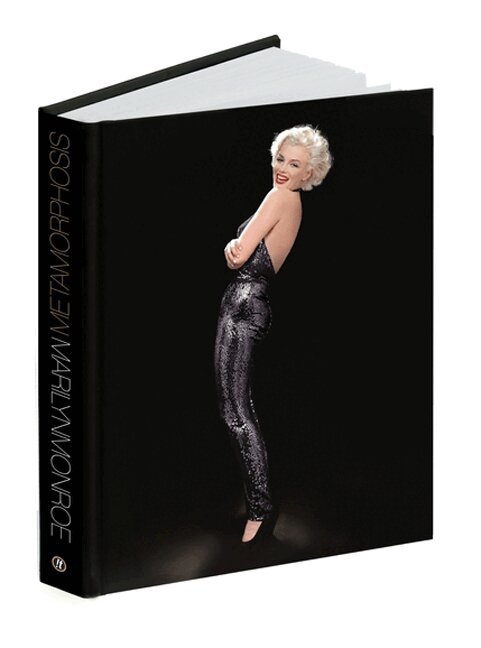
Inbunden, Engelska, 2011
318 kr
Skickas inom 3-6 vardagar
There have been many Marilyn photo books - but nothing like this. Australian-born curator and preservationist David Wills has accrued one of the world's largest independent archives of original Marilyn Monroe photographs. Now, in "Marilyn Monroe: Metamorphosis", he has gathered spectacular work of the key Marilyn photographers - and dozens of unknowns - to create the most dazzling portfolio of images from every period in Marilyn Monroe's life, from her earliest sittings in 1942 till just weeks before her death two decades later. With more than two hundred first-generation photos - including countless luminous, unseen color photos from the very start of her career - "Marilyn Monroe: Metamorphosis" chronicles her meteoric rise from a humble catalog model to one of the most recognized faces in history. No other book even comes close.
Inbunden, Engelska
252 kr
Skickas inom 3-6 vardagar

Inbunden, Engelska, 2016
285 kr
Skickas
A stunning photographic compilation showcasing Audrey Hepburn's iconic career in the 1950s-the decade that solidified her place as one of the world's greatest stars in film and fashion. Devoted to her most influential decade, Audrey: The 50s brings together in one volume the allure and elegance that made Audrey Hepburn the most iconic figure in modern fashion history. Photographed during the early days of her career, both on the sets of Roman Holiday, Sabrina, Funny Face, and other classic films, and in fashion photo shoots by top photographers who adored and immortalized her, these beautiful black-and-white and color images radiate with Audrey's waifish charm, ethereal beauty, and effortless style. Renowned author, curator and photographic preservationist David Wills has carefully selected this collection of two hundred museum-quality photos that capture Audrey in her prime as never before. Audrey: The 50s displays this star at her brightest, and brings her legacy into perfect focus. Among the highlights: * Rare and classic images digitally restored from vintage photographic prints, original studio negatives and transparencies.*Never-before-seen publicity photos, scene stills and work shots from the sets of Roman Holiday, Sabrina, Funny Face, Love in the Afternoon, and The Nun's Story.* Previously unpublished "posed candids" of Audrey at home.* Beautifully restored advertisements, fan magazine layouts, international film posters and lobby cards.* Quotes from photographers, directors, and costars, including William Holden, Gregory Peck, Fred Astaire, Billy Wilder, King Vidor, William Wyler, Edith Head, Hubert de Givenchy, Richard Avedon, Cecil Beaton, and Audrey herself.
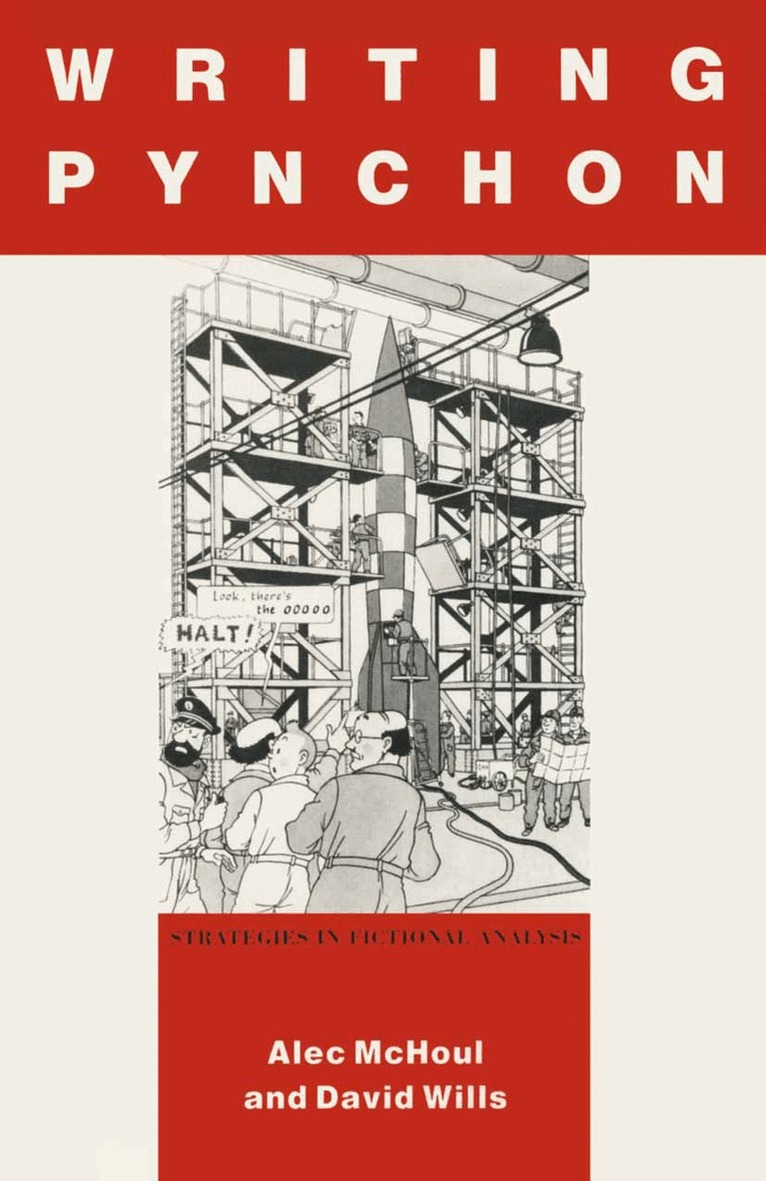
Häftad, Engelska, 1990
353 kr
Skickas inom 10-15 vardagar
This book explores some of the ways in which contemporary literary theory can be used to read fiction. In particular, it focuses on Thomas Pynchon's three novels to date and his collection of early stories. The theories exploited are concentrated in the work of Jacques Derrida which has been variously labelled "deconstructive" or more recently "grammatological". The boundaries between biography, criticism and fiction are challenged to such an extent that the gentre of the text itself is part of the game that its readers are invited to play. Alec McHoul also wrote "Telling How Texts Talk: Essays on Reading and Ethnomethodology" and "Wittgenstein on Certainty and the Problem of Rule in Social Science". David Wills has also written "Self De(con)struct: Writing and the Surrealist Text" and also "Screen Play: Derrida and Film Theory" together with Peter Brunette.

Inbunden, Engelska, 2000
1 041 kr
Skickas inom 7-10 vardagar
Jean-Luc Godard's Pierrot le fou, made at the height of the French New Wave, remains a milestone in French cinema. More accessible than his later films, it represents the diverse facets of Godard's concerns and themes: a bittersweet analysis of male-female relations; an interrogation of the image; personal and international politics; the existential dilemmas of consumer society. This volume, first published in 2000, brings together essays by five prominent scholars of French film. They approach Pierrot le fou from the perspectives of image-and-word-play, aesthetics and politics, history, and high and popular culture, offering thought-provoking insights into the film, while demonstrating its relevance for a new generation of students of film. Also included are a selection of reviews of the film, as well as a complete filmography of Godard's work.

Häftad, Engelska, 2000
245 kr
Skickas inom 7-10 vardagar
Jean-Luc Godard's Pierrot le fou, made at the height of the French New Wave, remains a milestone in French cinema. More accessible than his later films, it represents the diverse facets of Godard's concerns and themes: a bittersweet analysis of male-female relations; an interrogation of the image; personal and international politics; the existential dilemmas of consumer society. This volume, first published in 2000, brings together essays by five prominent scholars of French film. They approach Pierrot le fou from the perspectives of image-and-word-play, aesthetics and politics, history, and high and popular culture, offering thought-provoking insights into the film, while demonstrating its relevance for a new generation of students of film. Also included are a selection of reviews of the film, as well as a complete filmography of Godard's work.
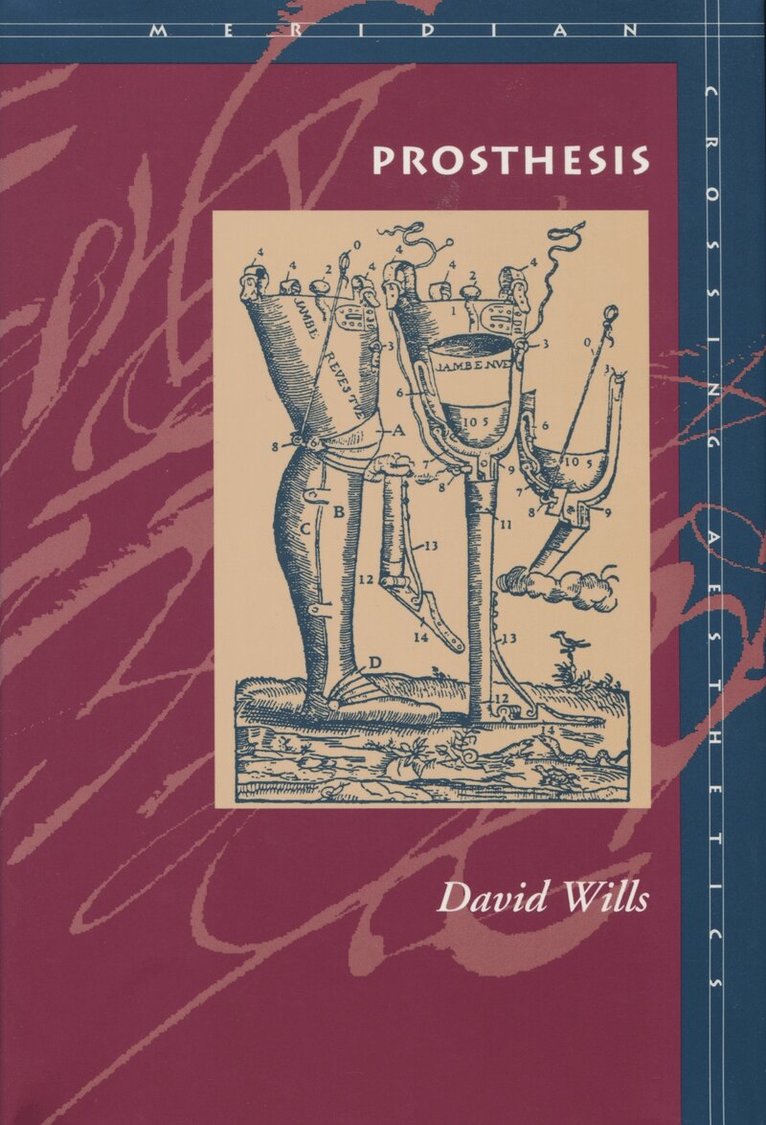
Inbunden, Engelska, 1995
999 kr
Skickas inom 5-8 vardagar
A Stanford University Press classic.
Inbunden, Engelska, 2005
1 427 kr
Skickas inom 10-15 vardagar
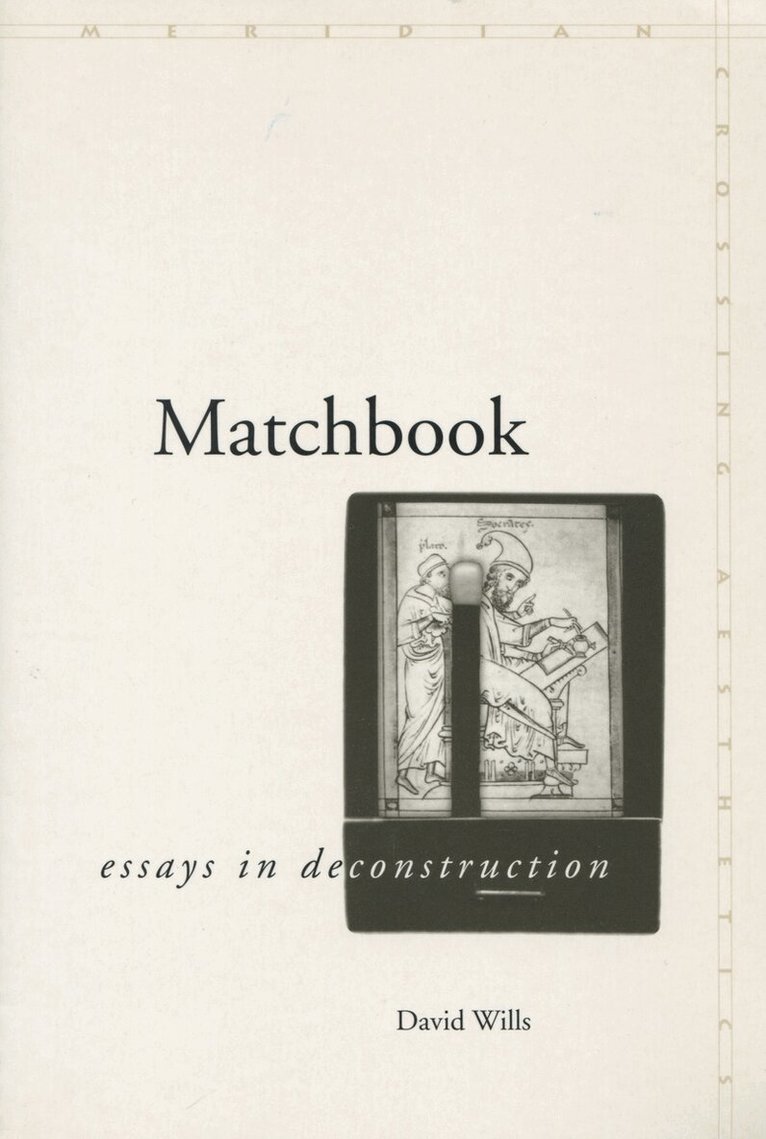
Matchbook consists of nine essays written around, or in response to, work published by Jacques Derrida since 1980. The focal point of the essays is the "Envois," which forms part of Derrida's Post Card. Particular attention is paid to how that text articulates with the ethical and political emphases of Derrida's more recent work, but also to its autobiographical conceit.The "incendiary" reference of the book's title underscores deconstruction's engagement with questions of reading: relations between (slow) reading and the speed of technology, and the political effects of an internationalized deconstruction in a globalized culture. It is in terms of what deconstruction can have us think about the speed of technology and technologies of reading that Derrida's work has made one of its most important contributions to philosophy and literary and cultural studies. The book concentrates on that as proof of the continued relevance of such work.
Häftad, Engelska, 2005
330 kr
Skickas inom 5-8 vardagar
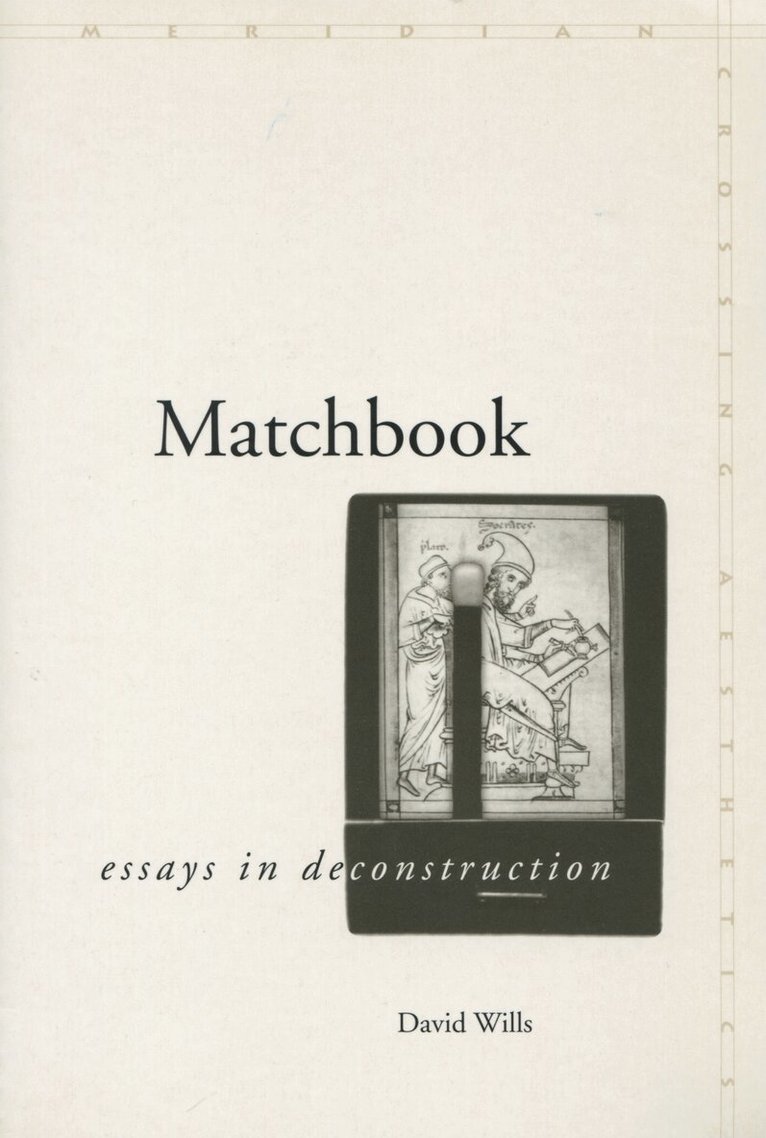
Matchbook consists of nine essays written around, or in response to, work published by Jacques Derrida since 1980. The focal point of the essays is the "Envois," which forms part of Derrida's Post Card. Particular attention is paid to how that text articulates with the ethical and political emphases of Derrida's more recent work, but also to its autobiographical conceit.The "incendiary" reference of the book's title underscores deconstruction's engagement with questions of reading: relations between (slow) reading and the speed of technology, and the political effects of an internationalized deconstruction in a globalized culture. It is in terms of what deconstruction can have us think about the speed of technology and technologies of reading that Derrida's work has made one of its most important contributions to philosophy and literary and cultural studies. The book concentrates on that as proof of the continued relevance of such work.
Häftad, Engelska, 2008
266 kr
Skickas inom 10-15 vardagar
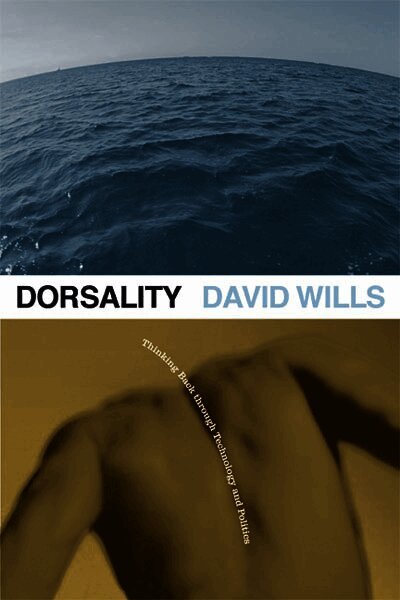
In this highly original book David Wills rethinks not only our nature before all technology but also what we understand to be technology. Rather than considering the human being as something natural that then develops technology, Wills argues, we should instead imagine an originary imbrication of nature and machine that begins with a dorsal turn-a turn that takes place behind our back, outside our field of vision. With subtle and insightful readings, Wills pursues this sense of what lies behind our idea of the human by rescuing Heidegger’s thinking from a reductionist dismissal of technology, examining different angles on LÉvinas’s face-to-face relation, and tracing a politics of friendship and sexuality in Derrida and Sade. He also analyzes versions of exile in Joyce’s rewriting of Homer and Broch’s rewriting of Virgil and discusses how Freud and Rimbaud exemplify the rhetoric of soil and blood that underlies every attempt to draw lines between nations and discriminate between peoples. In closing, Wills demonstrates the political force of rhetoric in a sophisticated analysis of Nietzsche’s oft-quoted declaration that “God is dead.” Forward motion, Wills ultimately reveals, is an ideology through which we have favored the front-what can be seen-over the aspects of the human and technology that lie behind the back and in the spine-what can be sensed otherwise-and shows that this preference has had profound environmental, political, sexual, and ethical consequences. David Wills is professor of French and English at the University of Albany (SUNY). He is the author of Prosthesis and Matchbook: Essays in Deconstruction as well as the translator of works by Jacques Derrida, including The Gift of Death.
Häftad, Engelska, 2016
317 kr
Skickas inom 5-8 vardagar
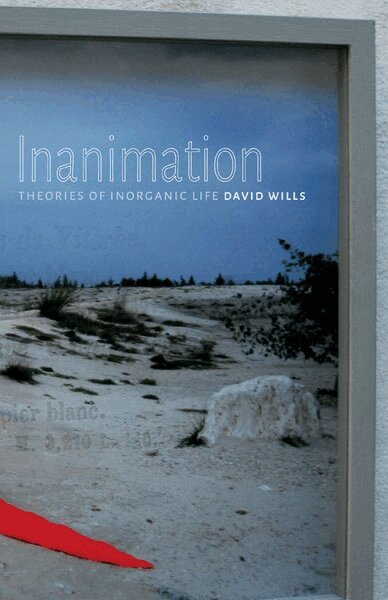
Inanimation is the third book by author David Wills to analyze the technology of the human. In Prosthesis, Wills traced our human attachment to external objects back to a necessity within the body itself. In Dorsality, he explored how technology is understood to function behind or before the human. Inanimation proceeds by taking literally the idea of inanimate or inorganic forms of life. Starting from a seemingly naÏve question about what it means to say texts “live on” or have a “life of their own,” Inanimation develops a new theory of the inanimate.Inanimation offers a fresh account of what life is and the ethical and political consequences that follow from this conception. Inspired by Walter Benjamin’s observation that “the idea of life and afterlife in works of art should be regarded with an entirely unmetaphorical objectivity,” the book challenges the coherence and limitations of “what lives,” arguing that there is no clear opposition between a live animate and dead inanimate. Wills identifies three major forms of inorganic life: autobiography, translation, and resonance. Informed by Jacques Derrida and Gilles Deleuze, he explores these forms through wide-ranging case studies. He brings his panoptic vision to bear on thinkers (Descartes, Freud, Derrida, Benjamin, Carl Schmitt, Jean-Luc Nancy, Roland Barthes), writers and poets (HÉlÈne Cixous, Paul Celan, William Carlos Williams, Ernst JÜnger, James Joyce, Georges Bataille), and visual artists (Jean-FranÇois Millet, Jean-Luc Godard, Paul Klee). With panache and gusto, Wills discovers life-forms well beyond textual remainders and translations, in such disparate “places” as the act of thinking, the death drive, poetic blank space, recorded bird songs, the technology of warfare, and the heart stopped by love.
Häftad, Engelska, 2019
458 kr
Skickas inom 10-15 vardagar
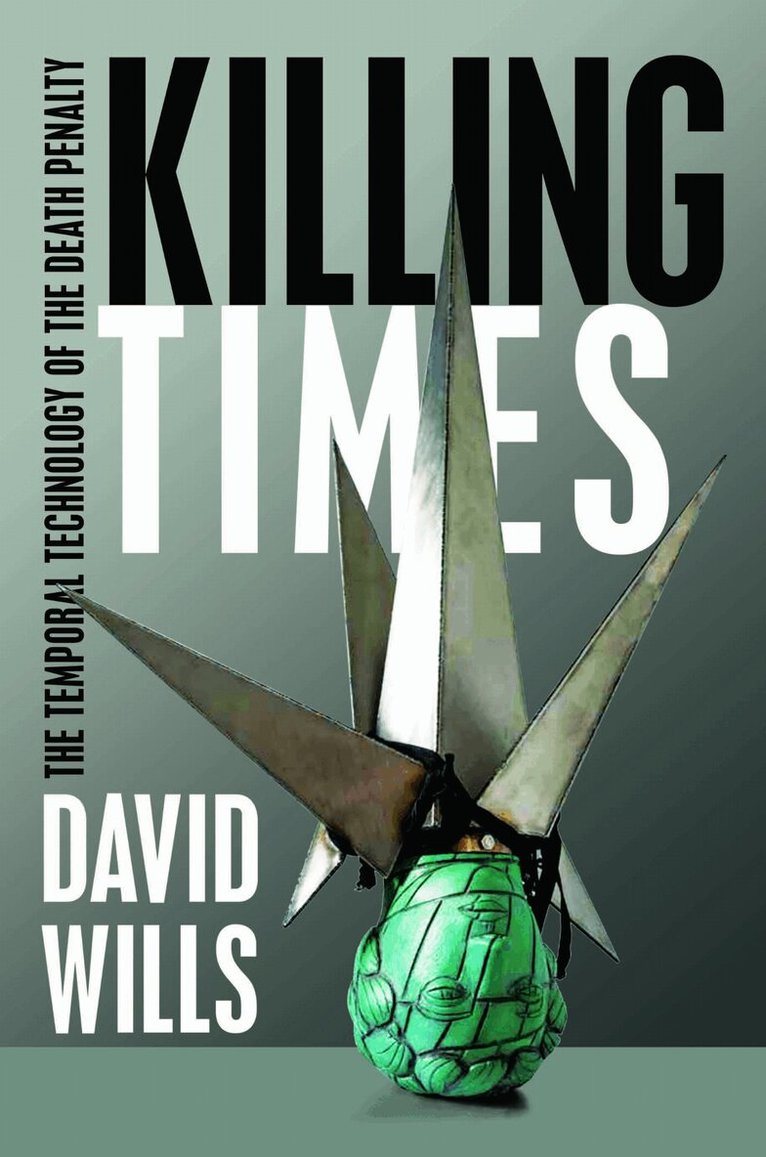
Killing Times begins with the deceptively simple observation—made by Jacques Derrida in his seminars on the topic—that the death penalty mechanically interrupts mortal time by preempting the typical mortal experience of not knowing at what precise moment we will die. Through a broader examination of what constitutes mortal temporality, David Wills proposes that the so-called machinery of death summoned by the death penalty works by exploiting, or perverting, the machinery of time that is already attached to human existence. Time, Wills argues, functions for us in general as a prosthetic technology, but the application of the death penalty represents a new level of prosthetic intervention into what constitutes the human.Killing Times traces the logic of the death penalty across a range of sites. Starting with the legal cases whereby American courts have struggled to articulate what methods of execution constitute "cruel and unusual punishment," Wills goes on to show the ways that technologies of death have themselves evolved in conjunction with ideas of cruelty and instantaneity, from the development of the guillotine and the trap door for hanging, through the firing squad and the electric chair, through today's controversies surrounding lethal injection. Responding to the legal system's repeated recourse to storytelling—prosecutors' and politicians' endless recounting of the horrors of crimes—Wills gives a careful eye to the narrative, even fictive spaces that surround crime and punishment.Many of the controversies surrounding capital punishment, Wills argues, revolve around the complex temporality of the death penalty: how its instant works in conjunction with forms of suspension, or extension of time; how its seeming correlation between egregious crime and painless execution is complicated by a number of different discourses. By pinpointing the temporal technology that marks the death penalty, Wills is able to show capital punishment's expansive reach, tracing the ways it has come to govern not only executions within the judicial system, but also the opposed but linked categories of the suicide bombing and drone warfare. In discussing the temporal technology of death, Wills elaborates the workings both of the terrorist who produces a simultaneity of crime and "punishment" that bypasses judicial process, and of the security state, in whose remote-control killings the time-space coordinates of "justice" are compressed and at the same time disappear into the black hole of secrecy.Grounded in a deep ethical and political commitment to death penalty abolition, Wills's engaging and powerfully argued book pushes the question of capital punishment beyond the confines of legal argument to show how the technology of capital punishment defines and appropriates the instant of death and reconfigures the whole of human mortality.
Inbunden, Engelska, 2019
1 372 kr
Skickas inom 10-15 vardagar
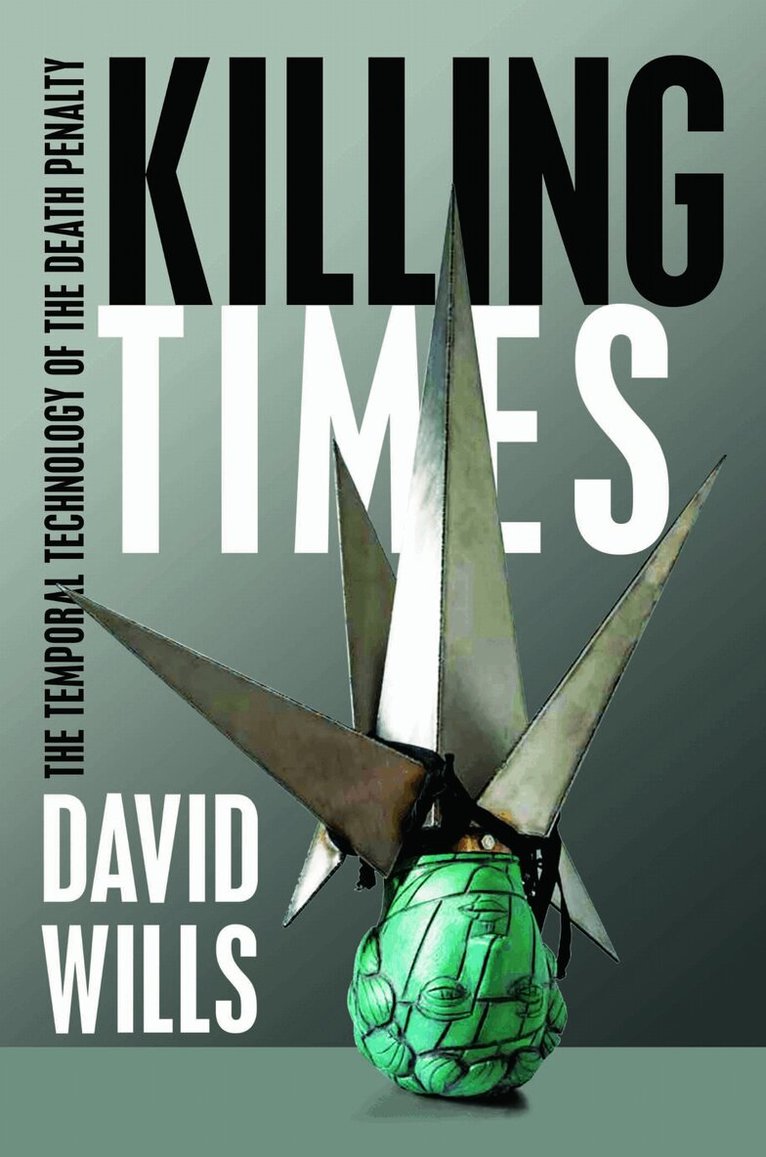
Killing Times begins with the deceptively simple observation—made by Jacques Derrida in his seminars on the topic—that the death penalty mechanically interrupts mortal time by preempting the typical mortal experience of not knowing at what precise moment we will die. Through a broader examination of what constitutes mortal temporality, David Wills proposes that the so-called machinery of death summoned by the death penalty works by exploiting, or perverting, the machinery of time that is already attached to human existence. Time, Wills argues, functions for us in general as a prosthetic technology, but the application of the death penalty represents a new level of prosthetic intervention into what constitutes the human.Killing Times traces the logic of the death penalty across a range of sites. Starting with the legal cases whereby American courts have struggled to articulate what methods of execution constitute "cruel and unusual punishment," Wills goes on to show the ways that technologies of death have themselves evolved in conjunction with ideas of cruelty and instantaneity, from the development of the guillotine and the trap door for hanging, through the firing squad and the electric chair, through today's controversies surrounding lethal injection. Responding to the legal system's repeated recourse to storytelling—prosecutors' and politicians' endless recounting of the horrors of crimes—Wills gives a careful eye to the narrative, even fictive spaces that surround crime and punishment.Many of the controversies surrounding capital punishment, Wills argues, revolve around the complex temporality of the death penalty: how its instant works in conjunction with forms of suspension, or extension of time; how its seeming correlation between egregious crime and painless execution is complicated by a number of different discourses. By pinpointing the temporal technology that marks the death penalty, Wills is able to show capital punishment's expansive reach, tracing the ways it has come to govern not only executions within the judicial system, but also the opposed but linked categories of the suicide bombing and drone warfare. In discussing the temporal technology of death, Wills elaborates the workings both of the terrorist who produces a simultaneity of crime and "punishment" that bypasses judicial process, and of the security state, in whose remote-control killings the time-space coordinates of "justice" are compressed and at the same time disappear into the black hole of secrecy.Grounded in a deep ethical and political commitment to death penalty abolition, Wills's engaging and powerfully argued book pushes the question of capital punishment beyond the confines of legal argument to show how the technology of capital punishment defines and appropriates the instant of death and reconfigures the whole of human mortality.
Inbunden, Engelska, 2019
1 064 kr
Skickas inom 10-15 vardagar
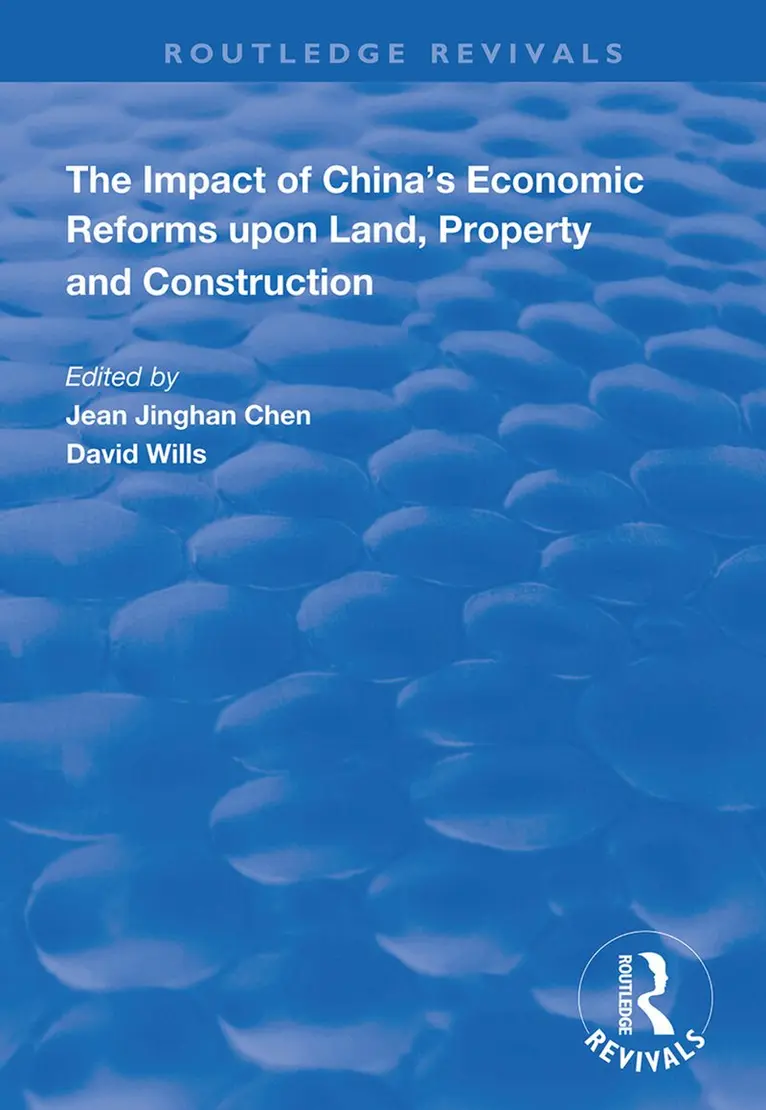
First published in 1999, this volume aims to explore the impact of China’s recent economic reforms and dynamic economic progress on land use, the property market and construction activity under the leadership of Deng Xiaoping until his death in 1997. Following the famine and bloody mayhem of Mao Zedong’s Great Leap Forward and Cultural Revolution, Deng Xiaoping took on the task of piecing the country back together to once more become a leading world economy. Here, Jean Jinghan Chen and David Wills concentrate on his reforms and progress, examining at what point power can be said to have passed from Deng Xiaoping to Jiang Zemin, to what extent Deng’s political philosophy remained in place under the new government and what this means for China’s economic reforms on land, property and construction. The authors provide a view on how management of the physical environment needs to be considered in the context of economic progress to achieve sustainable development.
Häftad, Engelska, 2020
393 kr
Skickas inom 10-15 vardagar
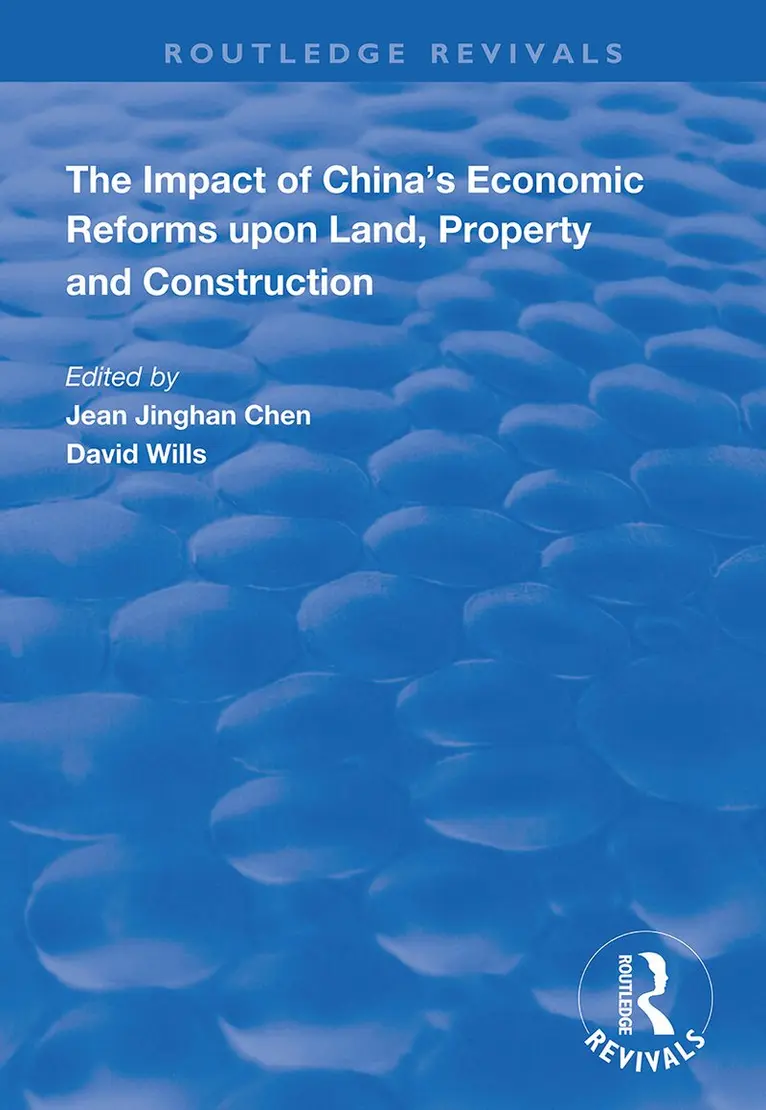
First published in 1999, this volume aims to explore the impact of China’s recent economic reforms and dynamic economic progress on land use, the property market and construction activity under the leadership of Deng Xiaoping until his death in 1997. Following the famine and bloody mayhem of Mao Zedong’s Great Leap Forward and Cultural Revolution, Deng Xiaoping took on the task of piecing the country back together to once more become a leading world economy. Here, Jean Jinghan Chen and David Wills concentrate on his reforms and progress, examining at what point power can be said to have passed from Deng Xiaoping to Jiang Zemin, to what extent Deng’s political philosophy remained in place under the new government and what this means for China’s economic reforms on land, property and construction. The authors provide a view on how management of the physical environment needs to be considered in the context of economic progress to achieve sustainable development.
Häftad, Engelska, 2012
235 kr
Skickas inom 5-8 vardagar
Inbunden, Engelska, 2012
392 kr
Skickas inom 5-8 vardagar
Häftad, Engelska, 2021
329 kr
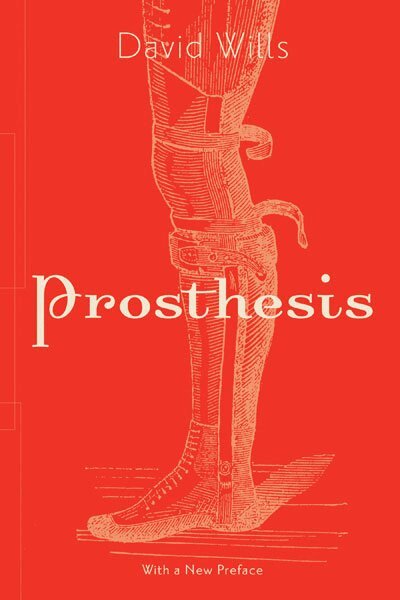
An examination of the presumed opposition between the natural human body and artificial inanimate objectsProsthesis is a landmark work in posthuman thought that analyzes and explores the human body as a technology, seamlessly integrated (both physically and psychologically) with prosthetics. Here David Wills lays the groundwork for ideas he develops in two of his other books, Dorsality, exploring how technology functions behind or before the human, and Inanimation, giving perspective on what it means to be “alive.” In Prosthesis, Wills promotes the idea that the human body is open to supplementation by artificial addenda that operate both internally or externally and engage it in an unceasing arbitration with the environment. Questioning the opposition between animate and inanimate along with the logic of the automatic prioritization of living flesh, Prosthesis undertakes these assumptions by studying thematics of artificiality through the writings of Freud, Derrida, William Gibson, Peter Greenaway, and others. In the twenty-five years since its first publication, Prosthesis has been a point of reference in the field of disability studies. It has also been recognized for its “prosthetic” writing, consisting of academic and autobiographical voices and styles that are artificially attached to one another.
- Nyhet

Inbunden, Tyska, 2026
851 kr
Skickas inom 3-6 vardagar

Häftad, Engelska, 2020
228 kr
Skickas inom 5-8 vardagar
Inbunden, Engelska, 2013
465 kr
Tillfälligt slut
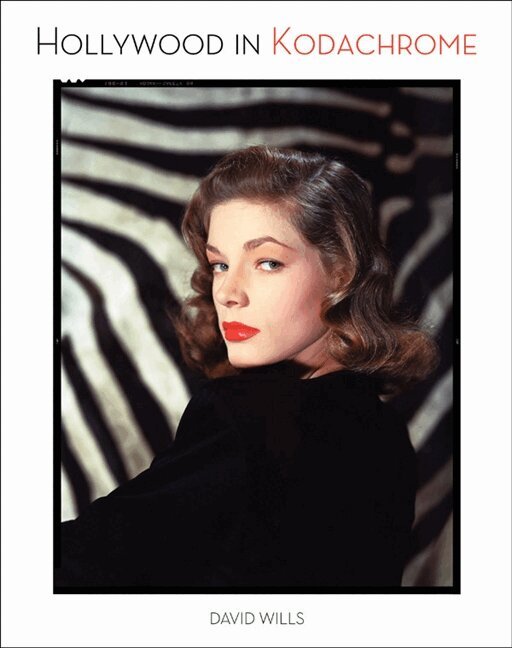
Curated from the luscious Kodachrome stock of the 1940s, renowned preservationist David Wills presents a dazzling Hollywood collection as never before printed. Drawn from Wills' vast collection of first-generation negatives and prints, meticulously scanned and gorgeously printed, these icons of film and style are brought back to life-almost more vibrantly than they were ever seen at the time. In Hollywood in Kodachrome, Wills offers a stunning gallery of hundreds of impossibly lush, full-color photos of the stars of Hollywood's Golden Age. Photographed using late 1940s sheet Kodachrome-a film stock that remains legendary for its tonal range, color accuracy, and detail-the silver screen's elite are brilliantly captured in unparalleled quality. Vividly portrayed in luxuriant detail, the stars in Hollywood in Kodachrome include Elizabeth Taylor, Ava Gardner, Rita Hayworth, Fred Astaire, Humphrey Bogart, Bette Davis, Frank Sinatra, Joan Crawford, Gregory Peck, Lucille Ball, William Holden, and many more.Including a foreword by Rhonda Fleming, and featuring more than 200 photos from classic films and publicity shoots, Hollywood in Kodachrome is a magnificent culmination of the 1940s' most beloved icons.