
Henry Petroski – författare
Visar alla böcker från författaren Henry Petroski. Handla med fri frakt och snabb leverans.
19 produkter
19 produkter

Häftad, Engelska, 2023
153 kr
Skickas inom 5-8 vardagar
An eminent engineer and historian tackles one of the most elemental aspects of life: how we experience and utilize physical force “Another gem from a master of technology writing.”—Kirkus Reviews Force explores how humans interact with the material world in the course of their everyday activities. This book for the general reader also considers the significance of force in shaping societies and cultures. Celebrated author Henry Petroski delves into the ongoing physical interaction between people and things that enables them to stay put or causes them to move. He explores the range of daily human experience whereby we feel the sensations of push and pull, resistance and assistance. The book is also about metaphorical force, which manifests itself as pressure and relief, achievement and defeat. Petroski draws from a variety of disciplines to make the case that force—represented especially by our sense of touch—is a unifying principle that pervades our lives. In the wake of a prolonged global pandemic that increasingly cautioned us about contact with the physical world, Petroski offers a new perspective on the importance of the sensation and power of touch.

Häftad, Engelska, 2008
232 kr
Skickas inom 5-8 vardagar

Häftad, Engelska, 2011
205 kr
Skickas inom 5-8 vardagar

Häftad, Engelska, 1998
272 kr
Skickas inom 3-6 vardagar

Häftad, Engelska, 2000
209 kr
Skickas inom 5-8 vardagar
Häftad, Engelska, 1994
301 kr
Skickas inom 7-10 vardagar
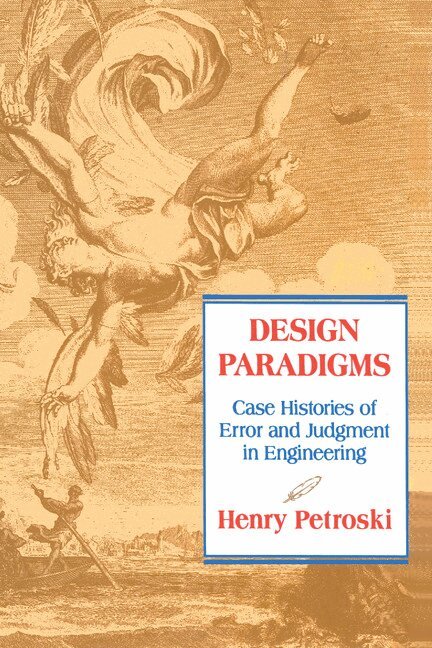
From ancient Greek temples to twentieth-century towers, engineers have learned more about design from failure than success. The concept of error, according to the author, is central to the design process. As a way of explaining the enduring aspects of engineering design, he relates stories of some of the greatest engineering successes and failures of all time. These case studies, drawn from a wide range of times and places, serve as paradigms of error and judgment in engineering design. By showing how errors were introduced in the design process and how they might be avoided, the book suggests how better quality and reliability might be achieved in designed devices, structures, and systems of all kinds. Clearly written, with striking illustrations, the book will appeal to engineering students, practising engineers, historians of science and technology, and all those interested in learning about the process of design.
Häftad, Engelska, 2014
236 kr
Skickas inom 10-15 vardagar
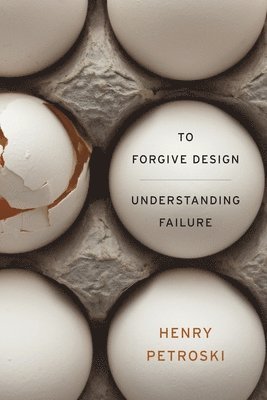
When planes crash, bridges collapse, and automobile gas tanks explode, we are quick to blame poor design. But Henry Petroski says we must look beyond design for causes and corrections. Known for his masterly explanations of engineering successes and failures, Petroski here takes his analysis a step further, to consider the larger context in which accidents occur. In To Forgive Design he surveys some of the most infamous failures of our time, from the 2007 Minneapolis bridge collapse and the toppling of a massive Shanghai apartment building in 2009 to Boston's prolonged Big Dig and the 2010 Gulf oil spill. These avoidable disasters reveal the interdependency of people and machines within systems whose complex behavior was undreamt of by their designers, until it was too late. Petroski shows that even the simplest technology is embedded in cultural and socioeconomic constraints, complications, and contradictions.Failure to imagine the possibility of failure is the most profound mistake engineers can make. Software developers realized this early on and looked outside their young field, to structural engineering, as they sought a historical perspective to help them identify their own potential mistakes. By explaining the interconnectedness of technology and culture and the dangers that can emerge from complexity, Petroski demonstrates that we would all do well to follow their lead.
Häftad, Engelska, 1998
247 kr
Skickas inom 5-8 vardagar
Henry Petroski’s previous bestsellers have delighted readers with intriguing stories about the engineering marvels around us, from the lowly pencil to the soaring suspension bridge. In this book, Petroski delves deeper into the mystery of invention, to explore what everyday artifacts and sophisticated networks can reveal about the way engineers solve problems.Engineering entails more than knowing the way things work. What do economics and ecology, aesthetics and ethics, have to do with the shape of a paper clip, the tab of a beverage can, the cabin design of a turbojet, or the course of a river? How do the idiosyncrasies of individual engineers, companies, and communities leave their mark on projects from Velcro® to fax machines to waterworks? Invention by Design offers an insider’s look at these political and cultural dimensions of design and development, production and construction.Readers unfamiliar with engineering will find Petroski’s enthusiasm contagious, whether the topic is the genesis of the Ziploc® baggie or the averted collapse of Manhattan’s sleekest skyscraper. And those who inhabit the world of engineering will discover insights to challenge their customary perspective, whether their work involves failure analysis, systems design, or public relations. Written with the flair that readers have come to expect from his books, Invention by Design reaffirms Petroski as the master explicator of the principles and processes that turn thoughts into the many things that define our made world.

Häftad, Engelska, 1992
318 kr
Skickas inom 3-6 vardagar
Häftad, Engelska, 1992
203 kr
Skickas inom 3-6 vardagar
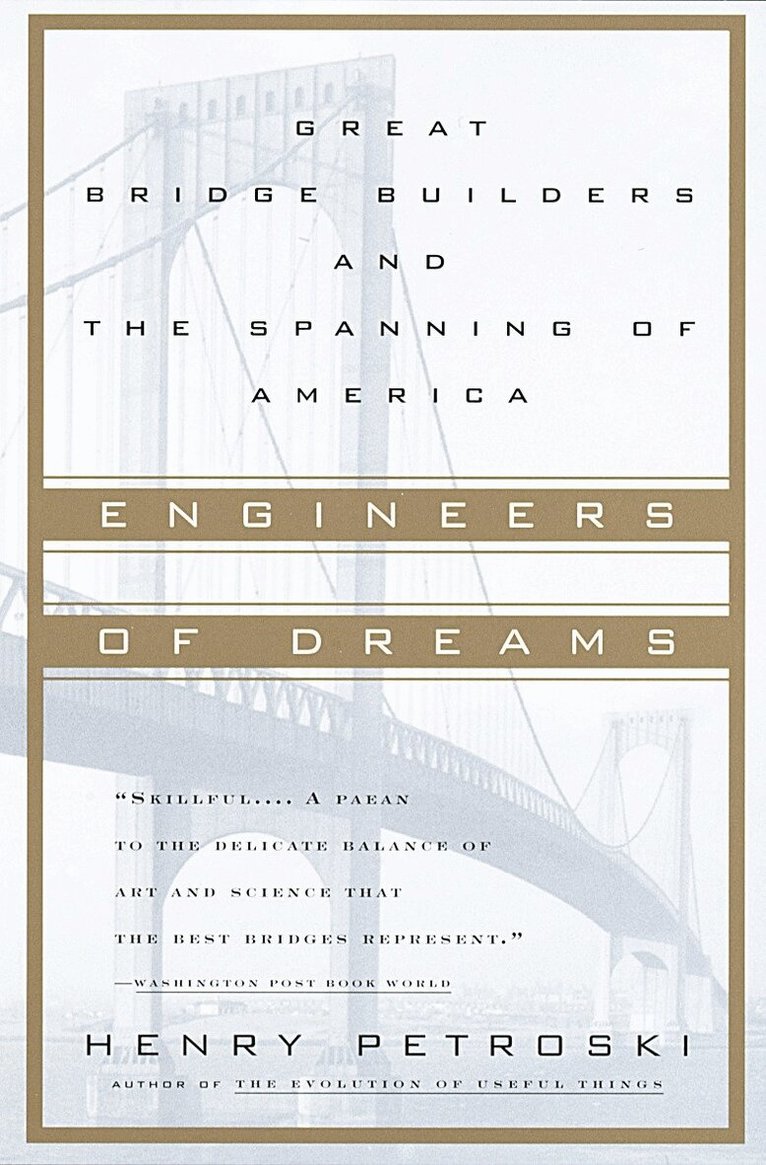
Häftad, Engelska, 1996
216 kr
Skickas inom 5-8 vardagar
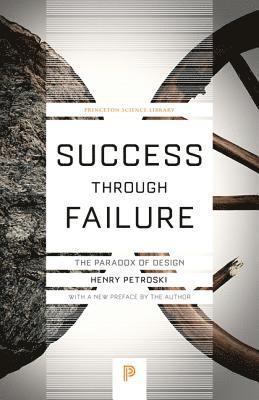
Häftad, Engelska, 2018
172 kr
Skickas inom 5-8 vardagar
From the acclaimed author and engineer, an engaging and lively account of the surprising secret of great designDesign pervades our lives. Everything from drafting a PowerPoint presentation to planning a state-of-the-art bridge embodies this universal human activity. But what makes a great design? In this compelling and wide-ranging look at the essence of invention, distinguished engineer and author Henry Petroski argues that, time and again, we have built success on the back of failure—not through easy imitation of success.Success through Failure shows us that making something better—by carefully anticipating and thus averting failure—is what invention and design are all about. Petroski explores the nature of invention and the character of the inventor through an unprecedented range of both everyday and extraordinary examples—illustrated lectures, child-resistant packaging for drugs, national constitutions, medical devices, the world's tallest skyscrapers, long-span bridges, and more. Stressing throughout that there is no surer road to eventual failure than modeling designs solely on past successes, he sheds new light on spectacular failures, from the destruction of the Tacoma Narrows Bridge in 1940 and the space shuttle disasters of recent decades, to the collapse of the World Trade Center in 2001.Petroski also looks at the prehistoric and ancient roots of many modern designs. The historical record, especially as embodied in failures, reveals patterns of human social behavior that have implications for large structures like bridges and vast organizations like NASA. Success through Failure—which will fascinate anyone intrigued by design, including engineers, architects, and designers themselves—concludes by speculating on when we can expect the next major bridge failure to occur, and the kind of bridge most likely to be involved.

Inbunden, Engelska, 2011
367 kr
Skickas inom 7-10 vardagar
Written by America's most famous engineering storyteller and educator, this abecedarium is one engineer's selection of thoughts, quotations, anecdotes, facts, trivia and arcana relating to the practice, history, culture and traditions of his profession. The entries reflect decades of reading, writing, talking and thinking about engineers and engineering, and range from brief essays to lists of great engineering achievements. This work is organized alphabetically and more like a dictionary than an encyclopedia. It is not intended to be read from first page to last, but rather to be dipped into, here and there, as the mood strikes the reader. In time, it is hoped, this book should become the source to which readers go first when they encounter a vague or obscure reference to the softer side of engineering.

Häftad, Engelska, 2004
191 kr
Skickas inom 5-8 vardagar

Häftad, Engelska, 2005
243 kr
Skickas inom 5-8 vardagar

Häftad, Tyska, 2014
570 kr
Skickas inom 10-15 vardagar

Häftad, Tyska, 2014
603 kr
Skickas inom 10-15 vardagar

Inbunden, Engelska, 2014
246 kr
Tillfälligt slut
When Henry Petroski and his wife Catherine bought a charming but modest six-decades-old island retreat in coastal Maine, Petroski couldn’t help but admire its unusual construction. An eminent expert on engineering, history, and design, he began wondering about the place’s origins and evolution: Who built it, and how? What needs, materials, technologies, historical developments, and laws shaped it? How had it fared through the years with its various inhabitants?Sleuthing around dimly lit closets, knotty-pine wall panels, and even a secret passage—but never removing so much as a nail—Petroski zooms in on the details but also steps back to examine the structure in the context of its time and place.Catherine Petroski’s beautiful photographs capture the clues and the atmosphere. A vibrant cast of neighbors and past residents—most notably the house’s masterful creator, an engineer-turned-“folk architect”—become key characters in the story.As the mystery unfolds, revealing an extraordinary house and its environs, this ode to loving design will leave readers enchanted and inspired.

Inbunden, Engelska, 2012
249 kr
Tillfälligt slut
When planes crash, bridges collapse, and automobile gas tanks explode, we are quick to blame poor design. But Henry Petroski says we must look beyond design for causes and corrections. Known for his masterly explanations of engineering successes and failures, Petroski here takes his analysis a step further, to consider the larger context in which accidents occur. In To Forgive Design he surveys some of the most infamous failures of our time, from the 2007 Minneapolis bridge collapse and the toppling of a massive Shanghai apartment building in 2009 to Boston's prolonged Big Dig and the 2010 Gulf oil spill. These avoidable disasters reveal the interdependency of people and machines within systems whose complex behavior was undreamt of by their designers, until it was too late. Petroski shows that even the simplest technology is embedded in cultural and socioeconomic constraints, complications, and contradictions.Failure to imagine the possibility of failure is the most profound mistake engineers can make. Software developers realized this early on and looked outside their young field, to structural engineering, as they sought a historical perspective to help them identify their own potential mistakes. By explaining the interconnectedness of technology and culture and the dangers that can emerge from complexity, Petroski demonstrates that we would all do well to follow their lead.