
Howard Frumkin – författare
Visar alla böcker från författaren Howard Frumkin. Handla med fri frakt och snabb leverans.
10 produkter
10 produkter
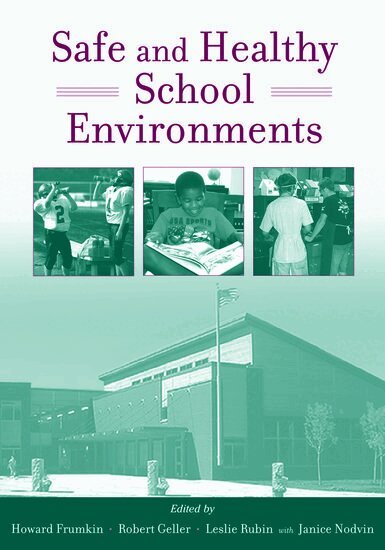
Inbunden, Engelska, 2006
829 kr
Skickas inom 5-8 vardagar
Millions of children and adults across the nation spend their days in school buildings, and they need safe, healthy environments to thrive, learn, and succeed. This book explores the school environment using the methods and perspectives of environmental health science. Its 30 chapters cover all aspects of the school environment, including air quality, toxic hazards, food, physical activity, violence, transportation, disaster preparedness, health services, and program management, making it the first book to offer such comprehensive coverage. It is evidence-based, readable, generously illustrated, and practical. The editors are physicians trained in paediatrics, occupational and environmental medicine, epidemiology, and medical toxicology, and the authors are experts in their fields drawn from across the United States and abroad.
Inbunden, Engelska, 2004
699 kr
Skickas inom 5-8 vardagar
How do new diseases become part of the public health agenda? Emerging Illnesses and Society brings together historians, sociologists, epidemiologists, public health experts, and others to explore this vital issue. Contributors describe the processes by which patients' groups interact with medical researchers, public health institutions, and the media to identify and address previously unknown illnesses, including multiple sclerosis, Tourette syndrome, AIDS, lead poisoning, Lyme disease, and hepatitis C. The introductory chapter develops a general theoretical model of the social process of "emerging"illness, identifying critical epidemiologic, social and political factors that shape different trajectories toward the construction of public health priorities. Through case studies of individual diseases and analyses of public awareness campaigns and institutional responses, this timely volume provides important insights into the medical, social, and economic factors that determine why some illnesses receive more attention and funding than others.Contributors: Deborah Barrett, University of North Carolina, Chapel Hill; Steven Epstein, University of California, San Diego; Phyllis Freeman, University of Massachusetts, Boston; Diane E. Goldstein, Memorial University of Newfoundland; Peter J. Krause, University of Connecticut School of Medicine; Howard I. Kushner, Emory University; Lawrence D. Mass, Beth Israel Medical Center, New York; Michelle Murphy, University of Toronto; Lydia Ogden, Global AIDS Program, CDCR; Sandy Smith-Nonini, Elon University; Ellen Griffith Spears, Southern Regional Council; Andrew Spielman, Harvard School of Public Health; Colin Talley, University of California San Francisco; Sam R. Telford III, Harvard School of Public Health; Christian Warren, New York Academy of Medicine.
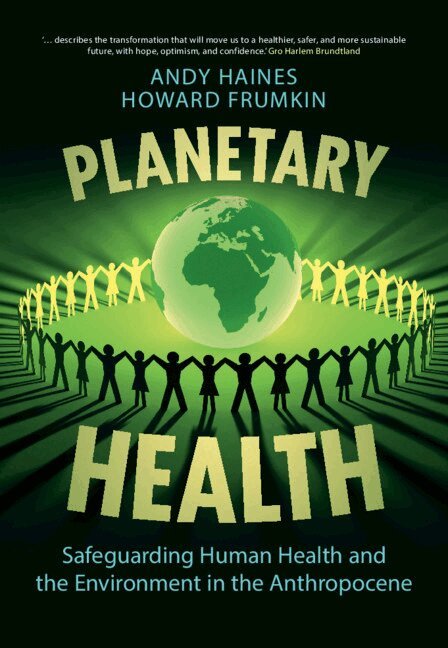
Inbunden, Engelska, 2021
769 kr
Skickas inom 7-10 vardagar
We live in unprecedented times - the Anthropocene - defined by far-reaching human impacts on the natural systems that underpin civilisation. Planetary Health explores the many environmental changes that threaten to undermine progress in human health, and explains how these changes affect health outcomes, from pandemics to infectious diseases to mental health, from chronic diseases to injuries. It shows how people can adapt to those changes that are now unavoidable, through actions that both improve health and safeguard the environment. But humanity must do more than just adapt: we need transformative changes across many sectors - energy, housing, transport, food, and health care. The book discusses specific policies, technologies, and interventions to achieve the change required, and explains how these can be implemented. It presents the evidence, builds hope in our common future, and aims to motivate action by everyone, from the general public to policymakers to health practitioners.
Häftad, Engelska, 2021
271 kr
Skickas inom 7-10 vardagar
We live in unprecedented times - the Anthropocene - defined by far-reaching human impacts on the natural systems that underpin civilisation. Planetary Health explores the many environmental changes that threaten to undermine progress in human health, and explains how these changes affect health outcomes, from pandemics to infectious diseases to mental health, from chronic diseases to injuries. It shows how people can adapt to those changes that are now unavoidable, through actions that both improve health and safeguard the environment. But humanity must do more than just adapt: we need transformative changes across many sectors - energy, housing, transport, food, and health care. The book discusses specific policies, technologies, and interventions to achieve the change required, and explains how these can be implemented. It presents the evidence, builds hope in our common future, and aims to motivate action by everyone, from the general public to policymakers to health practitioners.
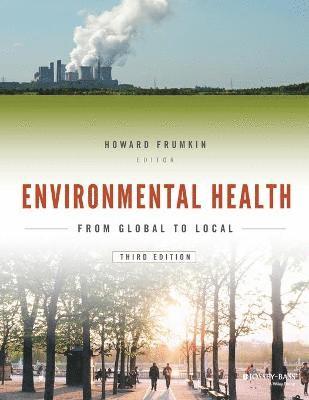
Häftad, Engelska, 2016
1 322 kr
Skickas inom 5-8 vardagar
The bestselling environmental health text, with all new coverage of key topics Environmental Health: From Global to Local is a comprehensive introduction to the subject, and a contemporary, authoritative text for students of public health, environmental health, preventive medicine, community health, and environmental studies. Edited by the former director of the CDC's National Center for Environmental Health and current dean of the School of Public Health at the University of Washington, this book provides a multi-faceted view of the topic, and how it affects different regions, populations, and professions. In addition to traditional environmental health topics—air, water, chemical toxins, radiation, pest control—it offers remarkably broad, cross-cutting coverage, including such topics as building design, urban and regional planning, energy, transportation, disaster preparedness and response, climate change, and environmental psychology. This new third edition maintains its strong grounding in evidence, and has been revised for greater readability, with new coverage of ecology, sustainability, and vulnerable populations, with integrated coverage of policy issues, and with a more global focus. Environmental health is a critically important topic, and it reaches into fields as diverse as communications, technology, regulatory policy, medicine, and law. This book is a well-rounded guide that addresses the field's most pressing concerns, with a practical bent that takes the material beyond theory. Explore the cross-discipline manifestations of environmental healthUnderstand the global ramifications of population and climate changeLearn how environmental issues affect health and well-being closer to homeDiscover how different fields incorporate environmental health perspectivesThe first law of ecology reminds is that 'everything is connected to everything else.' Each piece of the system affects the whole, and the whole must sustain us all for the long term. Environmental Health lays out the facts, makes the connections, and demonstrates the importance of these crucial issues to human health and well-being, both on a global scale, and in our homes, workplaces, and neighborhoods.
Häftad, Engelska, 2004
355 kr
Skickas inom 5-8 vardagar
In Urban Sprawl and Public Health, three of the nation's leading public health and urban planning experts explore an intriguing question: How does the physical environment in which we live affect our health? For decades, growth and development in our communities has been of the low-density, automobile-dependent type known as sprawl. The authors examine the direct and indirect impacts of sprawl on human health and well-being, and discuss the prospects for improving public health through alternative approaches to design, land use, and transportation. Urban Sprawl and Public Health offers a comprehensive look at the interface of urban planning, architecture, transportation, community design, and public health. It summarizes the evidence linking adverse health outcomes with sprawling development, and outlines the complex challenges of developing policy that promotes and protects public health. Anyone concerned with issues of public health, urban planning, transportation, architecture, or the environment will want to read this book.
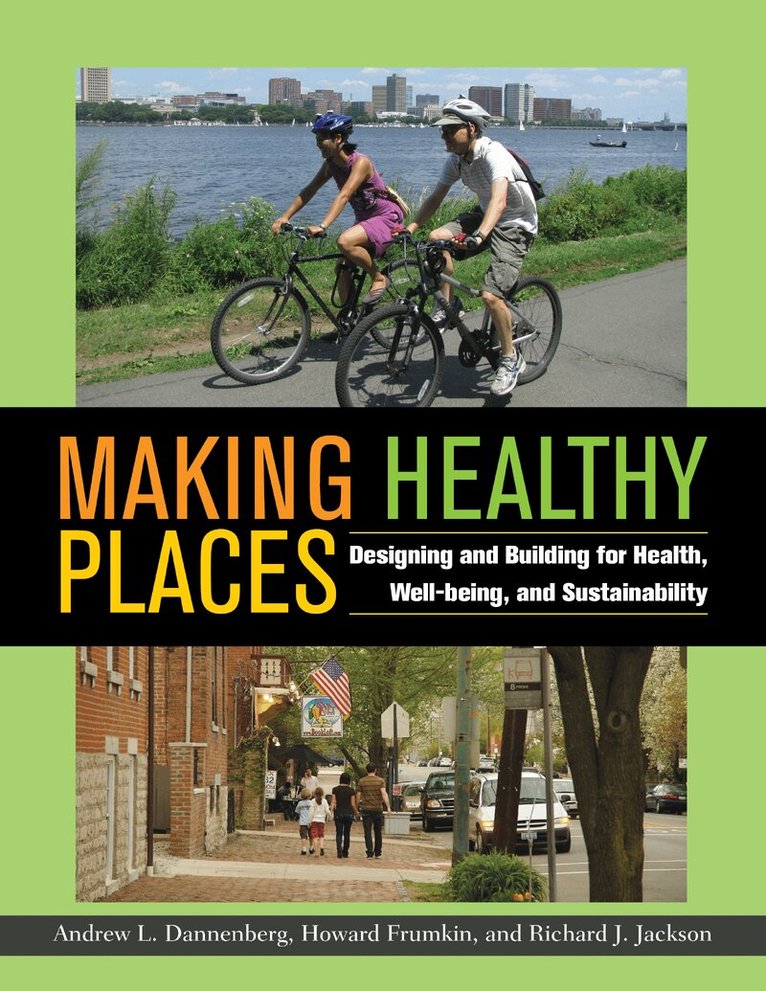
Häftad, Engelska, 2011
408 kr
Skickas inom 11-20 vardagar
The environment that we construct affects both humans and our natural world in myriad ways. There is a pressing need to create healthy places and to reduce the health threats inherent in places already built. However, there has been little awareness of the adverse effects of what we have constructed - or the positive benefits of well-designed built environments. This book provides a far-reaching follow-up to the path-breaking Urban Sprawl and Public Health, published in 2004. That book sparked a range of inquiries into the connections between constructed environments, particularly cities and suburbs, and the health of residents, especially humans. Since then, numerous studies have extended and refined the book's research and reporting. "Making Healthy Places" offers a fresh and comprehensive look at this vital subject today. There is no other book with the depth, breadth, vision, and accessibility that this book offers.In addition to being of particular interest to undergraduate and graduate students in public health and urban planning, it will be essential reading for public health officials, planners, architects, landscape architects, environmentalists, and all those who care about the design of their communities. "Making Healthy Places" presents a diagnosis of - and offers treatment for - problems related to the built environment. Drawing on the latest scientific evidence, with contributions from experts in a range of fields, it imparts a wealth of practical information, with an emphasis on demonstrated and promising solutions to commonly occurring problems.
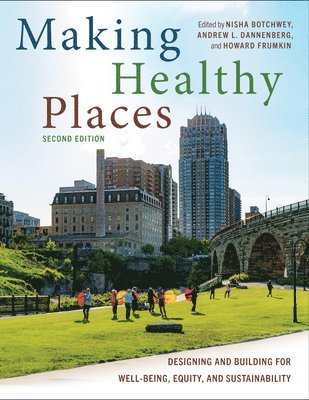
Häftad, Engelska, 2022
461 kr
Skickas inom 5-8 vardagar
The first edition of Making Healthy Places offered a visionary and thoroughly researched treatment of the connections between constructed environments and human health. Since its publication over 10 years ago, the field of healthy community design has evolved significantly to address major societal problems, including health disparities, obesity, and climate change. Most recently, the COVID-19 pandemic has upended how we live, work, learn, play, and travel.In Making Healthy Places, Second Edition: Designing and Building for Well-Being, Equity, and Sustainability, planning and public health experts Nisha D. Botchwey, Andrew L. Dannenberg, and Howard Frumkin bring together scholars and practitioners from across the globe in fields ranging from public health, planning, and urban design, to sustainability, social work, and public policy. This updated and expanded edition explains how to design and build places that are beneficial to the physical, mental, and emotional health of humans, while also considering the health of the planet.This edition expands the treatment of some topics that received less attention a decade ago, such as the relationship of the built environment to equity and health disparities, climate change, resilience, new technology developments, and the evolving impacts of the COVID-19 pandemic.Drawing on the latest research, Making Healthy Places, Second Edition imparts a wealth of practical information on the role of the built environment in advancing major societal goals, such as health and well-being, equity, sustainability, and resilience. This update of a classic is a must-read for students and practicing professionals in public health, planning, architecture, civil engineering, transportation, and related fields.
Häftad, Engelska, 2002
491 kr
Tillfälligt slut
The purpose of this regional workshop in the Southeast was to broaden the environmental health perspective from its typical focus on environmental toxicology to a view that included the impact of the natural, built, and social environments on human health. Early in the planning, Roundtable members realized that the process of engaging speakers and developing an agenda for the workshop would be nearly as instructive as the workshop itself. In their efforts to encourage a wide scope of participation, Roundtable members sought input from individuals from a broad range of diverse fields-urban planners, transportation engineers, landscape architects, developers, clergy, local elected officials, heads of industry, and others. This workshop summary captures the discussions that occurred during the two-day meeting.During this workshop, four main themes were explored: (1) environmental and individual health are intrinsically intertwined; (2) traditional methods of ensuring environmental health protection, such as regulations, should be balanced by more cooperative approaches to problem solving; (3) environmental health efforts should be holistic and interdisciplinary; and (4) technological advances, along with coordinated action across educational, business, social, and political spheres, offer great hope for protecting environmental health. This workshop report is an informational document that provides a summary of the regional meeting.
Häftad, Engelska, 2007
603 kr
Tillfälligt slut
Green Healthcare Institutions : Health, Environment, and Economics, Workshop Summary is based on the ninth workshop in a series of workshops sponsored by the Roundtable on Environmental Health Sciences, Research, and Medicine since the roundtable began meeting in 1998. When choosing workshops and activities, the roundtable looks for areas of mutual concern and also areas that need further research to develop a strong environmental science background. This workshop focused on the environmental and health impacts related to the design, construction, and operations of healthcare facilities, which are part of one of the largest service industries in the United States. Healthcare institutions are major employers with a considerable role in the community, and it is important to analyze this significant industry. The environment of healthcare facilities is unique; it has multiple stakeholders on both sides, as the givers and the receivers of care. In order to provide optimal care, more research is needed to determine the impacts of the built environment on human health.The scientific evidence for embarking on a green building agenda is not complete, and at present, scientists have limited information. Green Healthcare Institutions : Health, Environment, and Economics, Workshop Summary captures the discussions and presentations by the speakers and participants; they identified the areas in which additional research is needed, the processes by which change can occur, and the gaps in knowledge.