
James B. Jacobs – författare
Visar alla böcker från författaren James B. Jacobs. Handla med fri frakt och snabb leverans.
18 produkter
18 produkter
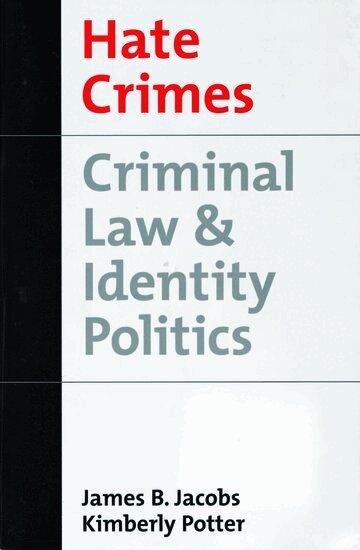
Inbunden, Engelska, 1998
914 kr
Skickas inom 5-8 vardagar
Early in the 1980s, a new category of crime appeared in the criminal law lexicon. In response to what was said to be an epidemic of prejudice-motivated violence, Congress and many state legislatures passed a wave of "hate crime" laws that required the collection of statistics and enhanced the punishment of crimes motivated by certain prejudices. This book places in socio-legal perspective both the hate crime problem and society's response to it. From the outset, Jacobs and Potter adopt a sceptical if not critical stance. They argue that hate crime is a hopelessly muddled concept and that legal definitions of the term are riddled with ambiguity and subjectivity. Moreover, no matter how hate crime is defined, the authors find no evidence to support the claim that the US is experiencing a hate crime epidemic--nor that the number or rate of hate crimes is at an historic zenith. Furthermore, assert the authors, the federal effort to establish a hate crime accounting system has been a failure. The authors argue that hate crime as a socio-legal category represents the elaboration of an identity politics that manifests itself in many areas of the law. However, the attempt to apply the anti-discrimination paradigm to criminal law generates a number of problems and anomalies. The underlying conduct that hate crime law prohibits is already subject to criminal punishment. Jacobs and Potter maintain that there is no persuasive rationale for saying that hate crimes are "worse" or "more serious" than similar crimes attributable to other anti-social motivations. Also, they argue that the effort to single out hate crime for greater punishment, in effect, is an effort to punish some offenders more seriously because of their bad beliefs, opinions, or values, thus implicating the First Amendment. Jabobs and Potter show that the recriminalization of hate crime has little (if any) value with respect to law enforcement or criminal justice. Indeed, enforcement of such laws may in fact exacerbate intergroup tensions rather than eradicate prejudice.
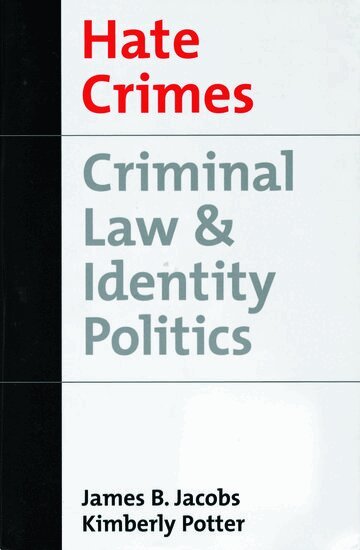
Häftad, Engelska, 2001
294 kr
Skickas inom 5-8 vardagar
In the early 1980s, a new category of crime appeared in the criminal law lexicon. In response to concerted advocacy-group lobbying, Congress and many state legislatures passed a wave of "hate crime" laws requiring the collection of statistics on, and enhancing the punishment for, crimes motivated by certain prejudices. This book places the evolution of the hate crime concept in socio-legal perspective. James B. Jacobs and Kimberly Potter adopt a skeptical if not critical stance, maintaining that legal definitions of hate crime are riddled with ambiguity and subjectivity. No matter how hate crime is defined, and despite an apparent media consensus to the contrary, the authors find no evidence to support the claim that the United States is experiencing a hate crime epidemic--instead, they cast doubt on whether the number of hate crimes is even increasing. The authors further assert that, while the federal effort to establish a reliable hate crime accounting system has failed, data collected for this purpose have led to widespread misinterpretation of the state of intergroup relations in this country. The book contends that hate crime as a socio-legal category represents the elaboration of an identity politics now manifesting itself in many areas of the law. But the attempt to apply the anti-discrimination paradigm to criminal law generates problems and anomalies. For one thing, members of minority groups are frequently hate crime perpetrators. Moreover, the underlying conduct prohibited by hate crime law is already subject to criminal punishment. Jacobs and Potter question whether hate crimes are worse or more serious than similar crimes attributable to other anti-social motivations. They also argue that the effort to single out hate crime for greater punishment is, in effect, an effort to punish some offenders more seriously simply because of their beliefs, opinions, or values, thus implicating the First Amendment. Advancing a provocative argument in clear and persuasive terms, Jacobs and Potter show how the recriminalization of hate crime has little (if any) value with respect to law enforcement or criminal justice. Indeed, enforcement of such laws may exacerbate intergroup tensions rather than eradicate prejudice.
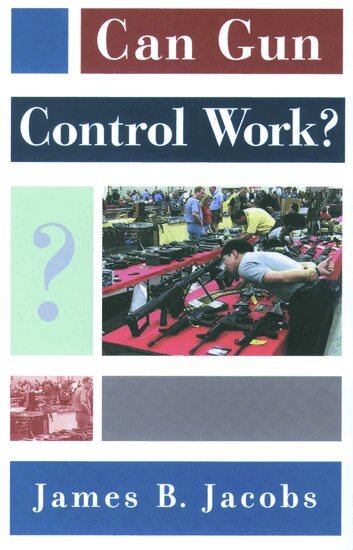
Häftad, Engelska, 2004
614 kr
Skickas inom 5-8 vardagar
Few schisms in American life run as deep or as wide as the divide between gun rights and gun control advocates. Awash in sound and symbol, the gun regulation debate has largely been defined by forceful rhetoric rather than substantive action. Politicians shroud themselves in talk of individual rights or public safety while lobbyists on both sides make doom-and-gloom pronouncements on the consequences of potential shifts in the status quo.In America today there are between 250 and 300 million firearms in private hands, amounting to one weapon for every American. Two in five American homes house guns. On the one hand, most gun owners are law-abiding citizens who believe they have a constitutional right to bear arms. On the other, a great many people believe gun control to be our best chance at reducing violent crime. While few--whether gun owner or anti-gun advocate--dispute the need to keep guns out of the wrong hands, the most important question has too often been dodged: What gun control options does the most heavily armed democracy in the world have? Can gun control really work?The last decade has seen several watersheds in the debate, none more important than the 1993 Brady Bill. That bill, James B. Jacobs argues, was the culmination of a strategy in place since the 1930s to permit widespread private ownership of guns while curtailing illegal use. But where do we go from here? While the Brady background check is easily circumvented, any further attempts to extend gun control--for instance, through comprehensive licensing of all gun owners and registration of all guns--would pose monumental administrative burdens. Jacobs moves beyond easy slogans and broad-brush ideology to examine the on-the-ground practicalities of gun control, from mandatory safety locks to outright prohibition and disarmament. Casting aside ideology and abstractions, he cautions against the belief that there exists some gun control solution which, had we the political will to seize it, would substantially reduce violent crime.In Can Gun Control Work?, James B. Jacobs, one of our most fearless commentators on intractable social problems, has given us the most sober and even-handed assessment of whether gun control can really be made to work.
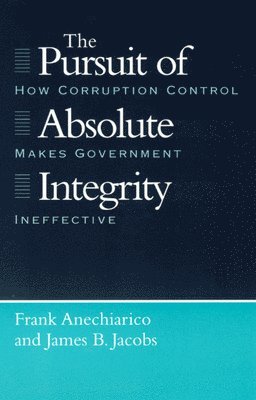
Inbunden, Engelska, 1996
807 kr
Skickas inom 5-8 vardagar
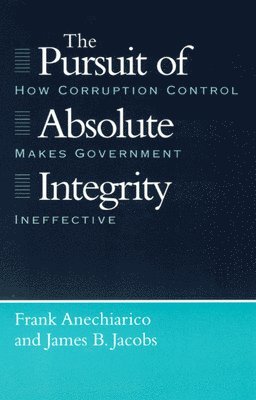
Anticorruption reforms provide political cover for public officials, but do they really work? This text seeks to show how the proliferating regulations and oversight mechanisms designed to prevent or root out corruption seriously undermine the ability to govern. Over the last century, the authors argue, society has become enmeshed in alternating cycles of corruption and reform. Governments attribute the absence of scandal to existing regulations, and see their reoccurrence as proof of the need of additional laws. Using the anticorruption efforts in New York City to illustrate their argument, the authors seeks to deomonstrate the costly inefficiencies of pursuing absolute integrity. They assert that by constraining decision makers' discretion, shaping priorities, and causing delays, corruption control - no less than corruption itself - has contributed to the contemporary crisis in public administration.
Häftad, Engelska, 1998
241 kr
Skickas inom 5-8 vardagar
Anticorruption reforms provide political cover for public officials, but do they really work? This text seeks to show how the proliferating regulations and oversight mechanisms designed to prevent or root out corruption seriously undermine the ability to govern. Over the last century, the authors argue, society has become enmeshed in alternating cycles of corruption and reform. Governments attribute the absence of scandal to existing regulations, and see their reoccurrence as proof of the need of additional laws. Using the anti-corruption efforts in New York City to illustrate their argument, the authors seeks to deomonstrate the costly inefficiencies of pursuing absolute integrity. They assert that by constraining decision makers' discretion, shaping priorities, and causing delays, corruption control - no less than corruption itself - has contributed to the contemporary crisis in public administration.
Häftad, Engelska, 1978
306 kr
Skickas inom 5-8 vardagar
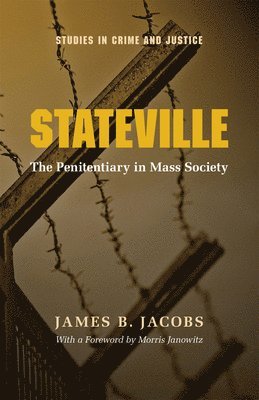
Stateville penitentiary in Illinois has housed some of Chicago's most infamous criminals and was proclaimed to be "the world's toughest prison" by Joseph Ragen, Stateville's powerful warden from 1936 to 1961. It shares with Attica, San Quentin, and Jackson the notoriety of being one of the maximum security prisons that has shaped the public's conception of imprisonment. In Stateville James B. Jacobs, a sociologist and legal scholar, presents the first historical examination of a total prison organization—administrators, guards, prisoners, and special interest groups. Jacobs applies Edward Shils's interpretation of the dynamics of mass society in order to explain the dramatic events of the past quarter century that have permanently altered Stateville's structure. With the extension of civil rights to previously marginal groups such as racial minorities, the poor, and, ultimately, the incarcerated, prisons have moved from society's periphery toward its center. Accordingly Stateville's control mechanisms became less authoritarian and more legalistic and bureaucratic. As prisoners' rights increased, the preogatives of the staff were sharply curtailed. By the early 1970s the administration proved incapable of dealing with politicized gangs, proliferating interest groups, unionized guards, and interventionist courts. In addition to extensive archival research, Jacobs spent many months freely interacting with the prisoners, guards, and administrators at Stateville. His lucid presentation of Stateville's troubled history will provide fascinating reading for a wide audience of concerned readers. ". . . [an] impressive study of a complex social system."—Isidore Silver, Library Journal
Häftad, Engelska, 1992
259 kr
Skickas inom 5-8 vardagar
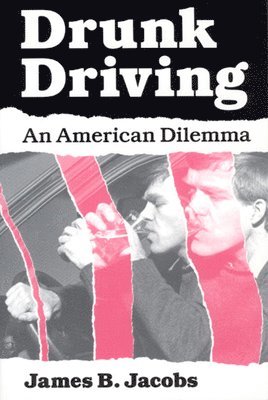
In this ambitious interdisciplinary study, James B. Jacobs provides the first comprehensive review and analysis of America's drunk driving problem and of America's anti-drunk driving policies and jurisprudence. In a clear and accessible style, he considers what has been learned, what is being done, and what constitutional limits exist to the control and enforcement of drunk driving.
Inbunden, Engelska, 2015
407 kr
Skickas inom 10-15 vardagar
For over sixty million Americans, possessing a criminal record overshadows everything else about their public identity. A rap sheet, or even a court appearance or background report that reveals a run-in with the law, can have fateful consequences for a person’s interactions with just about everyone else. The Eternal Criminal Record makes transparent a pervasive system of police databases and identity screening that has become a routine feature of American life.The United States is unique in making criminal information easy to obtain by employers, landlords, neighbors, even cyberstalkers. Its nationally integrated rap-sheet system is second to none as an effective law enforcement tool, but it has also facilitated the transfer of ever more sensitive information into the public domain. While there are good reasons for a person’s criminal past to be public knowledge, records of arrests that fail to result in convictions are of questionable benefit. Simply by placing someone under arrest, a police officer has the power to tag a person with a legal history that effectively incriminates him or her for life.In James Jacobs’s view, law-abiding citizens have a right to know when individuals in their community or workplace represent a potential threat. But convicted persons have rights, too. Jacobs closely examines the problems created by erroneous record keeping, critiques the way the records of individuals who go years without a new conviction are expunged, and proposes strategies for eliminating discrimination based on criminal history, such as certifying the records of those who have demonstrated their rehabilitation.
Inbunden, Engelska, 1994
1 168 kr
Skickas inom 10-15 vardagar
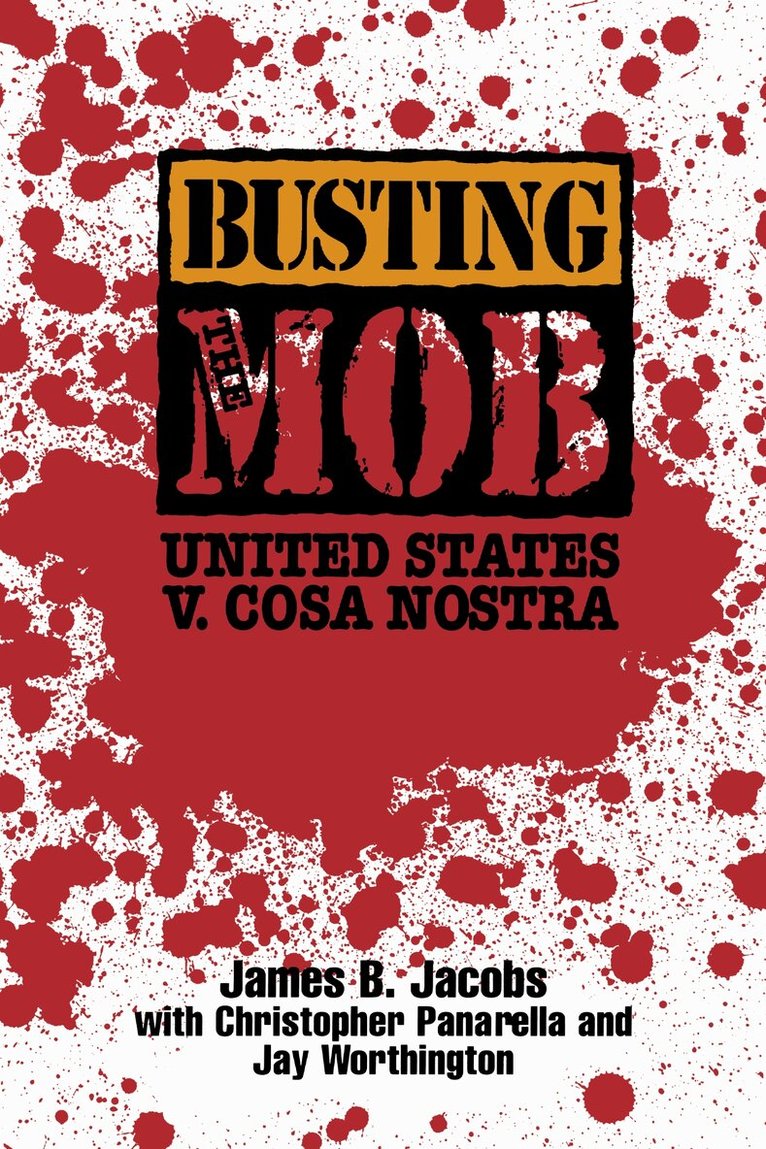
An examination of the forces and events that led to the most successful organized crime control initiatives in American historySince Prohibition, the Mafia has captivated the media and, indeed, the American imagination. From Al Capone to John Gotti, organized crime bosses have achieved notoriety as anti- heroes in popular culture. In practice, organized crime grew strong and wealthy by supplying illicit goods and services and by obtaining control over labor unions and key industries.Despite, or perhaps because of, its power and high profile, Cosa Nostra faced little opposition from law enforcement. Yet, in the last 15 years, the very foundations of the mob have been shaken, its bosses imprisoned, its profits diminished, and its influence badly weakened.In this vivid and dramatic book, James B. Jacobs, Christopher Panarella, and Jay Worthington document the government's relentless attack on organized crime. The authors present an overview of the forces and events that led in the 1980s to the most successful organized crime control initiatives in American history. Enlisting trial testimony, secretly taped conversations, court documents, and depositions, they document five landmark cases, representing the most important organized crime prosecutions of the modern era—Teamsters Local 560, The Pizza Connection, The Commission, the International Teamsters, and the prosecution of John Gotti.
Häftad, Engelska, 1996
407 kr
Skickas inom 5-8 vardagar
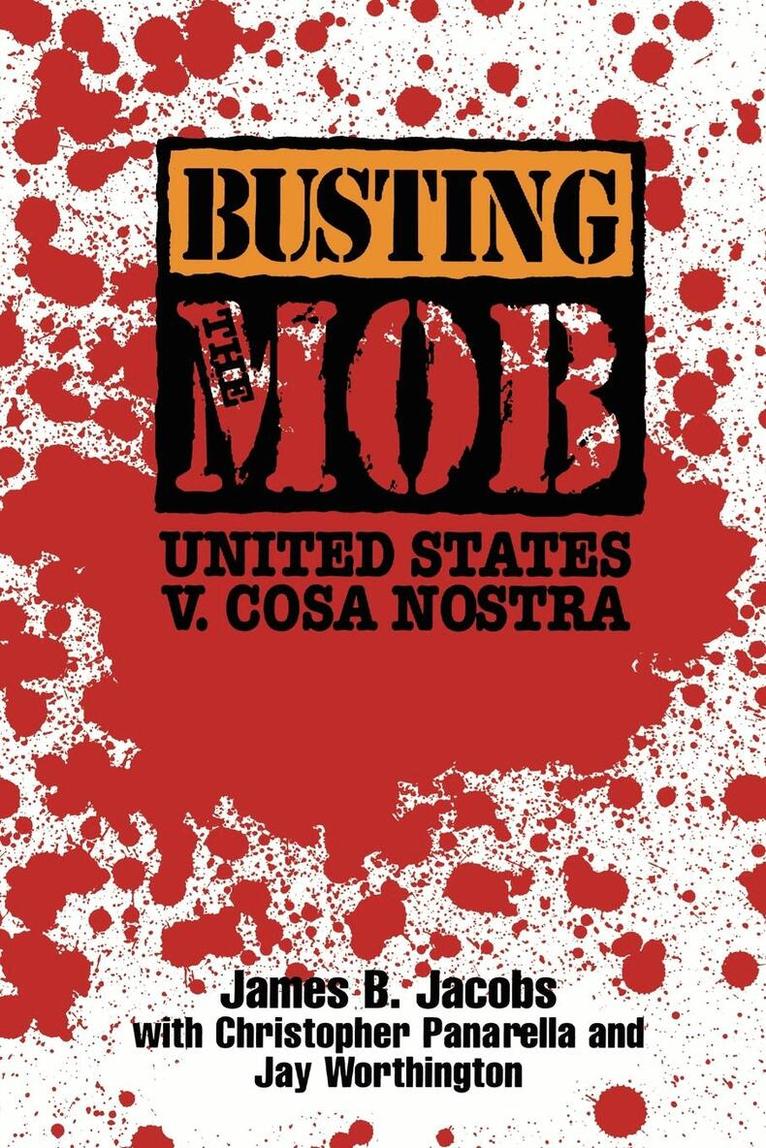
An examination of the forces and events that led to the most successful organized crime control initiatives in American historySince Prohibition, the Mafia has captivated the media and, indeed, the American imagination. From Al Capone to John Gotti, organized crime bosses have achieved notoriety as anti- heroes in popular culture. In practice, organized crime grew strong and wealthy by supplying illicit goods and services and by obtaining control over labor unions and key industries.Despite, or perhaps because of, its power and high profile, Cosa Nostra faced little opposition from law enforcement. Yet, in the last 15 years, the very foundations of the mob have been shaken, its bosses imprisoned, its profits diminished, and its influence badly weakened.In this vivid and dramatic book, James B. Jacobs, Christopher Panarella, and Jay Worthington document the government's relentless attack on organized crime. The authors present an overview of the forces and events that led in the 1980s to the most successful organized crime control initiatives in American history. Enlisting trial testimony, secretly taped conversations, court documents, and depositions, they document five landmark cases, representing the most important organized crime prosecutions of the modern era—Teamsters Local 560, The Pizza Connection, The Commission, the International Teamsters, and the prosecution of John Gotti.
Inbunden, Engelska, 1999
927 kr
Skickas inom 10-15 vardagar
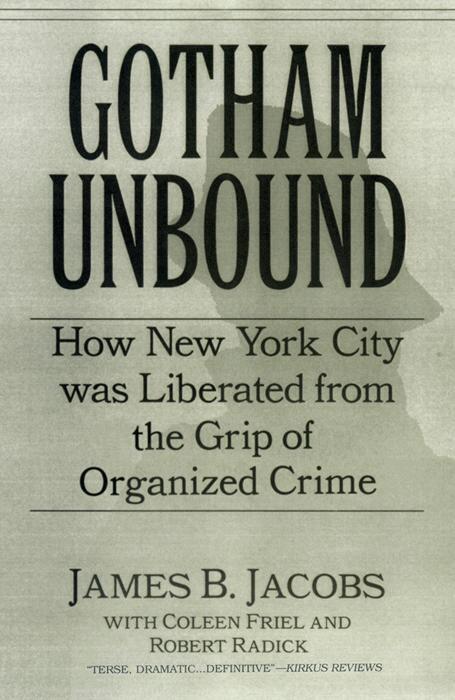
Through an investigation of Cosa Nostra's activities, reveals the role of organized crime in the urban power structureCosa Nostra. Organized crime. The Mob. Call it what you like, no other crime group has infiltrated labor unions and manipulated legitimate industries like Italian organized crime families. One cannot understand the history and political economy of New York City-or most other major American cities-in the 20th century without focusing on the role of organized crime in the urban power structure.Gotham Unbound demonstrates the remarkable range of Cosa Nostra's activities and influence and convincingly argues that 20th century organized crime has been no minor annoyance at the periphery of society but a major force in the core economy, acting as a power broker, even as an alternative government in many sectors of the urban economy. James B. Jacobs presents the first comprehensive account of the ways in which the Cosa Nostra infiltrated key sectors of New York City's legitimate economic life and how this came over the years to be accepted as inevitable, in some cases even beneficial. The first half of Gotham Unbound is devoted to the ways organized crime became entrenched in six economic sectors and institutions of the city-the garment district, Fulton Fish Market, freight at JFK airport, construction, the Jacob Javits Convention Center, and the waste-hauling industry. The second half compellingly documents the campaign to purge the mob from unions, industries, and economic sectors, focusing on the unrelenting law enforcement efforts and the central role of Rudolph Giuliani's mayoral administration in devising innovative regulatory strategies to combat the mob.
Häftad, Engelska, 2001
407 kr
Skickas inom 5-8 vardagar
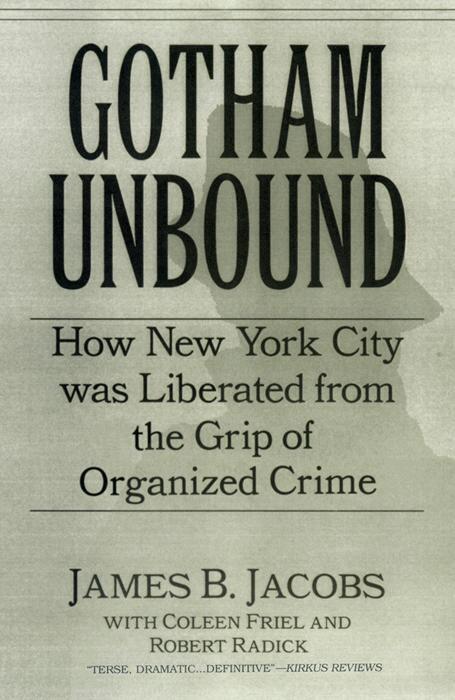
Through an investigation of Cosa Nostra's activities, reveals the role of organized crime in the urban power structureCosa Nostra. Organized crime. The Mob. Call it what you like, no other crime group has infiltrated labor unions and manipulated legitimate industries like Italian organized crime families. One cannot understand the history and political economy of New York City-or most other major American cities-in the 20th century without focusing on the role of organized crime in the urban power structure.Gotham Unbound demonstrates the remarkable range of Cosa Nostra's activities and influence and convincingly argues that 20th century organized crime has been no minor annoyance at the periphery of society but a major force in the core economy, acting as a power broker, even as an alternative government in many sectors of the urban economy. James B. Jacobs presents the first comprehensive account of the ways in which the Cosa Nostra infiltrated key sectors of New York City's legitimate economic life and how this came over the years to be accepted as inevitable, in some cases even beneficial. The first half of Gotham Unbound is devoted to the ways organized crime became entrenched in six economic sectors and institutions of the city-the garment district, Fulton Fish Market, freight at JFK airport, construction, the Jacob Javits Convention Center, and the waste-hauling industry. The second half compellingly documents the campaign to purge the mob from unions, industries, and economic sectors, focusing on the unrelenting law enforcement efforts and the central role of Rudolph Giuliani's mayoral administration in devising innovative regulatory strategies to combat the mob.
Inbunden, Engelska, 2006
859 kr
Skickas inom 10-15 vardagar
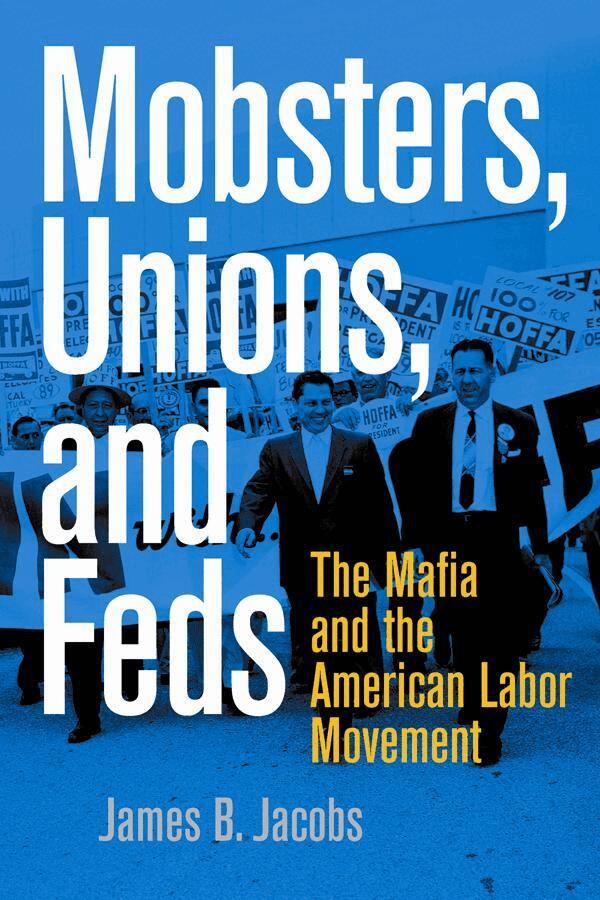
The first book to document organized crime's exploitation of organized labor and the massive federal cleanup effortNowhere in the world has organized crime infiltrated the labor movement as effectively as in the United States. Yet the government, the AFL-CIO, and the civil liberties community all but ignored the situation for most of the twentieth century. Since 1975, however, the FBI, Department of Justice, and the federal judiciary have relentlessly battled against labor racketeering, even in some of the nation's most powerful unions.Mobsters, Unions, and Feds is the first book to document organized crime's exploitation of organized labor and the massive federal cleanup effort. A renowned criminologist who for twenty years has been assessing the government's attack on the Mafia, James B. Jacobs explains how Cosa Nostra families first gained a foothold in the labor movement, then consolidated their power through patronage, fraud, and violence and finally used this power to become part of the political and economic power structure of Twentieth century urban America.Since FBI Director J. Edgar Hoover's death in 1972, federal law enforcement has aggressively investigated and prosecuted labor racketeers, as well as utilized the civil remedies provided for by the Racketeer Influenced and Corrupt Organization (RICO) statute to impose long-term court-supervised remedial trusteeships on mobbed-up unions. There have been some impressive victories, including substantial progress toward liberating the four most racketeer-ridden national unions from the grip of organized crime, but victory cannot yet be claimed.The only book to investigate how the mob has exploited the American labor movement, Mobsters, Unions, and Feds is the most comprehensive study to date of how labor racketeering evolved and how the government has finally resolved to eradicate it.
Häftad, Engelska, 2007
407 kr
Skickas inom 5-8 vardagar
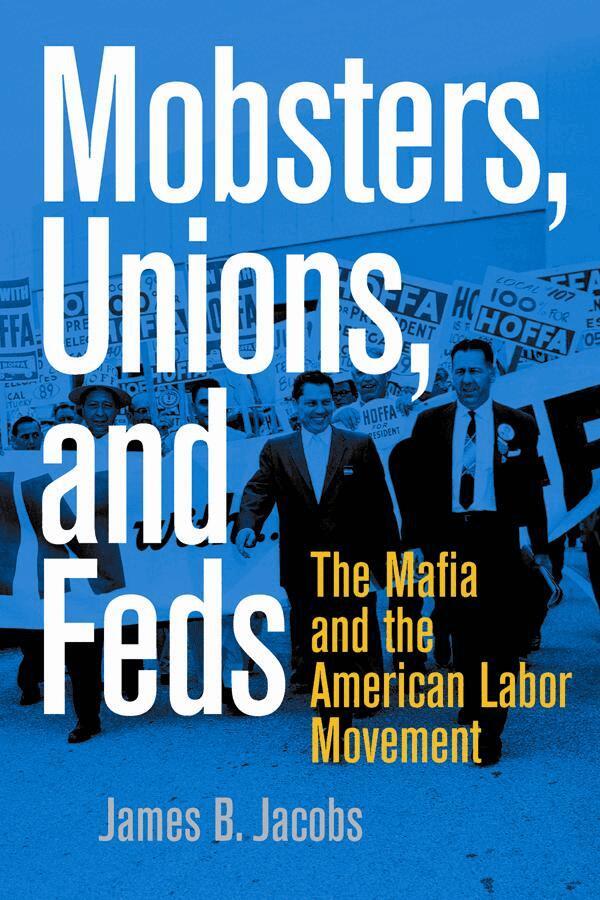
The first book to document organized crime's exploitation of organized labor and the massive federal cleanup effortNowhere in the world has organized crime infiltrated the labor movement as effectively as in the United States. Yet the government, the AFL-CIO, and the civil liberties community all but ignored the situation for most of the twentieth century. Since 1975, however, the FBI, Department of Justice, and the federal judiciary have relentlessly battled against labor racketeering, even in some of the nation's most powerful unions.Mobsters, Unions, and Feds is the first book to document organized crime's exploitation of organized labor and the massive federal cleanup effort. A renowned criminologist who for twenty years has been assessing the government's attack on the Mafia, James B. Jacobs explains how Cosa Nostra families first gained a foothold in the labor movement, then consolidated their power through patronage, fraud, and violence and finally used this power to become part of the political and economic power structure of Twentieth century urban America.Since FBI Director J. Edgar Hoover's death in 1972, federal law enforcement has aggressively investigated and prosecuted labor racketeers, as well as utilized the civil remedies provided for by the Racketeer Influenced and Corrupt Organization (RICO) statute to impose long-term court-supervised remedial trusteeships on mobbed-up unions. There have been some impressive victories, including substantial progress toward liberating the four most racketeer-ridden national unions from the grip of organized crime, but victory cannot yet be claimed.The only book to investigate how the mob has exploited the American labor movement, Mobsters, Unions, and Feds is the most comprehensive study to date of how labor racketeering evolved and how the government has finally resolved to eradicate it.
Inbunden, Engelska, 2011
841 kr
Skickas inom 10-15 vardagar
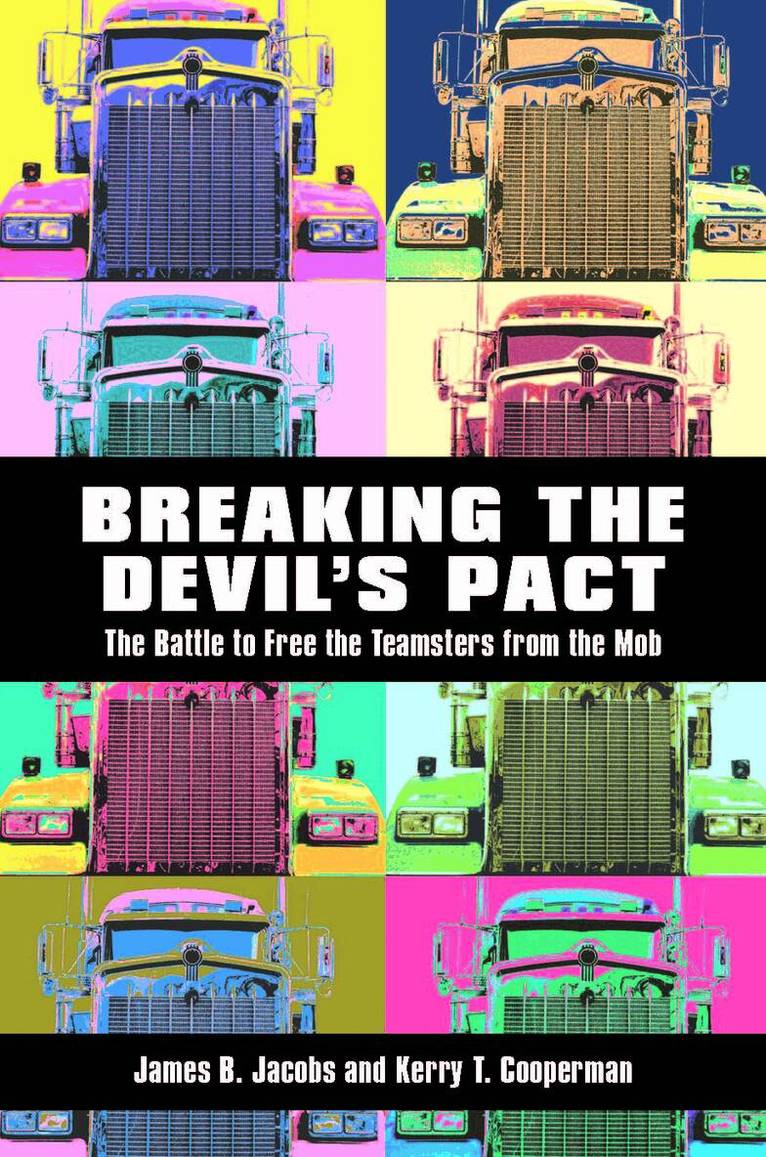
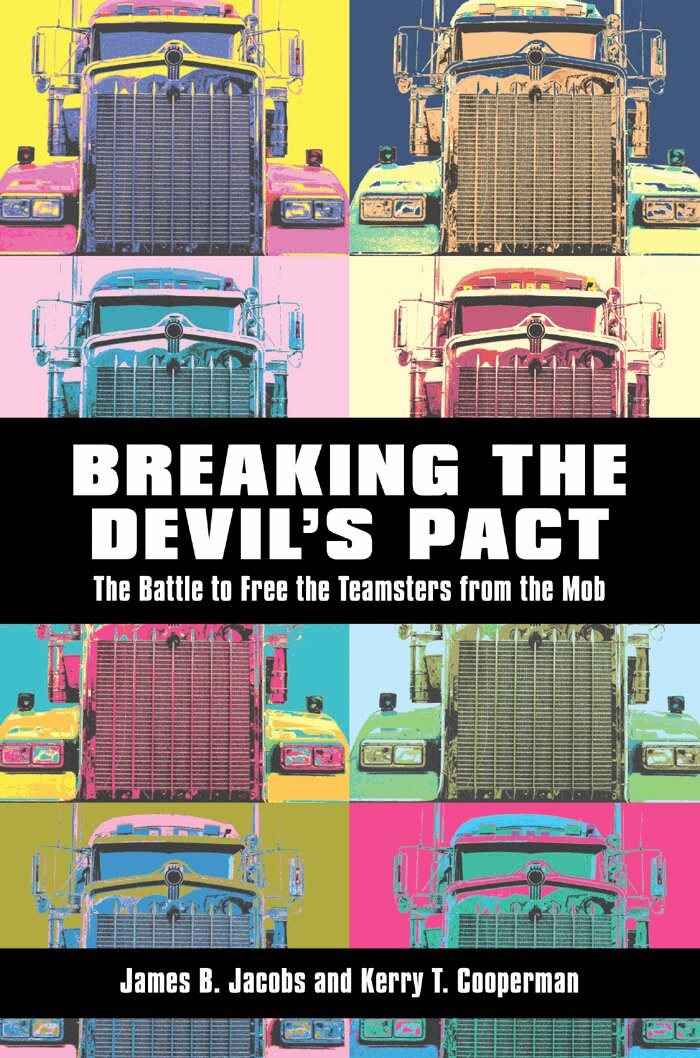
An in-depth study of the U.S. v. the International Brotherhood of TeamstersIn 1988, Manhattan U.S. Attorney Rudy Giuliani brought a massive civil racketeering suit against the leadership of the International Brotherhood of Teamsters (IBT), at the time possibly the most corrupt union in the world. The lawsuit charged that the mafia had operated the IBT as a racketeering enterprise for decades, systematically violating the rights of members and furthering the interests of organized crime. On the eve of trial, the parties settled the case, and twenty years later, the trustees are still on the job. Breaking the Devil's Pact is an in-depth study of the U.S. v. IBT, beginning with Giuliani's lawsuit and the politics surrounding it, and continuing with an incisive analysis of the controversial nature of the ongoing trusteeship. James B. Jacobs and Kerry T. Cooperman address the larger question of the limits of legal reform in the American labor movement and the appropriate level of government involvement.
Häftad, Engelska, 2023
255 kr
Skickas inom 10-15 vardagar
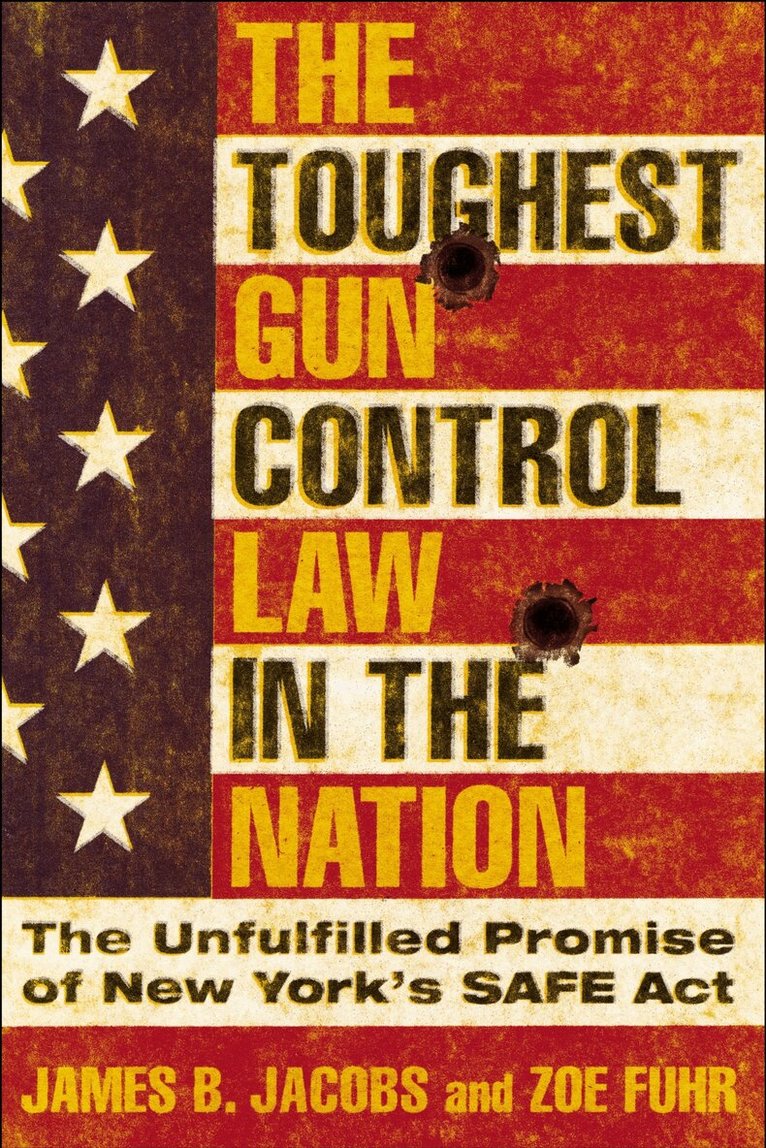
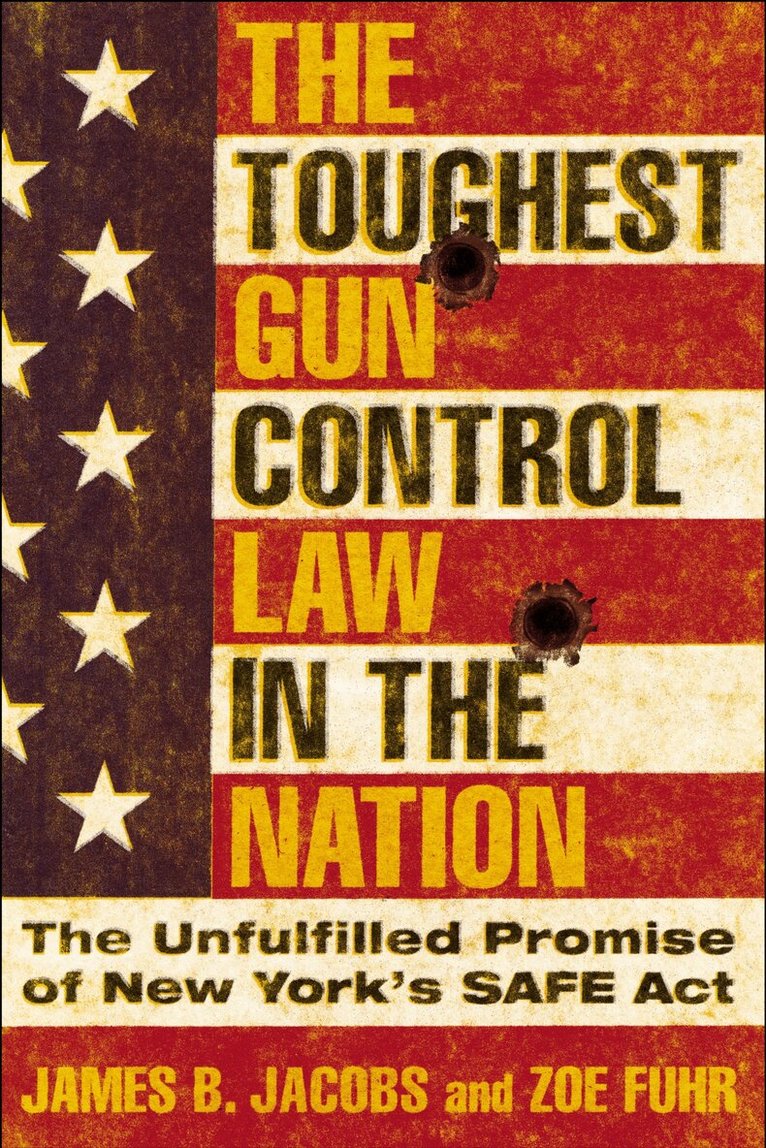
A comprehensive assessment of real gun reform legislation with recommendations for better design, implementation and enforcementA month after the Sandy Hook Elementary School shooting, New York State passed, with record speed, the first and most comprehensive state post-Sandy Hook gun control law. In The Toughest Gun Control Law in the Nation, James B. Jacobs and Zoe Fuhr ask whether the 2013 SAFE Act — hailed by Governor Andrew Cuomo as "the nation's toughest gun control law" – has lived up to its promise. Jacobs and Fuhr illuminate the gap between gun control on the books and gun control in action. They argue that, to be effective, gun controls must be capable of implementation and enforcement. This requires realistic design, administrative and enforcement capacity and commitment and ongoing political and fiscal support. They show that while the SAFE Act was good symbolic politics, most of its provisions were not effectively implemented or, if implemented, not enforced. Gun control in a society awash with guns poses an immense regulatory challenge. The Toughest Gun Control Law in the Nation takes a tough-minded look at the technological, administrative, fiscal and local political impediments to effectively keeping guns out of the hands of dangerous persons and eliminating some types of guns altogether.
Inbunden, Engelska, 2019
318 kr
Skickas inom 10-15 vardagar
A comprehensive assessment of real gun reform legislation with recommendations for better design, implementation and enforcementA month after the Sandy Hook Elementary School shooting, New York State passed, with record speed, the first and most comprehensive state post-Sandy Hook gun control law. In The Toughest Gun Control Law in the Nation, James B. Jacobs and Zoe Fuhr ask whether the 2013 SAFE Act — hailed by Governor Andrew Cuomo as "the nation's toughest gun control law" – has lived up to its promise. Jacobs and Fuhr illuminate the gap between gun control on the books and gun control in action. They argue that, to be effective, gun controls must be capable of implementation and enforcement. This requires realistic design, administrative and enforcement capacity and commitment and ongoing political and fiscal support. They show that while the SAFE Act was good symbolic politics, most of its provisions were not effectively implemented or, if implemented, not enforced. Gun control in a society awash with guns poses an immense regulatory challenge. The Toughest Gun Control Law in the Nation takes a tough-minded look at the technological, administrative, fiscal and local political impediments to effectively keeping guns out of the hands of dangerous persons and eliminating some types of guns altogether.
Häftad, Engelska, 2013
378 kr
Skickas inom 5-8 vardagar
An in-depth study of the U.S. v. the International Brotherhood of TeamstersIn 1988, Manhattan U.S. Attorney Rudy Giuliani brought a massive civil racketeering suit against the leadership of the International Brotherhood of Teamsters (IBT), at the time possibly the most corrupt union in the world. The lawsuit charged that the mafia had operated the IBT as a racketeering enterprise for decades, systematically violating the rights of members and furthering the interests of organized crime. On the eve of trial, the parties settled the case, and twenty years later, the trustees are still on the job. Breaking the Devil's Pact is an in-depth study of the U.S. v. IBT, beginning with Giuliani's lawsuit and the politics surrounding it, and continuing with an incisive analysis of the controversial nature of the ongoing trusteeship. James B. Jacobs and Kerry T. Cooperman address the larger question of the limits of legal reform in the American labor movement and the appropriate level of government involvement.