
Jan M. Rabaey – författare
Visar alla böcker från författaren Jan M. Rabaey. Handla med fri frakt och snabb leverans.
11 produkter
11 produkter
Inbunden, Engelska, 1996
1 602 kr
Skickas inom 10-15 vardagar
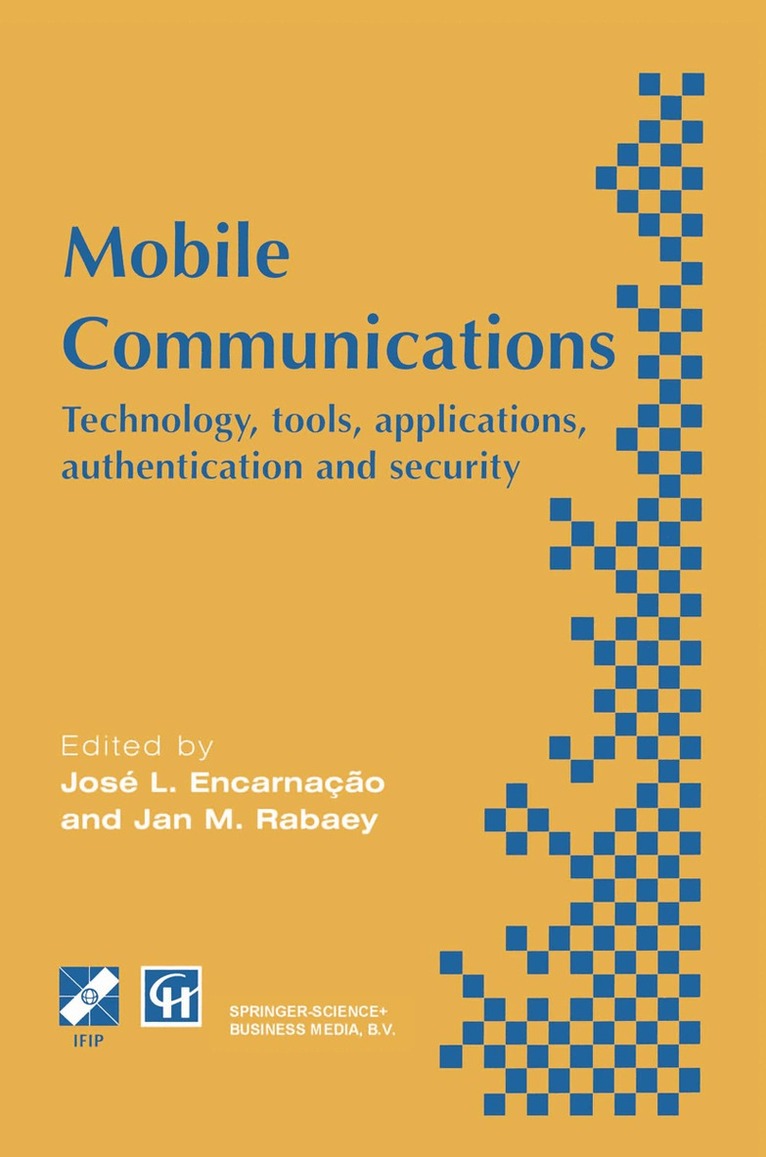
Mobile computing is one of the biggest issues of computer technology, science and industry today. This text looks at the requirements of developing mobile computing systems and the challenges they pose to computer designers. It examines the requirements of mobile computing hardware, infrastructure and communications services. Information security and the data protection aspects of design are considered, together with telecommunications facilities for linking up to the worldwide computer infrastructure. The book considers the mobility of computer users versus the portability of the equipment, and also examines current applications of mobile computing in the public sector, and future innovative applications.
Inbunden, Engelska, 2001
1 070 kr
Skickas inom 10-15 vardagar
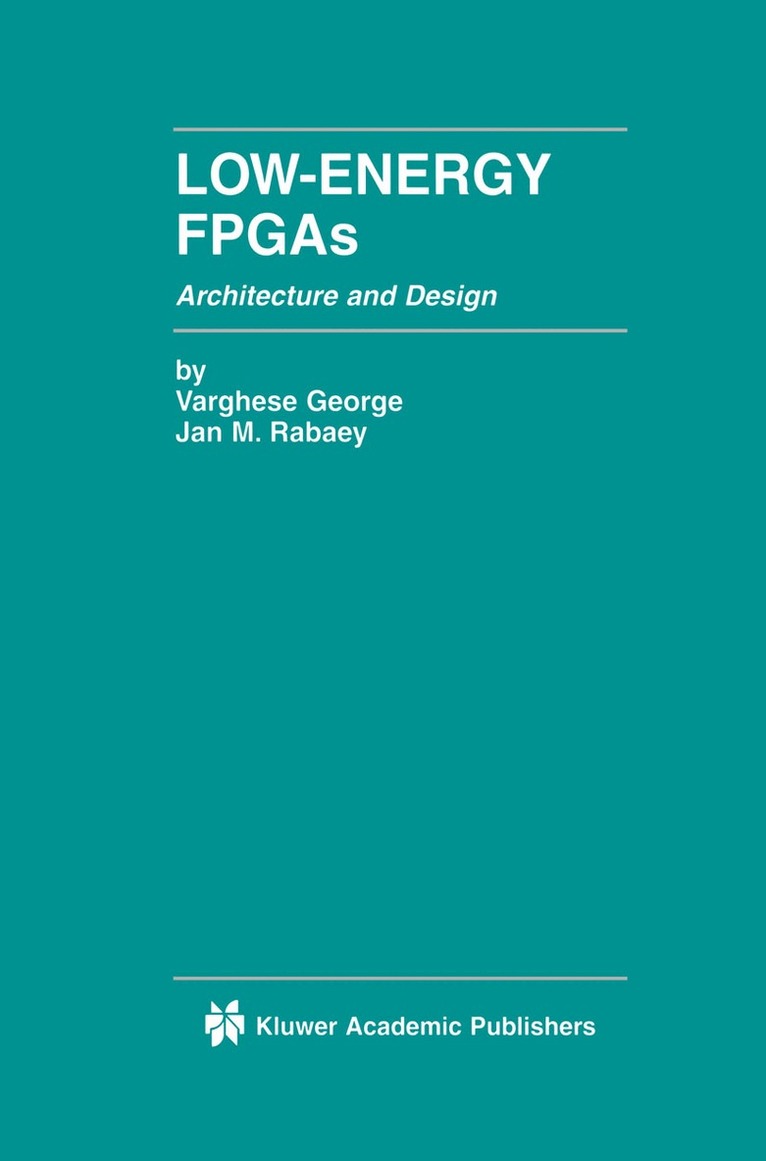
Low-Energy FPGAs: Architecture and Design is a primary resource for both researchers and practicing engineers in the field of digital circuit design. The book addresses the energy consumption of Field-Programmable Gate Arrays (FPGAs). FPGAs are becoming popular as embedded components in computing platforms. The programmability of the FPGA can be used to customize implementations of functions on an application basis. This leads to performance gains, and enables reuse of expensive silicon. Chapter 1 provides an overview of digital circuit design and FPGAs. Chapter 2 looks at the implication of deep-submicron technology on FPGA power dissipation. Chapter 3 describes the exploration environment to guide and evaluate design decisions. Chapter 4 discusses the architectural optimization process to evaluate the trade-offs between the flexibility of the architecture, and the effect on the performance metrics. Chapter 5 reviews different circuit techniques to reduce the performance overhead of some of the dominant components. Chapter 6 shows methods to configure FPGAs to minimize the programming overhead.Chapter 7 addresses the physical realization of some of the critical components and the final implementation of a specific low-energy FPGA. Chapter 8 compares the prototype array to an equivalent commercial architecture.
Del 336 - Springer International Series in Engineering and Computer Science
Low Power Design Methodologies
Inbunden, Engelska, 1995
1 602 kr
Skickas inom 10-15 vardagar
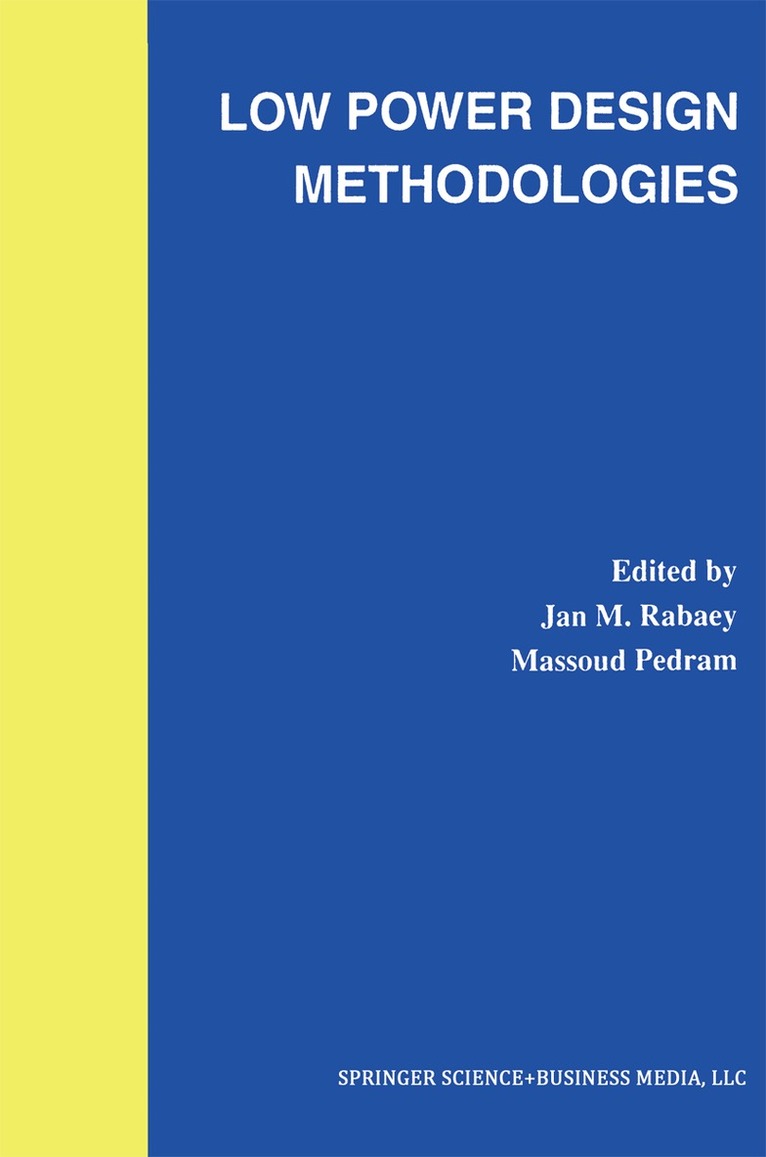
This text presents coverage of all the layers of the design hierarchy, ranging from the technology, circuit, logic and architectural levels, up to the system layer. It gives insight into the mechanisms of power dissipation in digital circuits and presents state of the art approaches to power reduction. Finally, it introduces a global view of low power design methodologies and how these are being captured in the latest design automation environments. The book should serve as a broad introduction for anyone interested in low power design. It can also be used as a text book for an advanced graduate class, or a starting point for any aspiring researcher.
Inbunden, Engelska, 2002
2 134 kr
Skickas inom 10-15 vardagar
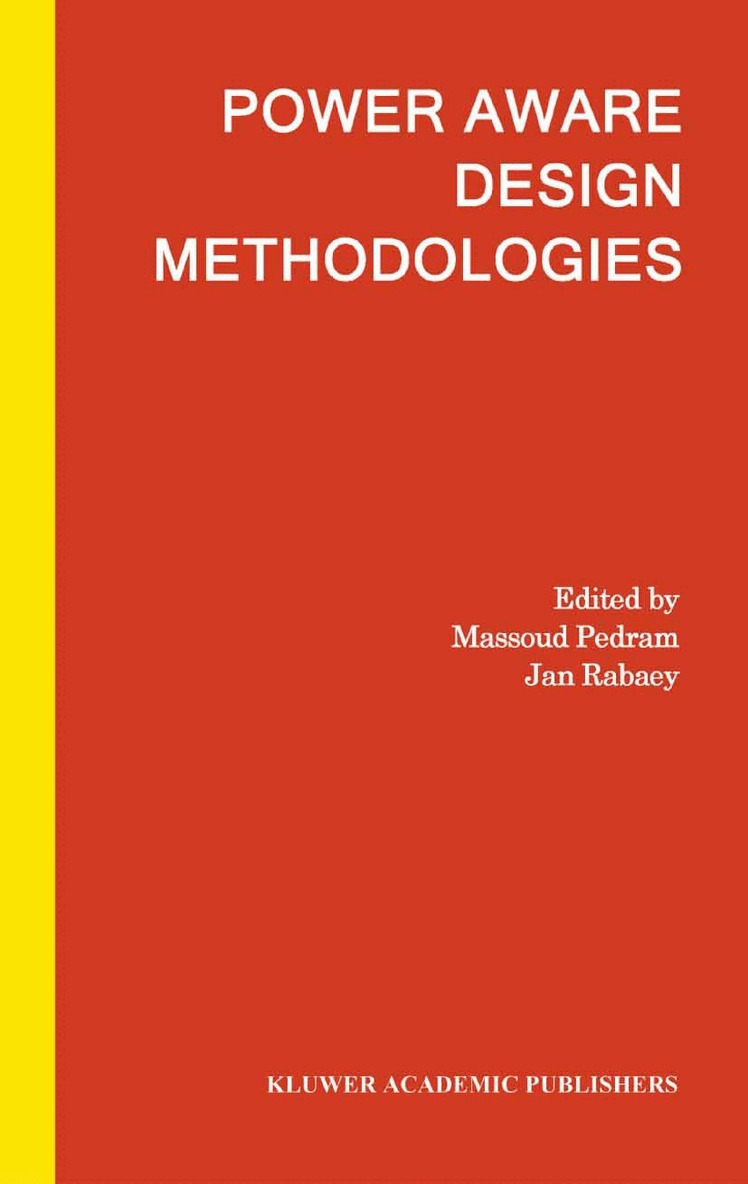
Power Aware Design Methodologies was conceived as an effort to bring all aspects of power-aware design methodologies together in a single document. It covers several layers of the design hierarchy from technology, circuit logic, and architectural levels up to the system layer. It includes discussion of techniques and methodologies for improving the power efficiency of CMOS circuits (digital and analog), systems on chip, microelectronic systems, wirelessly networked systems of computational nodes and so on. In addition to providing an in-depth analysis of the sources of power dissipation in VLSI circuits and systems and the technology and design trends, this book provides a myriad of state-of-the-art approaches to power optimization and control.The different chapters of Power Aware Design Methodologies have been written by leading researchers and experts in their respective areas. Contributions are from both academia and industry. The contributors have reported the various technologies, methodologies, and techniques in such a way that they are understandable and useful.
Inbunden, Engelska, 2003
2 134 kr
Skickas inom 10-15 vardagar
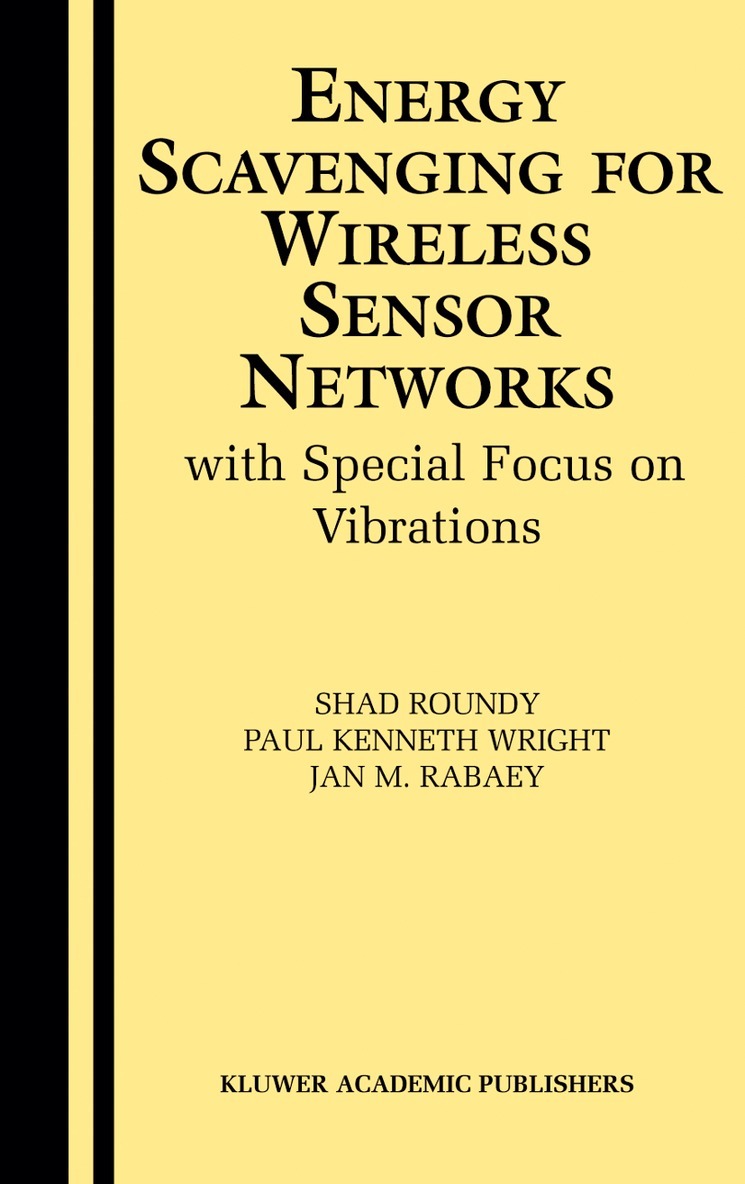
The vast reduction in size and power consumption of CMOS circuitry has led to a large research effort based around the vision of ubiquitous networks of wireless communication nodes. The wireless devices are usually designed to run on batteries. However, as the networks increase in number and the devices decrease in size, the replacement of depleted batteries is not practical. Furthermore, a battery that is large enough to last the lifetime of the device would dominate the overall system size, and thus is not very attractive. There is clearly a need to explore alternative methods of powering these small communication nodes. This book, therefore, focuses on potential "ambient" sources of power that can be scavenged or harvested and subsequently used to run low power electronics and wireless transceivers. A wide range of potential power sources are briefly explored. Based on a comparison of these many potential sources, commonly occurring vibrations was chosen as an attractive, and little explored, power source. Models for different types of power converters using both electrostatic and piezoelectric conversion mechanisms have been developed.The models have been validated by testing prototypes driven at vibrations similar to those found in many industrial and commercial building environments. Finally, integration of a piezoelectric generator, power circuit, and custom design radio transceiver is demonstrated. Power sources are becoming a bottleneck to the widespread deployment of wireless sensor networks. This work reviews many potential alternative sources of ambient power that can be scavenged. Vibration to electricity converters are explored in great detail, and based on studies and experiments, are shown to be an attractive power source in many applications.
Häftad, Engelska, 2012
2 135 kr
Skickas inom 10-15 vardagar
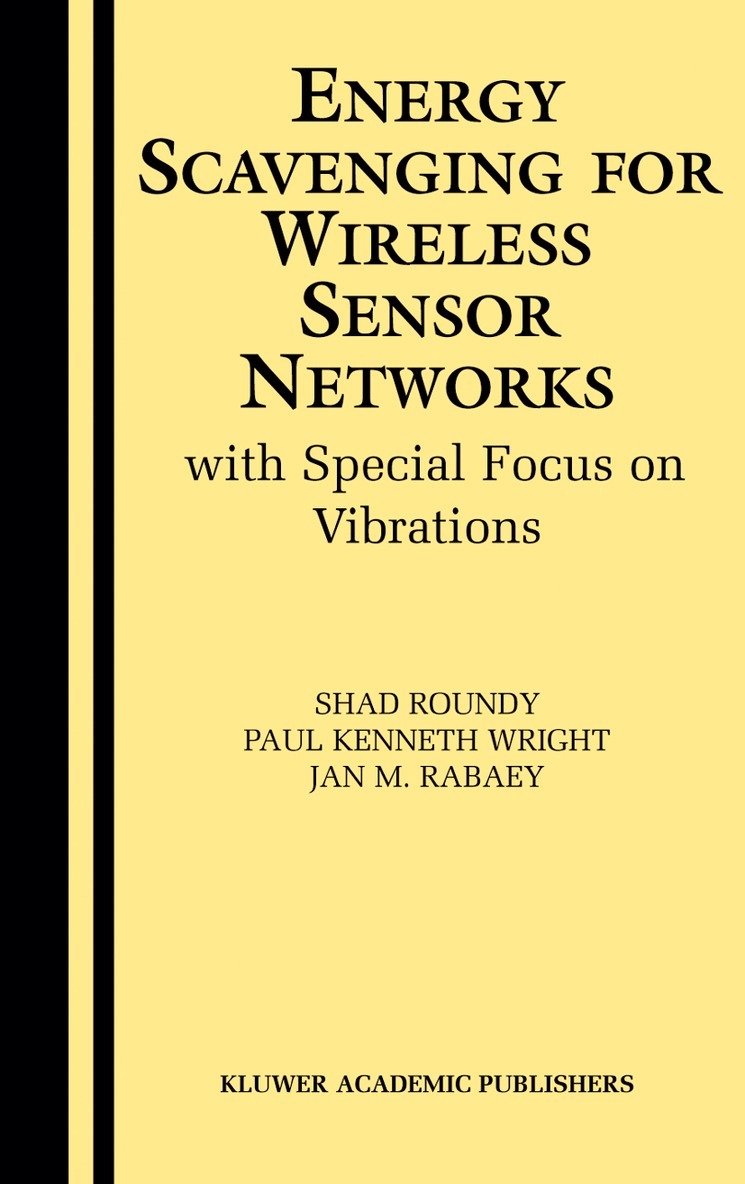
The vast reduction in size and power consumption of CMOS circuitry has led to a large research effort based around the vision of wireless sensor networks. The proposed networks will be comprised of thousands of small wireless nodes that operate in a multi-hop fashion, replacing long transmission distances with many low power, low cost wireless devices. The result will be the creation of an intelligent environment responding to its inhabitants and ambient conditions. Wireless devices currently being designed and built for use in such environments typically run on batteries. However, as the networks increase in number and the devices decrease in size, the replacement of depleted batteries will not be practical. The cost of replacing batteries in a few devices that make up a small network about once per year is modest. However, the cost of replacing thousands of devices in a single building annually, some of which are in areas difficult to access, is simply not practical. Another approach would be to use a battery that is large enough to last the entire lifetime of the wireless sensor device. However, a battery large enough to last the lifetime of the device would dominate the overall system size and cost, and thus is not very attractive. Alternative methods of powering the devices that will make up the wireless networks are desperately needed.
Häftad, Engelska, 2012
1 070 kr
Skickas inom 10-15 vardagar
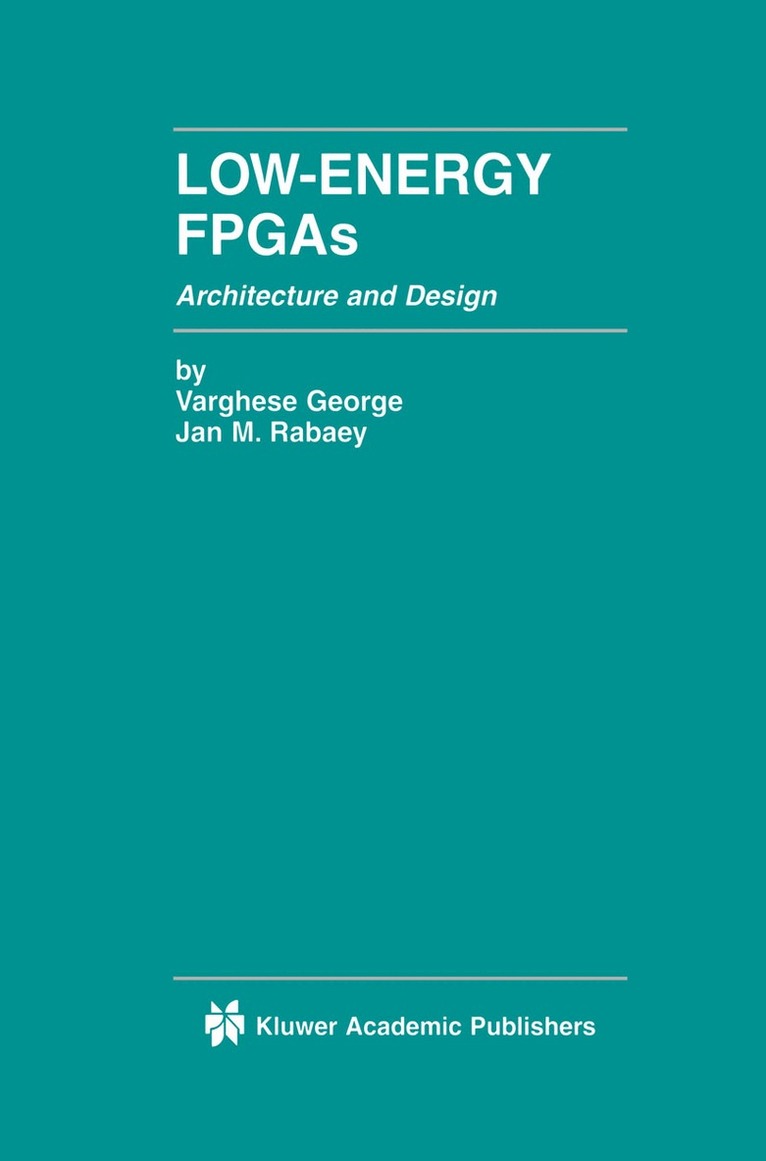
Low-Energy FPGAs: Architecture and Design is a primary resource for both researchers and practicing engineers in the field of digital circuit design. The book addresses the energy consumption of Field-Programmable Gate Arrays (FPGAs). FPGAs are becoming popular as embedded components in computing platforms. The programmability of the FPGA can be used to customize implementations of functions on an application basis. This leads to performance gains, and enables reuse of expensive silicon. Chapter 1 provides an overview of digital circuit design and FPGAs. Chapter 2 looks at the implication of deep-submicron technology onFPGA power dissipation. Chapter 3 describes the exploration environment to guide and evaluate design decisions. Chapter 4 discusses the architectural optimization process to evaluate the trade-offs between the flexibility of the architecture, and the effect on the performance metrics. Chapter 5 reviews different circuit techniques to reduce the performance overhead of some of the dominant components. Chapter 6 shows methods to configure FPGAs to minimize the programming overhead. Chapter 7 addresses the physical realization of some of the critical components and the final implementation of a specific low-energy FPGA. Chapter 8 compares the prototype array to an equivalent commercial architecture.
Del 336 - Springer International Series in Engineering and Computer Science
Low Power Design Methodologies
Häftad, Engelska, 2012
1 603 kr
Skickas inom 10-15 vardagar
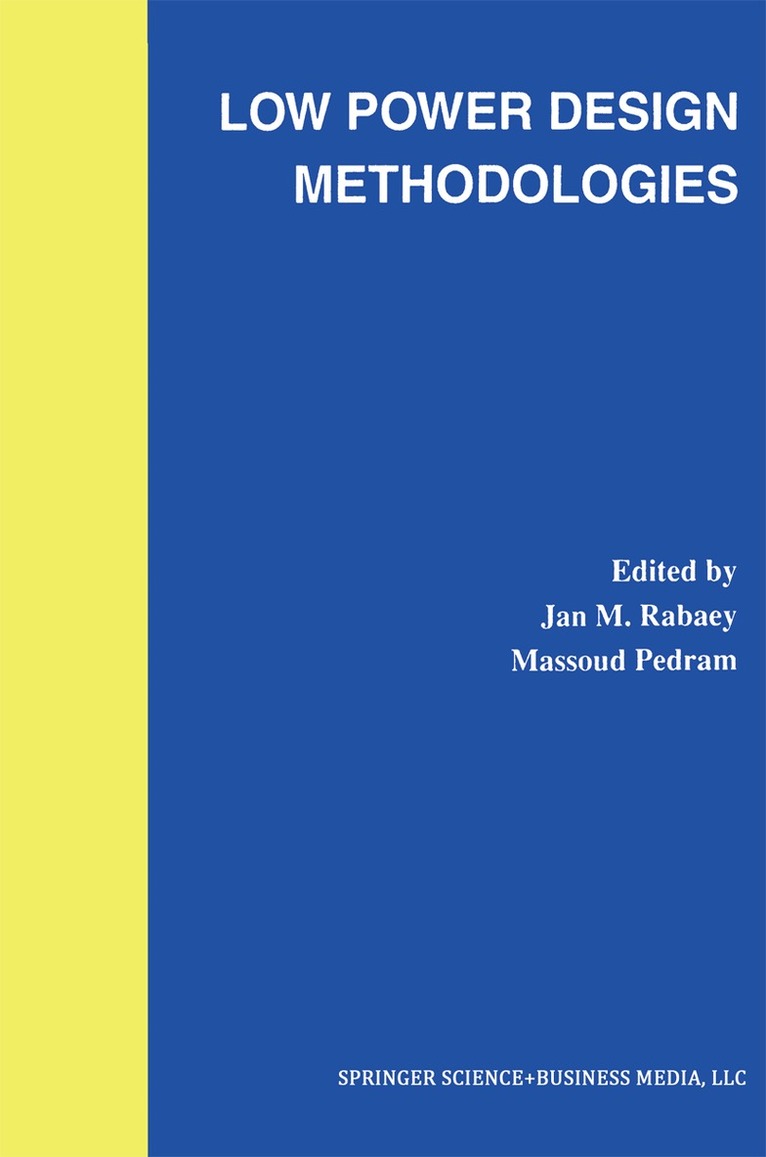
Low Power Design Methodologies presents the first in-depth coverage of all the layers of the design hierarchy, ranging from the technology, circuit, logic and architectural levels, up to the system layer.

625 kr
Skickas inom 5-8 vardagar
Häftad, Engelska, 2013
1 603 kr
Skickas inom 10-15 vardagar
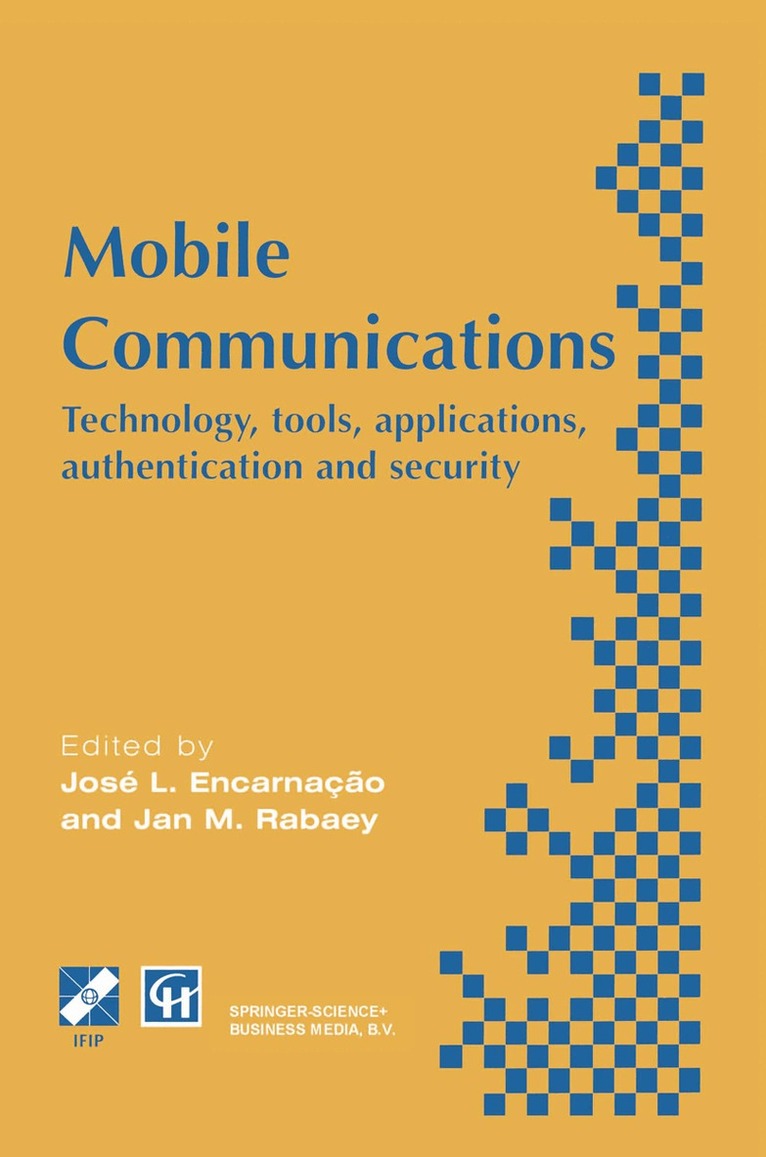
Mobile computing is one of the biggest issues of computer technology, science and industry today. This book looks at the requirements of developing mobile computing systems and the challenges they pose to computer designers.
Häftad, Engelska, 2013
2 135 kr
Skickas inom 10-15 vardagar
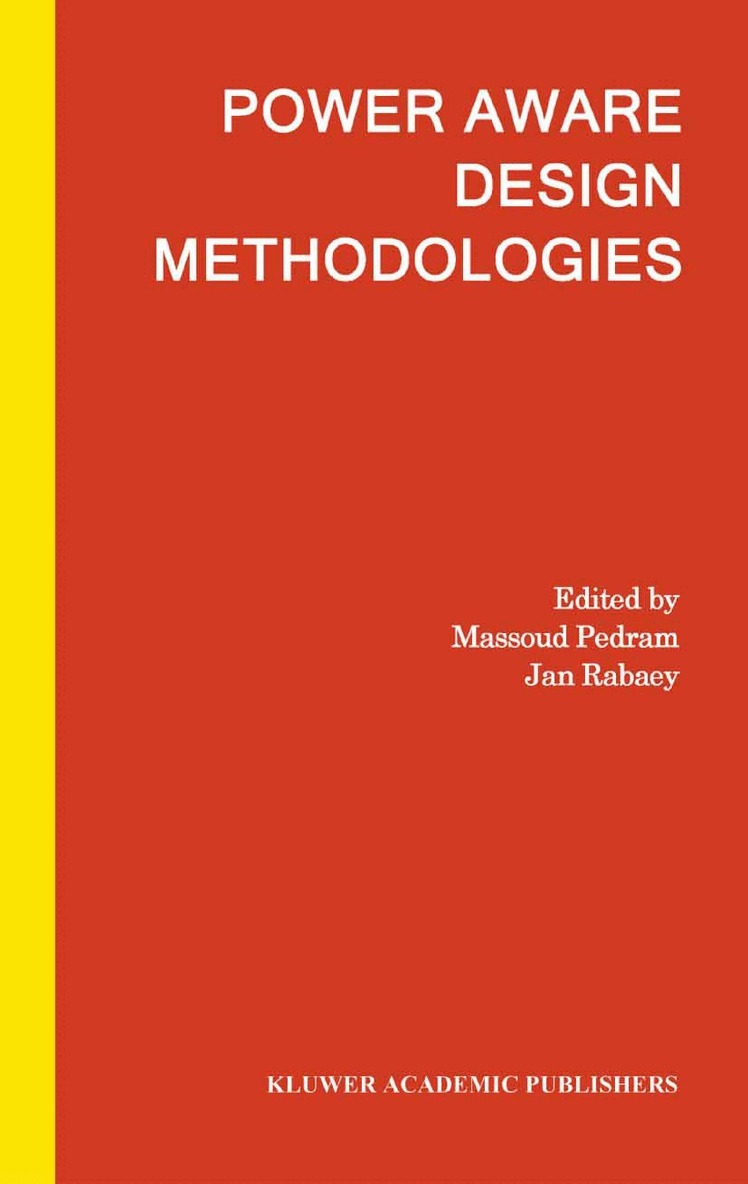
Power Aware Design Methodologies was conceived as an effort to bring all aspects of power-aware design methodologies together in a single document. It covers several layers of the design hierarchy from technology, circuit logic, and architectural levels up to the system layer. It includes discussion of techniques and methodologies for improving the power efficiency of CMOS circuits (digital and analog), systems on chip, microelectronic systems, wirelessly networked systems of computational nodes and so on. In addition to providing an in-depth analysis of the sources of power dissipation in VLSI circuits and systems and the technology and design trends, this book provides a myriad of state-of-the-art approaches to power optimization and control.The different chapters of Power Aware Design Methodologies have been written by leading researchers and experts in their respective areas. Contributions are from both academia and industry. The contributors have reported the various technologies, methodologies, and techniques in such a way that they are understandable and useful.