
John Foot – författare
Visar alla böcker från författaren John Foot. Handla med fri frakt och snabb leverans.
18 produkter
18 produkter
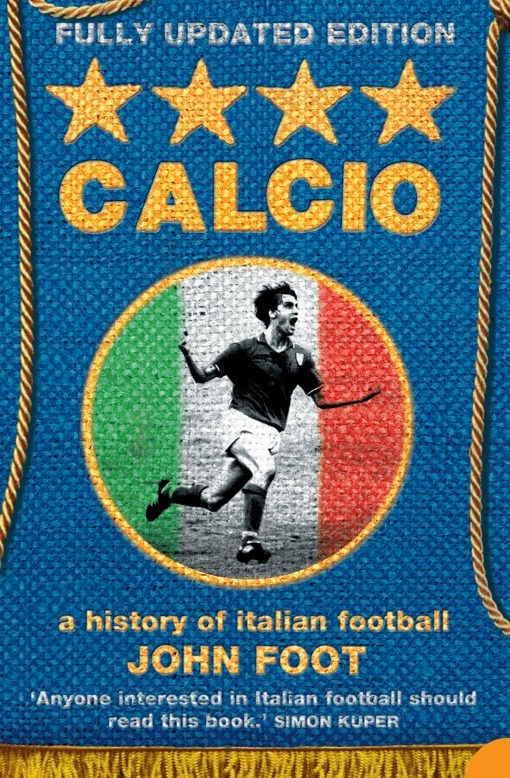
Häftad, Engelska, 2007
182 kr
Skickas
The first history of Italian football to be written in English, ‘Calcio’ is a mix of serious analysis and comic storytelling, with vivid descriptions of games, goals, dives, missed penalties, riots and scandals in the richest and toughest league in the world.‘Calcio’ tells the story of Italian football from its origins in the 1890’s to the present day. It takes us through a history of great players and teams, of style, passion and success, but also of violence, cynicism, catenaccio tactics and corruption.We meet the personalities that have shaped this history – from the Italian heroes to the foreigners that failed, the model professionals to the mavericks. ‘Calcio’ evokes the triumphs (the 1982 World Cup victory) and the tragedies (Meroni, the 'Italian George Best', killed by his number one fan), set against a backdrop of paranoia and intrigue, in a country where the referee is seen as corrupt until proven otherwise.Calcio is no longer a game. It is sometimes difficult to define it as a sport. It is certainly big business and a fanatical civic religion. There is no moral code here. Winners are always right, losers always wrong. This history of Italian football reveals all about the richest and toughest league in the world.
Inbunden, Engelska, 2025
307 kr
Skickas
*A TELEGRAPH BOOK OF THE YEAR*'A compelling and sobering read' JOHN DICKIE, author of Mafia Republic'Taut and gripping' TELEGRAPH, BEST BOOKS OF 2025'Grimly absorbing' FINANCIAL TIMESThe explosive story of the terrorist group who brought Italy to a standstill in the 1970s.In March 1978, the Red Brigades kidnapped former Italian prime minister Aldo Moro, murdering his bodyguards. For nearly two months, they held him hostage while a shocked world looked on, before eventually killing him and dumping his body in the middle of Rome.But who were this terrorist group? What did they want? And how did they continue to operate for almost twenty years, terrifying a nation from 1970 to 1988? In John Foot’s remarkable new book, we learn how they became the most formidable left-wing terrorist organisation in post-war Western Europe. Drawing their support from the student protest movements of the 1960s, activists and workers radicalised by the ‘hot autumn’ of 1969, the Red Brigades were inspired by terrorist groups from across the world, especially in Latin America. They recognised no rules and authority other than their own, and launched a campaign of murder, kidnap, kneecapping and intimidation that paralysed Italy’s justice system and reshaped the political landscape. For a time, they were admired as freedom fighters by the Italian left and commemorated as martyrs.Through meticulous research, Foot uncovers the true story behind the myths that have grown around the Red Brigades, highlighting the human costs of their actions, as well as their impact on Italian society. He explains how the contradictions inherent in their actions eventually led to their downfall in a series of high-profile mass trials. The Red Brigades sheds new light on the shadowy world of the brigatisti, and highlights their legacy of conspiracy, distrust and bitterness that still lingers in Italy to this day.
Inbunden, Engelska, 2020
1 375 kr
Skickas inom 7-10 vardagar
Franco Basaglia (1924-1980) was an Italian psychiatrist and activist who proposed the dismantling of psychiatric hospitals and pioneered new ideas about mental health and its treatment. Basaglia was also one of the principal proponents of Italy's Law 180, which effectively closed down large mental hospitals in Italy. His ideas and his disciples have had a decisive influence in the move away from institutional care in many parts of the world, particularly in continental Europe and South America. However, Basaglia is strikingly absent from the literature in Germanic and Anglophone psychiatry. Most of the literature about Basaglia in the last 40 years has been published by his followers and supporters and has often been largely positive, with little exploration of differing responses or possible limitations of his model. Basaglia's International Legacy: From Asylum to Community provides an overview of current thinking and the international influence of Franco Basaglia. This resource draws on the combined knowledge of clinicians, policy makers, historians, and social scientists, including a handful of Basaglia's collaborators. It provides an in-depth understanding and critical analysis of the various applications of his thinking worldwide. Organised into three broad sections, chapters examine Basaglia's work and influence in Italy; in the 'Basaglian' countries of Europe and South America; and in those countries where his influence has either been rejected or significantly modified. The Editors bring together the contributions and draw out the important messages (both positive and negative) for current clinical practice and development within international mental health services.
Häftad, Engelska, 2014
480 kr
Skickas inom 10-15 vardagar
This innovative textbook places Italy at the heart of modern European history, tracing the often difficult relationship between Italians, the State and the Nation. A breeding-ground for radical political and social organisations, Italy saw the emergence of the first Fascist movements seen on the world stage after the First World War. Later, the country produced an anti-fascist movement which helped to create the biggest Communist Party outside of the Eastern bloc. Across this whole period, the political system has been marked by deep legitimation crises, clientelism and corruption. Economically, Italy struggled to keep up with the major industrial powers, but later created a dynamic small business sector which is the envy of the world.Modern Italy:- Uses source material, including contemporary documents and legislation, to explain Italian history, inspire interest and stimulate further discussion- Is organised around broad thematic chapters (The Nation, The State, Economy and Society, Politics) which introduce students to the main areas of debate- Includes maps, tables, and boxed material to assist teaching and learning- Adopts a multi-disciplinary approach making it ideal for teachers and students of European Politics, European Studies, and Italian Studies, as well as for those studying modern Italian historyClear, concise and well-organised, this essential book introduces readers to the key historical debates, events, and controversies. It helps students to understand the complex nature of Italian history over the last 140 years, without laying out a single and linear version of that history.
Häftad, Engelska, 2004
259 kr
Skickas inom 5-8 vardagar
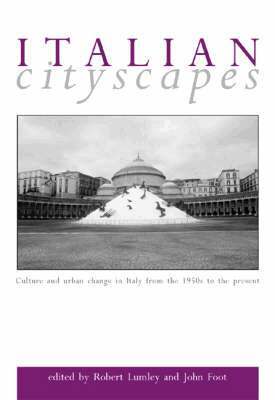
This book examines the transformation of the Italian city from the 1950s to the present with particular attention to questions of identity, migration and changes in urban culture. It focuses on two phases of that transformation: the years of accelerated industrialisation in the late 1950s and early 1960s, and the period of de-industrialisation and postmodernity beginning in the 1980s. It shows how major demographic movements and cultural shifts threw into relief new conceptions of the city in which old boundaries had become problematic. Design, fine art, literature, youth culture, film and social history all provide focal points. The contributions bring specialist expertise to each area while the extensive illustrations give a vivid picture of the contemporary visual culture for which Italian cities are famed. This is a genuinely interdisciplinary approach by Italian and English-speaking historians and scholars of urban studies, literature, architecture and design which introduces new debates and research to an English-speaking audience for the first time. Extensive illustrations provide a vivid picture of contemporary Italian visual culture.

Häftad, Engelska, 2010
208 kr
Skickas inom 5-8 vardagar

Inbunden, Engelska, 2018
345 kr
Skickas inom 5-8 vardagar
Häftad, Engelska, 2019
201 kr
Skickas
‘An enjoyable, highly readable history that manages to bring murky, often fiendishly complex events into the light’ Sunday TimesItaly emerged from the Second World War in ruins. Divided, invaded and economically broken, it was a nation that some people claimed had ceased to exist. And yet, as rural society disappeared almost overnight, by the 1960s, it could boast the fastest-growing economy in the world. In The Archipelago, historian John Foot chronicles Italy’s tumultuous history from the post-war period to the present day. From the silent assimilation of fascists into society after 1945 to the artistic peak of neorealist cinema, he examines both the corrupt and celebrated sides of the country. While often portrayed as a failed state on the margins of Europe, Italy has instead been at the centre of innovation and change – a political laboratory. This new history tells the fascinating story of a country always marked by scandal but with the constant ability to re-invent itself. Comprising original research and lively insights, The Archipelago chronicles the crises and modernisations of more than seventy years of post-war Italy, from its fields, factories, squares and housing estates to Rome's political intrigue.
Häftad, Engelska, 2023
179 kr
Skickas
'Clear, cool, plainly written and devastating’ Lucy Hughes-Hallett, Times Literary SupplementA major history of the rise and fall of Italian fascism: a dark tale of violence, ideals and a country at war.In the aftermath of the First World War, the seeds of fascism were sown in Italy. While the country reeled in shock, a new movement emerged from the chaos: one that preached hatred for politicians and love for the fatherland; one that promised to build a ‘New Roman Empire’, and make Italy a great power once again.Wearing black shirts and wielding guns, knives and truncheons, the proponents of fascism embraced a climate of violence and rampant masculinity. Led by Benito Mussolini, they would systematically destroy the organisations of the left, murdering and torturing anyone who got in their way.In Blood and Power, historian John Foot draws on decades of research to chart the turbulent years between 1915 and 1945, and beyond. Drawing widely from accounts of people across the political spectrum – fascists, anti-fascists, communists, anarchists, victims, perpetrators and bystanders – he tells the story of fascism and its legacy, which still, disturbingly, reverberates to this day.
Häftad, Engelska, 2026
179 kr
Kommande
*A TELEGRAPH BOOK OF THE YEAR*'A compelling and sobering read' JOHN DICKIE'Taut and gripping' TELEGRAPH, BEST BOOKS OF 2025'Grimly absorbing' FINANCIAL TIMESThe explosive story of the terrorist group who brought Italy to a standstill in the 1970s.In March 1978, the Red Brigades shocked the world by kidnapping former Italian prime minister Aldo Moro in the heart of Rome. They held him hostage for fifty-five days before killing him and dumping his body in the boot of a car. But who were they? And what did they want?In this gripping and explosive book, John Foot casts new light on the shadowy world of the Red Brigades, revealing how they became the most formidable left-wing terrorist organisation in post-war Western Europe. Through a campaign of murder, kidnap and intimidation, they brought Italy’s justice system to its knees and shook the nation’s political foundations – leaving behind a legacy of conspiracy and distrust that still lingers today.
Häftad, Engelska, 2007
251 kr
Skickas inom 10-15 vardagar
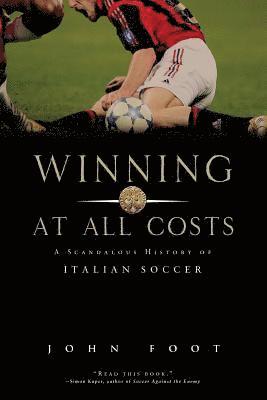
The 2006 World Cup final between Italy and France was a down-and-dirty game, marred by French superstar Zidane's head-butting of Italian defender Materazzi. But viewers were also exposed to the poetry, force, and excellence of the Italian game as operatic as Verdi and as cunning as Machiavelli, it seemed to open a window into the Italian soul. John Foot's epic history shows what makes Italian soccer so unique. Mixing serious analysis and comic storytelling, Foot describes its humble origins in northern Italy in the 1890s to its present day incarnation where soccer is the national civic religion. A story that is reminiscent of Gangs of New York and A Clockwork Orange, Foot shows how the Italian game , like its political culture , has been overshadowed by big business, violence, conspiracy, and tragedy, how demagogues like Benito Mussolini and Silvio Berlusconi have used the game to further their own political ambitions. But Winning at All Costs also celebrates the sweet moments , the four World Cup victories, the success of Juventus, Inter Milan, AC Milan, the role soccer played in the resistance to Nazism, and the great managers and players who show that Italian soccer is as irresistible as Italy itself.
Häftad, Engelska, 2023
237 kr
Skickas inom 7-10 vardagar
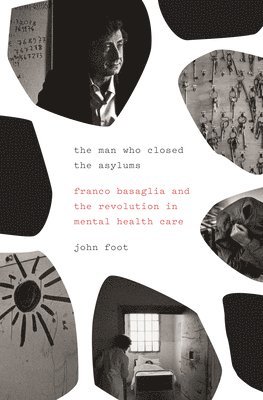
In 1961, when Franco Basaglia arrived outside the grim walls of the Gorizia asylum, on the Italian border with Yugoslavia, it was a place of horror, a Bedlam for the mentally sick and excluded, redolent of Basaglia's own wartime experience inside a fascist gaol. Patients were frequently restrained for long periods, and therapy was largely a matter of electric and insulin shocks. The corridors stank, and for many of the interned the doors were locked for life. This was a concentration camp, not a hospital.Basaglia, the new Director, was expected to practise all the skills of oppression in which he had been schooled, but he would have none of this. The place had to be closed down by opening it up from the inside, bringing freedom and democracy to the patients, the nurses and the psychiatrists working in that 'total institution'.Inspired by the writings of authors such as Primo Levi, R. D. Laing, Erving Goffman, Michel Foucault and Frantz Fanon, and the practices of experimental therapeutic communities in the UK, Basaglia's seminal work as a psychiatrist and campaigner in Gorizia, Parma and Trieste fed into and substantially contributed to the national and international movement of 1968. In 1978 a law was passed (the 'Basaglia law') which sanctioned the closure of the entire Italian asylum system.The first comprehensive study of this revolutionary approach to mental health care, The Man Who Closed the Asylums is a gripping account of one of the most influential movements in twentiethcentury psychiatry, which helped to transform the way we see mental illness. Basaglia's work saved countless people from a miserable existence, and his legacy persists, as an object lesson in the struggle against the brutality and ignorance that the establishment peddles to the public as common sense.
Inbunden, Engelska, 2001
1 245 kr
Skickas
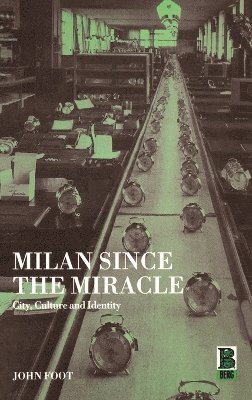
This book is the first comprehensive post-war history of one of Europe's most vibrant cities throughout an extraordinary period of social, cultural and economic change. The capital of Italy's economic miracle of the 1950s and 60s, Milan was a magnet for immigrants, as industry, design and culture created a heady mix of wealth, innovation and conflict. By the 1980s, heavy industry had all but disappeared and the city had reinvented itself as the world capital of fashion and a dynamic post-industrial metropolis. Meanwhile, the urban landscape was darkened by the bleak estates of the peripheries and the corruption scandals that exploded in what became known as 'Tangentopoli', or Bribesville. This fascinating book traces Milan's 'biography' through its buildings, design, fashion, cinema, families, immigrants and television. The city emerges as a potent economic power-house and laboratory for change, where art and culture converge in a modern but problematic urban space. Anyone interested in Italian history, urban studies or the future of Europe's cities will find this book an essential read.
Häftad, Engelska, 2001
495 kr
Skickas inom 10-15 vardagar
This book is the first comprehensive post-war history of one of Europe's most vibrant cities throughout an extraordinary period of social, cultural and economic change. The capital of Italy's economic miracle of the 1950s and 60s, Milan was a magnet for immigrants, as industry, design and culture created a heady mix of wealth, innovation and conflict. By the 1980s, heavy industry had all but disappeared and the city had reinvented itself as the world capital of fashion and a dynamic post-industrial metropolis. Meanwhile, the urban landscape was darkened by the bleak estates of the peripheries and the corruption scandals that exploded in what became known as 'Tangentopoli', or Bribesville. This fascinating book traces Milan's 'biography' through its buildings, design, fashion, cinema, families, immigrants and television. The city emerges as a potent economic power-house and laboratory for change, where art and culture converge in a modern but problematic urban space. Anyone interested in Italian history, urban studies or the future of Europe's cities will find this book an essential read.
Inbunden, Engelska, 2024
1 752 kr
Skickas inom 5-8 vardagar
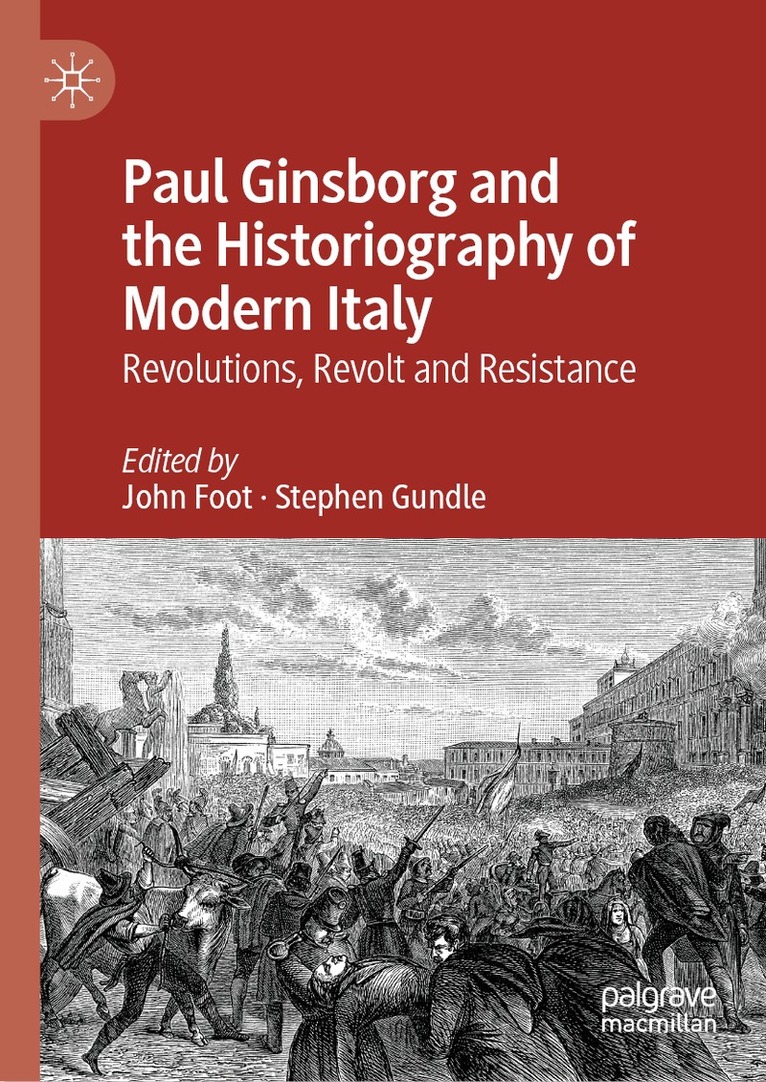
This book brings together a group of British and Italian scholars who have made significant contributions to the historiography of modern Italy over the last three decades, dedicated to the influence of Paul Ginsborg.
Häftad, Engelska, 2025
1 761 kr
Skickas inom 10-15 vardagar
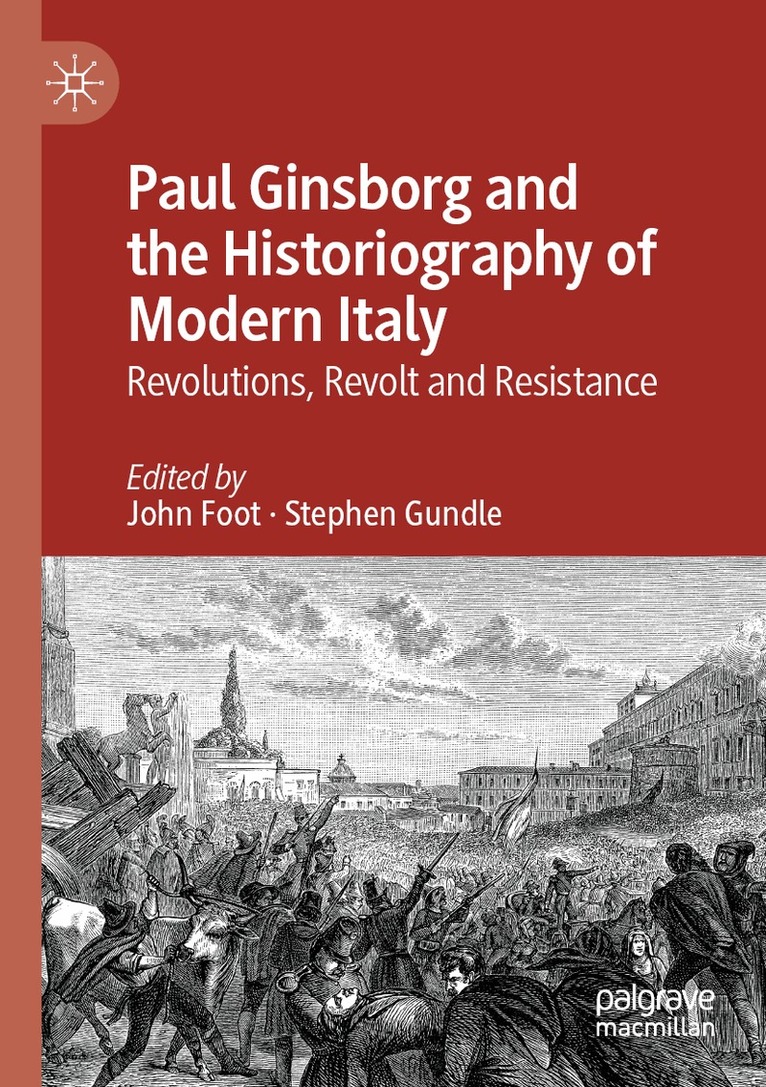
This book brings together a group of British and Italian scholars who have made significant contributions to the historiography of modern Italy over the last three decades, dedicated to the influence of Paul Ginsborg. Reflecting Ginsborg's interest in the encounter of social and political history in modern Italy, contributions explore the varied forms taken by activism in civil society. Rather than just treating activism and engagement as limited, circumscribed phenomena within a political system, the essays consider these as interventions in the social. Taken together, the contributions gathered here highlight Ginsborg's contributions to scholarship and activism, as well as advancing our understanding of cultural change, institutional reform and the renewal of community in modern Italian history.
Inbunden, Engelska, 2004
931 kr
Tillfälligt slut
This book examines the transformation of the Italian city from the 1950s to the present with particular attention to questions of identity, migration and changes in urban culture. It focuses on two phases of that transformation: the years of accelerated industrialisation in the late 1950s and early 1960s, and the period of de-industrialisation and postmodernity beginning in the 1980s. It shows how major demographic movements and cultural shifts threw into relief new conceptions of the city in which old boundaries had become problematic. Design, fine art, literature, youth culture, film and social history all provide focal points. The contributions bring specialist expertise to each area while the extensive illustrations give a vivid picture of the contemporary visual culture for which Italian cities are famed. This is a genuinely interdisciplinary approach by Italian and English-speaking historians and scholars of urban studies, literature, architecture and design which introduces new debates and research to an English-speaking audience for the first time. Extensive illustrations provide a vivid picture of contemporary Italian visual culture.
Häftad, Engelska, 2012
152 kr
Tillfälligt slut
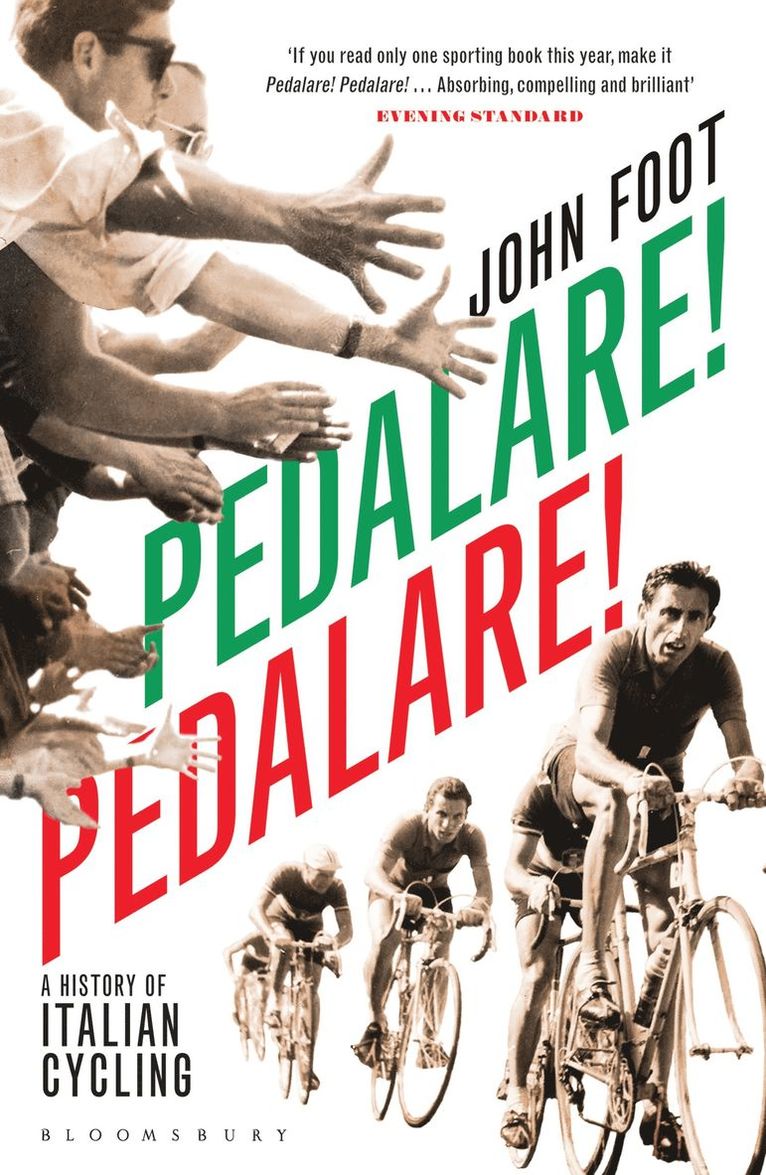
Cycling was a sport so important in Italy that it marked a generation, sparked fears of civil war, changed the way Italian was spoken, led to legal reform and even prompted the Pope himself to praise a cyclist, by name, from his balcony in St Peter's in Rome. It was a sport so popular that it created the geography of Italy in the minds of her citizens, and some have said that it was cycling, not political change, that united Italy.Pedalare! Pedalare! is the first complete history of Italian cycling to be published in English. The book moves chronologically from the first Giro d'Italia (Italy's equivalent of the Tour de France) in 1909 to the present day. The tragedies and triumphs of great riders such as Fausto Coppi and Gino Bartali appear alongside stories of the support riders, snow-bound mountains and the first and only woman to ride the whole Giro.Cycling's relationship with Italian history, politics and culture is always up front, with reference to fascism, the cold war and the effect of two world wars. The sport is explored alongside changes in Italian society as a whole, from the poor peasants who took up cycling in the early, pioneering period, to the slick, professional sport of today. Scandals and controversy appear throughout the book as constant features of the connection between fans, journalists and cycling.Concluding with an examination of doping, which has helped to destroy what was at one time the most popular sport of all, Pedalare, Pedalare is an engrossing history of a national passion.