
Liz James – författare
Visar alla böcker från författaren Liz James. Handla med fri frakt och snabb leverans.
11 produkter
11 produkter
Häftad, Engelska, 2020
657 kr
Skickas inom 10-15 vardagar
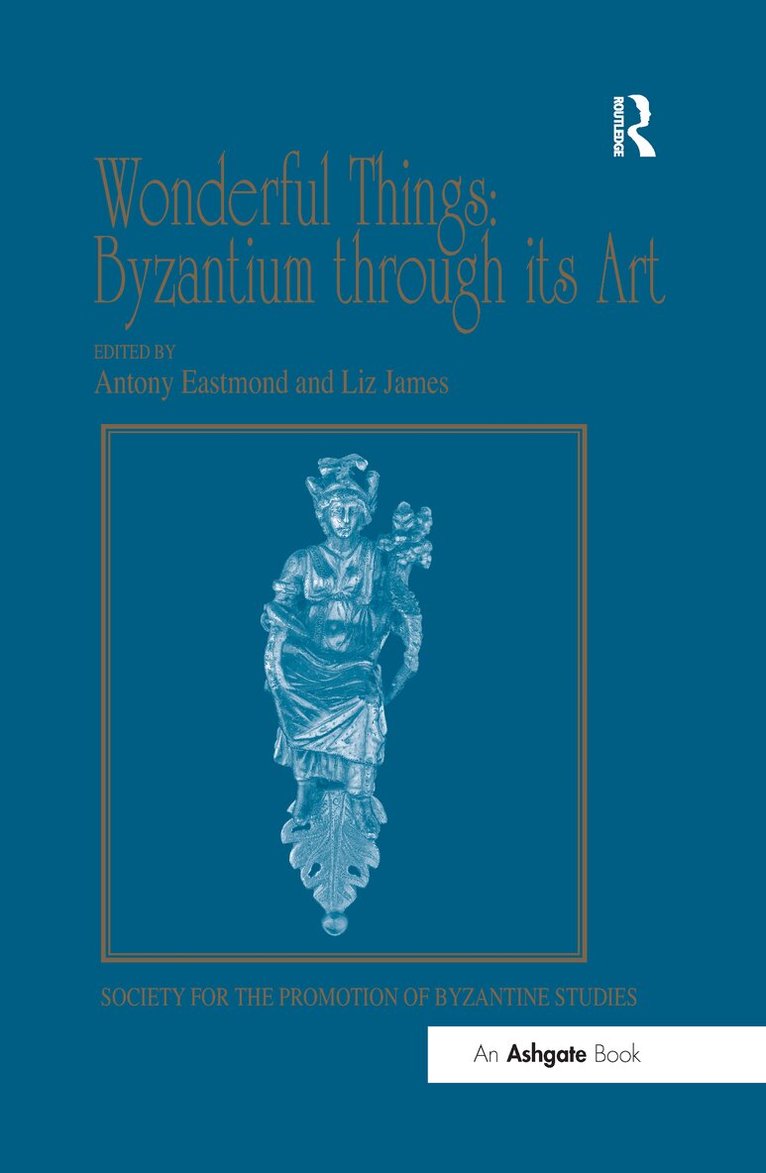
The essays collected in this book were delivered at the XLII Spring Symposium of Byzantine Studies, held in London in 2009 to accompany the exhibition Byzantium 330-1453, at the Royal Academy. The exhibition was one of the most ambitious and complex exhibitions ever mounted at the Royal Academy, as well as one of the most popular, and the overall aim of the book is to reflect on the exhibition of Byzantine art, both as an academic and popular exercise, and through the choice and discussion of individual objects. Exhibitions present a very different picture of Byzantium and its culture from works of history. The choices of object for display, their arrangement, and the underlying aims of exhibition curators and designers mean that every exhibition presents a different picture of Byzantium. Particular emphases can be placed, whether on everyday life or high court culture; Constantinople or the provinces; or claims of continuity or change over the Byzantine millennium. The essays explore aspects of the image of Byzantium that results from these choices. Given the enormous popularity of exhibitions of Byzantine objects (continued after the completion of this volume by exhibitions in Paris, Bonn and Istanbul), art has become one of the most popular and accessible means of popularizing Byzantium to a wide public audience. Hitherto there has been no general consideration of either the historiography of Byzantine exhibitions or the ways in which they have been set up to present different aspects of Byzantine culture to an academic and general public. The essays are divided into 3 sections: Exhibiting Byzantium sets the 2009 exhibition into the context of other exhibitions of Byzantine art and considers the issues involved in curating and viewing such major collections of medieval art; Object Lessons offers a set of studies of individual objects that were in the exhibition; Byzantium through its Art moves to consider Byzantine art more widely, thinking about the different ways in which objects can be used to study Byzantine culture and society. These are preceded by an introduction by the editors which sets the volume in context.
Inbunden, Engelska, 2021
2 690 kr
Skickas inom 10-15 vardagar
After the Text honours the work of renowned historian Margaret Mullett, who since the 1970s has transformed the study of Byzantine literature.Her work has been influential in demonstrating the strength and variety of Byzantine texts. Byzantium is renowned for its achievements in architecture and the visual arts. Byzantium is renowned for its achievements in architecture and the visual arts. Professor Mullett's perceptive studies, produced over more than 40 years, have shown that the literature of the Byzantine Empire is of equal beauty and interest, ranging, as it does, from high-style poetry and rhetoric in the classical manner through letters to demotic writings such as fables and the lives of saints. The collection of essays in this volume draws further attention to the wealth and diversity of Byzantine texts, by exploring the Greek literature of Late Antiquity and the Middle Ages in all its variety. These studies, by going, like Professor Mullett herself, beyond the texts, illustrate the value of Byzantine literature for interpreting Byzantine history and civilisation in all its richness.This book is crucial reading for scholars and students of the Byzantine world, as well as for those interested in literary studies.Chapter 16 of this book is freely available as a downloadable Open Access PDF at http://www.taylorfrancis.com under a Creative Commons Attribution-Non Commercial-No Derivatives (CC-BY-NC-ND) 4.0 license.
Inbunden, Engelska, 1999
2 056 kr
Skickas inom 10-15 vardagar
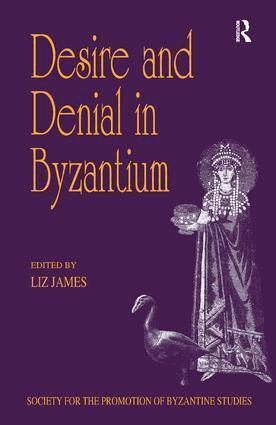
The papers in this volume derive from the 31st Spring Symposium of Byzantine Studies held for the Promotion of Byzantine Studies at the University of Sussex, Brighton, in March 1997. Desire, sex, love and the erotic are not terms usually associated with Byzantium and Byzantine Studies, unlike celibacy, virginity and asceticism, which more readily spring to mind. In order to examine whether the balance between these two extremes needed redressing, desire and denial was adopted as the theme for this symposium. The papers in this volume, by a group of international scholars, explore the many different aspects of Byzantine perceptions towards their own humanity and the frailties of that humanity. Using evidence from archaeology, art history and literary texts, ranging from sermons to legal documents, these chapters reveal writings about love, both secular and religious; images of sexuality and sensuality; the law; and Byzantine attitudes to bodies and the senses. What the symposium illustrated is that the question of desires in the Byzantine world is significant, and that such desires can offer insights into Byzantine conceptions of their own world.
Häftad, Engelska, 2023
672 kr
Skickas inom 10-15 vardagar
After the Text honours the work of renowned historian Margaret Mullett, who since the 1970s has transformed the study of Byzantine literature.Her work has been influential in demonstrating the strength and variety of Byzantine texts. Byzantium is renowned for its achievements in architecture and the visual arts. Byzantium is renowned for its achievements in architecture and the visual arts. Professor Mullett's perceptive studies, produced over more than 40 years, have shown that the literature of the Byzantine Empire is of equal beauty and interest, ranging, as it does, from high-style poetry and rhetoric in the classical manner through letters to demotic writings such as fables and the lives of saints. The collection of essays in this volume draws further attention to the wealth and diversity of Byzantine texts, by exploring the Greek literature of Late Antiquity and the Middle Ages in all its variety. These studies, by going, like Professor Mullett herself, beyond the texts, illustrate the value of Byzantine literature for interpreting Byzantine history and civilisation in all its richness.This book is crucial reading for scholars and students of the Byzantine world, as well as for those interested in literary studies.Chapter 16 of this book is freely available as a downloadable Open Access PDF at http://www.taylorfrancis.com under a Creative Commons Attribution-Non Commercial-No Derivatives (CC-BY-NC-ND) 4.0 license.
Inbunden, Engelska, 2024
2 197 kr
Skickas inom 10-15 vardagar
This volume consists of 15 articles published between 1991 and 2018. It falls into three sections, reflecting different areas of Liz James’s interests.The first section deals with light and colour and mosaics: four articles considering light and colour in mosaics and the making of mosaics, as well as the question of what it means to define mosaics as ‘Byzantine’ are reprinted. The second brings together four pieces on empresses: their relationships with female personifications and the Mother of God; their roles in founding and refounding buildings; and their employment as ciphers by some authors. Finally, seven papers cover a range of topics: what monumental images of saints in churches might have been for; what the differences between relics and icons might have been; how captions to images can be misleading; why touch was an important sense; how words can sometimes ‘just’ be decorative rather than for reading; why the materiality of objects makes a difference. There is also a brief section of additional notes and comments which add to, update and reflect on each piece now in 2024.Mosaics, Empresses and Other Things in Byzantium will be of interest to scholars and students alike interested in material culture, the depiction of regal women, and the use of relics and icons in the Byzantine Empire.
Häftad, Engelska, 2026
665 kr
Kommande
This volume consists of 15 articles published between 1991 and 2018. It falls into three sections, reflecting different areas of Liz James’s interests.The first section deals with light and colour and mosaics: four articles considering light and colour in mosaics and the making of mosaics, as well as the question of what it means to define mosaics as ‘Byzantine’ are reprinted. The second brings together four pieces on empresses: their relationships with female personifications and the Mother of God; their roles in founding and refounding buildings; and their employment as ciphers by some authors. Finally, seven papers cover a range of topics: what monumental images of saints in churches might have been for; what the differences between relics and icons might have been; how captions to images can be misleading; why touch was an important sense; how words can sometimes ‘just’ be decorative rather than for reading; why the materiality of objects makes a difference. There is also a brief section of additional notes and comments which add to, update and reflect on each piece now in 2024.Mosaics, Empresses and Other Things in Byzantium will be of interest to scholars and students alike interested in material culture, the depiction of regal women, and the use of relics and icons in the Byzantine Empire.
Inbunden, Engelska, 2017
2 511 kr
Skickas inom 7-10 vardagar
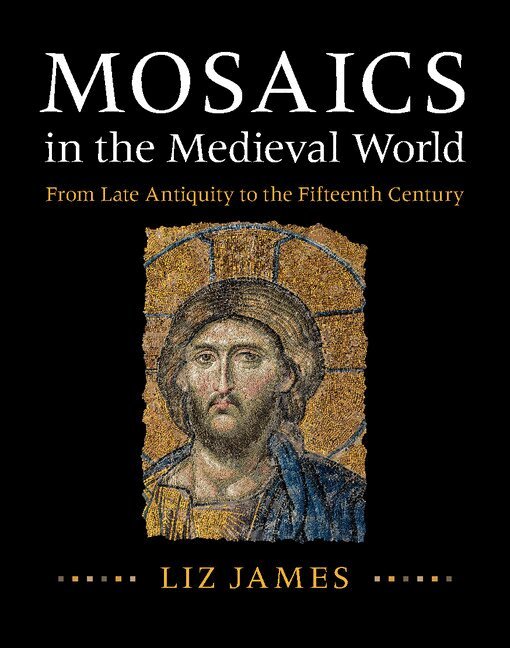
In this book, Liz James offers a comprehensive history of wall mosaics produced in the European and Islamic middle ages. Taking into account a wide range of issues, including style and iconography, technique and material, and function and patronage, she examines mosaics within their historical context. She asks why the mosaic was such a popular medium and considers how mosaics work as historical 'documents' that tell us about attitudes and beliefs in the medieval world. The book is divided into two part. Part I explores the technical aspects of mosaics, including glass production, labour and materials, and costs. In Part II, James provides a chronological history of mosaics, charting the low and high points of mosaic art up until its abrupt end in the late middle ages. Written in a clear and engaging style, her book will serve as an essential resource for scholars and students of medieval mosaics.
Häftad, Engelska, 2016
891 kr
Skickas inom 10-15 vardagar
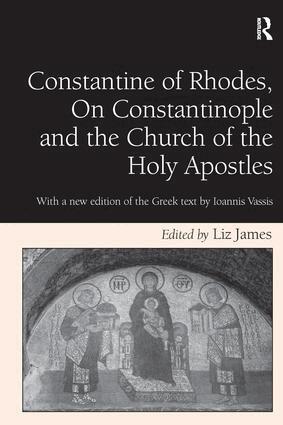
Constantine of Rhodes's tenth-century poem is an account of public monuments in Constantinople and of the Church of the Holy Apostles. In the opening section of the work, Constantine describes columns and sculptures within the city, seven of which he calls 'wonders'. In the second part of the poem, he portrays the Church of the Holy Apostles, offering an account of its architecture and internal decoration, notably the mosaics, seven of which are also depicted as 'wonders'. On one level, the poem offers an account of what was visible, a sense of city topography and, in the case of the Apostoleion, a vital description of a now-lost building. But it cannot be read as a straightforward description. Rather, Constantine's work offers insights into Byzantine perceptions of works of art. The monuments Constantine decided to portray and the ways in which he chose to describe them say as much, if not more, about the social and cultural milieu in which he operated as about the actual physical appearance of the monuments themselves. Further, the poem itself, as it survives in one fifteenth-century manuscript, raises questions: is it, in its current form, a single poem or is it made up of a compilation of Constantine's writings? This book supersedes the two previous editions of the poem, both dating to 1896, and provides the first full translation of the text. It consists of a new Greek edition of Constantine's poem, with an introductory essay, prepared by Ioannis Vassis, and a translation and commentary by a group of scholars headed by Liz James. Liz James also contributes an extensive discussion of the two distinct parts of the poem, the city monuments and the Church of the Holy Apostles.
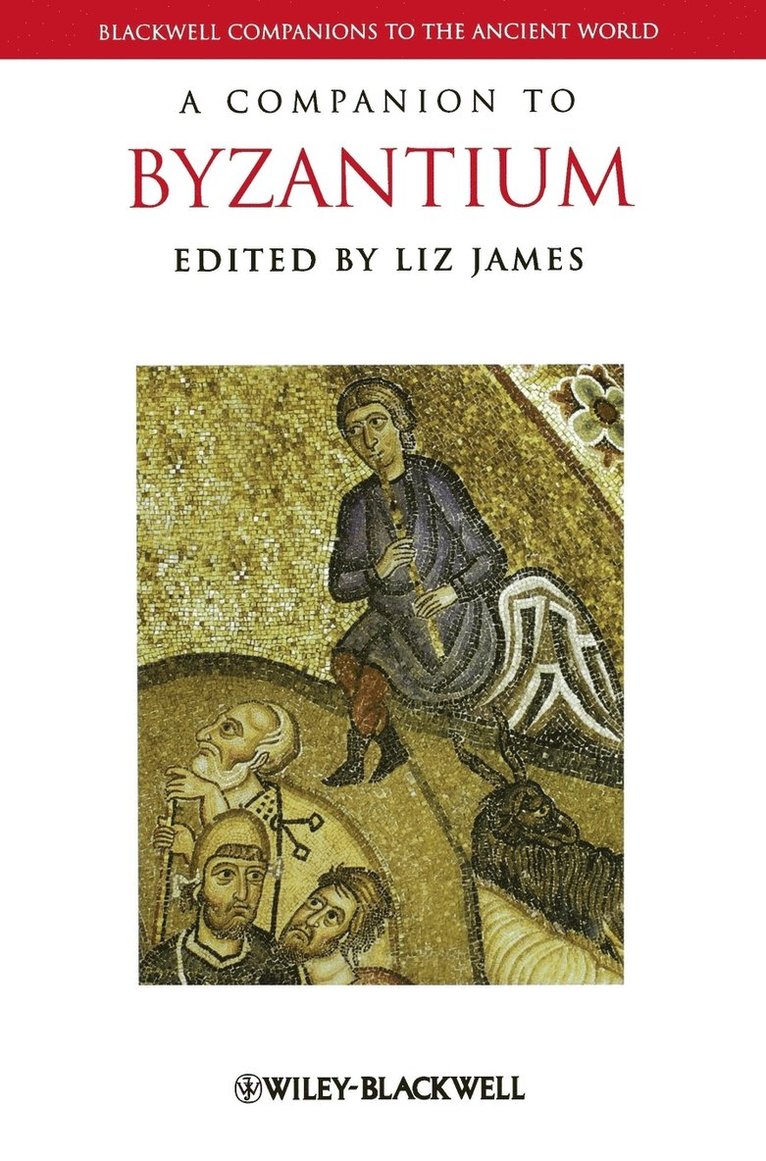
Del 37 - Blackwell Companions to the Ancient World
Companion to Byzantium
Inbunden, Engelska, 2010
1 802 kr
Skickas inom 5-8 vardagar
Using new methodological and theoretical approaches, A Companion to Byzantium presents an overview of the Byzantine world from its inception in 330 A.D. to its fall to the Ottoman Turks in 1453. Provides an accessible overview of eleven centuries of Byzantine societyIntroduces the most recent scholarship that is transforming the field of Byzantine studiesEmphasizes Byzantium's social and cultural history, as well as its material cultureExplores traditional topics and themes through fresh perspectives
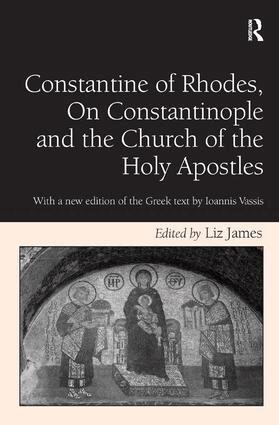
Inbunden, Engelska, 2012
2 690 kr
Skickas inom 10-15 vardagar
Constantine of Rhodes's tenth-century poem is an account of public monuments in Constantinople and of the Church of the Holy Apostles. In the opening section of the work, Constantine describes columns and sculptures within the city, seven of which he calls 'wonders'. In the second part of the poem, he portrays the Church of the Holy Apostles, offering an account of its architecture and internal decoration, notably the mosaics, seven of which are also depicted as 'wonders'. On one level, the poem offers an account of what was visible, a sense of city topography and, in the case of the Apostoleion, a vital description of a now-lost building. But it cannot be read as a straightforward description. Rather, Constantine's work offers insights into Byzantine perceptions of works of art. The monuments Constantine decided to portray and the ways in which he chose to describe them say as much, if not more, about the social and cultural milieu in which he operated as about the actual physical appearance of the monuments themselves. Further, the poem itself, as it survives in one fifteenth-century manuscript, raises questions: is it, in its current form, a single poem or is it made up of a compilation of Constantine's writings? This book supersedes the two previous editions of the poem, both dating to 1896, and provides the first full translation of the text. It consists of a new Greek edition of Constantine's poem, with an introductory essay, prepared by Ioannis Vassis, and a translation and commentary by a group of scholars headed by Liz James. Liz James also contributes an extensive discussion of the two distinct parts of the poem, the city monuments and the Church of the Holy Apostles.
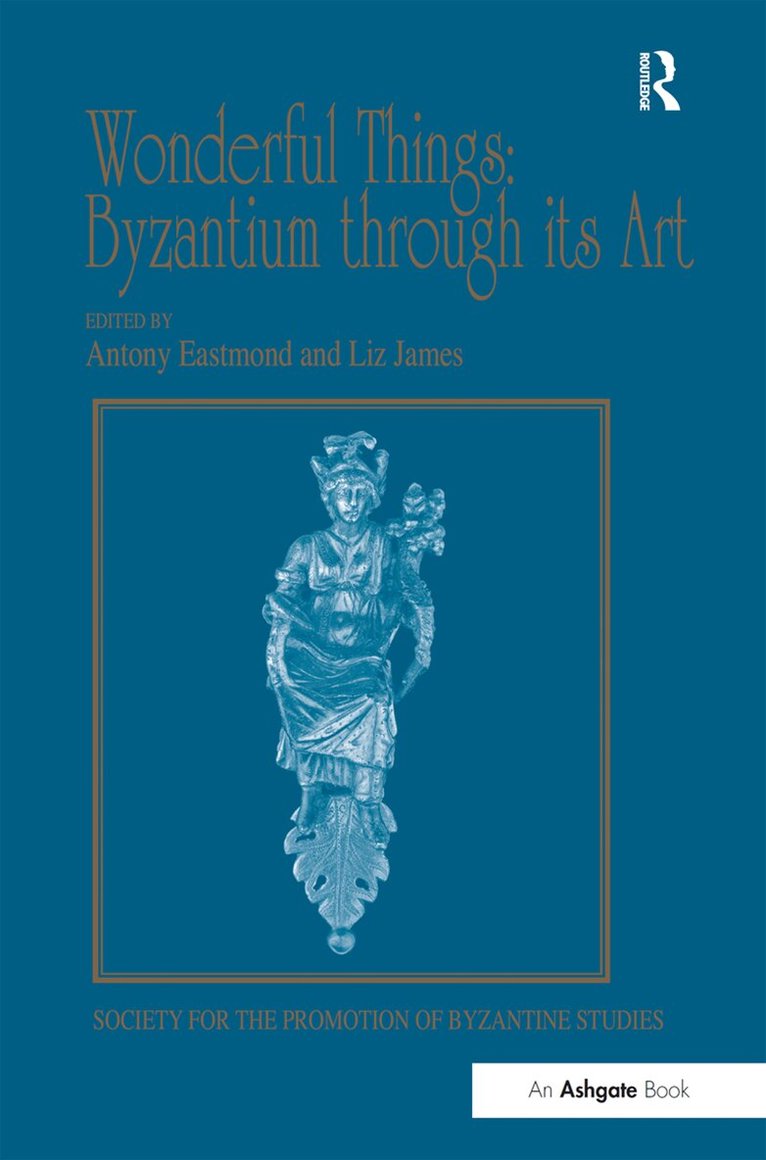
Inbunden, Engelska, 2013
2 268 kr
Skickas inom 10-15 vardagar
The essays collected in this book were delivered at the XLII Spring Symposium of Byzantine Studies, held in London in 2009 to accompany the exhibition Byzantium 330-1453, at the Royal Academy. The exhibition was one of the most ambitious and complex exhibitions ever mounted at the Royal Academy, as well as one of the most popular, and the overall aim of the book is to reflect on the exhibition of Byzantine art, both as an academic and popular exercise, and through the choice and discussion of individual objects. Exhibitions present a very different picture of Byzantium and its culture from works of history. The choices of object for display, their arrangement, and the underlying aims of exhibition curators and designers mean that every exhibition presents a different picture of Byzantium. Particular emphases can be placed, whether on everyday life or high court culture; Constantinople or the provinces; or claims of continuity or change over the Byzantine millennium. The essays explore aspects of the image of Byzantium that results from these choices. Given the enormous popularity of exhibitions of Byzantine objects (continued after the completion of this volume by exhibitions in Paris, Bonn and Istanbul), art has become one of the most popular and accessible means of popularizing Byzantium to a wide public audience. Hitherto there has been no general consideration of either the historiography of Byzantine exhibitions or the ways in which they have been set up to present different aspects of Byzantine culture to an academic and general public. The essays are divided into 3 sections: Exhibiting Byzantium sets the 2009 exhibition into the context of other exhibitions of Byzantine art and considers the issues involved in curating and viewing such major collections of medieval art; Object Lessons offers a set of studies of individual objects that were in the exhibition; Byzantium through its Art moves to consider Byzantine art more widely, thinking about the different ways in which objects can be used to study Byzantine culture and society. These are preceded by an introduction by the editors which sets the volume in context.