
Mark Mazower – författare
Visar alla böcker från författaren Mark Mazower. Handla med fri frakt och snabb leverans.
24 produkter
24 produkter
Häftad, Engelska, 2005
208 kr
Skickas
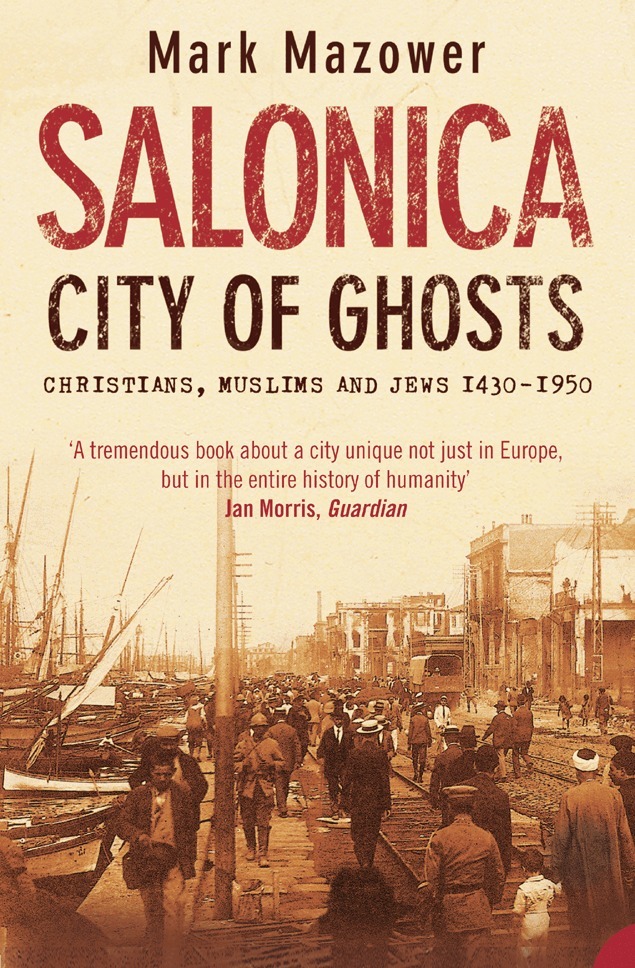
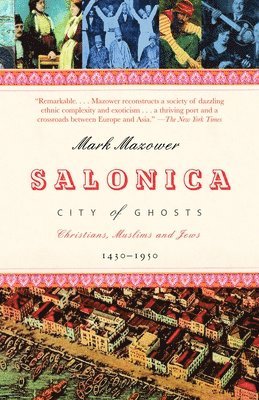
The history of a bewilderingly exotic city, rarely written about: five hundred years of clashing cultures and peoples, from the glories of Suleiman the Magnificent to its nadir under Nazi occupation.Salonica is the point where the wonders and horrors of the Orient and Europe have met over the centuries.Written with a Pepysian sense of the texture of daily life in the city through the ages, and with breathtakingly detailed historical research, Salonica evokes the sights, smells, habits, songs and responses of a unique city and its inhabitants. The history of Salonica is one of forgotten alternatives and wrong choices, of identities assumed and discarded. For centuries Jews, Christians and Muslims have succeeded each other in ascendancy, each people intent on erasing the presence of their predecessors, and the result is a city of extraordinarily rich cultural traditions and memories of extreme violence and genocide, one that sits on the overlapping hinterlands of both Europe and the East.Mark Mazower has written a work of astonishing depth and originality about this remarkable city. Magnificently researched and beautifully written, it is more than a book about a place; it studies in detail the way in which three great faiths and peoples have inhabited the same territory, and how smooth transitions and adaptations have been interwoven with violent endings and new beginnings.

Inbunden, Engelska, 2025
255 kr
Skickas
What do we mean when we talk about antisemitism? A thoughtful, vital new intervention from the award-winning historian'An immense contribution... In tracing the evolving meaning of ‘antisemitism,’ [Mazower] demonstrates persuasively how we might turn it from a weapon back into a word... Rigorous and lucid' - Lily Meyer, The New Republic'For most of history, antisemitism has been understood as a menace from Europe’s political Right, the province of blood-and-soil ethno-nativists who built on Christendom’s long-standing suspicion of its Jewish population and infused it with racist pseudo-science. Such threats culminated in the nightmare of Nazi Germany and the Holocaust.The landscape is very different now, as Mark Mazower argues in this piercingly brilliant book. More than four-fifths of the world’s Jews now live in Israel and the United States, with the former’s military dominance of its region guaranteed by the latter while the loudest voices decrying antisemitism see it coming from the Left not the Right.Mazower clearly and carefully shows us how we got here, seeking to illuminate rather than blame. Very few words have the punch of ‘antisemitism’ and yet no term is more liable to be misunderstood in ways affecting free speech and foreign policy alike. On Antisemitism is a vitally important attempt to draw a line that must be drawn.
Häftad, Engelska, 2023
201 kr
Skickas
WINNER OF THE DUFF COOPER PRIZE 2021SHORTLISTED FOR THE RUNCIMAN AWARD 2022A NEW STATESMAN AND TIMES LITERARY SUPPLEMENT BOOK OF THE YEAR 2021'Deserves to remain the standard treatment of the subject in English for many decades to come' Roderick Beaton, Times Literary SupplementIn the exhausted, repressive years that followed Napoleon's defeat in 1815, there was one cause that came to galvanize countless individuals across Europe and the United States: freedom for Greece.Mark Mazower's wonderful new book recreates one of the most compelling, unlikely and significant events in the story of modern Europe. In the face of near impossible odds, the people of the villages, valleys and islands of Greece rose up against Sultan Mahmud II and took on the might of the imperial Ottoman armed forces, its Turkish cavalrymen, Albanian foot soldiers and the fearsome Egyptians. Despite the most terrible disasters, they held on until military intervention by Russia, France and Britain finally secured the kingdom of Greece.Mazower brilliantly brings together the different strands of the story. He takes us into the minds of revolutionary conspirators and the terrors of besieged towns, the stories of itinerant priests, sailors and slaves, ambiguous heroes and defenceless women and children struggling to stay alive amid a conflict of extraordinary brutality. Ranging across the Eastern Mediterranean and far beyond, he explores the central place of the struggle in the making of Romanticism and a new kind of politics that had volunteers flocking from across Europe to die in support of the Greeks. A story of how statesmen came to terms with an even more powerful force than themselves - the force of nationalism - this is above all a book about how people decided to see their world differently and, at an often terrible cost to themselves and their families, changed history.'Exquisite, impressive' The Times'Superbly subtle and thorough' Daily Telegraph
Häftad, Engelska, 2018
155 kr
Skickas
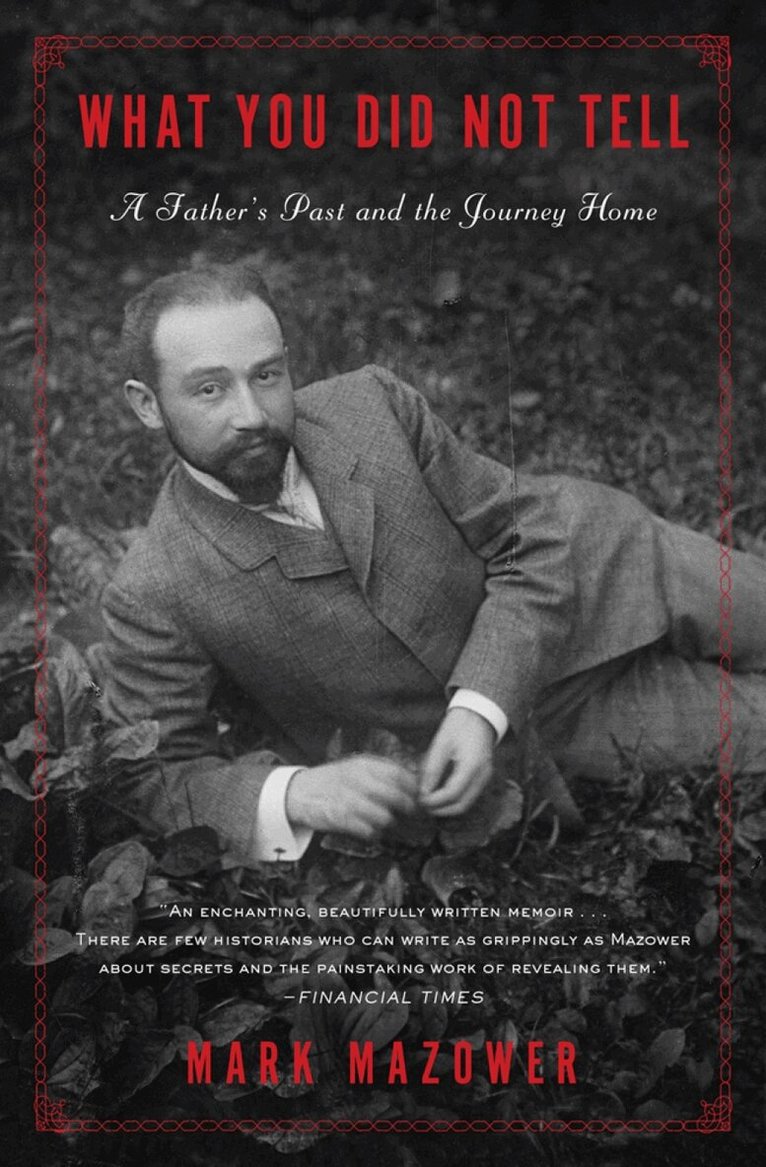
SHORLISTED FOR THE ORWELL PRIZE 2018 NEW STATESMAN AND EVENING STANDARD BOOKS OF THE YEAR 2017'Brilliant ... a staggering story' Robert Fox, Evening Standard, Books of the Year'Fascinating, vast and rich ... a dramatic family memoir' GuardianUncovering his family's remarkable and moving stories, Mark Mazower recounts the sacrifices and silences that marked a generation and their descendants. It was a family that fate drove into the siege of Stalingrad, the Vilna ghetto, occupied Paris, and even into the ranks of the Wehrmacht. His British father was the lucky one, the son of Russian Jewish emigrants who settled in London after escaping the civil war and revolution. Max, the grandfather, had started out as a socialist and manned the barricades against tsarist troops, but never spoke of it. His wife, Frouma, came from a family ravaged by the Great Terror yet somehow making their way in Soviet society. In the centenary of the Russian Revolution, What You Did Not Tell recounts a brand of socialism erased from memory - humanistic, impassioned, and broad-ranging in its sympathies. But it also explores the unexpected happiness that may await history's losers, the power of friendship, and the love of place that allowed Max and Frouma's son to call England home.

Häftad, Engelska, 1999
160 kr
Skickas
From award-winning historian Mark Mazower, Dark Continent: Europe's Twentieth Century retells the story of a century of division, charting the struggles of rival ideologies to create a new world order for mankind.The end of the First World War saw old empires swept away and the opportunity to build a better society from the ruins. Yet the result was division and bloodshed on an unprecedented scale, as liberal democracy, communism and fascism struggled against one another for mastery of the world.Dark Continent radically overturns the myth of Europe as a safe haven of democracy to redefine our view of the twentieth century.'Original, thought-provoking, iconoclastic' Frank McLynn, Irish Times'Fascinating and forceful' Martin Gilbert, Literary Review'Mazower leaves us, in this wonderful book, with an account of our century that anyone who takes an interest in Europe's present and future will enlarge their mind by reading' John Keegan, Daily Telegraph'There are few who can walk with A.J.P. Taylor. One is Mark Mazower ... a tour de force' Alex Danchev, TLS'Combines narrative verve with wise and humane analysis. For anyone who wants to know how Europe came to be the way it is in the years since 1900, this is the work to provide the answers' David Cannadine, Observer Books of the YearMark Mazower is the author of Inside Hitler's Greece, The Balkans, which won the Wolfson Prize for History, Salonika: City of Ghosts, which won both the Runciman Prize and the Duff Cooper Prize and Hitler's Empire.
Häftad, Engelska, 2009
213 kr
Skickas
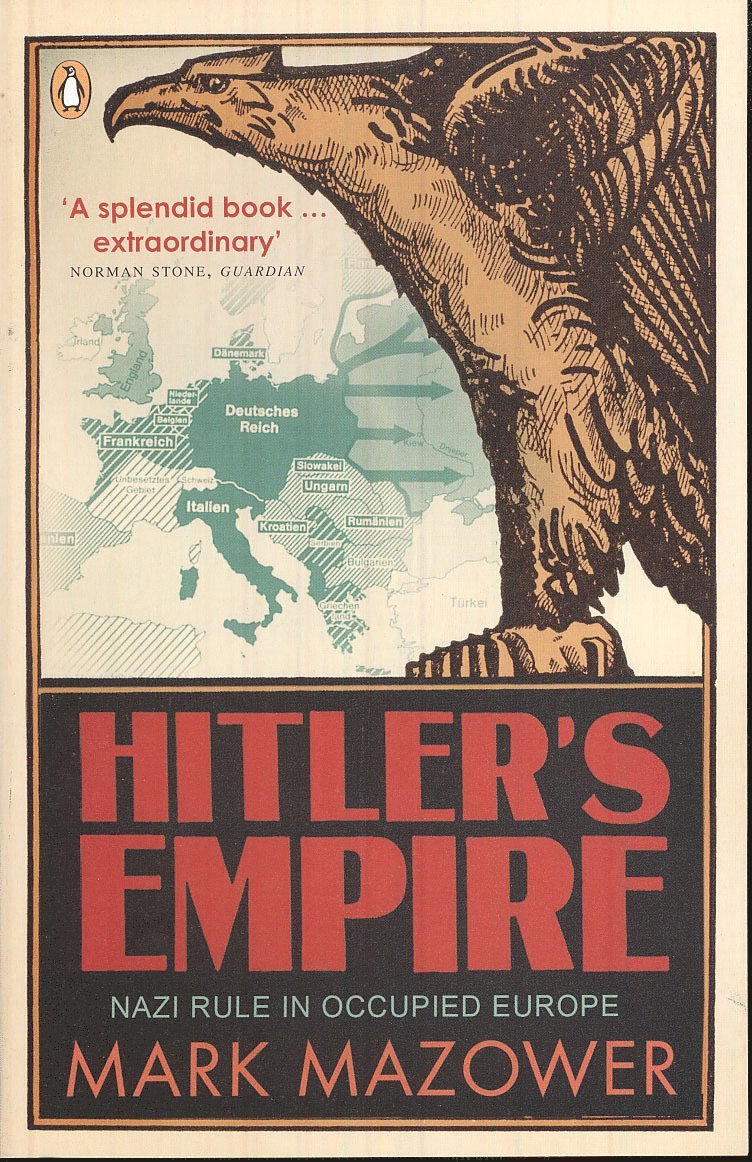
Mark Mazower's Hitler's Empire is a provocative account of the rise and fall of Nazi Europe by one of Britain's leading historians. Hitler's empire was the largest, most brutal and most ambitious reshaping of Europe in history. Inspired by the imperial legacy of those such as the British, the Third Reich cast its shadow from the Channel Islands to the Caucasus and ruled hundreds of millions. Yet, as Mark Mazower's groundbreaking new account shows, it was an empire built on an illusion.From Hitler's plans for vast motorways crossing an ethnically cleansed Russian steppe, to dreams of a German super-economy rivalling America's, Mazower reveals the lethal fusion of mass murder, modern managerialism and colossal incompetence that underpinned the Nazi New Order. Ultimately Hitler's empire ended up consuming its own, leaving destruction in its wake and finishing not just with the downfall of Germany, but an entire continent.'Remarkable ... provocative ... an important new book' Adam Tooze, Sunday Telegraph'A stunning survey ... breaks new ground' Dominic Sandbrook, Daily Telegraph Books of the Year 'A first-class account' Richard Overy, Literary Review'Brilliant ... a must for anyone who has a serious interest in the dreadful Third Reich'Justin Cartwright, Spectator'Exposes the intellectual bankruptcy of the enterprise with forensic skill and wit' Christopher Silvester, Daily ExpressMark Mazower is the author of Inside Hitler's Greece, Dark Continent: Europe's Twentieth Century, The Balkans - which won the Wolfson Prize for History - and Salonika: City of Ghosts, which won both the Runciman Prize and the Duff Cooper Prize. He has taught at the University of Sussex, Princeton University and Birkbeck College, University of London. He is now Professor of History at Columbia University.
Häftad, Engelska, 2013
160 kr
Skickas
The compelling and provocative history of world government, from acclaimed author Mark MazowerShortlisted for the RUSI 2013 Duke of Wellington Medal for Military LiteratureIn 1815 the shocked and exhausted victors of the decades of fighting that had engulfed Europe for a generation agreed to a new system for keeping the peace. Instead of independent states changing sides, doing deals and betraying one another, a new, collegial 'Concert of Europe' would ensure that the brutal chaos of the Napoleonic Wars never happened again.Mark Mazower's remarkable new book recreates two centuries of international government - the struggle to spread values and build institutions to bring order to an anarchic and dangerous state system.
Häftad, Engelska, 2022
292 kr
Skickas inom 3-6 vardagar
Häftad, Engelska, 2009
411 kr
Skickas inom 3-6 vardagar

Häftad, Engelska, 1900
266 kr
Skickas inom 3-6 vardagar

Inbunden, Engelska, 1991
2 270 kr
Skickas inom 5-8 vardagar
The great depression of the inter-war years was the most profound shock ever to strike the world economy, and is widely held to have led directly to the collapse of parliamentary democracy in many countries. This scholarly study of Greece in the period between the two world wars, however, demonstrates that there was no simple correlation between economic and political crisis.How was an underdeveloped country such as Greece able to recover so fast from this unprecedented economic crisis? Mark Mazower examines the complex processes involved, basing his analysis on detailed statistical research. Recovery, like crisis, threatened prevailing notions of the relationship between state and society, and undermined traditional ruling elites. Dr Mazower's challenging study makes an important contribution not only to the historiography of modern Greece, but also to our understanding of the interrelationship between politics, economics, and the democratic process.
Häftad, Engelska, 2011
168 kr
Skickas inom 5-8 vardagar
This collection of essays offers new insights into the aftermath of the Second World War. Rather than treating the years 1945 to 1949 as mere precursors of the Cold War, it takes them to be a crucial period in the reconstruction of European states and the re-modeling of European societies. Contributors explore key arenas, such as the revival of material production, the re-foundation of the state, its legitimacy and its monopoly of armed force, the legacies of empire, the treatment of dislocated populations and refugees, and the role of international organisations. As a result, the volume sets European reconstruction in a genuinely global framework for the first time. This supplement was edited by Mark Mazower, Jessica Reinisch, and David Feldman.
Häftad, Engelska, 2001
206 kr
Skickas inom 5-8 vardagar
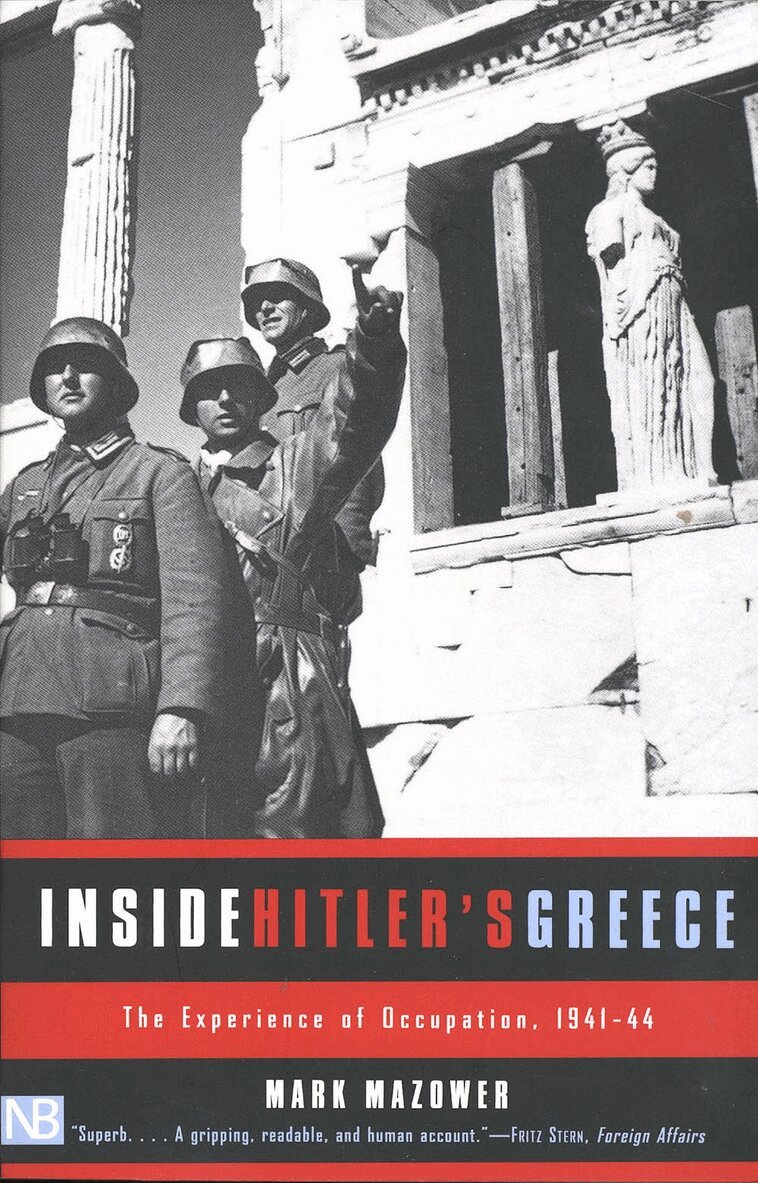
This gripping and richly illustrated account of wartime Greece explores the impact of the Nazi Occupation upon the lives and values of ordinary people. The first full account of the experience of occupation, it offers a vividly human picture of resistance fighters and black marketeers, teenage German conscripts and Gestapo officers, Jews and starving villagers."Fascinating. . . . [Mazower] succeeds in getting under the skin of the occupation. . . . [This book] conjures up, in vivid detail, life under an occupation that had shattered old certainties and replaced them with painful choices, cynical compromises, and hopes undercut by the daily death toll." —Mark Almond, New York Times"A vivid picture of the German occupier’s mind and actions. . . . Mazower’s arguments are always fair." —Richard Eder, Los Angeles Times Book Review"A superb book on the horrors afflicting wartime Greece. . . . [Mazower] has done vast archival research and emerged with a gripping, readable and human account, setting every moment of a tragic period in appropriate context." —Fritz Stern, Foreign Affairs"[A] sensitive, illuminating and richly textured account of painful, complex experience." —Richard Overy, ObserverMark Mazower is professor of history at Birkbeck College, University of London, and author of Dark Continent.
Häftad, Engelska, 2006
261 kr
Skickas inom 3-6 vardagar
Inbunden, Engelska, 1900
268 kr
Skickas inom 3-6 vardagar
Häftad, Engelska, 2002
209 kr
Skickas inom 3-6 vardagar
Inbunden, Engelska, 1997
1 960 kr
Skickas inom 3-6 vardagar
The role of the police has, from its beginnings, been ambiguous, even janus-faced. This volume focuses on one of its controversial aspects by showing how the police have been utilized in the past by regimes in Europe, the USA and the British Empire to check political dissent and social unrest. Ideologies such as anti-Communism emerge as significant influences in both democracies and dictatorships. And by shedding new light on policing continuities in twentieth-century Germany and Italy, as well as Interpol, this volume questions the compatibility of democratic government and political policing.
Häftad, Engelska, 2026
146 kr
Kommande
What do we mean when we talk about antisemitism? A thoughtful, vital new intervention from the award-winning historian'An immense contribution... In tracing the evolving meaning of ‘antisemitism,’ [Mazower] demonstrates persuasively how we might turn it from a weapon back into a word... Rigorous and lucid' - Lily Meyer, The New Republic'For most of history, antisemitism has been understood as a menace from Europe’s political Right, the province of blood-and-soil ethno-nativists who built on Christendom’s long-standing suspicion of its Jewish population and infused it with racist pseudo-science. Such threats culminated in the nightmare of Nazi Germany and the Holocaust.The landscape is very different now, as Mark Mazower argues in this piercingly brilliant book. More than four-fifths of the world’s Jews now live in Israel and the United States, with the former’s military dominance of its region guaranteed by the latter while the loudest voices decrying antisemitism see it coming from the Left not the Right.Mazower clearly and carefully shows us how we got here, seeking to illuminate rather than blame. Very few words have the punch of ‘antisemitism’ and yet no term is more liable to be misunderstood in ways affecting free speech and foreign policy alike. On Antisemitism is a vitally important attempt to draw a line that must be drawn.
Del 34 - UNIVERSAL HISTORY
Balkans
Häftad, Engelska, 2002
130 kr
Skickas inom 5-8 vardagar
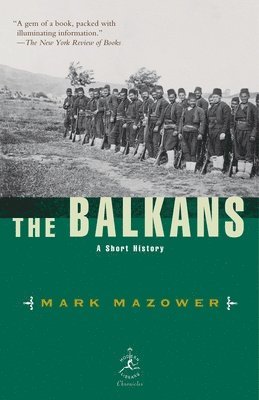
A dazzling short history of the Balkans from the Romans to the present, which provides vital historical and cultural background to contemporary Balkan politics.At the end of the twentieth century people spoke as if the Balkans had plagued Europe for ever. But two hundred years earlier, the Balkans did not exist. It was not the Balkans but the 'Rumeli' that the Ottomans ruled, the formerly Roman lands they had conquered from Byzantium, together with their Christian inhabitants. In this original account of the region Mark Mazower dispels current Western clichés and replaces stereotypes with a vivid account of how mountains, empires and religions have shaped its inhabitants' lives. As a bridge between Europe and Asia it has been exposed to a constant incursion of nomadic peoples across the centuries.Mazower's narrative ranges broadly both in time and in space, treating the former Turkish domains in Europe as part of a common if complex historical inheritance.
Häftad, Tyska, 2021
348 kr
Skickas inom 3-6 vardagar
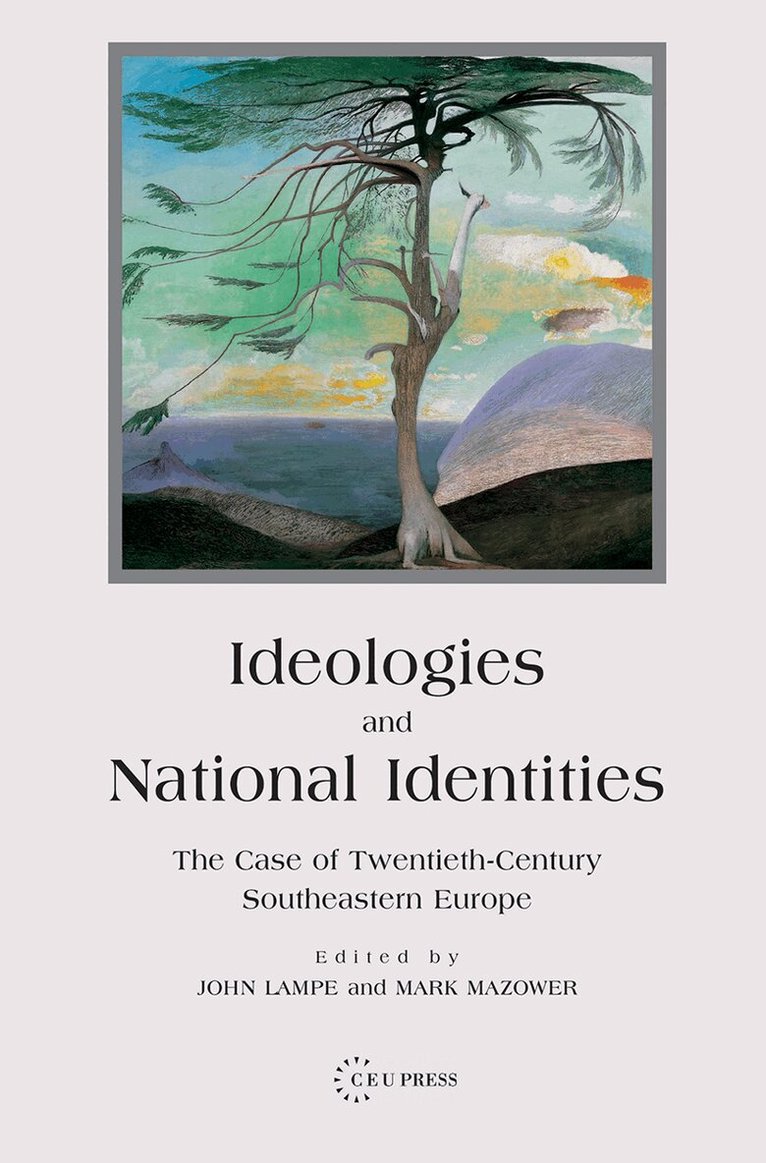
Inbunden, Engelska, 2004
1 750 kr
Skickas inom 10-15 vardagar
Twentieth-century Southeastern Europe endured three, separate decades of international and civil war, and was marred in forced migration and wrenching systematic changes. This book is the result of a year-long project by the Open Society Institute to examine and reappraise this tumultuous century. A cohort of young scholars with backgrounds in history, anthropology, political science, and comparative literature were brought together for this undertaking. The studies invite attention to fascism, socialism, and liberalism as well as nationalism and Communism. While most chapters deal with war and confrontation, they focus rather on the remembrance of such conflicts in shaping today's ideology and national identity.
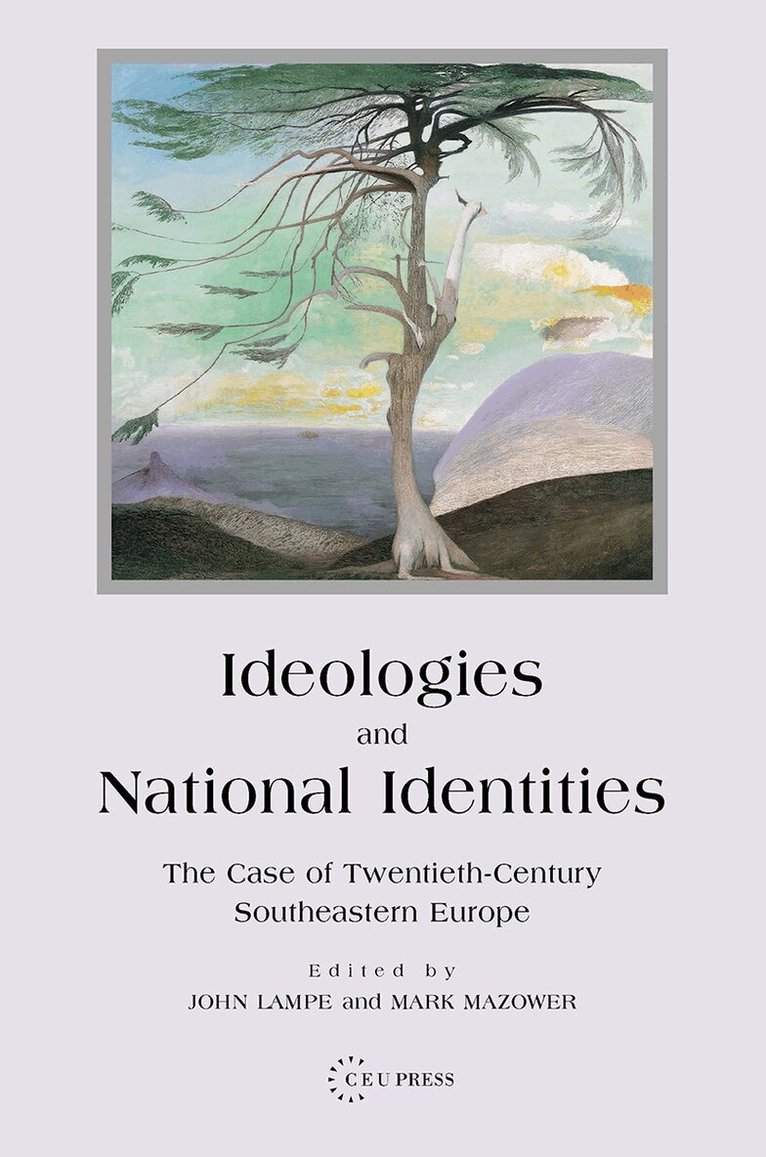
Häftad, Engelska, 2004
658 kr
Skickas inom 10-15 vardagar
Twentieth-century Southeastern Europe endured three, separate decades of international and civil war, and was marred in forced migration and wrenching systematic changes. This book is the result of a year-long project by the Open Society Institute to examine and reappraise this tumultuous century. A cohort of young scholars with backgrounds in history, anthropology, political science, and comparative literature were brought together for this undertaking. The studies invite attention to fascism, socialism, and liberalism as well as nationalism and Communism. While most chapters deal with war and confrontation, they focus rather on the remembrance of such conflicts in shaping today's ideology and national identity.
Häftad, Engelska, 2018
170 kr
Tillfälligt slut

Häftad, Svenska, 2000
256 kr
Tillfälligt slut
Är det omöjligt för européer från skilda kulturer att leva tillsammans i demokratiska stater? Sedan de mångkulturella imperierna – det habsburgska, det ottomanska – föll sönder efter första världskriget, har européerna inte lyckats skapa några stabila, liberalt demokratiska stater där skilda folkgrupper kan leva fredligt tillsammans. Det är en av många intressanta och kanske oväntade iakttagelser i Mark Mazower skildring av Europas nittonhundratal. "Den mörka kontinenten" är ett exempel på historieskrivning bortom nationsgränserna; författaren urskiljer bredare tendenser och för olika länder gemensamma utvecklingslinjer. Samtidigt, menar han, är just den kulturella mångfalden – de många nationella kulturerna, historierna och värderingarna – fortfarande nyckeln till en förståelse av denna kontinent. "Den mörka kontinenten" är inte en traditionell historieskrivning upphängd på olika händelser, snarare kan boken beskrivas som en rad analytiska essäer. Mazower knyter samman ekonomisk historia och socialhistoria med den politiska utvecklingen. Han diskuterar utförligt välfärdspolitikens utveckling och inte minst frågorna om jämställdhet och relationerna mellan könen i ett historiskt perspektiv. Detta är en bok som kan läsas av alla intresserade av europeiskt samhällsliv och historia. Den har i internationell press hyllats som ett blivande standardverk om Europas moderna historia.