
Stephen G Fritz – författare
Visar alla böcker från författaren Stephen G Fritz. Handla med fri frakt och snabb leverans.
4 produkter
4 produkter
Häftad, Engelska, 1997
375 kr
Skickas inom 3-6 vardagar
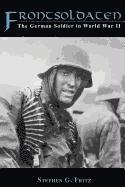
Alois Dwenger, writing from the front in May of 1942, complained that people forgot "the actions of simple soldiers….I believe that true heroism lies in bearing this dreadful everyday life." In exploring the reality of the Landser, the average German soldier in World War II, through letters, diaries, memoirs, and oral histories, Stephen G. Fritz provides the definitive account of the everyday war of the German front soldier. The personal documents of these soldiers, most from the Russian front, where the majority of German infantrymen saw service, paint a richly textured portrait of the Landser that illustrates the complexity and paradox of his daily life. Although clinging to a self-image as a decent fellow, the German soldier nonetheless committed terrible crimes in the name of National Socialism. When the war was finally over, and his country lay in ruins, the Landser faced a bitter truth: all his exertions and sacrifices had been in the name of a deplorable regime that had committed unprecedented crimes. With chapters on training, images of combat, living conditions, combat stress, the personal sensations of war, the bonds of comradeship, and ideology and motivation, Fritz offers a sense of immediacy and intimacy, revealing war through the eyes of these self-styled "little men." A fascinating look at the day-to-day life of German soldiers, this is a book not about war but about men. It will be vitally important for anyone interested in World War II, German history, or the experiences of common soldiers throughout the world.
Inbunden, Engelska, 2004
961 kr
Skickas inom 3-6 vardagar
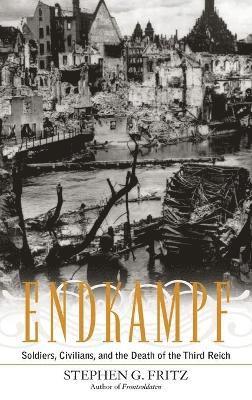
At the end of World War II, Gen. Dwight D. Eisenhower, fearing that retreating Germans would consolidate large numbers of troops in an Alpine stronghold and from there conduct a protracted guerilla war, turned U.S. forces toward the heart of Franconia, ordering them to cut off and destroy German units before they could reach the Alps. Opposing this advance was a conglomeration of German forces headed by SS-Gruppenführer Max Simon, a committed National Socialist who advocated merciless resistance. Under the direction of officers schooled in harsh combat in Russia, the Germans succeeded in bringing the American advance to a grinding halt. Caught in the middle were the people of Franconia. Historians have accorded little mention to this period of violence and terror, but it provides insight into the chaotic nature of life while the Nazi regime was crumbling. Neither German civilians nor foreign refugees acted simply as passive victims caught between two fronts. Throughout the region people pressured local authorities to end the senseless resistance and sought revenge for their tribulations in the "liberation" that followed. Stephen G. Fritz examines the predicament and outlook of American GI's, German soldiers and officials, and the civilian population caught in the arduous fighting during the waning days of World War II. Endkampf is a gripping portrait of the collapse of a society and how it affected those involved, whether they were soldiers or civilians, victors or vanquished, perpetrators or victims.
Inbunden, Engelska, 2011
1 181 kr
Skickas inom 3-6 vardagar
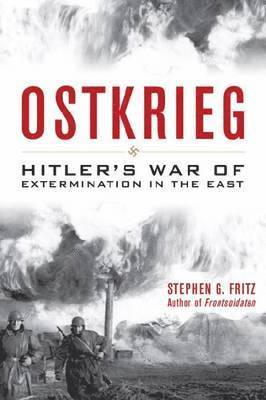
On June 22, 1941, Germany launched the greatest land assault in history on the Soviet Union, an attack that Adolf Hitler deemed crucial to ensure German economic and political survival. As the key theater of the war for the Germans, the eastern front consumed enormous levels of resources and accounted for 75 percent of all German casualties. Despite the significance of this campaign to Germany and to the war as a whole, few English-language publications of the last thirty-five years have addressed these pivotal events.In Ostkrieg: Hitler's War of Extermination in the East, Stephen G. Fritz bridges the gap in scholarship by incorporating historical research from the last several decades into an accessible, comprehensive, and coherent narrative. His analysis of the Russo-German War from a German perspective covers all aspects of the eastern front, demonstrating the interrelation of military events, economic policy, resource exploitation, and racial policy that first motivated the invasion. This in-depth account challenges accepted notions about World War II and promotes greater understanding of a topic that has been neglected by historians.
Häftad, Engelska, 2015
638 kr
Skickas inom 3-6 vardagar
On June 22, 1941, Germany launched the greatest land assault in history on the Soviet Union, an attack that Adolf Hitler deemed crucial to ensure German economic and political survival. As the key theater of the war for the Germans, the eastern front consumed enormous levels of resources and accounted for 75 percent of all German casualties. Despite the significance of this campaign to Germany and to the war as a whole, few English-language publications of the last thirty-five years have addressed these pivotal events.In Ostkrieg: Hitler's War of Extermination in the East, Stephen G. Fritz bridges the gap in scholarship by incorporating historical research from the last several decades into an accessible, comprehensive, and coherent narrative. His analysis of the Russo-German War from a German perspective covers all aspects of the eastern front, demonstrating the interrelation of military events, economic policy, resource exploitation, and racial policy that first motivated the invasion. This in-depth account challenges accepted notions about World War II and promotes greater understanding of a topic that has been neglected by historians.