
Thomas DiLorenzo – författare
Visar alla böcker från författaren Thomas DiLorenzo. Handla med fri frakt och snabb leverans.
6 produkter
6 produkter
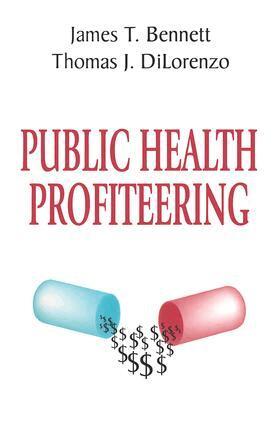
Inbunden, Engelska, 2001
2 197 kr
Skickas inom 10-15 vardagar
The diet industry feeds on the hopes and the fears of those who need-or think that they need-to lose weight. Since the publication of the first known diet book in 1864, a host of sanctimonious preachers and self-proclaimed experts-often overweight themselves-have stoked fears of obesity effectively for both profit and political power, none more so than former surgeon general C. Everett Koop. In Public Health Profiteering, James T. Bennett and Thomas J. DiLorenzo offer a scathing and irreverent assessment of Koop's public and private career showing how a brilliant pediatric surgeon has evolved into a self-seeking and hypocritical public scold.During his term as Surgeon General under the Bush administration, Koop, enamored of the military trappings of title and uniform, saw himself as leading an army of public health administrators against an enemy. As often as not, the enemy took on the disquieting countenance of the American people. In Koop's view they were stupid, improvident, feckless, unable to make the simplest decisions about their lives. As Bennett and DiLorenzo show, he used his position as a bully pulpit for intemperate attacks on the tobacco and alcohol industries and to irresponsibly exaggerate the dangers of obesity. While taking a prohibitionist line, Koop himself smoked a pipe, drank martinis, and weighed in at a hefty 210 pounds. Although Koop claimed that he would never cash in on his office, his subsequent career tells a far different story. He has lobbied, hawked, and endorsed products for a host of firms: Wyeth Ayerst (makers of the dubious diet drug Fen-Phen), Weight Watchers, Jenny Craig, Intel, Neurocrine, Kelloggs, BioPure, and many others.Lively in style and carefully researched, Public Health Profiteering will be of interest to health policy specialists, political scientists, economists, and media analysts.James T. Bennett is professor of economics at George Mason University. He is founder and editor of the Journal of Labor Research and has authored many books and articles, including Health Research Charities: Image and Reality and Official Lies: How Washington Misleads Us, co-authored with Thomas DiLorenzo.Thomas DiLorenzo is professor of economics at the Sellinger School of Business and Management at Loyola College in Baltimore. He has co-authored many books and is widely published in academic journals as well as the popular press, including the Wall Street Journal and USA Today.
Häftad, Engelska, 2018
699 kr
Skickas inom 10-15 vardagar
The diet industry feeds on the hopes and the fears of those who need-or think that they need-to lose weight. Since the publication of the first known diet book in 1864, a host of sanctimonious preachers and self-proclaimed experts-often overweight themselves-have stoked fears of obesity effectively for both profit and political power, none more so than former surgeon general C. Everett Koop. In Public Health Profiteering, James T. Bennett and Thomas J. DiLorenzo offer a scathing and irreverent assessment of Koop's public and private career showing how a brilliant pediatric surgeon has evolved into a self-seeking and hypocritical public scold.During his term as Surgeon General under the Bush administration, Koop, enamored of the military trappings of title and uniform, saw himself as leading an army of public health administrators against an enemy. As often as not, the enemy took on the disquieting countenance of the American people. In Koop's view they were stupid, improvident, feckless, unable to make the simplest decisions about their lives. As Bennett and DiLorenzo show, he used his position as a bully pulpit for intemperate attacks on the tobacco and alcohol industries and to irresponsibly exaggerate the dangers of obesity. While taking a prohibitionist line, Koop himself smoked a pipe, drank martinis, and weighed in at a hefty 210 pounds. Although Koop claimed that he would never cash in on his office, his subsequent career tells a far different story. He has lobbied, hawked, and endorsed products for a host of firms: Wyeth Ayerst (makers of the dubious diet drug Fen-Phen), Weight Watchers, Jenny Craig, Intel, Neurocrine, Kelloggs, BioPure, and many others.Lively in style and carefully researched, Public Health Profiteering will be of interest to health policy specialists, political scientists, economists, and media analysts.James T. Bennett is professor of economics at George Mason University. He is founder and editor of the Journal of Labor Research and has authored many books and articles, including Health Research Charities: Image and Reality and Official Lies: How Washington Misleads Us, co-authored with Thomas DiLorenzo.Thomas DiLorenzo is professor of economics at the Sellinger School of Business and Management at Loyola College in Baltimore. He has co-authored many books and is widely published in academic journals as well as the popular press, including the Wall Street Journal and USA Today.
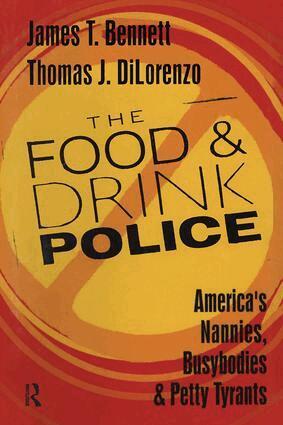
Häftad, Engelska, 2018
473 kr
Skickas inom 10-15 vardagar
Written in a lively, engaging style, The Food and Drink Police is a thoroughgoing examination and critique of the efforts of government agencies and private organizations (including the Center for Science in the Public Interest, Mothers Against Drunk Driving, the Bureau of Alcohol, Tobacco and Firearms, and the Food and Drug Administration) to regulate the dietary habits and choices of private citizens. Irreverent, yet always informed, the authors analyze the ideological motivations, spurious science, and assaults on freedom that underlie the activities of these groups. General readers, nutritionists and scientists in general, doctors, and government policymakers will find this indispensable reading. Chapters such as "Eat, Drink, and Keel Over: Lasagna, Egg Rolls, and Popcorn Can Kill" discuss the "evils" of multicultural cuisine and coffee, and the "good news" about junk food. In "care for a Drink?" and "None for the Road" the authors provide an in-depth look at Prohibition 1990s-style; "Glow-in-the-Dark Eggs or Anal Leakage: Pick Your Poison" provocatively fuels the current debate on fake fats and irradiated beef.In The Pleasure Police, David Shaw quotes the psychologist and advocate of "defensive" eating, Dr. Stephen Gullo, as advising his thin-obsessed patients to "drink tomato juice before ordering" in restaurants; tomato juice, after al, is "a natural appetite suppressant." To which Shaw adds, "I assume he also advises his clients to masturbate before making love." James T. Bennett and Thomas J. DiLorenzo expose this sort of convoluted advice in The Food and Drink Police, a timely and important contribution to the cultural debate on government and private choice.
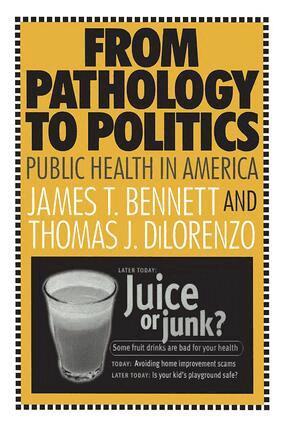
Häftad, Engelska, 2008
699 kr
Skickas inom 10-15 vardagar
Barely a day goes by without news of the latest public health threat from the American media. Some of us are told we live in a "cancer cluster"-an area with a disproportionate number of cancer deaths. During the summer months, those who live in or near urban areas are bombarded with daily smog measurements and air pollution alerts. City water supplies are frequently called health hazards. At times, it seems as though virtually everything we eat and drink is denounced as bad for us by some "public health expert." Our cars burn too much gasoline; we own too many firearms; we are too fat; some of us are too skinny. Americans today are living longer than they ever have before. Why the almost daily announcements of new public health threats and proclamations of impending crises? Bennett and DiLorenzo address this question and others here. They begin by examining the large public health bureaucracy, its preoccupation with expanding governmental programs, and its concern with political issues that too often have little to do with improving public health. Then they trace the evolution of the American public health movement from its founding after the Civil War to the 1950s. They describe the transformation of public health's focus from the eradication of disease to social policy as a by-product of the 1960s. Bennett and DiLorenzo catalogue the "radicalization" of the public health movement by discussing its numerous political initiatives. They include case studies of the politicization of the public health movement in America. The authors reveal various methods of statistical manipulation that certain public health researchers use to "cook the data" in order to achieve politically correct results. A final chapter discusses the implications of the transformation of public health from pathology to politics. This vigorously argued analysis sees the public health movement as claiming expertise on virtually every social issue, from poverty to human rights. Students of public policy and public health officials, along with readers interested in public health issues, will find this absorbing reading.

Inbunden, Engelska, 2000
1 148 kr
Tillfälligt slut
Barely a day goes by without news of the latest public health threat from the American media. Some of us are told we live in a "cancer cluster"-an area with a disproportionate number of cancer deaths. During the summer months, those who live in or near urban areas are bombarded with daily smog measurements and air pollution alerts. City water supplies are frequently called health hazards. At times, it seems as though virtually everything we eat and drink is denounced as bad for us by some "public health expert." Our cars burn too much gasoline; we own too many firearms; we are too fat; some of us are too skinny. Americans today are living longer than they ever have before. Why the almost daily announcements of new public health threats and proclamations of impending crises? Bennett and DiLorenzo address this question and others here. They begin by examining the large public health bureaucracy, its preoccupation with expanding governmental programs, and its concern with political issues that too often have little to do with improving public health. Then they trace the evolution of the American public health movement from its founding after the Civil War to the 1950s. They describe the transformation of public health's focus from the eradication of disease to social policy as a by-product of the 1960s. Bennett and DiLorenzo catalogue the "radicalization" of the public health movement by discussing its numerous political initiatives. They include case studies of the politicization of the public health movement in America. The authors reveal various methods of statistical manipulation that certain public health researchers use to "cook the data" in order to achieve politically correct results. A final chapter discusses the implications of the transformation of public health from pathology to politics. This vigorously argued analysis sees the public health movement as claiming expertise on virtually every social issue, from poverty to human rights. Students of public policy and public health officials, along with readers interested in public health issues, will find this absorbing reading.
Inbunden, Engelska, 1999
1 115 kr
Tillfälligt slut
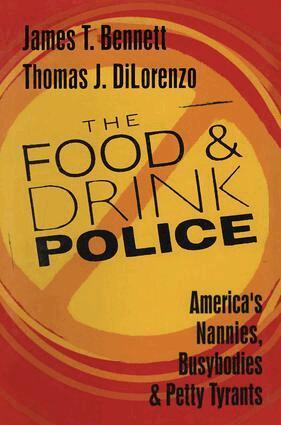
Written in a lively, engaging style, The Food and Drink Police is a thoroughgoing examination and critique of the efforts of government agencies and private organizations (including the Center for Science in the Public Interest, Mothers Against Drunk Driving, the Bureau of Alcohol, Tobacco and Firearms, and the Food and Drug Administration) to regulate the dietary habits and choices of private citizens. Irreverent, yet always informed, the authors analyze the ideological motivations, spurious science, and assaults on freedom that underlie the activities of these groups. General readers, nutritionists and scientists in general, doctors, and government policymakers will find this indispensable reading. Chapters such as "Eat, Drink, and Keel Over: Lasagna, Egg Rolls, and Popcorn Can Kill" discuss the "evils" of multicultural cuisine and coffee, and the "good news" about junk food. In "care for a Drink?" and "None for the Road" the authors provide an in-depth look at Prohibition 1990s-style; "Glow-in-the-Dark Eggs or Anal Leakage: Pick Your Poison" provocatively fuels the current debate on fake fats and irradiated beef.In The Pleasure Police, David Shaw quotes the psychologist and advocate of "defensive" eating, Dr. Stephen Gullo, as advising his thin-obsessed patients to "drink tomato juice before ordering" in restaurants; tomato juice, after al, is "a natural appetite suppressant." To which Shaw adds, "I assume he also advises his clients to masturbate before making love." James T. Bennett and Thomas J. DiLorenzo expose this sort of convoluted advice in The Food and Drink Police, a timely and important contribution to the cultural debate on government and private choice.