
Thomas H Brobjer – författare
Visar alla böcker från författaren Thomas H Brobjer. Handla med fri frakt och snabb leverans.
15 produkter
15 produkter
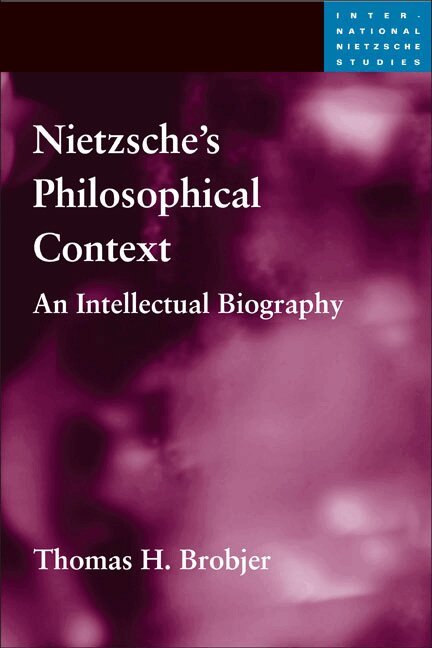
Inbunden, Engelska, 2008
629 kr
Skickas inom 5-8 vardagar
Friedrich Nietzsche was immensely influential and, counter to most expectations, also very well read. An essential new reference tool for those interested in his thinking, Nietzsche’s Philosophical Context identifies the chronology and huge range of philosophical books that engaged him. Rigorously examining the scope of this reading, Thomas H. Brobjer consulted over two thousand volumes in Nietzsche’s personal library, as well as his book bills, library records, journals, letters, and publications. This meticulous investigation also considers many of the annotations in his books. In arguing that Nietzsche’s reading often constituted the starting point for, or counterpoint to, much of his own thinking and writing, Brobjer’s study provides scholars with fresh insight into how Nietzsche worked and thought; to which questions and thinkers he responded; and by which of them he was influenced. The result is a new and much more contextual understanding of Nietzsche's life and thinking.
Inbunden, Engelska, 2004
2 133 kr
Skickas inom 10-15 vardagar
Nietzsche and Science explores the German philosopher's response to the extraordinary cultural impact of the natural sciences in the late nineteenth century. It argues that the science of his day exerted a powerful influence on his thought and provided an important framework within which he articulated his ideas. The first part of the book investigates Nietzsche's knowledge and understanding of specific disciplines and the influence of particular scientists on Nietzsche's thought. The second part examines how Nietzsche actually incorporated various scientific ideas, concepts and theories into his philosophy, the ways in which he exploited his reading to frame his writings, and the relationship between his understanding of science and other key themes of his thought, such as art, rhetoric and the nature of philosophy itself.
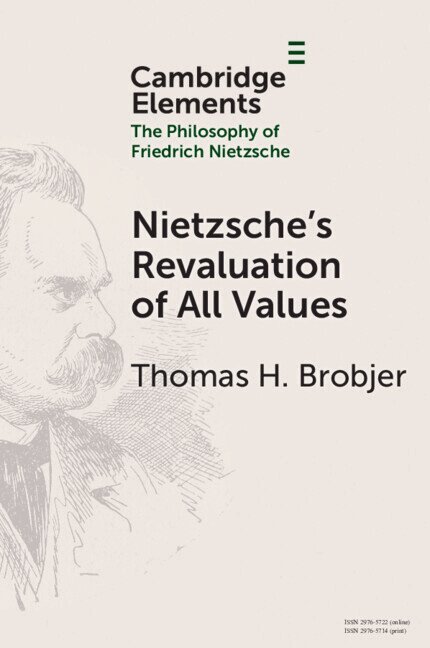
Häftad, Engelska, 2025
230 kr
Skickas inom 7-10 vardagar
Why is Nietzsche's thought and philosophy still regarded as relevant today? There are a large number of possible answers to a question like this, but one of the most important and persuasive is that Nietzsche questioned and discussed the nature, character and value of our values. Nietzsche frequently turns other questions such as epistemological and ontological ones into axiological ones, making values pivotal in his thought. It is possible to argue that the revaluation of all values is both the most important and today the most relevant of Nietzsche's main philosophical themes and projects. Furthermore, the theme is intimately involved with what Nietzsche regarded as his most important work, his magnum opus (that he called his Hauptwerk), for a long period called The Will to Power but later Revaluation of All Values.
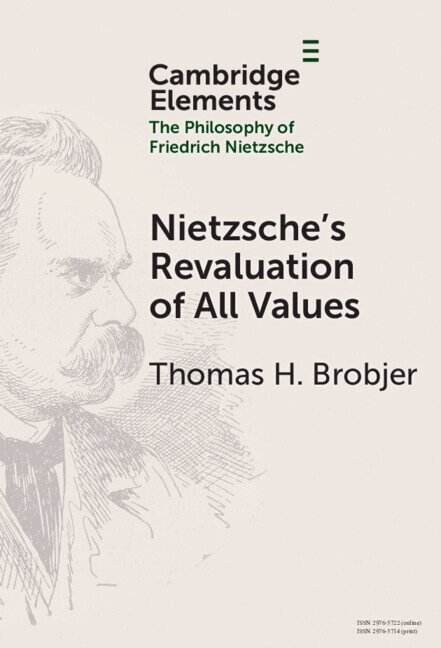
Inbunden, Engelska, 2025
742 kr
Skickas inom 7-10 vardagar
Why is Nietzsche's thought and philosophy still regarded as relevant today? There are a large number of possible answers to a question like this, but one of the most important and persuasive is that Nietzsche questioned and discussed the nature, character and value of our values. Nietzsche frequently turns other questions such as epistemological and ontological ones into axiological ones, making values pivotal in his thought. It is possible to argue that the revaluation of all values is both the most important and today the most relevant of Nietzsche's main philosophical themes and projects. Furthermore, the theme is intimately involved with what Nietzsche regarded as his most important work, his magnum opus (that he called his Hauptwerk), for a long period called The Will to Power but later Revaluation of All Values.

Häftad, Engelska, 2026
613 kr
Kommande
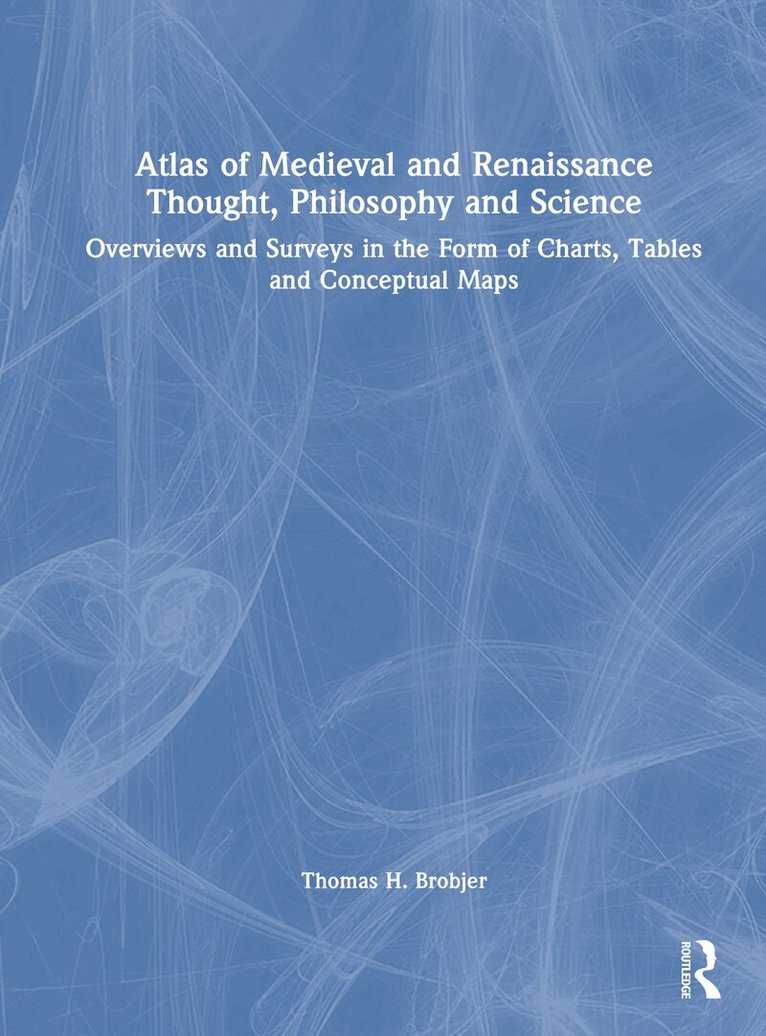
This conceptual Atlas of Medieval and Renaissance Thought, Philosophy and Science presents visual overviews, thematic outlines, surveys and summaries of the many thematic aspects of this long period of European intellectual history, c. 400 to 1600.Conceptual charts and ‘maps’ are well suited for structuring, organizing and presenting information, although this approach is rarely used in the humanities. The pictorial representations in this atlas are multi-dimensional: chronological, thematic, rating the importance of the thinker or tradition and showing affinities and tensions between them. Many of the diagrams are chronologically proportional which gives the reader an immediate sense of time and historical distance. This book constitutes a sort of ‘intellectual atlas’, in many ways comparable to a geographical atlas, but instead charting out the intellectual landscape of this period. The topics covered include the history of medieval Christianity, Judaism and Islam; the history of science; the Renaissance; the history of books, literacy and education; the history of knowledge; and medieval and Renaissance historiography.Each diagram offers the perfect starting point to a fuller understanding of an aspect of medieval and Renaissance thought, allowing students to engage with the topic visually to support making their own assessments. The atlas can function as a companion volume to, or as a reference work for, a wide range of courses, approaches to and interests in medieval and Renaissance history.
Inbunden, Engelska, 2026
2 225 kr
Kommande
This conceptual Atlas of Medieval and Renaissance Thought, Philosophy and Science presents visual overviews, thematic outlines, surveys and summaries of the many thematic aspects of this long period of European intellectual history, c. 400 to 1600.Conceptual charts and ‘maps’ are well suited for structuring, organizing and presenting information, although this approach is rarely used in the humanities. The pictorial representations in this atlas are multi-dimensional: chronological, thematic, rating the importance of the thinker or tradition and showing affinities and tensions between them. Many of the diagrams are chronologically proportional which gives the reader an immediate sense of time and historical distance. This book constitutes a sort of ‘intellectual atlas’, in many ways comparable to a geographical atlas, but instead charting out the intellectual landscape of this period. The topics covered include the history of medieval Christianity, Judaism and Islam; the history of science; the Renaissance; the history of books, literacy and education; the history of knowledge; and medieval and Renaissance historiography.Each diagram offers the perfect starting point to a fuller understanding of an aspect of medieval and Renaissance thought, allowing students to engage with the topic visually to support making their own assessments. The atlas can function as a companion volume to, or as a reference work for, a wide range of courses, approaches to and interests in medieval and Renaissance history.
Häftad, Engelska, 2017
830 kr
Skickas inom 10-15 vardagar
Nietzsche and Science explores the German philosopher's response to the extraordinary cultural impact of the natural sciences in the late nineteenth century. It argues that the science of his day exerted a powerful influence on his thought and provided an important framework within which he articulated his ideas. The first part of the book investigates Nietzsche's knowledge and understanding of specific disciplines and the influence of particular scientists on Nietzsche's thought. The second part examines how Nietzsche actually incorporated various scientific ideas, concepts and theories into his philosophy, the ways in which he exploited his reading to frame his writings, and the relationship between his understanding of science and other key themes of his thought, such as art, rhetoric and the nature of philosophy itself.
Inbunden, Engelska, 2021
1 357 kr
Skickas inom 10-15 vardagar
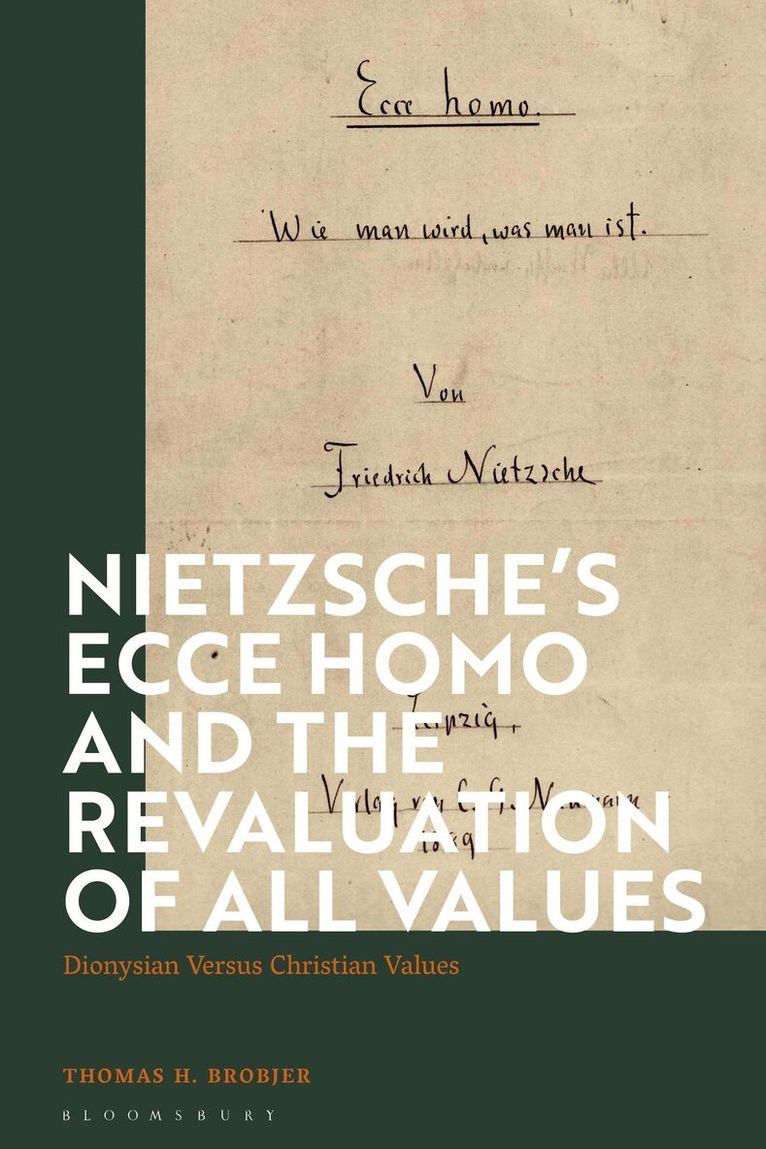
Challenging the standard interpretation of Nietzsche’s last published work, Ecce Homo, as frivolous autobiography, Thomas H. Brobjer provides an original and detailed analysis of Ecce Homo as fundamental to Nietzsche’s unfinished masterwork on the revaluation of all values.Arguing that Ecce Homo laid the foundations for his planned four-volume work on values, Brobjer draws together the intentions and motivations behind Nietzsche’s late work to create a new narrative on it. He situates this period in the desire to undermine the system of Christian values that Nietzsche believed were unchecked as the standard moral gauge for his time. To engage in this project, Brobjer shows that it was essential for Nietzsche to explore the self and life-denying qualities of a Christian system of values within a broader framework of ideas about morality, altruism, egotism, pessimism, humility and pride.By fully outlining the context of Ecce Homo, Brobjer provides a complete corrective to its reception as a self-referential and eccentric text of little philosophical significance, enabling a new understanding within the history of philosophy and Nietzsche’s oeuvre.
Häftad, Engelska, 2023
412 kr
Skickas inom 10-15 vardagar
Challenging the standard interpretation of Nietzsche’s last published work, Ecce Homo, as frivolous autobiography, Thomas H. Brobjer provides an original and detailed analysis of Ecce Homo as fundamental to Nietzsche’s unfinished masterwork on the revaluation of all values.Arguing that Ecce Homo laid the foundations for his planned four-volume work on values, Brobjer draws together the intentions and motivations behind Nietzsche’s late work to create a new narrative on it. He situates this period in the desire to undermine the system of Christian values that Nietzsche believed were unchecked as the standard moral gauge for his time. To engage in this project, Brobjer shows that it was essential for Nietzsche to explore the self and life-denying qualities of a Christian system of values within a broader framework of ideas about morality, altruism, egotism, pessimism, humility and pride.By fully outlining the context of Ecce Homo, Brobjer provides a complete corrective to its reception as a self-referential and eccentric text of little philosophical significance, enabling a new understanding within the history of philosophy and Nietzsche’s oeuvre.
Inbunden, Engelska, 2023
1 222 kr
Skickas inom 10-15 vardagar
Thomas Brobjer revisits Nietzsche’s Twilight of the Idols (1888) and positions it as a rich and stimulating work that contains and summarizes much of Nietzsche’s late philosophy, especially his unfinished magnum opus, The Revaluation of All Values.By examining the contents and the purpose of The Twilight of the Idols in relation to Nietzsche’s Hauptwerk, Brobjer shows the deep influence of the revaluation project on its construction, a theme ignored by almost all previous commentators. This book reveals more of what Nietzsche was reading as well as outlining influences on him at the time of writing this text, providing a comprehensive commentary that explores both German and English language scholarship. Detailed analyses of the moral, religious and scientific underpinnings of the text enable a new interpretation that is rooted in the project’s core philosophy, yielding more knowledge about The Revaluation of All Values as well as Nietzsche’s last philosophical thought and position.
Häftad, Engelska, 2024
398 kr
Skickas inom 10-15 vardagar
Thomas Brobjer revisits Nietzsche’s Twilight of the Idols (1888) and positions it as a rich and stimulating work that contains and summarizes much of Nietzsche’s late philosophy, especially his unfinished magnum opus, The Revaluation of All Values.By examining the contents and the purpose of The Twilight of the Idols in relation to Nietzsche’s Hauptwerk, Brobjer shows the deep influence of the revaluation project on its construction, a theme ignored by almost all previous commentators. This book reveals more of what Nietzsche was reading as well as outlining influences on him at the time of writing this text, providing a comprehensive commentary that explores both German and English language scholarship. Detailed analyses of the moral, religious and scientific underpinnings of the text enable a new interpretation that is rooted in the project’s core philosophy, yielding more knowledge about The Revaluation of All Values as well as Nietzsche’s last philosophical thought and position.
Inbunden, Engelska, 2026
1 386 kr
Kommande
Through detailed analysis of Nietzsche’s correspondence and late notebooks, Thomas Brobjer uncovers the intricate relationship between Nietzsche’s Genealogy of Morals and his unfinished Revaluation of All Values.Demonstrating the close links in content between the two works, Brobjer explores how it is in the Genealogy that Nietzsche charts the two-value dichotomy between noble (active) and Christian (passive) values: a dichotomy that was also to constitute the basis of his project of revaluating values. Moreover, unearthing for the first time Nietzsche’s plans for a second volume of the Genealogy and translating many of the notes and plans for this text into English, he reveals how the idea for this second volume eventually merged into the third volume of the Hauptwerk. In doing so, this book bridges the gap between Nietzsche’s published works and his Nachlass in a way that few English-language studies have done. By engaging directly with Nietzsche's late notebooks and other elements of his Nachlass, this book makes a significant contribution to the debate around these sources. Arguing against their dismissal, Brobjer classes them as active working materials crucial for understanding the development and intended trajectory of Nietzsche's unfinished philosophy. In these sources he also finds new information about how Nietzsche worked – his reading habits, note-taking, compositional process, and routine of walking and thinking – further enriching our understanding of the philosopher’s thought beyond his finished texts. History of philosophy at its best, this is the third volume in Brobjer’s trilogy examining the connections between Nietzsche’s published works and the Revaluation of All Values. It is an essential read for all Nietzsche scholars, providing crucial insights into not only the Genealogy and Hauptwerk, but also Nietzsche’s ethics, working methods, and Nachlass.
Inbunden, Engelska, 2023
910 kr
Skickas inom 5-8 vardagar
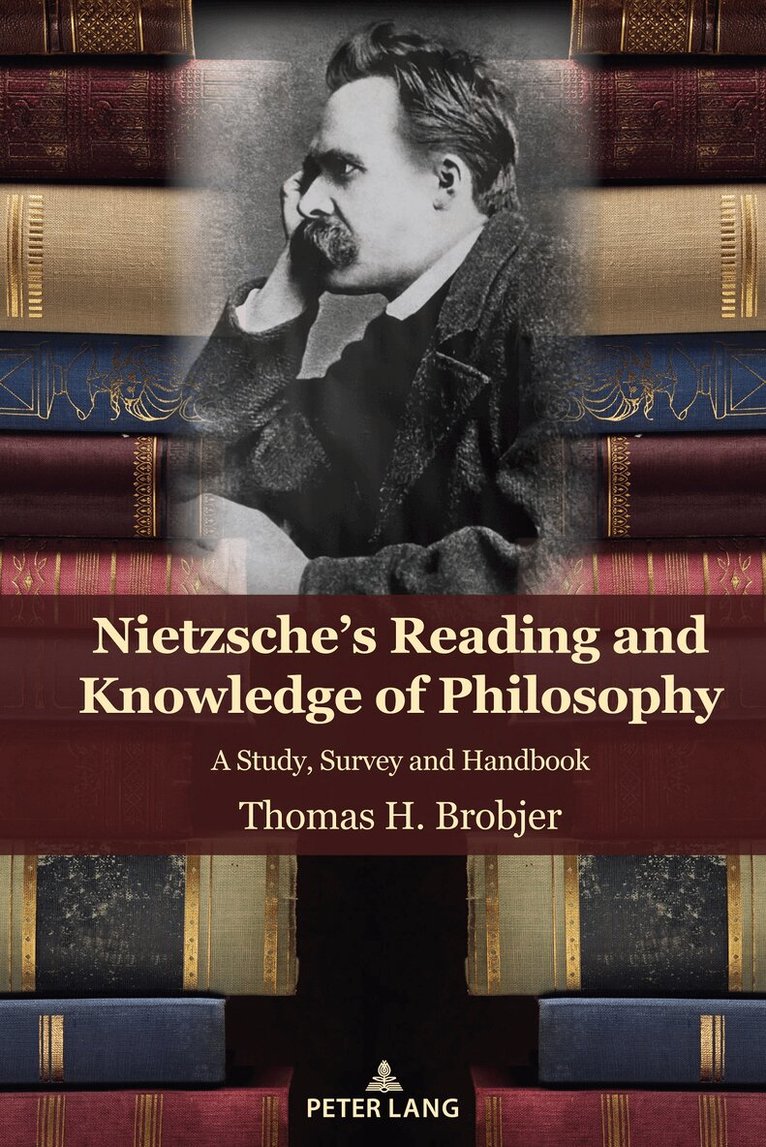
Nietzsche read far more widely, and more actively, than he led us to believe. Reading was his most important intellectual stimulus: he lived a very isolated life for most of his career, particularly in the 1880s. Much of what Nietzche thought and wrote, therefore, came in response to his reading.This book is an in-depth study of Nietzsche’s reading and his knowledge of philosophy and philosophers. It examines his relation to the major European thinkers and Eastern traditions, as well as his knowledge and reading of intellectual women and journals of philosophy.Author Thomas H. Brobjer has gathered much previously unpublished information about Nietzsche's reading and library, including a great deal about the annotations he made in his books. Nietzsche’s Reading and Knowledge of Philosophy will be useful as a handbook for anyone interested in the philosophical context of Nietzsche’s thought. It will become an important reference work for all those interested in Nietzsche’s philosophy.
Inbunden, Engelska, 2025
1 177 kr
Skickas inom 10-15 vardagar
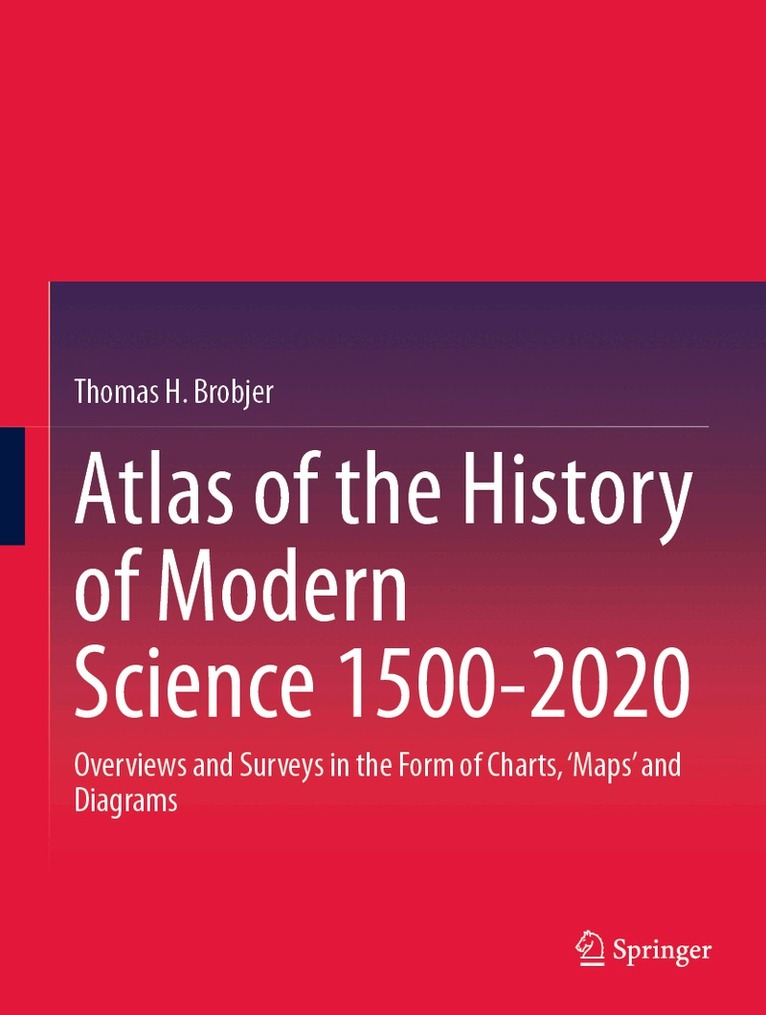
This Atlas of the History of Modern Science functions as a textbook to help the student, by means of diagrams and flowcharts, to better understand both science and the history of science.
Inbunden, Engelska, 2025
1 389 kr
Skickas inom 10-15 vardagar