
Zhendi Wang – författare
1 510 kr
Skickas inom 10-15 vardagar
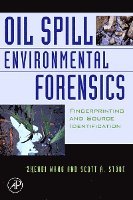
Oil Spill Environmental Forensics provides a complete view of the various forensic techniques used to identify the source of an oil spill into the environment. The forensic procedures described within represent various methods from scientists throughout the world. The authors explore which analytical and interpretative techniques are best suited for a particular oil spill project.
This handy reference also explores the use of these techniques in actual environmental oil spills. Famous incidents discussed include the Exxon Valdez incident in 1989 and the Guanabara Bay, Brazil 2000. The authors chronicle both the successes and failures of the techniques used for each of these events.
Dr. Zhendi Wang is a senior research scientist and Head of Oil Spill Research of Environment Canada, working in the oil and toxic chemical spill research field. He has authored over 270 academic publications and won a number of national and international scientific honors and awards. Dr. Wang is a member of American Chemical Society (ACS), the Canadian Society for Chemistry (CSC), and the International Society of Environmental Forensics (ISEF).
International experts show readers the forensic techniques used in oil spill investigations Provides the theoretical basis and practical applications for investigative techniques Contains numerous case studies demonstrating proven technique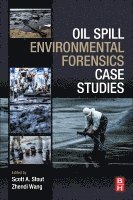
1 426 kr
Skickas inom 10-15 vardagar
Oil Spill Environmental Forensics Case Studies includes 34 chapters that serve to present various aspects of environmental forensics in relation to "real-world� oil spill case studies from around the globe. Authors representing academic, government, and private researcher groups from 14 countries bring a diverse and global perspective to this volume.
Oil Spill Environmental Forensics Case Studies addresses releases of natural gas/methane, automotive gasoline and other petroleum fuels, lubricants, vegetable oils, paraffin waxes, bitumen, manufactured gas plant residues, urban runoff, and, of course, crude oil, the latter ranging from light Bakken shale oil to heavy Canadian oil sands oil. New challenges surrounding forensic investigations of stray gas in the shallow subsurface, volatiles in air, dissolved chemicals in water (including passive samplers), and biological tissues associated with oil spills are included, as are the effects and long-term oil weathering, long-term monitoring in urbanized and non-urbanized environments, fate and transport, forensic historical research, new analytical and chemical data processing and interpretation methods.
Presents cases in each chapter on the application of specific oil spill environmental forensic techniques Features chapters written by international experts from both academia and industry Includes relevant concepts and theories elucidated for each theme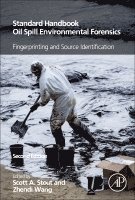
2 363 kr
Skickas inom 10-15 vardagar
Standard Handbook Oil Spill Environmental Forensics: Fingerprinting and Source Identification, Second Edition, provides users with the latest information on the tools and methods that have become popular over the past ten years.
The book presents practitioners with the latest environmental forensics techniques and best practices for quickly identifying the sources of spills, how to form an effective response, and how to determine liability. This second edition represents a complete overhaul of the existing chapters, and includes 13 new chapters on methods and applications, such as emerging application of PAHi isomers in oil spill forensics, development and application of computerized oil spill identification (COSI), and fingerprinting of oil in biological and passive sampling devices.
Contains 13 new chapters on methods and applications, including emerging application of PAH isomers in oil drill forensics, the development and application of computerized oil spill identification (COSI), and the fingerprinting of oil in biological and passive sampling devices Presents the latest technology and methods in biodegradation of oil hydrocarbons and its implications for source identification, surface trajectory modeling of marine oil spills, and identification of hydrocarbons in biological samples for source determination Contains new case studies to illustrate key applications, methods, and techniques