
Visar resultat för..."ADDISON-WESLEY"

969 kr
Skickas inom 3-6 vardagar
551 kr
Skickas inom 3-6 vardagar
434 kr
Skickas inom 3-6 vardagar
668 kr
Skickas inom 3-6 vardagar
466 kr
Skickas inom 3-6 vardagar
649 kr
Skickas inom 3-6 vardagar
902 kr
Skickas inom 3-6 vardagar
632 kr
Skickas inom 3-6 vardagar
719 kr
Skickas inom 3-6 vardagar
1 137 kr
Skickas inom 3-6 vardagar
295 kr
Tillfälligt slut

464 kr
Tillfälligt slut
336 kr
Tillfälligt slut
338 kr
Tillfälligt slut
421 kr
Skickas inom 7-10 vardagar
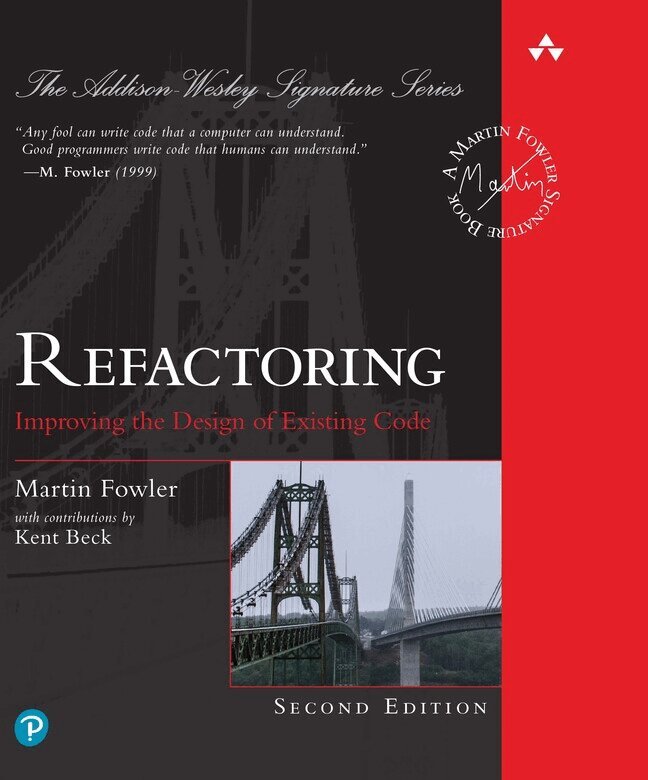
Martin Fowler’s guide to reworking bad code into well-structured code
Refactoring improves the design of existing code and enhances software maintainability, as well as making existing code easier to understand. Original Agile Manifesto signer and software development thought leader, Martin Fowler, provides a catalog of refactorings that explains why you should refactor; how to recognize code that needs refactoring; and how to actually do it successfully, no matter what language you use.
Refactoring principles: understand the process and general principles of refactoring Code smells: recognize “bad smells” in code that signal opportunities to refactor Application improvement: quickly apply useful refactorings to make a program easier to comprehend and change Building tests: writing good tests increases a programmer’s effectiveness Moving features: an important part of refactoring is moving elements between contexts Data structures: a collection of refactorings to organize data, an important role in programs Conditional Logic: use refactorings to make conditional sections easier to understand APIs: modules and their functions are the building blocks of our software, and APIs are the joints that we use to plug them together Inheritance: it is both very useful and easy to misuse, and it’s often hard to see the misuse until it’s in the rear-view mirror---refactorings can fix the misuseExamples are written in JavaScript, but you shouldn’t find it difficult to adapt the refactorings to whatever language you are currently using as they look mostly the same in different languages.
"Whenever you read [Refactoring], it’s time to read it again. And if you haven’t read it yet, please do before writing another line of code." –David Heinemeier Hansson, Creator of Ruby on Rails, Founder & CTO at Basecamp
“Any fool can write code that a computer can understand. Good programmers write code that humans can understand.” –M. Fowler (1999)
305 kr
Skickas inom 7-10 vardagar
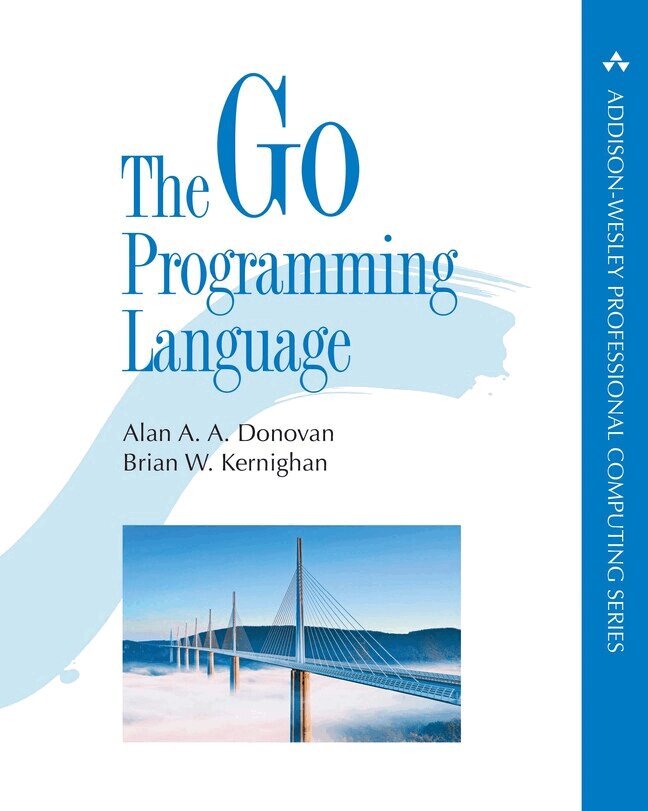
The authoritative resource to writing clear and idiomatic Go to solve real-world problems
Google’s Go team member Alan A. A. Donovan and Brian Kernighan, co-author of The C Programming Language, provide hundreds of interesting and practical examples of well-written Go code to help programmers learn this flexible, and fast, language. It is designed to get you started programming with Go right away and then to progress on to more advanced topics.
Basic components : an opening tutorial provides information and examples to get you off the ground and doing useful things as quickly as possible. This includes: command-line arguments gifs URLs web servers Program structure : simple examples cover the basic structural elements of a Go program without getting sidetracked by complicated algorithms or data structures. Data types: Go offers a variety of ways to organize data, with a spectrum of data types that at one end match the features of the hardware and at the other end provide what programmers need to conveniently represent complicated data structures. Composite types : arrays slices maps structs JSON test and HTML templates Functions : break a big job into smaller pieces that might well be written by different people separated by both time and space. Methods : declarations with a pointer receiver struct embedding values and expressions Interfaces : write functions that are more flexible and adaptable because they are not tied to the details of one particular implementation. Concurrent programming : Goroutines, channels, and with shared variables. Packages : use existing packages and create new ones. Automated testing : write small programs that check the code. Reflection features : update variables and inspect their values at run time. Low-level programming : step outside the usual rules to achieve the highest possible performance, interoperate with libraries written in other languages, or implement a function that cannot be expressed in pure Go.Each chapter has exercises to test your understanding and explore extensions and alternatives. Source code is freely available for download and may be conveniently fetched, built, and installed using the go get command.
458 kr
Skickas inom 7-10 vardagar
467 kr
Skickas inom 7-10 vardagar
335 kr
Skickas inom 7-10 vardagar
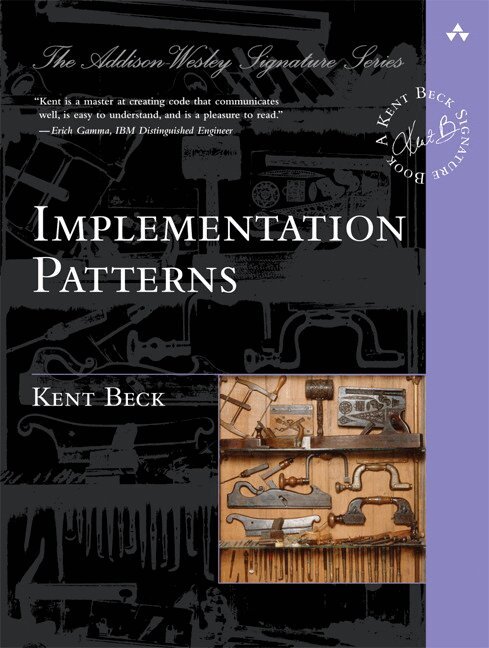
“Kent is a master at creating code that communicates well, is easy to understand, and is a pleasure to read. Every chapter of this book contains excellent explanations and insights into the smaller but important decisions we continuously have to make when creating quality code and classes.”
–Erich Gamma, IBM Distinguished Engineer
“Many teams have a master developer who makes a rapid stream of good decisions all day long. Their code is easy to understand, quick to modify, and feels safe and comfortable to work with. If you ask how they thought to write something the way they did, they always have a good reason. This book will help you become the master developer on your team. The breadth and depth of topics will engage veteran programmers, who will pick up new tricks and improve on old habits, while the clarity makes it accessible to even novice developers.”
–Russ Rufer, Silicon Valley Patterns Group
“Many people don’t realize how readable code can be and how valuable that readability is. Kent has taught me so much, I’m glad this book gives everyone the chance to learn from him.”
–Martin Fowler, chief scientist, ThoughtWorks
“Code should be worth reading, not just by the compiler, but by humans. Kent Beck distilled his experience into a cohesive collection of implementation patterns. These nuggets of advice will make your code truly worth reading.”
–Gregor Hohpe, author of Enterprise Integration Patterns
“In this book Kent Beck shows how writing clear and readable code follows from the application of simple principles. Implementation Patterns will help developers write intention revealing code that is both easy to understand and flexible towards future extensions. A must read for developers who are serious about their code.”
–Sven Gorts
“Implementation Patterns bridges the gap between design and coding. Beck introduces a new way of thinking about programming by basing his discussion on values and principles.”
–Diomidis Spinellis, author of Code Reading and Code Quality
Software Expert Kent Beck Presents a Catalog of Patterns Infinitely Useful for Everyday Programming
Great code doesn’t just function: it clearly and consistently communicates your intentions, allowing other programmers to understand your code, rely on it, and modify it with confidence. But great code doesn’t just happen. It is the outcome of hundreds of small but critical decisions programmers make every single day. Now, legendary software innovator Kent Beck–known worldwide for creating Extreme Programming and pioneering software patterns and test-driven development–focuses on these critical decisions, unearthing powerful “implementation patterns” for writing programs that are simpler, clearer, better organized, and more cost effective.
Beck collects 77 patterns for handling everyday programming tasks and writing more readable code. This new collection of patterns addresses many aspects of development, including class, state, behavior, method, collections, frameworks, and more. He uses diagrams, stories, examples, and essays to engage the reader as he illuminates the patterns. You’ll find proven solutions for handling everything from naming variables to checking exceptions.
This book covers
The value of communicating through code and the philosophy behind patterns How and when to create classes, and how classes encode logic Best practices for storing and retrieving state Behavior: patterns for representing logic, including alternative paths Writing, naming, and decomposing methods Choosing and using collections Implementation pattern variations for use in building frameworksImplementation Patterns will help programmers at all experience levels, especially those who have benefited from software patterns or agile methods. It will also be an indispensable resource for development teams seeking to work together more efficiently and build more maintainable software. No other programming book will touch your day-to-day work more often.
280 kr
Skickas inom 7-10 vardagar
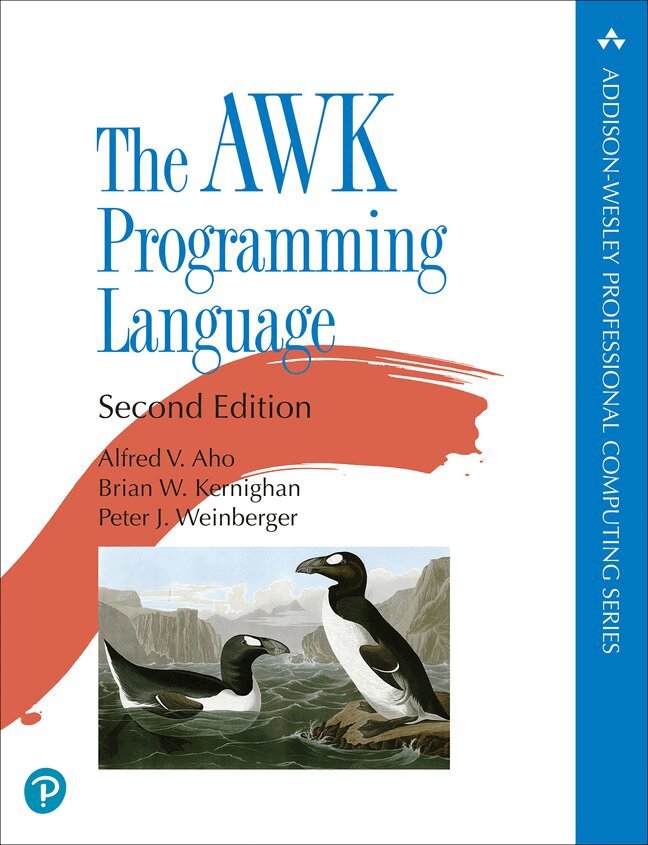
Awk was developed in 1977 at Bell Labs, and it's still a remarkably useful tool for solving a wide variety of problems quickly and efficiently. In this update of the classic Awk book, the creators of the language show you what Awk can do and teach you how to use it effectively.
Here's what programmers today are saying: "I love Awk." "Awk is amazing." "It is just so damn good." "Awk is just right." "Awk is awesome." "Awk has always been a language that I loved."
It's easy: "Simple, fast and lightweight." "Absolutely efficient to learn because there isn't much to learn." "3-4 hours to learn the language from start to finish." "I can teach it to new engineers in less than 2 hours."
It's productive: "Whenever I need to do a complex analysis of a semi-structured text file in less than a minute, Awk is my tool." "Learning Awk was the best bang for buck investment of time in my entire career." "Designed to chew through lines of text files with ease, with great defaults that minimize the amount of code you actually have to write to do anything."
It's always available: "AWK runs everywhere." "A reliable Swiss Army knife that is always there when you need it." "Many systems lack Perl or Python, but include Awk."
Register your book for convenient access to downloads, updates, and/or corrections as they become available. See inside book for details.
421 kr
Skickas inom 7-10 vardagar
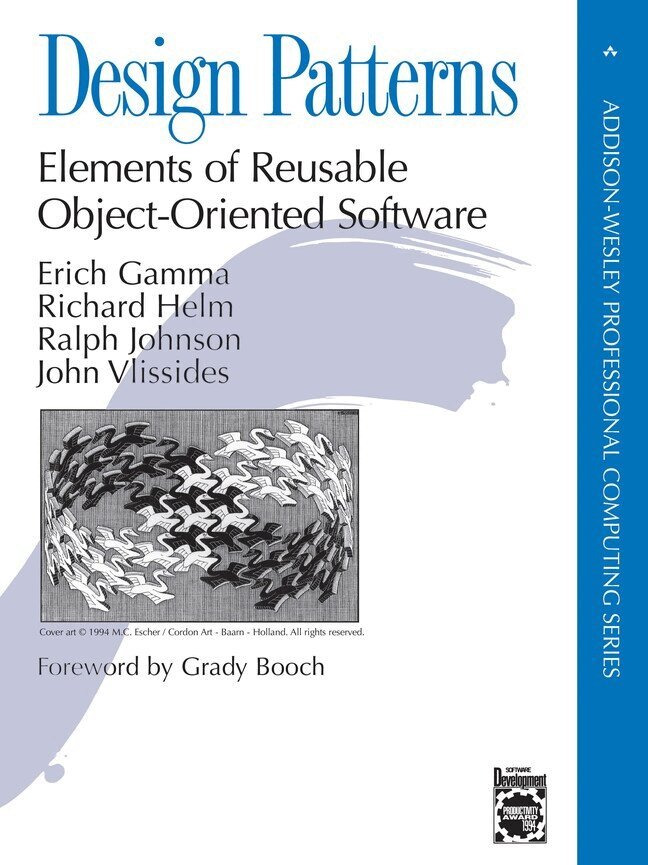
The authors begin by describing what patterns are and how they can help you design object-oriented software. They then go on to systematically name, explain, evaluate, and catalog recurring designs in object-oriented systems. With Design Patterns as your guide, you will learn how these important patterns fit into the software development process, and how you can leverage them to solve your own design problems most efficiently.
Each pattern describes the circumstances in which it is applicable, when it can be applied in view of other design constraints, and the consequences and trade-offs of using the pattern within a larger design. All patterns are compiled from real systems and are based on real-world examples. Each pattern also includes code that demonstrates how it may be implemented in object-oriented programming languages like C++ or Smalltalk.
357 kr
Skickas inom 7-10 vardagar
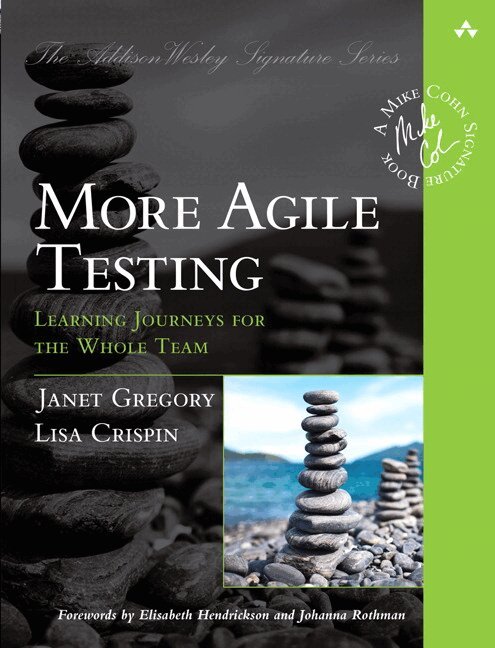
Janet Gregory and Lisa Crispin pioneered the agile testing discipline with their previous work, Agile Testing. Now, in More Agile Testing, they reflect on all they’ve learned since. They address crucial emerging issues, share evolved agile practices, and cover key issues agile testers have asked to learn more about.
Packed with new examples from real teams, this insightful guide offers detailed information about adapting agile testing for your environment; learning from experience and continually improving your test processes; scaling agile testing across teams; and overcoming the pitfalls of automated testing. You’ll find brand-new coverage of agile testing for the enterprise, distributed teams, mobile/embedded systems, regulated environments, data warehouse/BI systems, and DevOps practices.
You’ll come away understanding
• How to clarify testing activities within the team
• Ways to collaborate with business experts to identify valuable features and deliver the right capabilities
• How to design automated tests for superior reliability and easier maintenance
• How agile team members can improve and expand their testing skills
• How to plan “just enough,” balancing small increments with larger feature sets and the entire system
• How to use testing to identify and mitigate risks associated with your current agile processes and to prevent defects
• How to address challenges within your product or organizational context
• How to perform exploratory testing using “personas” and “tours”
• Exploratory testing approaches that engage the whole team, using test charters with session- and thread-based techniques
• How to bring new agile testers up to speed quickly–without overwhelming them
The eBook edition of More Agile Testing also is available as part of a two-eBook collection, The Agile Testing Collection (9780134190624).
446 kr
Skickas inom 7-10 vardagar
“For an engineer determined to refine and secure Internet operation or to explore alternative solutions to persistent problems, the insights provided by this book will be invaluable.”
—Vint Cerf, Internet pioneer
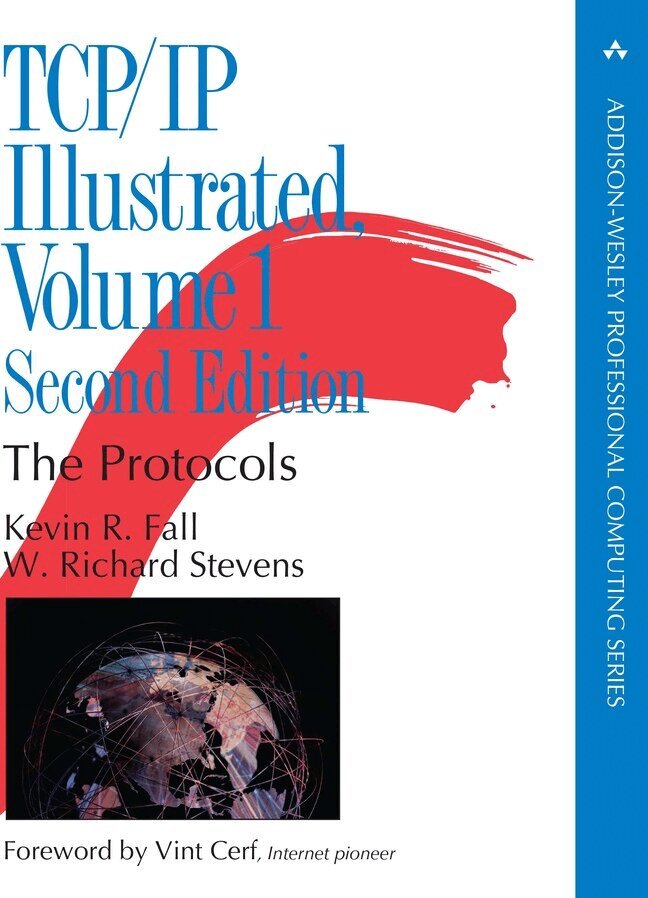
TCP/IP Illustrated, Volume 1, Second Edition, is a detailed and visual guide to today’s TCP/IP protocol suite. Fully updated for the newest innovations, it demonstrates each protocol in action through realistic examples from modern Linux, Windows, and Mac OS environments. There’s no better way to discover why TCP/IP works as it does, how it reacts to common conditions, and how to apply it in your own applications and networks.
Building on the late W. Richard Stevens’ classic first edition, author Kevin R. Fall adds his cutting-edge experience as a leader in TCP/IP protocol research, updating the book to fully reflect the latest protocols and best practices. He first introduces TCP/IP’s core goals and architectural concepts, showing how they can robustly connect diverse networks and support multiple services running concurrently. Next, he carefully explains Internet addressing in both IPv4 and IPv6 networks. Then, he walks through TCP/IP’s structure and function from the bottom up: from link layer protocols–such as Ethernet and Wi-Fi–through network, transport, and application layers.
Fall thoroughly introduces ARP, DHCP, NAT, firewalls, ICMPv4/ICMPv6, broadcasting, multicasting, UDP, DNS, and much more. He offers extensive coverage of reliable transport and TCP, including connection management, timeout, retransmission, interactive data flow, and congestion control. Finally, he introduces the basics of security and cryptography, and illuminates the crucial modern protocols for protecting security and privacy, including EAP, IPsec, TLS, DNSSEC, and DKIM. Whatever your TCP/IP experience, this book will help you gain a deeper, more intuitive understanding of the entire protocol suite so you can build better applications and run more reliable, efficient networks.
435 kr
Skickas inom 7-10 vardagar
The Go-To Resource for Large-Scale Organizations to Be Agile
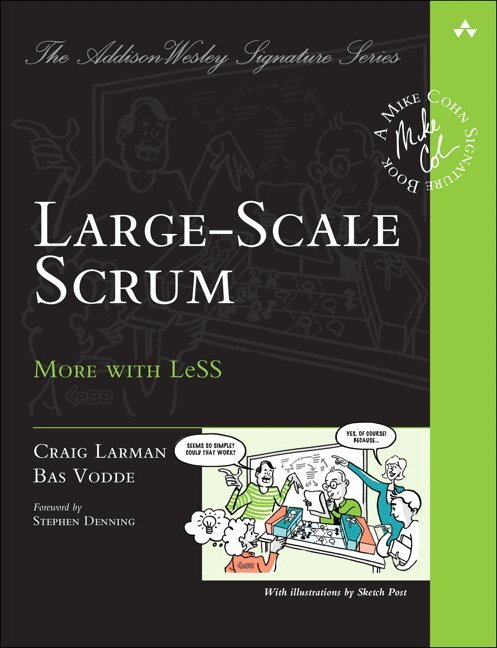
Rather than asking, “How can we do agile at scale in our big complex organization?” a different and deeper question is, “How can we have the same simple structure that Scrum offers for the organization, and be agile at scale rather than do agile?” This profound insight is at the heart of LeSS (Large-Scale Scrum).
In Large-Scale Scrum: More with LeSS, Craig Larman and Bas Vodde have distilled over a decade of experience in large-scale LeSS adoptions towards a simpler organization that delivers more flexibility with less complexity, more value with less waste, and more purpose with less prescription.
Targeted to anyone involved in large-scale development, Large-Scale Scrum: More with LeSS, offers straight-to-the-point guides for how to be agile at scale, with LeSS. It will clearly guide you to
Adopt LeSS Structure a large development organization for customer value Clarify the role of management and Scrum Master Define what your product is, and why Be a great Product Owner Work with multiple whole-product focused feature teams in one Sprint that produces a shippable product Coordinate and integrate between teams Work with multi-site teams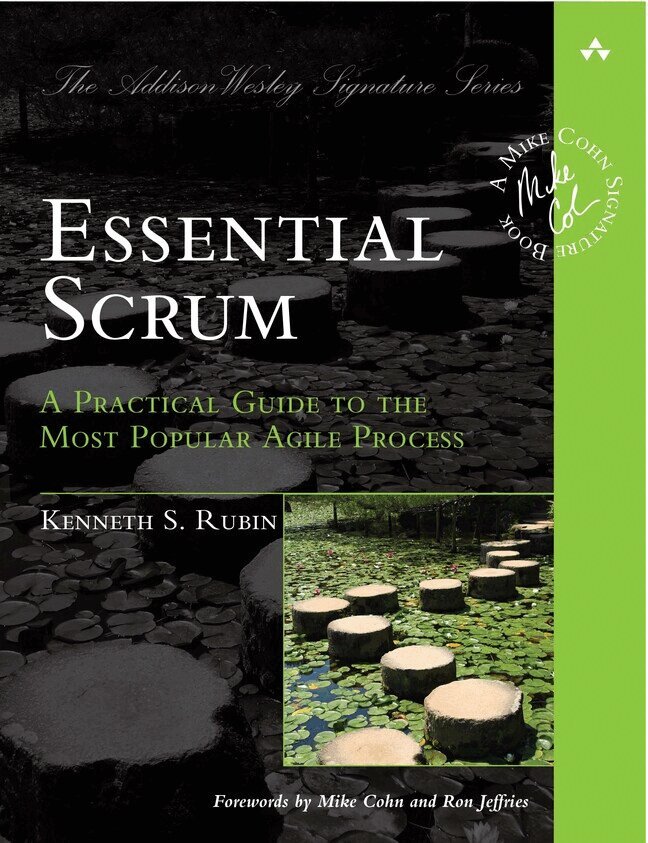
361 kr
Skickas inom 7-10 vardagar
A Practical Guide to the Most Popular Agile Process
The Single-Source, Comprehensive Guide to Scrum for All Team Members, Managers, and Executives
If you want to use Scrum to develop innovative products and services that delight your customers, Essential Scrum is the complete, single-source reference you’ve been searching for. Leading Scrum coach and trainer Kenny Rubin illuminates the values, principles, and practices of Scrum, and describes flexible, proven approaches that can help you implement it far more effectively.
Whether you are new to Scrum or years into your use, this book will introduce, clarify, and deepen your Scrum knowledge at the team, product, and portfolio levels. Drawing from Rubin’s experience helping hundreds of organizations succeed with Scrum, this book provides easy-to-digest descriptions enhanced by more than two hundred illustrations based on an entirely new visual icon language for describing Scrum’s roles, artifacts, and activities.
Essential Scrum will provide every team member, manager, and executive with a common understanding of Scrum, a shared vocabulary they can use in applying it, and practical knowledge for deriving maximum value from it.
446 kr
Skickas inom 7-10 vardagar
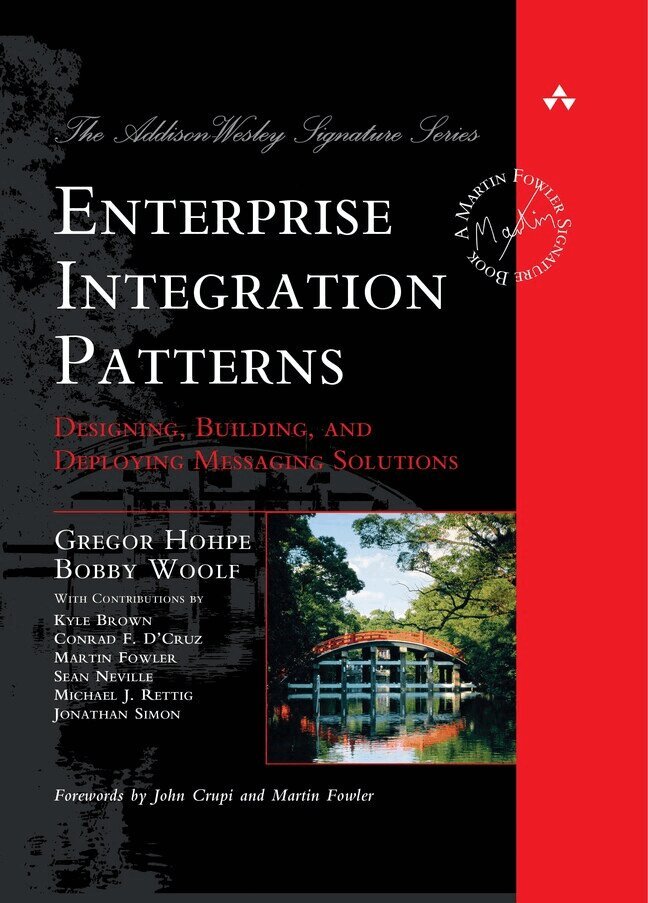
Enterprise Integration Patterns provides an invaluable catalog of sixty-five patterns, with real-world solutions that demonstrate the formidable of messaging and help you to design effective messaging solutions for your enterprise.
The authors also include examples covering a variety of different integration technologies, such as JMS, MSMQ, TIBCO ActiveEnterprise, Microsoft BizTalk, SOAP, and XSL. A case study describing a bond trading system illustrates the patterns in practice, and the book offers a look at emerging standards, as well as insights into what the future of enterprise integration might hold.
This book provides a consistent vocabulary and visual notation framework to describe large-scale integration solutions across many technologies. It also explores in detail the advantages and limitations of asynchronous messaging architectures. The authors present practical advice on designing code that connects an application to a messaging system, and provide extensive information to help you determine when to send a message, how to route it to the proper destination, and how to monitor the health of a messaging system. If you want to know how to manage, monitor, and maintain a messaging system once it is in use, get this book.
541 kr
Tillfälligt slut
253 kr
Tillfälligt slut

649 kr
Tillfälligt slut

342 kr
Tillfälligt slut