
Visar resultat för..."Channel Books division"
Sökningen "Channel 4 Books, a division of Transworld Publishers" gav inga träffar.6 produkter
6 produkter
Häftad, Engelska, 2024
181 kr
Skickas
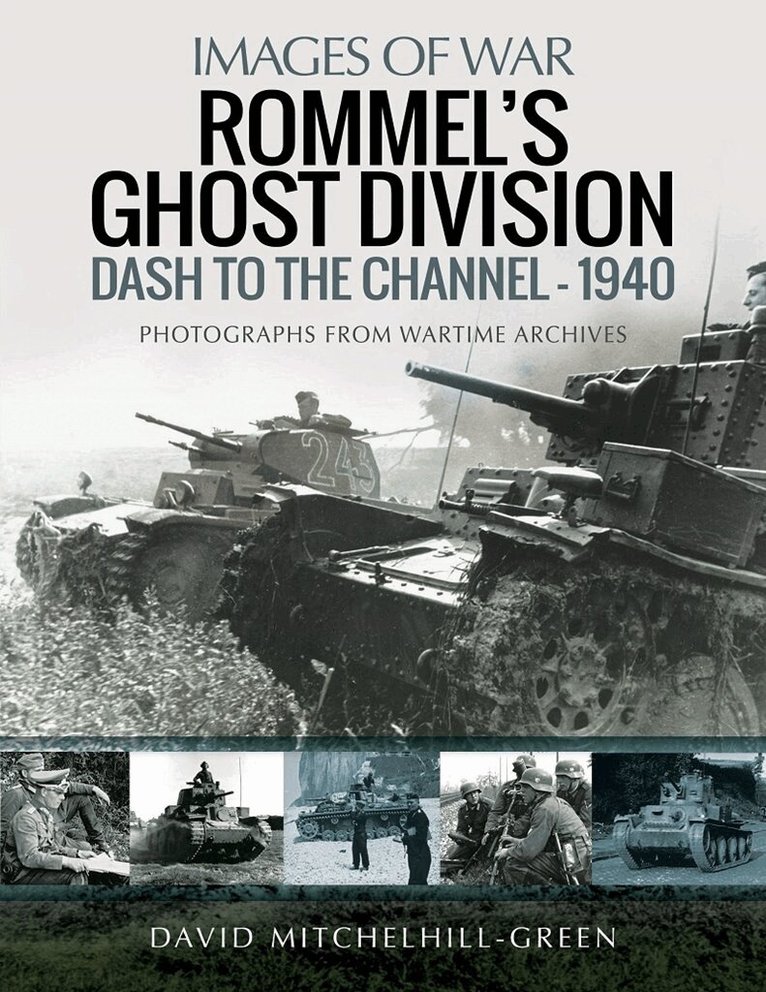
Adolf Hitler invaded Western Europe on 10 May 1940. General Erwin Rommel was at the forefront of the 7th Panzer Division as it crossed the River Meuse in Belgium and punched through the Maginot Line into northern France. An audacious drive toward the English Channel followed. With no prior experience in leading an armoured division in combat, Rommel moved with speed and nerve, frequently surprising and overrunning French units in what he termed a 'lightning Tour de France'. His so-called 'Ghost Division' reached the Channel coast on 10 June, a jubilant Rommel signalling : 'Am at sea.'
Inbunden, Engelska, 2019
391 kr
Skickas inom 7-10 vardagar
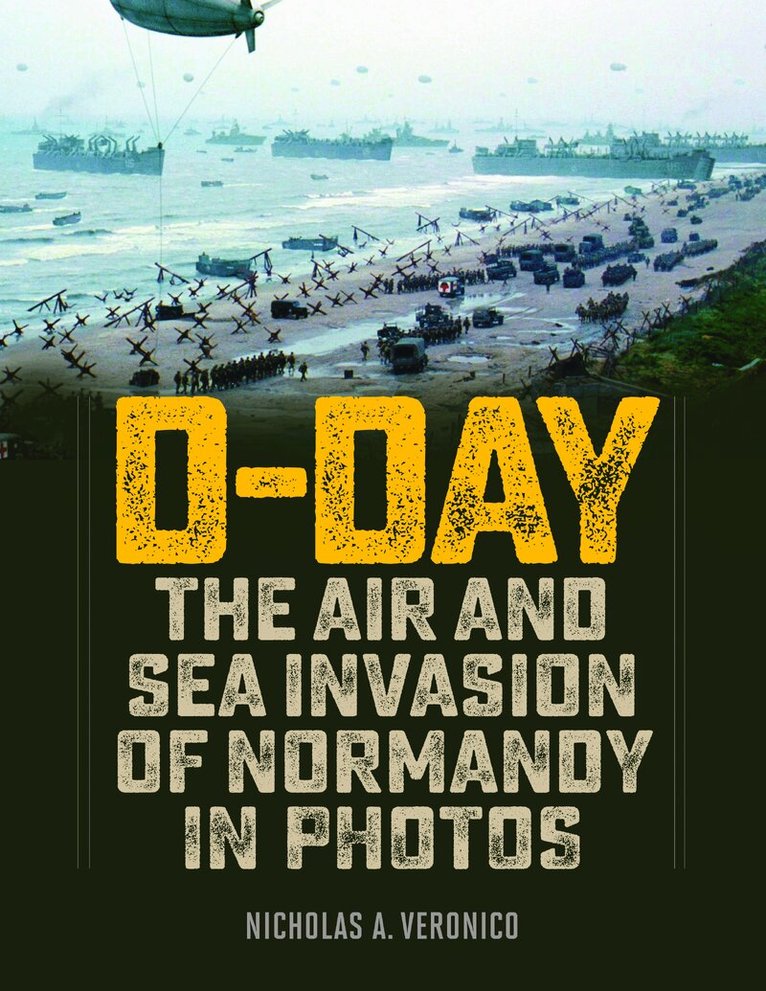
Those who witnessed it never forgot it: the great armada of Allied ships that filled the English Channel on D-Day, June 6, 1944. From battleships, cruisers, and destroyers down to the much smaller landing ships and landing craft, these nearly 7,000 vessels bombarded the Normandy coast, ferried men, tanks, and equipment across the channel, and landed 150,000 troops—under withering German fire—on Omaha, Utah, Gold, Juno, and Sword beaches in a single day. In numbers and scope, it was the largest seaborne invasion in history.Meanwhile, some 12,000 aircraft flew above the sea, a dizzying assortment of fighters and bombers, transports, recon craft, and gliders. Taking off from air fields in England, they dropped thousands of paratroopers and even vehicles, bombed roads and German positions miles inland, provided vital intelligence, and attacked any German planes that were able to take to the skies. It was the largest single-day aerial operation in history.And yet these important—and impressive—aspects of D-Day haven’t received the coverage they deserve, having been overshadowed by the fighting on the beaches. Veronico assembles photos of both the air and sea components of the D-Day invasion, giving the sailors and airmen their due and giving modern readers a vivid sense of what this monumental day was like in the air and at sea.
Inbunden, Engelska, 2024
213 kr
Skickas
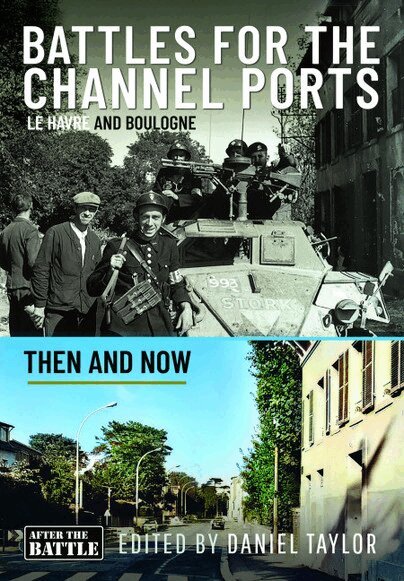
When the Allied armies broke out from the Normandy bridgehead in late July 1944, it became of paramount importance that they quickly capture new harbours to sustain the rapid northward advance. All the Allies supplies and reinforcements were still coming in through just two places the Mulberry artificial harbour at Arromanches and the port of Cherbourg captured by the Americans and with supply lines lengthening by the day, it was essential to speedily open up ports nearer the armies. For Field-Marshal Montgomery s 21st Army Group this meant first of all the channel ports of Le Havre and Boulogne. Both cities had been declared a Festung (Fortress) by Hitler and were to be defended to the last man. The attack on Le Havre (Operation Astonia ) was launched on September 10 and was a classic example of a successful set-piece battle. After the German defences had been softened up by colossal aerial and naval bombardment and artillery shelling, a siege-train of specialised armour broke through the outer crust of the German defensive perimeter and allowed two British infantry divisions the 49th (West Riding) Division and the 51st (Highland) Division to push through the gap and methodically reduce the enemy strongholds before driving into the heart of the city. The attack on Boulogne (Operation Wellhit ) began a week later and was the task of the 3rd Canadian Infantry Division. Another set-piece assault, it was again preceded by a devastating bombardment by RAF heavy bombers, which reduced large parts of the city to ruins, and a massive artillery barrage. Supported by specialised armour, two Canadian brigades then moved forward but the Germans resisted stubbornly and it took six days of heavy fighting before the Canadians had subdued all strongpoints and finally forced the garrison to surrender.Although both ports were now in Allied hands, it brought no immediate alleviation to the Allies logistical problems. Harbour installations had been extensively damaged by German demolitions and Allied bombardments and it would take many weeks of rehabilitation before the ports could be brought into use. Le Havre (which had meanwhile been assigned to the Americans) did not see the few first ships arriving until October 2 and Boulogne not until on October 12.As is our hallmark, all phases of the battles for the two Channel ports are illustrated with Then and Now comparison photographs.The book contains the following two stories from ATB magazine:Issue 139: The Capture of Le HavreAuthor: Karel Margry. 17,441 words, 76 black & white photos.Issue 86: Operation Wellhit The Capture of BoulogneAuthor: Ian Galbraith. 9,099 words,. 80 black & white photos
Häftad, Engelska, 2018
160 kr
Skickas
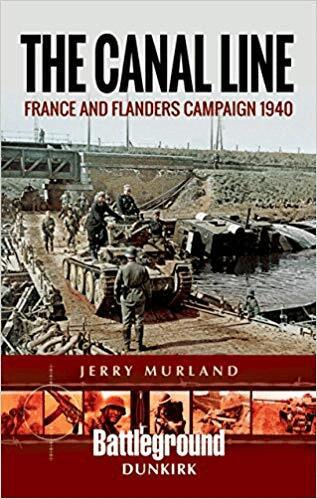
The network of canals stretching from the coast at Gravelines, through St-Omer, B thune and La Bass e, follows the approximate boundary between Artois and Flanders and was, in 1940, the defensive line established on the western edge of the so-called Dunkerque Corridor designed by Lord Gort to provide an evacuation route to the channel coast. Even before events on the line of the Escaut line had concluded with yet another Allied withdrawal, Lord Gort was diverting units to bolster the Canal Line defensesThis is probably the first occasion that the fighting along the Canal Line has been looked at in detail; overlooked by the inevitable withdrawal towards the channel coast, the units deployed along the canal faced some of the stiffest fighting in the whole 1940 France and Flanders campaign. Whole battalions, particularly those in the 2nd Division, were sacrificed as units were thrown into the battle in an attempt to slow down the German advance. The book looks in some detail at the ad hoc nature of the Usherforce and Polforce units, the units of the independent 25 Brigade and the vicious fighting that enveloped the 2nd Division. Time is given also to the notorious massacre of the Royal Norfolks at Louis Creton's farm near Le Paradis.Material concerning the deployment of units along the Canal Line in 1940 has been found in a variety of sources, including regimental histories and unit war diaries. The author has been fortunate in being able to access a number of personal diaries and accounts from men serving with the independent 25 Brigade and the 2nd Division, which has, in some cases, added to and enhanced the actions taken by those units while deployed on the canal.The book is illustrated by over a hundred contemporary and modern photographs and by five car tours and three walks, all of which give the tourist a greater access to the battlefield.
Häftad, Engelska, 2020
170 kr
Skickas
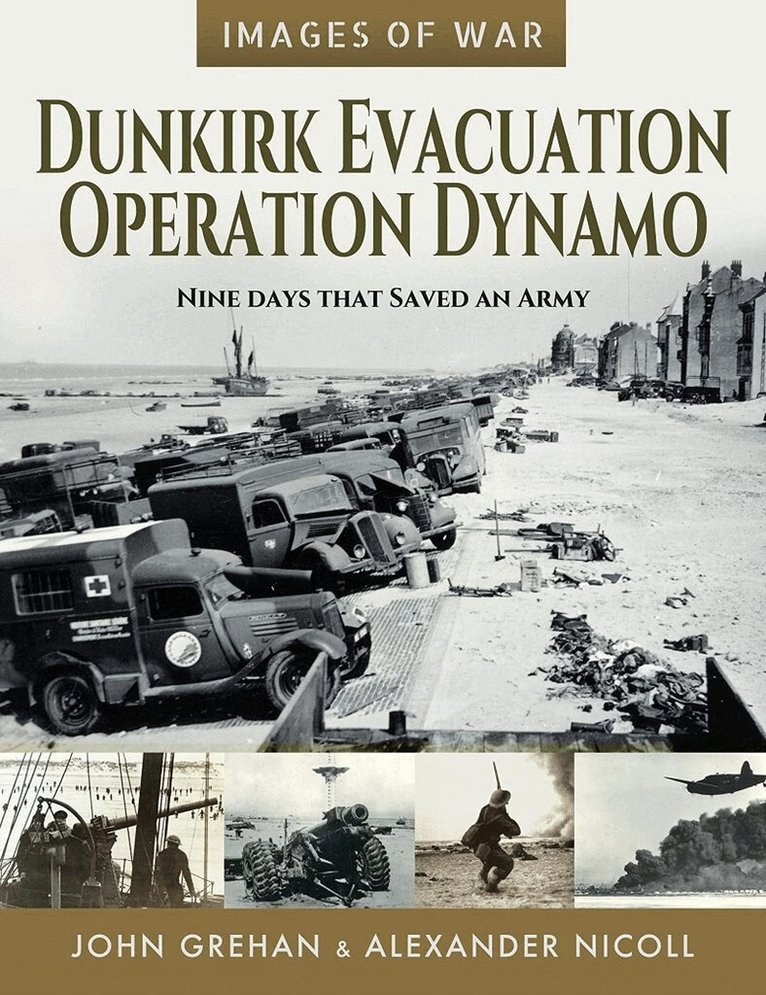
The miracle' of Dunkirk is one of the most inspiring stories of all time. The British Expeditionary Force had been all but surrounded, and, with the French armies collapsing on all sides, it appeared that Britain was about to suffer the heaviest defeat in its history.When Winston Churchill's War Cabinet finally accepted that the Battle of France had been lost, preparations were made to try and rescue as many soldiers as possible from one of the few ports left open to the British Expeditionary Force - Dunkirk.So rushed and chaotic was the retreat to the Channel coast, with thousands of guns, vehicles and tanks being abandoned, there was little time for soldiers to consider taking photographs of the shocking scenes of death and destruction which surrounded them. Yet images do exist of the ships and boats of all descriptions which braved the bombs and guns of the German Air Force to rescue Britain's only field army from the clutches of Hitler's panzer divisions.One man in particular, Sub-Lieutenant John Rutherford Crosby, a member of the crew of the minesweeper, and converted Clyde paddle steamer, HMS Oriole, left a legacy of dramatic images. These include the never-to-be-forgotten scenes of long lines of tired and anxious troops stretching into the sea and of bombs exploding on the packed beaches - all with his own personal little camera.Other images in this book paint a vivid and memorable picture, as no words ever could, of the greatest evacuation of troops under fire.

Inbunden, Engelska, 2006
1 210 kr
Tillfälligt slut
Wireless Communications over MIMO Channels: Applications to CDMA and Multiple Antenna Systems covers both, state-of-the-art channel coding concepts and CDMA and multiple antenna systems, rarely found in other books on the subject. Furthermore, an information theoretical analysis of CDMA and SDMA systems illuminate ultimate limits and demonstrates the high potential of these concepts. Besides spatial multiplexing, the use of multiple transmit antennas in order to increase the link reliability by diversity concepts (space-time coding) is described. Another focus is the application of error control coding in mobile radio communicationsAccompanying appendices include: basic derivations, tables of frequently used channel models, chain rules for entropy and information, data processing theorem, basics of linear algebra, Householder reflection and Givens rotation, and the LLL algorithm for lattice reduction.
Letar du efter digitala böcker?
E-böcker och ljudböcker handlar du än så länge på vår tidigare sajt.