
Visar resultat för..."Six Memos"
9 produkter
9 produkter
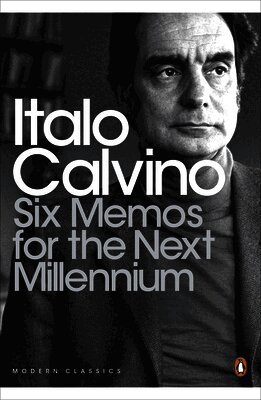
Häftad, Engelska, 2016
139 kr
Skickas
'Words connect the visible track to the invisible thing ... like a fragile makeshift bridge cast across the void'With imagination and wit, Italo Calvino sought to define the virtues of the great literature of the past in order to shape the values of the future. His effervescent last works, left unfinished at his death, were the Charles Eliot Norton lectures, which he was due to deliver at Harvard in 1985-86. These surviving drafts explore the literary concepts closest to his heart: Lightness, Quickness, Multiplicity, Exactitude and Visibility (Constancy was to be the sixth), in serious yet playful essays that reveal his debt to the comic strip and the folktale. This collection, now in a fluent and supple new translation, is a brilliant précis of a great writer whose legacy will endure through the millennium he addressed.Translated by Geoffrey Brock 'The book I give most to people is Six Memos for the Next Millennium' Ali Smith'Wonderful . . . full of wit and erudition' Daily Telegraph
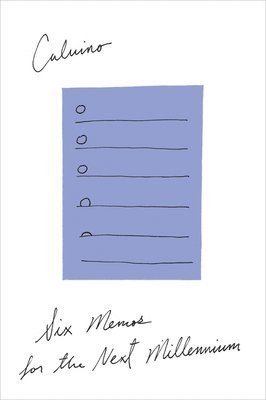
Häftad, Engelska, 2016
244 kr
Skickas inom 3-6 vardagar
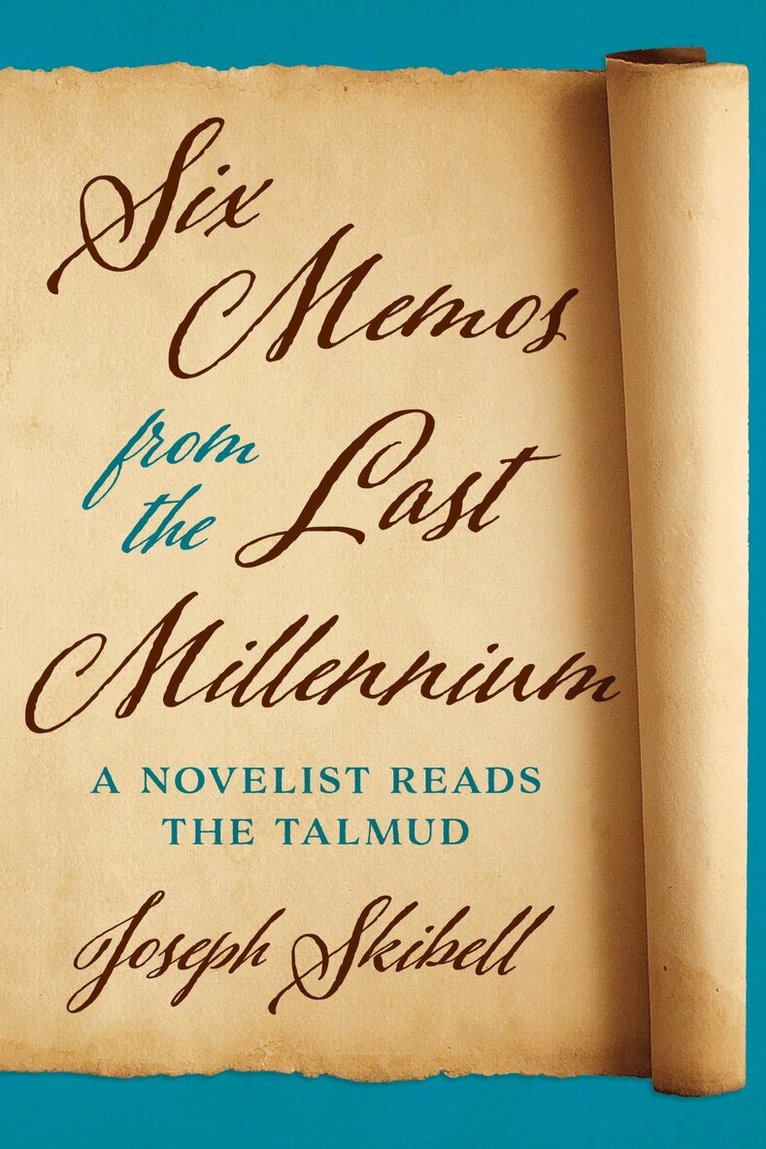
Inbunden, Engelska, 2016
276 kr
Skickas inom 5-8 vardagar
A thief-turned-saint, killed by an insult. A rabbi burning down his world in order to save it. A man who lost his sanity while trying to fathom the origin of the universe. A beautiful woman battling her brother’s and her husband’s egos to preserve their family. Stories such as these enliven the pages of the Talmud, the great repository of ancient wisdom that is one of the sacred texts of the Jewish people. Comprised of the Mishnah, the oral law of the Torah, and the Gemara, a multigenerational metacommentary on the Mishnah dating from between 3950 and 4235 (190 and 475 CE), the Talmud presents a formidable challenge to understand without scholarly training and study. But what if one approaches it as a collection of tales with surprising relevance for contemporary readers?In Six Memos from the Last Millennium, critically acclaimed novelist Joseph Skibell reads some of the Talmud’s tales with a storyteller’s insight, concentrating on the lives of the legendary rabbis depicted in its pages to uncover the wisdom they can still impart to our modern age. He unifies strands of stories that are scattered throughout the Talmud into coherent narratives or “memos,” which he then analyzes and interprets from his perspective as a novelist. In Skibell’s imaginative and personal readings, this sacred literature frequently defies our conventional notions of piety. Sometimes wild, rude, and even bawdy, these memos from the last millennium pursue a livable transcendence, a way of fusing the mundane hours of earthly life with a cosmic sense of holiness and wonder.
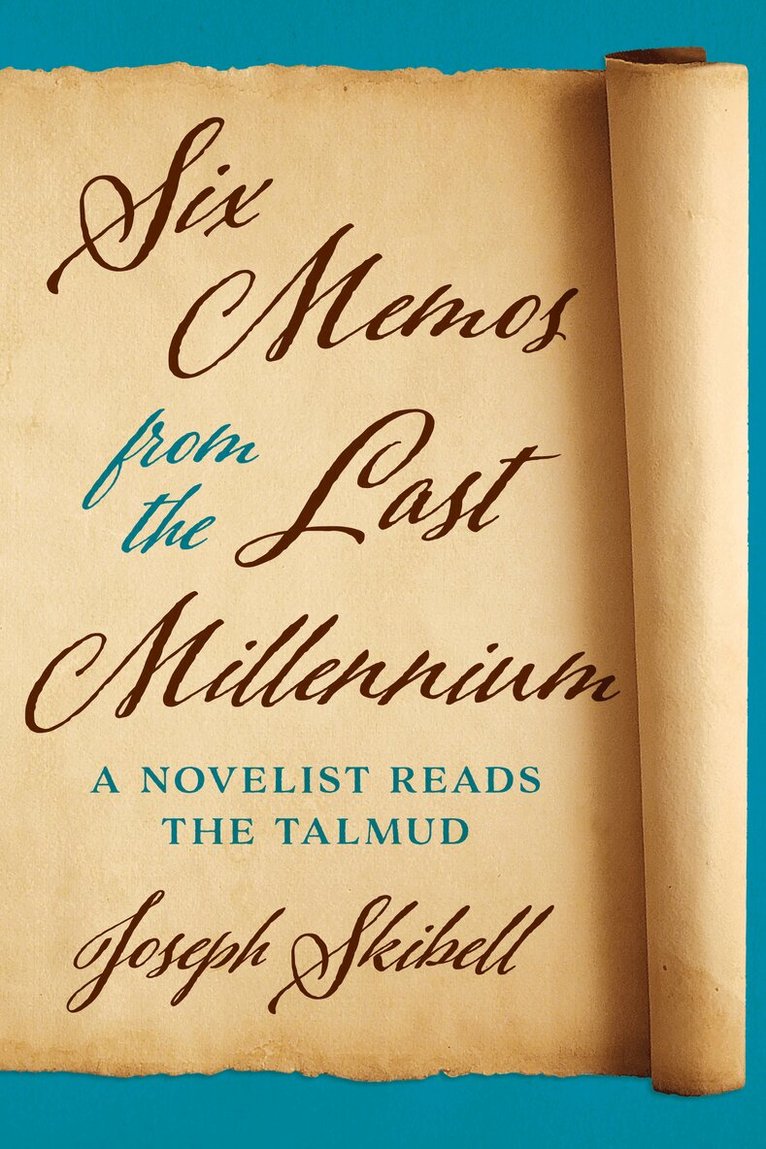
Häftad, Engelska, 2026
295 kr
Kommande
A thief-turned-saint, killed by an insult. A rabbi burning down his world in order to save it. A man who lost his sanity while trying to fathom the origin of the universe. A beautiful woman battling her brother’s and her husband’s egos to preserve their family. Stories such as these enliven the pages of the Talmud, the great repository of ancient wisdom that is one of the sacred texts of the Jewish people. Comprised of the Mishnah, the oral law of the Torah, and the Gemara, a multigenerational metacommentary on the Mishnah dating from between 3950 and 4235 (190 and 475 CE), the Talmud presents a formidable challenge to understand without scholarly training and study. But what if one approaches it as a collection of tales with surprising relevance for contemporary readers?In Six Memos from the Last Millennium, critically acclaimed novelist Joseph Skibell reads some of the Talmud’s tales with a storyteller’s insight, concentrating on the lives of the legendary rabbis depicted in its pages to uncover the wisdom they can still impart to our modern age. He unifies strands of stories that are scattered throughout the Talmud into coherent narratives or “memos,” which he then analyzes and interprets from his perspective as a novelist. In Skibell’s imaginative and personal readings, this sacred literature frequently defies our conventional notions of piety. Sometimes wild, rude, and even bawdy, these memos from the last millennium pursue a livable transcendence, a way of fusing the mundane hours of earthly life with a cosmic sense of holiness and wonder.

Engelska, 2023
691 kr
Skickas inom 5-8 vardagar
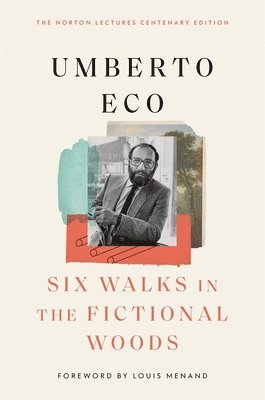
Del 59 - Charles Eliot Norton Lectures
Six Walks in the Fictional Woods
Inbunden, Engelska, 2025
223 kr
Skickas inom 5-8 vardagar
“Erudite, wide-ranging, and slyly humorous.” —The AtlanticOne of the great novelists and public intellectuals of our time gives a master class on the philosophy of fiction.Umberto Eco was fond of pointing out that all writing is narrative. He published his famed debut novel The Name of the Rose when he was forty-eight years old, yet he believed that everything he had written to that point—from treatises on semiotics to essays on mass culture—took the form of a story. To Eco, scholarship, much like fiction, was shaped by narrative. It was the stuff of life itself.Six Walks in the Fictional Woods, a collection of essays based on Eco’s 1992–1993 Norton Lectures at Harvard, illuminates fiction’s porous boundaries—in particular, the myriad ways that literary works conscript readers’ experiences and expectations. Fiction, says Eco, can offer metaphysical comfort by appealing to our desire for a smaller, more legible world, one that gives a definitive answer to the question of “whodunnit?” But it also makes demands of us, presupposing a model reader who possesses the cultural knowledge necessary to interpret the text, as well as a willingness to follow the never-quite-specified rules of the literary game.Whether he is dissecting grammatical ambiguities in Gérard de Nerval’s nineteenth-century romantic masterpiece Sylvie, studying the rhythms of Ian Fleming’s James Bond novels, or tracing the web of fraud and misattribution that produced the antisemitic conspiracy theory of The Protocols of the Elders of Zion, this is Eco at his very best: intellectually omnivorous, endlessly fascinated by hoaxes, and always an adept navigator of the narrative forests that surround us.
Inbunden, Engelska, 2025
2 481 kr
Skickas inom 10-15 vardagar
In 1985, Italo Calvino proposed six values he deemed crucial to literature as it moved into the next millennium: lightness, quickness, ‘crystal’ exactitude, visibility, multiplicity, and consistency. Using Italo Calvino’s Six Memos for the Next Millennium as structure and methodology, this book conjoins literary studies with creative practice to interrogate, extend/subvert, and then reflect on the aesthetic and structural ambitions of multiple innovative print authors (Italo Calvino, Zadie Smith, William Faulkner, Virginia Woolf, Bernardine Evaristo, Roberto Bolano, Rachel Cusk, Shahriar Mandanipour, W.G. Sebald, Ross Gibson, Han Kang, and J.M. Coetzee) reimagined in new media in order to develop a model for digital literary practice-led research. This work contains four strands that are presented simultaneously. First, this monograph explores the rise of Calvino’s values within the Calvino corpus. Second, this value’s application to a contemporary literary predicament is explored through a digression. Third, conclusions from this interrogation are drawn as they relate to digital literary culture. Finally, the value’s importance is demonstrated through examining/reflecting on contemporary digital literary creative practice – both the author’s own and works created by contemporary writers/artists who have engaged with the digital postmodern.
Inbunden, Engelska, 2023
1 418 kr
Skickas inom 10-15 vardagar
Reinterpreting the six “memos” that Italo Calvino suggested more than thirty years ago for “the new Millennium”, in this acclaimed book Emmanuel Bouju identifies six new values for literature in the twenty-first century: Superficiality, Secrecy, Energy, Acceleration, Credit, and Follow Through.
Häftad, Engelska, 2024
1 418 kr
Skickas inom 10-15 vardagar
Reinterpreting the six “memos” that Italo Calvino suggested more than thirty years ago for “the new Millennium”, in this acclaimed book Emmanuel Bouju identifies six new values for literature in the twenty-first century: Superficiality, Secrecy, Energy, Acceleration, Credit, and Follow Through.
Letar du efter digitala böcker?
E-böcker och ljudböcker handlar du än så länge på vår tidigare sajt.