
Visar resultat för..."The Economist Shop"
8 produkter
8 produkter

Inbunden, Engelska, 2000
937 kr
Skickas inom 5-8 vardagar
How is the relationship between the Japanese state and Japanese society mediated by the press? Does the pervasive system of press clubs, and the regulations underlying them, alter or even censor the way news is reported in Japan? Who benefits from the press club system? And who loses? Here Laurie Anne Freeman examines the subtle, highly interconnected relationship between journalists and news sources in Japan. Beginning with a historical overview of the relationship between the press, politics, and the public, she describes how Japanese press clubs act as "information cartels," limiting competition among news organizations and rigidly structuring relations through strict rules and sanctions. She also shows how the web of interrelations extends into, and is reinforced by, media industry associations and business groups (keiretsu). Political news and information are conveyed to the public in Japan, but because of institutional constraints, they are conveyed in a highly delimited fashion that narrows the range of societal inquiry into the political process. Closing the Shop shows us how the press system in Japan serves as neither a watchdog nor a lapdog.Nor does the state directly control the press in ways Westerners might think of as censorship. The level of interconnectedness, through both official and unofficial channels, helps set the agenda and terms of political debate in Japan's mass media to an extent that is unimaginable to many in the United States and other advanced industrial democracies. This fascinating look at Japan's information cartels provides a critical but often overlooked explanation for the overall power and autonomy enjoyed by the Japanese state.
Häftad, Engelska, 2001
490 kr
Skickas inom 5-8 vardagar
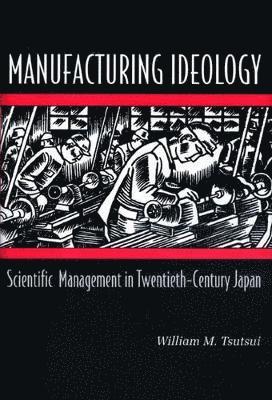
Japanese industry is the envy of the world for its efficient and humane management practices. Yet, as William Tsutsui argues, the origins and implications of "Japanese-style management" are poorly understood. Contrary to widespread belief, Japan's acclaimed strategies are not particularly novel or even especially Japanese. Tsutsui traces the roots of these practices to Scientific Management, or Taylorism, an American concept that arrived in Japan at the turn of the century. During subsequent decades, this imported model was embraced--and ultimately transformed--in Japan's industrial workshops. Imitation gave rise to innovation as Japanese managers sought a "revised" Taylorism that combined mechanistic efficiency with respect for the humanity of labor. Tsutsui's groundbreaking study charts Taylorism's Japanese incarnation, from the "efficiency movement" of the 1920s, through Depression-era "rationalization" and wartime mobilization, up to postwar "productivity" drives and quality-control campaigns.Taylorism became more than a management tool; its spread beyond the factory was a potent intellectual template in debates over economic growth, social policy, and political authority in modern Japan. Tsutsui's historical and comparative perspectives reveal the centrality of Japanese Taylorism to ongoing discussions of Japan's government-industry relations and the evolution of Fordist mass production. He compels us to rethink what implications Japanese-style management has for Western industries, as well as the future of Japan itself.
Häftad, Engelska, 2004
520 kr
Skickas inom 5-8 vardagar
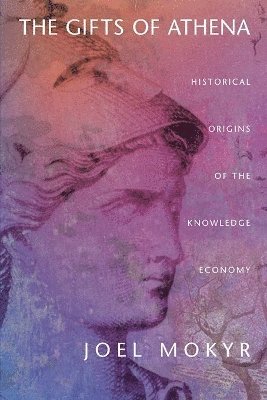
The growth of technological and scientific knowledge in the past two centuries has been the overriding dynamic element in the economic and social history of the world. Its result is now often called the knowledge economy. But what are the historical origins of this revolution and what have been its mechanisms? In The Gifts of Athena, Joel Mokyr constructs an original framework to analyze the concept of "useful" knowledge. He argues that the growth explosion in the modern West in the past two centuries was driven not just by the appearance of new technological ideas but also by the improved access to these ideas in society at large--as made possible by social networks comprising universities, publishers, professional sciences, and kindred institutions. Through a wealth of historical evidence set in clear and lively prose, he shows that changes in the intellectual and social environment and the institutional background in which knowledge was generated and disseminated brought about the Industrial Revolution, followed by sustained economic growth and continuing technological change.Mokyr draws a link between intellectual forces such as the European enlightenment and subsequent economic changes of the nineteenth century, and follows their development into the twentieth century. He further explores some of the key implications of the knowledge revolution. Among these is the rise and fall of the "factory system" as an organizing principle of modern economic organization. He analyzes the impact of this revolution on information technology and communications as well as on the public's state of health and the structure of households. By examining the social and political roots of resistance to new knowledge, Mokyr also links growth in knowledge to political economy and connects the economic history of technology to the New Institutional Economics. The Gifts of Athena provides crucial insights into a matter of fundamental concern to a range of disciplines including economics, economic history, political economy, the history of technology, and the history of science.

Inbunden, Engelska, 2014
285 kr
Skickas inom 11-20 vardagar
Henry Spearman, the balding economics professor with a knack for solving crimes, returns in The Mystery of the Invisible Hand--a clever whodunit of campus intrigue, stolen art, and murder. Having just won the Nobel Prize, Spearman accepts an invitation to lecture at Monte Vista University. He arrives in the wake of a puzzling art heist with plans to teach a course on art and economics--only to be faced with the alleged suicide of womanizing artist-in-residence Tristan Wheeler. When it becomes clear that Wheeler had serious enemies and a murderer is in their midst, Henry Spearman is on the case. Was Wheeler killed by a jilted lover, a cuckolded husband, or a beleaguered assistant? Could there have been a connection between Wheeler's marketability and his death? From the Monte Vista campus in San Antonio to the halls of Sotheby's in New York, Spearman traces the connections between economics and the art world, finding his clues in monopolies and the Coase conjecture, auction theory, and the work of Adam Smith. What are the parallels between a firm's capital and an art museum's collection? What does the market say about art's authenticity versus its availability?And what is the mysterious "death effect" that lies at the heart of the case? Spearman must rely on his savviest economic insights to clear up this artful mystery and pin down a killer.

Häftad, Engelska, 2016
166 kr
Skickas inom 5-8 vardagar
Henry Spearman, the balding economics professor with a knack for solving crimes, returns in The Mystery of the Invisible Hand--a clever whodunit of campus intrigue, stolen art, and murder. Having just won the Nobel Prize, Spearman accepts an invitation to lecture at Monte Vista University. He arrives in the wake of a puzzling art heist with plans to teach a course on art and economics--only to be faced with the alleged suicide of womanizing artist-in-residence Tristan Wheeler. When it becomes clear that Wheeler had serious enemies and a murderer is in their midst, Henry Spearman is on the case. Was Wheeler killed by a jilted lover, a cuckolded husband, or a beleaguered assistant? Could there have been a connection between Wheeler's marketability and his death? From the Monte Vista campus in San Antonio to the halls of Sotheby's in New York, Spearman traces the connections between economics and the art world, finding his clues in monopolies and the Coase conjecture, auction theory, and the work of Adam Smith. What are the parallels between a firm's capital and an art museum's collection? What does the market say about art's authenticity versus its availability?And what is the mysterious "death effect" that lies at the heart of the case? Spearman must rely on his savviest economic insights to clear up this artful mystery and pin down a killer.

Häftad, Engelska, 2024
184 kr
Skickas inom 5-8 vardagar
Economics professor and amateur detective Henry Spearman tackles a mystery where the price of art is murderIn The Mystery of the Invisible Hand, Henry Spearman, an economics professor with a knack for solving crimes, is pulled into a case that mixes campus intrigue, stolen art, and murder. Arriving at San Antonio’s Monte Vista University to teach a course on art and economics, he is confronted with a puzzling art theft and the suspicious suicide of the school’s artist-in-residence. From Texas to New York, Spearman traces the connections between economics and the art world, finding his clues in monopolies, auction theory, and Adam Smith. How is a company’s capital like an art museum’s collection? What does the market say about art’s authenticity versus its availability? What is the mysterious “death effect”—and does it lie at the heart of the case? Spearman must rely on his savviest economic thinking to answer these questions—and pin down a killer.
Häftad, Engelska, 2015
607 kr
Skickas inom 3-6 vardagar
Wallace N. Atherton is concerned with a single but very important facet of the behavior of labor unions--the ways in which their bargaining objectives are determined. He begins by reviewing the existing literature and briefly sketches the conceptual structure of the union. The analysis starts with a theory whose form and substance are close to existing theories, and then is altered by adding unfamiliar elements. An eclectic "economic" model is built with two provisional assumptions: complete internal homogeneity of preferences about bargaining objectives, and perfect knowledge and foresight of everything relevant to the attainment of these objectives. The main innovation at this stage is the inclusion of anticipated strike length as a variable which affects union preferences of goals to be pursued. In Chapter IV the first provisional assumption is dropped and the model becomes "politico-economic." Allowance is made for diversity of goals within the union and for the leaderships' concern to stay in office. The theory is then restated in axiomatic terms, enabling the author to dispense with the second assumption, that of the union's perfect knowledge and foresight.The theory is now adapted to deal with a union faced with probabilities rather than certainties, and additional adaptations deal with the effect of internal threats to the leaders' control of the organization. Originally published in 1973. The Princeton Legacy Library uses the latest print-on-demand technology to again make available previously out-of-print books from the distinguished backlist of Princeton University Press. These editions preserve the original texts of these important books while presenting them in durable paperback and hardcover editions. The goal of the Princeton Legacy Library is to vastly increase access to the rich scholarly heritage found in the thousands of books published by Princeton University Press since its founding in 1905.
Inbunden, Engelska, 2016
1 377 kr
Skickas inom 3-6 vardagar
Wallace N. Atherton is concerned with a single but very important facet of the behavior of labor unions--the ways in which their bargaining objectives are determined. He begins by reviewing the existing literature and briefly sketches the conceptual structure of the union. The analysis starts with a theory whose form and substance are close to existing theories, and then is altered by adding unfamiliar elements. An eclectic "economic" model is built with two provisional assumptions: complete internal homogeneity of preferences about bargaining objectives, and perfect knowledge and foresight of everything relevant to the attainment of these objectives. The main innovation at this stage is the inclusion of anticipated strike length as a variable which affects union preferences of goals to be pursued. In Chapter IV the first provisional assumption is dropped and the model becomes "politico-economic." Allowance is made for diversity of goals within the union and for the leaderships' concern to stay in office. The theory is then restated in axiomatic terms, enabling the author to dispense with the second assumption, that of the union's perfect knowledge and foresight.The theory is now adapted to deal with a union faced with probabilities rather than certainties, and additional adaptations deal with the effect of internal threats to the leaders' control of the organization. Originally published in 1973. The Princeton Legacy Library uses the latest print-on-demand technology to again make available previously out-of-print books from the distinguished backlist of Princeton University Press. These editions preserve the original texts of these important books while presenting them in durable paperback and hardcover editions. The goal of the Princeton Legacy Library is to vastly increase access to the rich scholarly heritage found in the thousands of books published by Princeton University Press since its founding in 1905.
Letar du efter digitala böcker?
E-böcker och ljudböcker handlar du än så länge på vår tidigare sajt.