
Visar resultat för..."Thomas Telford Ltd"
11 produkter
11 produkter
Häftad, Engelska
1 454 kr
Skickas inom 5-8 vardagar
Häftad, Engelska, 2023
165 kr
Tillfälligt slut
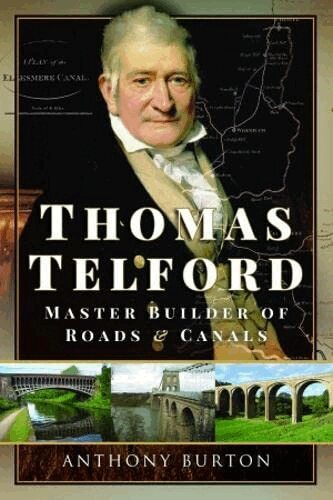
Thomas Telford's life was extraordinary: born in the Lowlands of Scotland, where his father worked as a shepherd, he ended his days as the most revered engineer in the world, known punningly as The Colossus of Roads. He was responsible for some of the great works of the age, such as the suspension bridge across the Menai Straits and the mighty Pontcysyllte aqueduct. He built some of the best roads seen in Britain since the days of the Romans and constructed the great Caledonian Canal, designed to take ships across Scotland from coast to coast. He did as much as anyone to turn engineering into a profession and was the first President of the newly formed Institution of Civil Engineers. All this was achieved by a man who started work as a boy apprentice to a stonemason. He was always intensely proud of his homeland and was to be in charge of an immense programme of reconstruction for the Highlands that included building everything from roads to harbours and even designing churches. He was unquestionably one of Britains finest engineers, able to take his place alongside giants such as Brunel. He was also a man of culture, even though he had only a rudimentary education. As a mason in his early days he had worked alongside some of the greatest architects of the day, such as William Chambers and Robert Adams, and when he was appointed County Surveyor for Shropshire early in his career, he had the opportunity to practice those skills himself, designing two imposing churches in the county and overseeing the renovation of Shrewsbury Castle. Even as a boy, he had developed a love of literature and throughout his life wrote poetry and became a close friend of the Poet Laureate, Robert Southey. He was a man of many talents, who rose to the very top of his profession but never forgot his roots: he kept his old masons tools with him to the end of his days. There are few official monuments to this great man, but he has no need of them: the true monuments are the structures that he left behind that speak of a man who brought about a revolution in transport and civil engineering.
Häftad, Engelska, 2010
211 kr
Skickas
L T C Rolt was an engineer and pioneer of industrial history; in this book he combined these two passions to give us a fascinating account of the men who 'made' Britain. From Brunel to Telford, he takes us on a journey from the first railway tracks being laid down to bridges spanning hitherto unimagined lengths, through to the 'invention' and mastery of the gas and electricity, which we take for granted today. The Victorians were at the forefront of modern technology in their time, but often came to see it as a blight on their landscape and struggled to adapt to the fast pace of this new industrial era.In this book, Rolt not only examines the creations that made Britain's empire great, but also how the age of optimism turned to one of disillusionment with many of our inventors finding fame and fortune abroad. This unrivalled insight into our industrial heritage is compulsory reading for anyone wanting to appreciate the foundations on which our modern lives were built.
Häftad, Engelska, 2017
304 kr
Skickas inom 7-10 vardagar
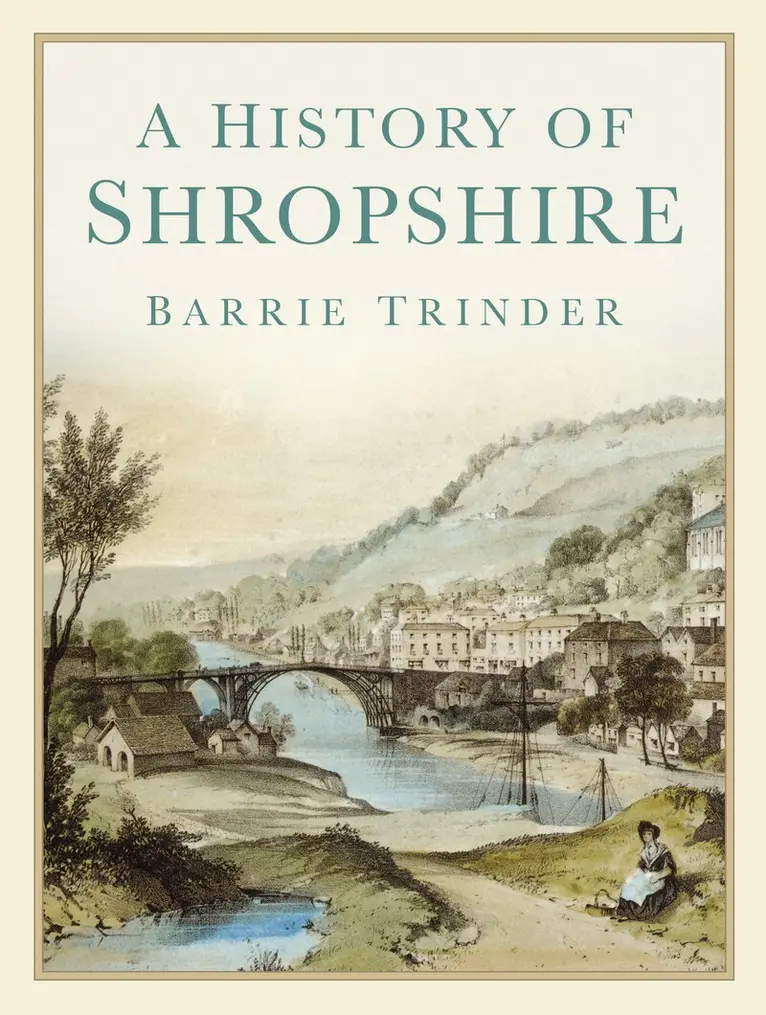
Shropshire is England’s largest inland county, extending from the fringes of the Black Country and the Potteries to the high sheep pastures of Clun Forest and the craggy heights of the Stiperstones. Dr Trinder’s very readable narrative encompasses Shropshire’s entire story, from prehistory to the 1990s. In Roman times, the citizens of Wroxeter enjoyed life in their elegant city beside the Severn, while later centuries of fighting along the Welsh border left a legacy of castles and fortifications, among them Offa’s Dyke, one of the supreme achievements of the Dark Ages. Most of Shropshire’s towns were deliberately planted in the early Middle Ages, among them Ludlow, one of the most beautiful towns in Europe. The development of the Shropshire iron industry, symbolised by the Iron Bridge, ushered in a period of industrialisation which has re-shaped the whole Western world. From 1788 to 1834 Thomas Telford was county surveyor, adding roads, canals and bridges of unfailing elegance to the landscape. During the two World Wars the county housed many military bases, while the most dramatic event of the post-war years has been the transformation of a legacy of industrial dereliction into the new town of Telford. This book is based on more than thirty years of Dr Trinder’s original research and close first-hand acquaintance with the Shropshire landscape. He provides a fascinating framework for further research, a thought-provoking chronicle for Salopians wishing to know more about their history and an informative introduction to Shropshire for its many visitors.
Häftad, Engelska, 2008
327 kr
Skickas inom 7-10 vardagar
The Ironbridge Gorge (midway between Wolverhampton and Shrewsbury) was at the forefront of the Industrial Revolution. The site is best symbolised by the Iron Bridge itself, cast in Coalbrookdale and erected across the River Severn in 1779. It was immediately hailed as one of the wonders of the age. The area had already established itself as the cutting edge of technological innovation and attracted engineers such as Telford and Trevithick. In 1709 Abraham Darby I successfully adopted coke for smelting iron - after which the Coalbrookdale Company spearheaded developments in the iron industry.During the later eighteenth and nineteenth centuries other companies and products became synonymous with the district: Coalport porcelain, Broseley roof tiles and clay tobacco pipes, and decorative tiles from Maws and Craven Dunnill. Using archaeological and historical evidence, the authors chart the rise and fall of the iron, clay and coal industries of Ironbridge and bring to life the communities that worked in them. They have written the definitive guide to the surviving buildings and archaeological remains, portraying the distinctive character of a string of small settlements.
Inbunden, Engelska, 2021
323 kr
Skickas
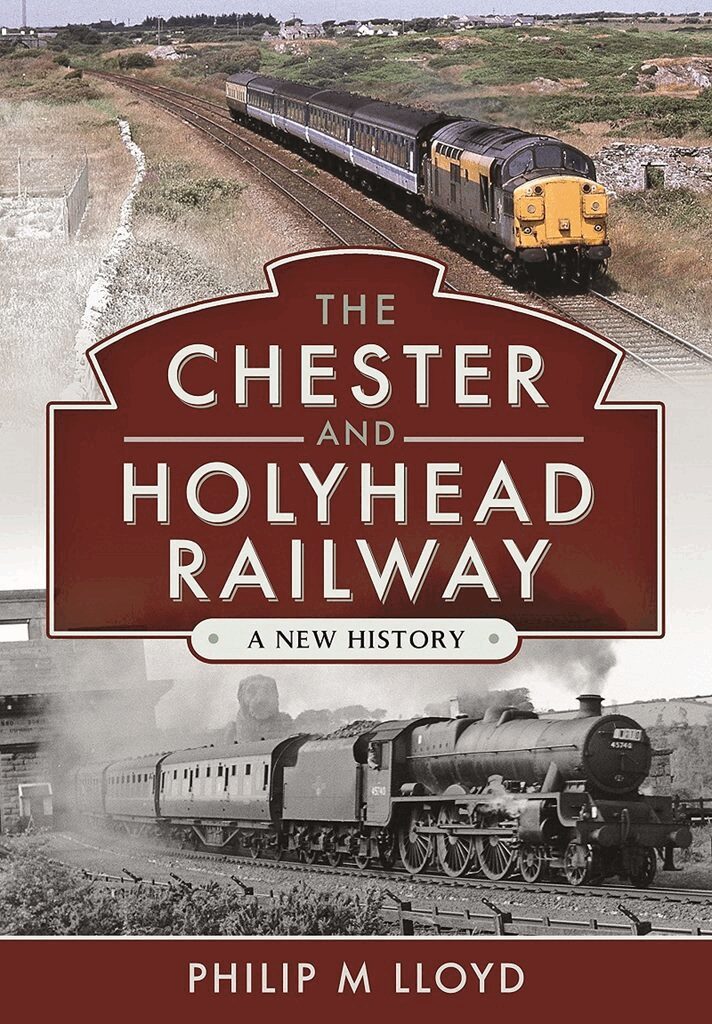
The Chester and Holyhead Railway is one of Britain's most important main line routes, connecting London with mainland north Wales, and the Isle of Anglesey.The line was completed in 1850 under the direction of Robert Stephenson whose work included the famous tubular bridges that cross the river at Conwy and the Menai Straits near Bangor, the latter one destroyed by fire in 1970.The line was built primarily to support British rule in Ireland but was later instrumental in developing north Wales as a major tourist destination. Today the railway remains an important part of the Welsh and UK networks, providing trains that link north Wales with Cardiff and major English cities, as well as connecting with ferry services to Ireland.
Häftad, Engelska, 2022
237 kr
Skickas
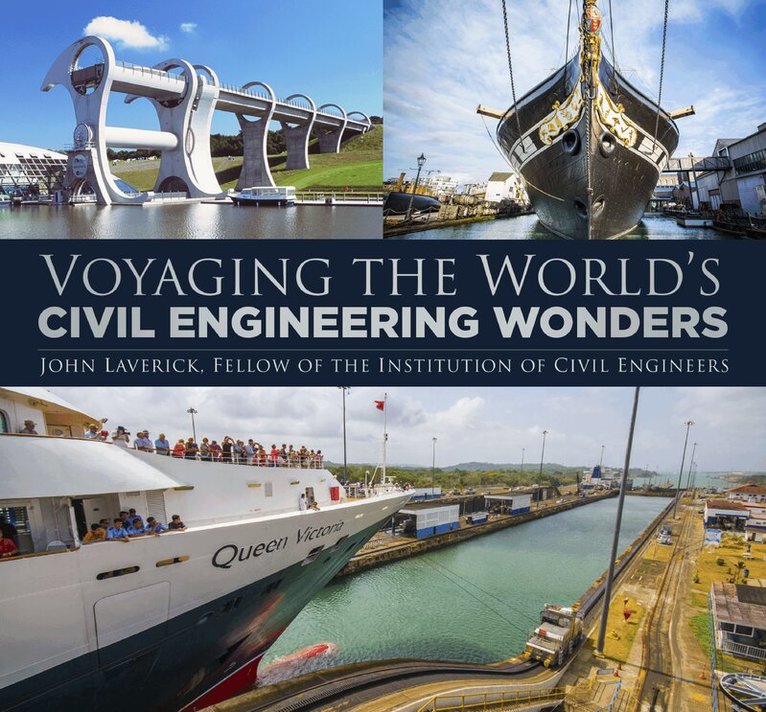
Examples of enduring feats of civil engineering endeavour can be seen around the world’s seas and waterways, from the SS Great Britain to the Panama Canal.In this beautifully illustrated book, John Laverick offers an insight into the intriguing field of civil engineering, taking you on a journey that crosses three continents and three centuries, exploring extraordinary achievements including the artificial waterways of the Panama and Suez canals, floating concepts such as the concrete Mulberry harbours, the world’s only rotating ship lift at Falkirk, a man-made island in the Baltic linking the crossings between two countries and the ambitious restoration of the Wilts & Berks Canal.
Häftad, Engelska, 2019
202 kr
Skickas
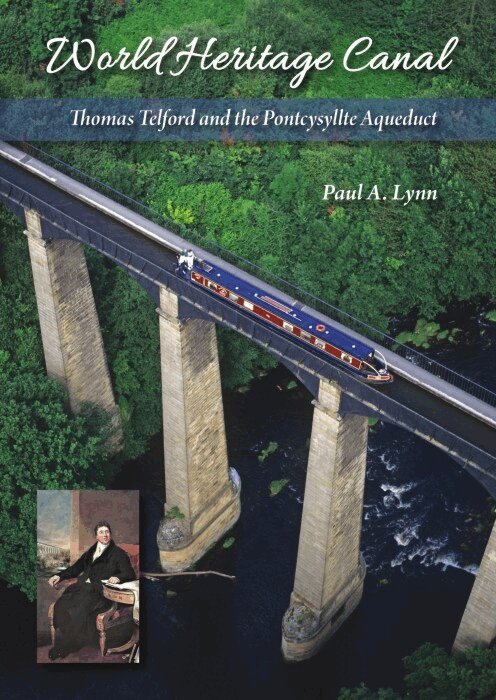
World Heritage Canal is an engaging and informative book offering insight into its subject through expert knowledge, storytelling and rich detail. Ideal for readers interested in history, nature, travel, culture and exploration.
Häftad, Engelska, 2021
240 kr
Skickas
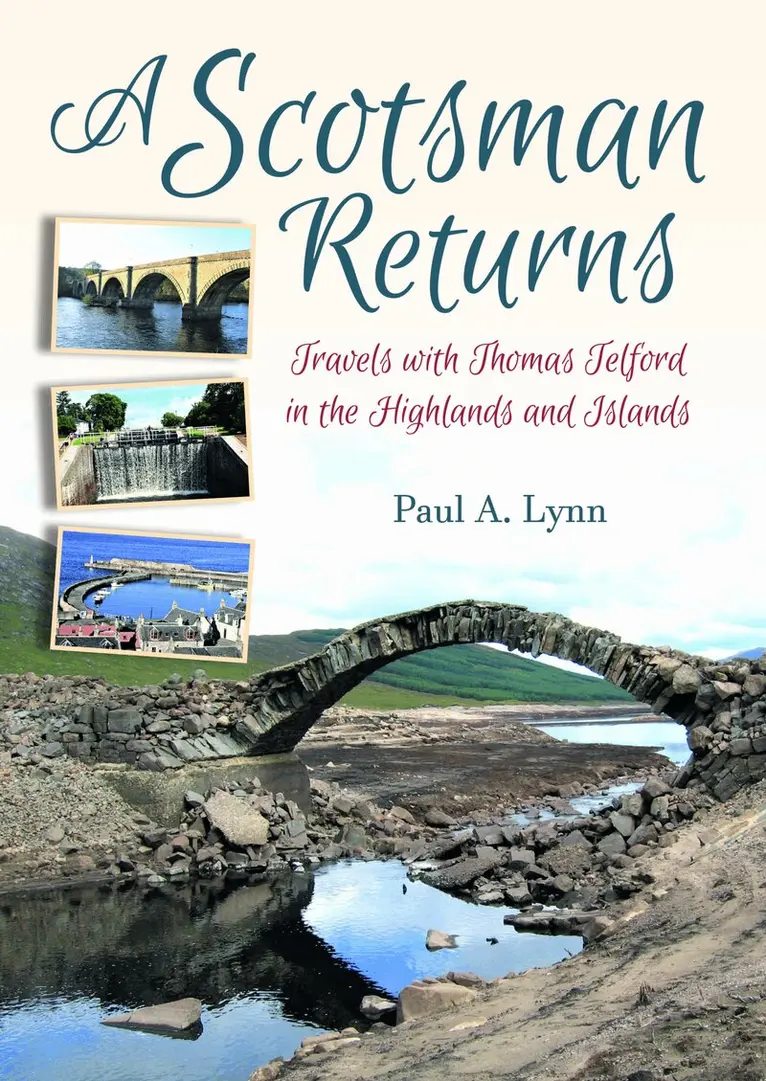
This is a fascinating combination of biographical material about the great Scottish engineer Thomas Telford (1757–1834), and a modern travelogue that revisits the places in the Highlands and Islands where he worked over a period of 20 years. Scotland was provided with desperately-needed civil infrastructure – nearly 1000 miles of roads, 1200 bridges, many harbours, and the monumental Caledonian Canal.Telford’s programme of work was one of the greatest sustained efforts by any individual in the years of Britain’s industrial revolution. And yet it is little celebrated in Scotland, let alone the rest of Britain and the wider world. After working in England and Wales for nearly 20 years, Telford was called back to his native land to address huge problems in the Highlands and Islands. These included unemployment, depopulation, Highlanders dispirited by poverty and suppression following the two Jacobite uprisings, compounded by living in mountainous regions almost totally isolated from the rest of Scotland.Thomas Telford has been widely painted as a brilliant engineer totally devoted to his work, a somewhat one-dimensional character. However, the author shows him differently, as a man of the Scottish Enlightenment, a rounded character with a love of poetry and the natural world, a good companion and a generous friend. A Scotsman Returns reveals him as a person who, in spite of the humblest start in life, displayed great social skills in his dealings with Scots both haughty and humble during his 20-year commitment to the Highlands and Islands.The author retraces an extensive Highland Tour made by Telford and the Poet Laureate, Robert Southey, in 1819. The two men were drawn together by Telford’s love of poetry and Southey’s admiration of the engineer’s remarkable work in the Highlands. Southey kept a journal of the tour, which remained unpublished for a century and is still not widely known. Comments on the places they visited, the sights they saw, their social interactions, and Southey’s intelligent interest in Telford’s roadmaking, bridgebuilding and, above all, the Caledonian Canal are featured.Telford’s work in other areas of the Highlands and Islands is also covered, principally in Caithness, Sutherland, and the Hebridean Islands. There are further discussions of the social and political environment in which Telford operated, including the Highland Clearances. This travelogue, beautifully illustrated in full colour with over 100 photographs of Telford’s surviving infrastructure, is complemented with modern views of the places where he worked.A Scotsman Returns is a wonderful collection of Telford’s remarkable achievements and will encourage readers worldwide to explore the routes followed by Telford as he developed Highland infrastructure.
Häftad, Engelska, 2024
231 kr
Skickas
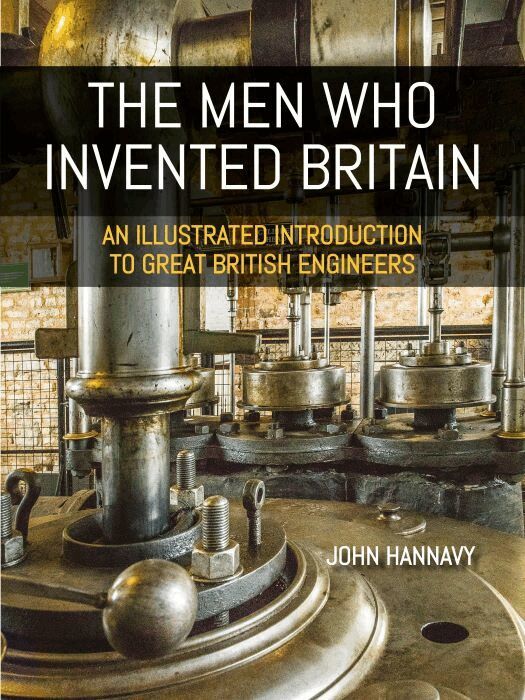
The book is a collection of inter-linked essays, each dealing with a significant figure in the emergence of Britain as an industrial powerhouse in the 18th, 19th and early 20th centuries. It is illustrated with drawings, patents, early historic images and John Hannavy’s acclaimed original contemporary photography of the machines and buildings which were key components in that history.The engineers are explored chronologically with links backwards and forwards to show who and what influenced them, and their influences on those who followed them. Many of them worked towards the same outcomes – either together, in parallel, or sequentially – and all left their marks on today’s Britain.Walking in the footsteps of Samuel Smiles – who 'invented' and popularised the industrial biography – this profusely illustrated book covers around 250 years, from James Brindley's early canal-building through John Smeaton's Eddystone Lighthouse, James Watt's steam engines, James Nasmyth's steam hammer, Isambard Kingdom Brunel's iron ships and Henry Bessemer's steel-making to William Arrol's bridges – taking in William Fairbairn, William Murdoch, Thomas Telford, William Jessop, John Rennie, John Scott Russell, The Lighthouse Stevensons, the Railway Stephensons, William Armstrong and others along the way. This highly illustrated book provides an accessible account of many of the key players in this most fascinating era in Britain’s industrial development.
Inbunden, Engelska, 2011
210 kr
Tillfälligt slut
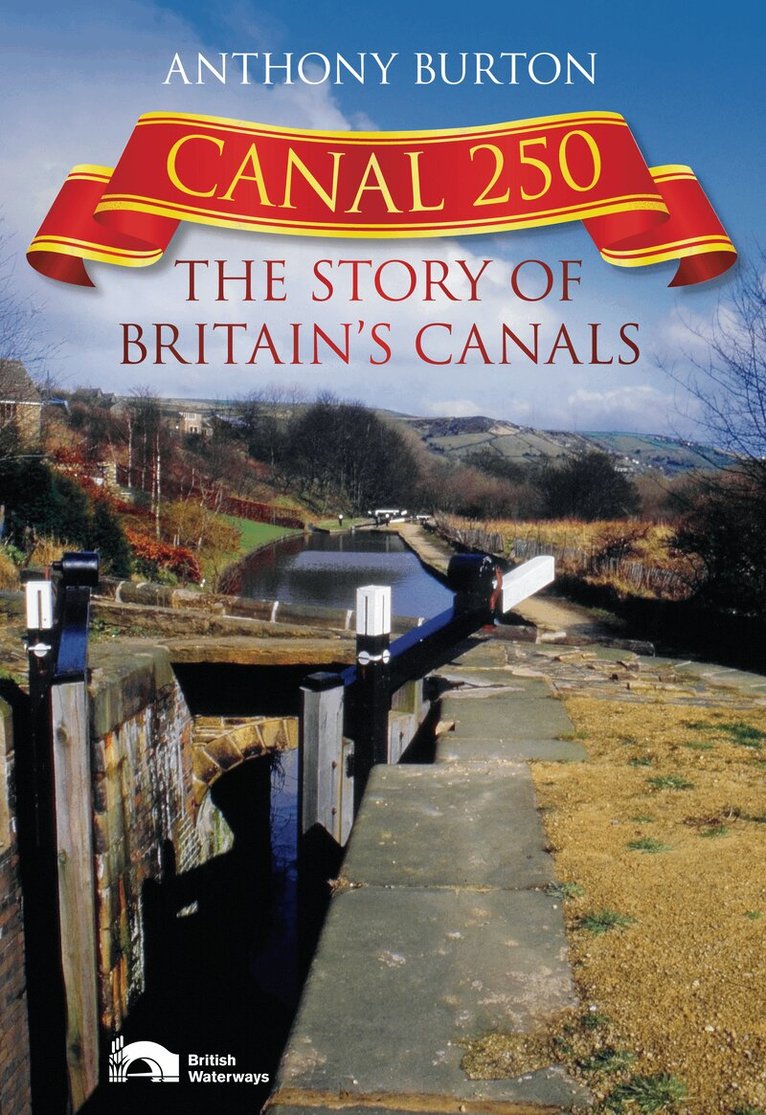
When a young English nobleman was thwarted in love he abandoned the court, retired to his estate near Manchester and built a canal to serve his coalmines. The Bridgewater Canal was the sensation of the age and led others to follow the example of the enterprising Duke of Bridgewater. From his starting point in 1760, over the next half-century Britain was covered by a network of waterways that became the lifeblood of the Industrial Revolution. This is the story of 250 years of history on those canals, and of the people who made and used them. The book tells of the great engineers, such as Telford, Brindley and Jessop and of the industrialists, such as Wedgwood and Arkwright who promoted the canals they built. It also tells the story of the anonymous navvies who dug the canals, the men and women who ran the boats and the workers who kept the canals running. Covering the entire history of the canal network (from the glorious early days, through the years of decline caused by rail and then road competition, up to the subsequent revival of the canals as leisure routes), this wonderfully illustrated book is a must-have for all canal enthusiasts.
Letar du efter digitala böcker?
E-böcker och ljudböcker handlar du än så länge på vår tidigare sajt.