
Databaser
644 kr
Skickas inom 5-8 vardagar
625 kr
Skickas inom 5-8 vardagar
658 kr
Skickas inom 5-8 vardagar
424 kr
Skickas inom 5-8 vardagar
497 kr
Skickas
693 kr
Skickas inom 5-8 vardagar
123 kr
765 kr
Skickas inom 5-8 vardagar
658 kr
Skickas inom 5-8 vardagar
593 kr
1 005 kr
Skickas inom 5-8 vardagar
414 kr
Skickas inom 5-8 vardagar
149 kr
Skickas inom 5-8 vardagar
658 kr
Skickas inom 5-8 vardagar
693 kr
Skickas inom 5-8 vardagar
975 kr
Skickas inom 10-15 vardagar
229 kr
Skickas
585 kr
Skickas inom 5-8 vardagar
758 kr
Skickas
469 kr
Skickas inom 5-8 vardagar
413 kr
Skickas inom 7-10 vardagar
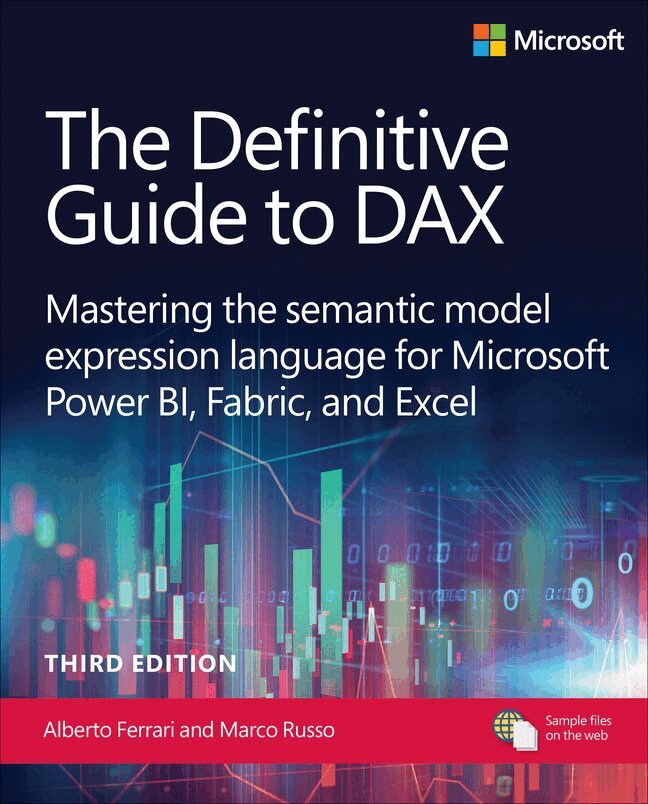
Seasoned Experts Alberto Ferrari and Marco Russo Help You Master DAX for Superior Business Intelligence Solutions
The Definitive Guide to DAX is an authoritative resource for mastering the DAX language, which is pivotal for creating measures for semantic models in Microsoft Power BI, Fabric, Analysis Services, and Excel. With years of experience since the inception of Power Pivot, the authors offer a comprehensive reference that navigates through the unique and complex concepts of DAX, making it an essential tool for BI professionals. This third edition updates you with the latest features and provides a framework for writing efficient DAX code, enhancing your ability to customize calculations in data models. You will gain the skills necessary to understand and apply advanced DAX concepts, structure code in user-defined functions, and leverage new calendars for time intelligence calculations.
By reading this book, you will:
Understand the foundational concepts of DAX and its unique language structure Master the use of evaluation contexts to enhance data analysis Utilize CALCULATE and CALCULATETABLE functions effectively Implement variables to simplify complex DAX expressions Leverage classic and new calendar based time intelligence functions Work with iterators to perform advanced calculations Apply visual calculations to improve report interactivity Create and manage calculation groups for dynamic reporting Handle complex hierarchies and relationships in data models Author DAX queries for testing and troubleshootingAbout This Book
For BI professionals and Excel power users eager to deepen their understanding of DAX and enhance their data modeling capabilities with advanced techniques For data analysts and IT specialists seeking to optimize their use of Microsoft Power BI, Fabric, Analysis Services, and Excel for more efficient and insightful data analysis
524 kr
Skickas inom 5-8 vardagar
829 kr
Skickas inom 10-15 vardagar
223 kr
Skickas inom 5-8 vardagar
482 kr
Skickas inom 5-8 vardagar
583 kr
Skickas inom 5-8 vardagar
3 302 kr
Skickas inom 3-6 vardagar
405 kr
Skickas inom 7-10 vardagar
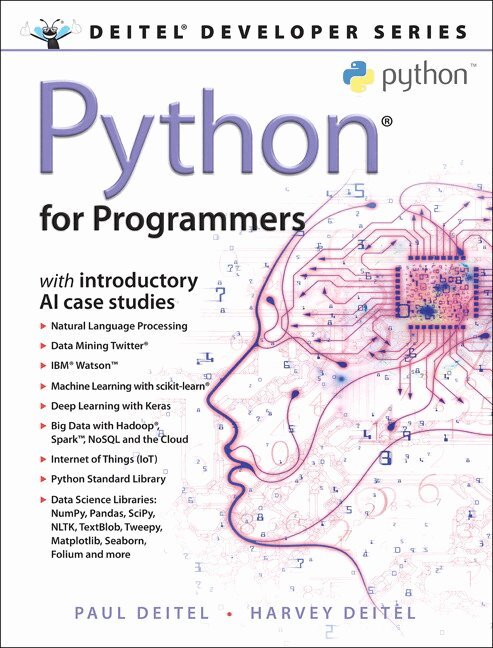
The professional programmer's Deitel® guide to Python® with introductory artificial intelligence case studies
Written for programmers with a background in another high-level language, Python for Programmers uses hands-on instruction to teach today's most compelling, leading-edge computing technologies and programming in Python--one of the world's most popular and fastest-growing languages. Please read the Table of Contents diagram inside the front cover and the Preface for more details.
In the context of 500+, real-world examples ranging from individual snippets to 40 large scripts and full implementation case studies, you'll use the interactive IPython interpreter with code in Jupyter Notebooks to quickly master the latest Python coding idioms. After covering Python Chapters 1-5 and a few key parts of Chapters 6-7, you'll be able to handle significant portions of the hands-on introductory AI case studies in Chapters 11-16, which are loaded with cool, powerful, contemporary examples. These include natural language processing, data mining Twitter® for sentiment analysis, cognitive computing with IBM® WatsonTM, supervised machine learning with classification and regression, unsupervised machine learning with clustering, computer vision through deep learning and convolutional neural networks, deep learning with recurrent neural networks, big data with Hadoop®, SparkTM and NoSQL databases, the Internet of Things and more. You'll also work directly or indirectly with cloud-based services, including Twitter, Google TranslateTM, IBM Watson, Microsoft® Azure®, OpenMapQuest, PubNub and more.
Features
500+ hands-on, real-world, live-code examples from snippets to case studies IPython + code in Jupyter® Notebooks Library-focused: Uses Python Standard Library and data science libraries to accomplish significant tasks with minimal code Rich Python coverage: Control statements, functions, strings, files, JSON serialization, CSV, exceptions Procedural, functional-style and object-oriented programming Collections: Lists, tuples, dictionaries, sets, NumPy arrays, pandas Series & DataFrames Static, dynamic and interactive visualizations Data experiences with real-world datasets and data sources Intro to Data Science sections: AI, basic stats, simulation, animation, random variables, data wrangling, regression AI, big data and cloud data science case studies: NLP, data mining Twitter®, IBM® WatsonTM, machine learning, deep learning, computer vision, Hadoop®, SparkTM, NoSQL, IoT Open-source libraries: NumPy, pandas, Matplotlib, Seaborn, Folium, SciPy, NLTK, TextBlob, spaCy, Textatistic, Tweepy, scikit-learn®, Keras and moreRegister your product to gain access to updated chapters and material, as well as downloads, future updates, and/or corrections as they become available. See inside book for more information.
581 kr
Skickas inom 5-8 vardagar
688 kr
Skickas inom 10-15 vardagar
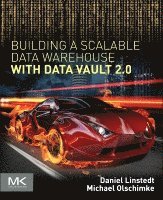
The Data Vault was invented by Dan Linstedt at the U.S. Department of Defense, and the standard has been successfully applied to data warehousing projects at organizations of different sizes, from small to large-size corporations. Due to its simplified design, which is adapted from nature, the Data Vault 2.0 standard helps prevent typical data warehousing failures.
"Building a Scalable Data Warehouse" covers everything one needs to know to create a scalable data warehouse end to end, including a presentation of the Data Vault modeling technique, which provides the foundations to create a technical data warehouse layer. The book discusses how to build the data warehouse incrementally using the agile Data Vault 2.0 methodology. In addition, readers will learn how to create the input layer (the stage layer) and the presentation layer (data mart) of the Data Vault 2.0 architecture including implementation best practices. Drawing upon years of practical experience and using numerous examples and an easy to understand framework, Dan Linstedt and Michael Olschimke discuss:
How to load each layer using SQL Server Integration Services (SSIS), including automation of the Data Vault loading processes.
Important data warehouse technologies and practices.
Data Quality Services (DQS) and Master Data Services (MDS) in the context of the Data Vault architecture. Provides a complete introduction to data warehousing, applications, and the business context so readers can get-up and running fast Explains theoretical concepts and provides hands-on instruction on how to build and implement a data warehouse Demystifies data vault modeling with beginning, intermediate, and advanced techniques Discusses the advantages of the data vault approach over other techniques, also including the latest updates to Data Vault 2.0 and multiple improvements to Data Vault 1.0