
Daniel M. Friedenberg – författare
Visar alla böcker från författaren Daniel M. Friedenberg. Handla med fri frakt och snabb leverans.
3 produkter
3 produkter
Inbunden, Engelska, 2009
501 kr
Skickas inom 5-8 vardagar
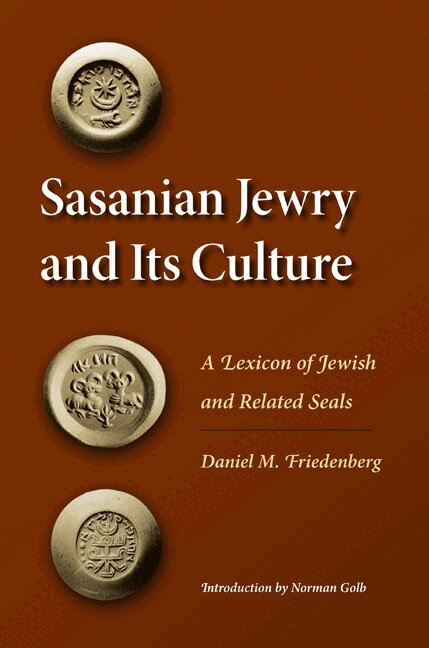
The Sasanian Empire began in 226 C.E., when Ardashir, a Persian satrap, revolted against his Parthian overlords. Occupying the territories now divided among Iran and Iraq, and for brief periods Syria and Armenia, the empire engaged in intermittent warfare with Rome and Byzantium and was beset by internal strife as kings sought to impose Zoroastrianism upon the population and fought each other for power. In 640 C.E. the empire succumbed to the Arab invaders. Within the empire lived large communities of Jews, whose sheer numbers were considerably greater than the Jewish population of Byzantium. It was within the Sasanian Empire that the great Babylonian Talmud was assembled, yet Jewish relics are scarce. One of the most significant material remnants of Jewish life are seals, almost all of which are signet whose styles, inscriptions, and sites of discovery provide important clues about the size and status of Jewish populations throughout the empire. Seals show how Jews within the empire adopted or resisted certain Sasanian symbols and sustained traditional Jewish motifs such as the lulab and etrog. This volume presents fifty-seven Jewish seals from the Sasanian Empire, as well as comparative Zoroastrian and Christian seals. The text identifies their provenance (if known), translates their inscriptions, and organizes them by their depiction or reference.
Inbunden, Engelska, 2002
393 kr
Skickas inom 3-6 vardagar
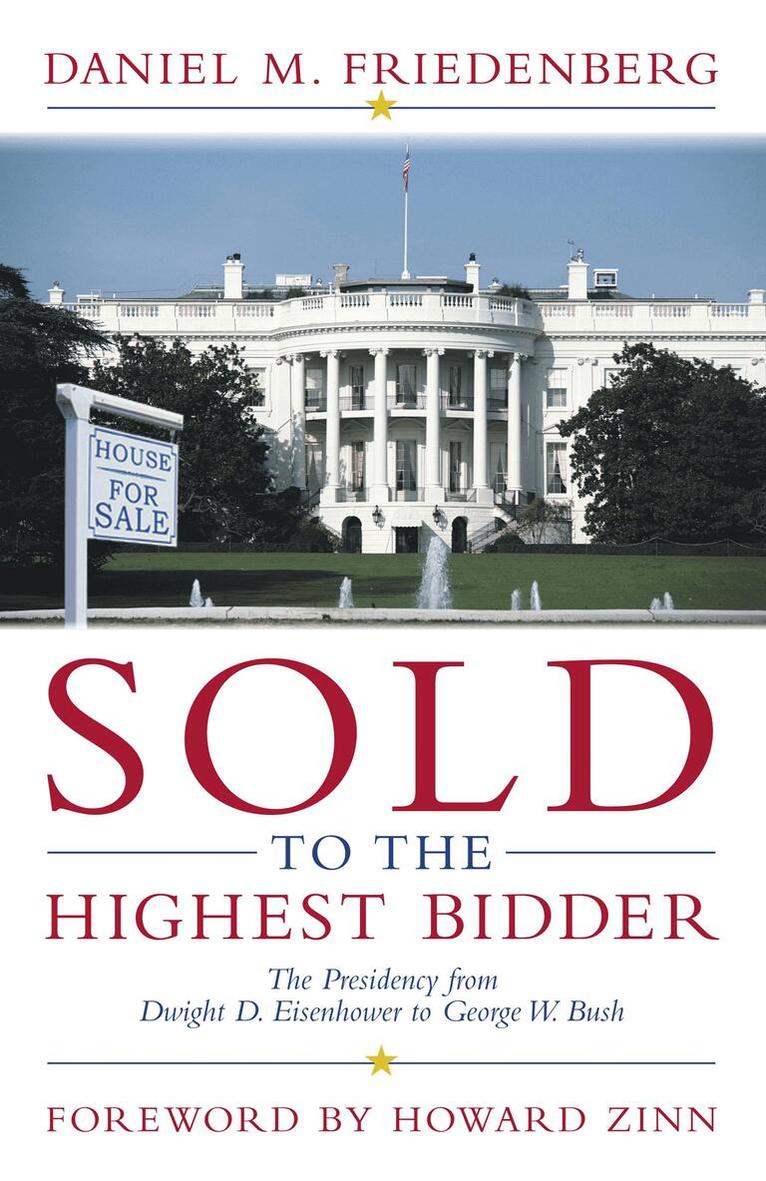
"This is a glorious America for the alert and resourceful," notes Daniel Friedenberg in this critical review of the American presidency during the last half of the 20th century. But he cautions, "This is an unhappy America for the disadvantaged, the weak in body or mind, and those born without close family ties."The disparity between rich and poor in our immensely wealthy nation and the corrupting influence of money on politics to the advantage of the few over the many form the heart of his critique. Friedenberg emphasizes that the New Deal concern for the underdog - the major social achievement of the first half of the 20th century - has been gradually abandoned by presidents in the latter half of the century, along with tax policies that shifted wealth from the well-to-do to the less privileged. Though paying lip service to democracy, in fact recent presidents have upheld a system designed to maximize the influence of a powerful elite, "a flexible plutocracy," as Friedenberg describes it. This has good and bad aspects. On the one hand, the innovations launched by powerful business leaders, such as Henry Ford, Thomas J. Watson (IBM), and Bill Gates (Microsoft), have resulted in millions of new jobs and advanced the overall prosperity of the nation. On the other hand, the system does little to help the poor rise to a higher level, and it has kept the middle class stagnating for the last thirty years. The effect of presidential policies is a divide between the haves and have-nots that today is every bit as stark as it was before the Great Depression.Friedenberg pleads for a new focus on improved education for all to narrow the widening gap between rich and poor, instead of the current folly of building gated communities for the wealthy and ever-more prisons for the law-breaking underprivileged. The vast technological resources unleashed by the computer revolution can and should be used to create a more equitable American future.

Inbunden, Engelska, 2010
315 kr
Skickas inom 5-8 vardagar