
Leo T. S. Ching – författare
Visar alla böcker från författaren Leo T. S. Ching. Handla med fri frakt och snabb leverans.
3 produkter
3 produkter
Häftad, Engelska, 2001
376 kr
Skickas inom 5-8 vardagar
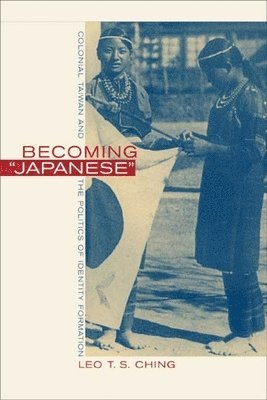
In 1895 Japan acquired Taiwan as its first formal colony after a resounding victory in the Sino-Japanese war. For the next fifty years, Japanese rule devastated and transformed the entire socioeconomic and political fabric of Taiwanese society. In "Becoming Japanese", Leo Ching examines the formation of Taiwanese political and cultural identities under the dominant Japanese colonial discourse of assimilation (doka) and imperialization (kominka) from the early 1920s to the end of the Japanese Empire in 1945. "Becoming Japanese" analyzes the ways in which the Taiwanese struggled, negotiated, and collaborated with Japanese colonialism during the cultural practices of assimilation and imperialization. It chronicles a historiography of colonial identity formations that delineates the shift from a collective and heterogeneous political horizon into a personal and inner struggle of 'becoming Japanese'.Representing Japanese colonialism in Taiwan as a topography of multiple associations and identifications made possible through the triangulation of imperialist Japan, nationalist China, and colonial Taiwan, Ching demonstrates the irreducible tension and contradiction inherent in the formations and transformations of colonial identities. Throughout the colonial period, Taiwanese elites imagined and constructed China as a discursive space where various forms of cultural identification and national affiliation were projected. Successfully bridging history and literary studies, this bold and imaginative book rethinks the history of Japanese rule in Taiwan by radically expanding its approach to colonial discourses.
Inbunden, Engelska, 2019
1 323 kr
Skickas inom 5-8 vardagar
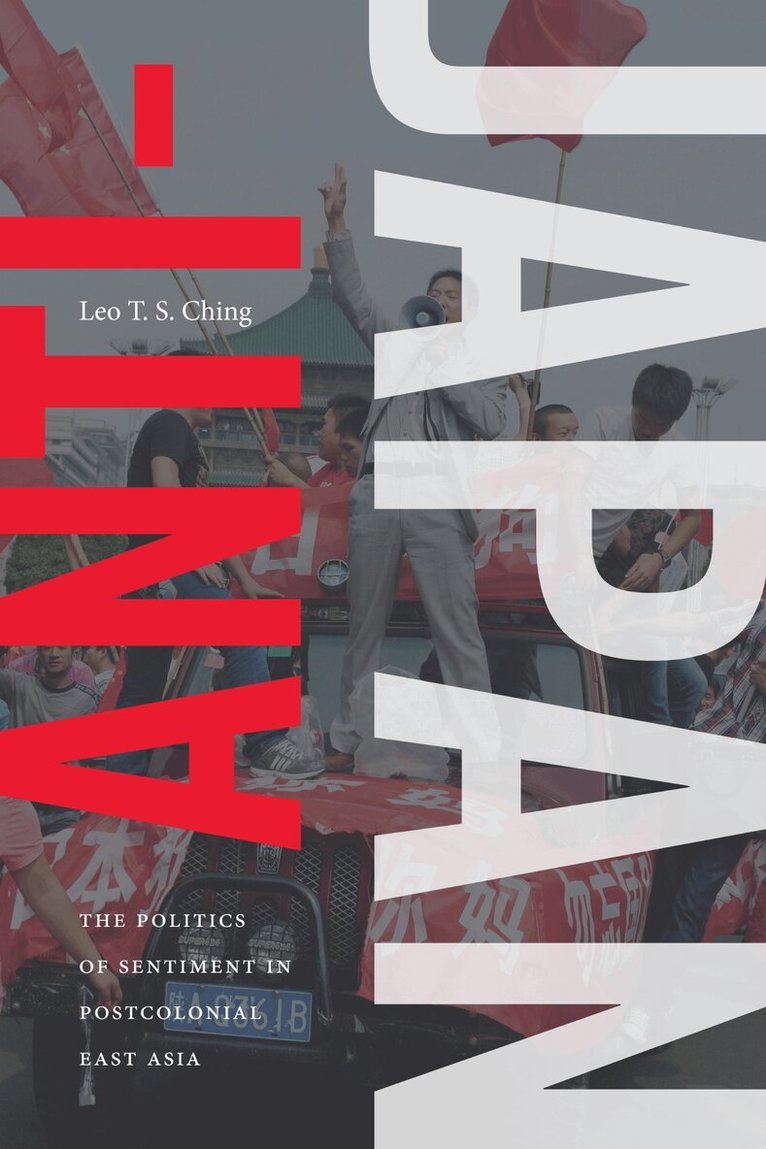
Although the Japanese empire rapidly dissolved following the end of World War II, the memories, mourning, and trauma of the nation's imperial exploits continue to haunt Korea, China, and Taiwan. In Anti-Japan Leo T. S. Ching traces the complex dynamics that shape persisting negative attitudes toward Japan throughout East Asia. Drawing on a mix of literature, film, testimonies, and popular culture, Ching shows how anti-Japanism stems from the failed efforts at decolonization and reconciliation, the Cold War and the ongoing U.S. military presence, and shifting geopolitical and economic conditions in the region. At the same time, pro-Japan sentiments in Taiwan reveal a Taiwanese desire to recoup that which was lost after the Japanese empire fell. Anti-Japanism, Ching contends, is less about Japan itself than it is about the real and imagined relationships between it and China, Korea, and Taiwan. Advocating for forms of healing that do not depend on state-based diplomacy, Ching suggests that reconciliation requires that Japan acknowledge and take responsibility for its imperial history.
Häftad, Engelska, 2019
322 kr
Skickas inom 5-8 vardagar
Although the Japanese empire rapidly dissolved following the end of World War II, the memories, mourning, and trauma of the nation's imperial exploits continue to haunt Korea, China, and Taiwan. In Anti-Japan Leo T. S. Ching traces the complex dynamics that shape persisting negative attitudes toward Japan throughout East Asia. Drawing on a mix of literature, film, testimonies, and popular culture, Ching shows how anti-Japanism stems from the failed efforts at decolonization and reconciliation, the Cold War and the ongoing U.S. military presence, and shifting geopolitical and economic conditions in the region. At the same time, pro-Japan sentiments in Taiwan reveal a Taiwanese desire to recoup that which was lost after the Japanese empire fell. Anti-Japanism, Ching contends, is less about Japan itself than it is about the real and imagined relationships between it and China, Korea, and Taiwan. Advocating for forms of healing that do not depend on state-based diplomacy, Ching suggests that reconciliation requires that Japan acknowledge and take responsibility for its imperial history.