
Nancy Mattina – författare
Visar alla böcker från författaren Nancy Mattina. Handla med fri frakt och snabb leverans.
3 produkter
3 produkter
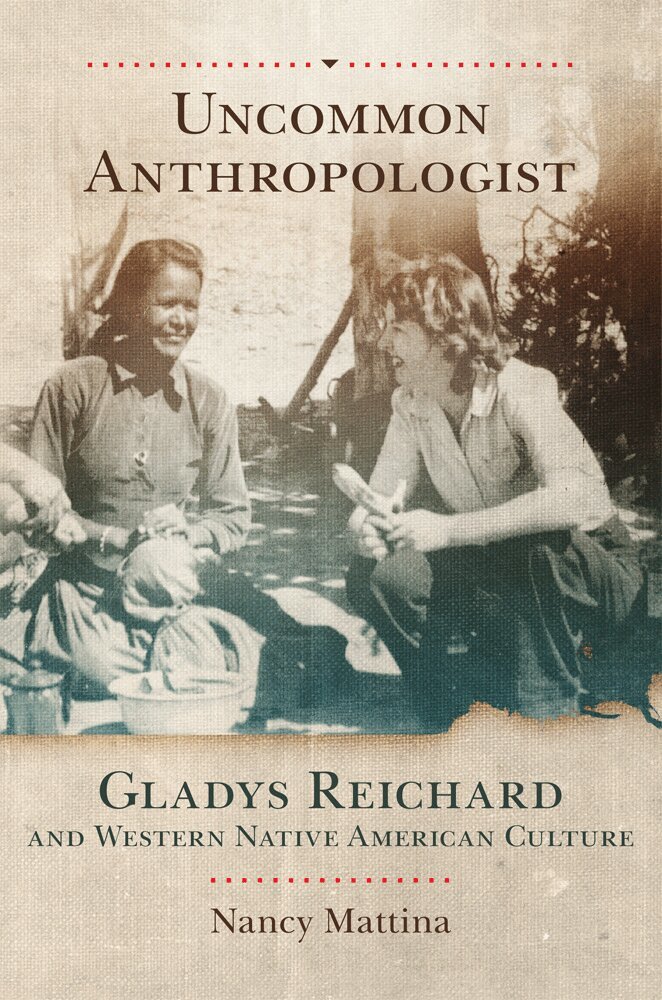
Inbunden, Engelska, 2019
407 kr
Skickas inom 10-15 vardagar
A trailblazer in Native American linguistics and anthropology, Gladys Reichard (1893-1955) is one of America's least appreciated anthropologists. Her accomplishments were obscured in her lifetime by differences in intellectual approach and envy, as well as academic politics and the gender realities of her age. This biography offers the first full account of Reichard's life, her milieu, and, most importantly, her work - establishing, once and for all, her lasting significance in the history of anthropology.In her thirty-two years as the founder and head of Barnard College's groundbreaking anthropology department, Reichard taught that Native languages, written or unwritten, sacred or profane, offered Euro-Americans the least distorted views onto the inner life of North America's first peoples. This unique approach put her at odds with anthropologists such as Edward Sapir, leader of the structuralist movement in American linguistics. Similarly, Reichard's focus on Native psychology as revealed to her by Native artists and storytellers produced a dramatically different style of ethnography from that of Margaret Mead, who relied on western psychological archetypes to ""crack"" alien cultural codes, often at a distance. Despite intense pressure from her peers to conform to their theories, Reichard held firm to her humanitarian principles and methods; the result, as Nancy Mattina makes clear, was pathbreaking work in the ethnography of ritual and mythology; Wiyot, Coeur d'Alene, and Navajo linguistics; folk art, gender, and language - amplified by an exceptional career of teaching, editing, publishing, and mentoring.Drawing on Reichard's own writings and correspondence, this book provides an intimate picture of her small-town upbringing, the professional challenges she faced in male-centered institutions, and her quietly revolutionary contributions to anthropology. Gladys Reichard emerges as she lived and worked - a far-sighted, self-reliant humanist sustained in turbulent times by the generous, egalitarian spirit that called her yearly to the far corners of the American West.
Häftad, Engelska, 2022
263 kr
Skickas inom 10-15 vardagar
A trailblazer in Native American linguistics and anthropology, Gladys Reichard (1893–1955) is one of America’s least appreciated anthropologists. Her accomplishments were obscured in her lifetime by differences in intellectual approach and envy, as well as academic politics and the gender realities of her age. This biography offers the first full account of Reichard’s life, her milieu, and, most importantly, her work—establishing, once and for all, her lasting significance in the history of anthropology.In her thirty-two years as the founder and head of Barnard College’s groundbreaking anthropology department, Reichard taught that Native languages, written or unwritten, sacred or profane, offered Euro-Americans the least distorted views onto the inner life of North America’s first peoples. This unique approach put her at odds with anthropologists such as Edward Sapir, leader of the structuralist movement in American linguistics. Similarly, Reichard’s focus on Native psychology as revealed to her by Native artists and storytellers produced a dramatically different style of ethnography from that of Margaret Mead, who relied on western psychological archetypes to “crack” alien cultural codes, often at a distance. Despite intense pressure from her peers to conform to their theories, Reichard held firm to her humanitarian principles and methods; the result, as Nancy Mattina makes clear, was pathbreaking work in the ethnography of ritual and mythology; Wiyot, Coeur d’Alene, and Navajo linguistics; folk art, gender, and language—amplified by an exceptional career of teaching, editing, publishing, and mentoring.Drawing on Reichard’s own writings and correspondence, this book provides an intimate picture of her small-town upbringing, the professional challenges she faced in male-centered institutions, and her quietly revolutionary contributions to anthropology. Gladys Reichard emerges as she lived and worked—a far-sighted, self-reliant humanist sustained in turbulent times by the generous, egalitarian spirit that called her yearly to the far corners of the American West.
- Nyhet

Inbunden, Engelska, 2026
753 kr
Skickas inom 10-15 vardagar
Adee Dodge: Navajo Artist, Intellectual, and Individualist chronicles the life of Navajo artist and intellectual Adee Dodge (1912–92). Born on the Navajo Reservation near Canyon de Chelly, Arizona, Dodge studied anthropological linguistics at Columbia University, taught Navajo literacy at Indian Bureau boarding schools on his reservation, rose from private first class to captain in the army during World War II, and founded Adee Dodge Enterprises, Inc., the first uranium prospecting and mining firm owned by a Navajo. At age forty, by then living in Santa Fe, New Mexico, Dodge began to paint allegorical pictures grounded in Navajo wisdom traditions and aesthetics. By 1960 he was an acclaimed Southwest Native watercolorist based in Arizona's Phoenix metro area. His devotion to interpreting the Navajo worldview in modernist form earned him praise as the best of the Navajo painters of his day. Upon his death, Dodge left behind a rich record of his intellectual history that has since been conserved at major museums and archives.Written from a postcolonial perspective, this biography conveys Dodge's assessment of the contributions the Navajo Nation might yet make to the American experiment, if only Americans would honor their promise to treat tribal peoples with dignity and respect.