
Peter Trachtenberg – författare
Visar alla böcker från författaren Peter Trachtenberg. Handla med fri frakt och snabb leverans.
3 produkter
3 produkter
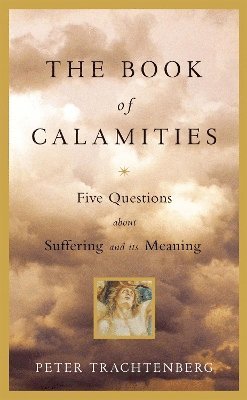
Inbunden, Engelska, 2009
366 kr
Skickas inom 5-8 vardagar
What does it mean to suffer? What enables some people to emerge from tragedy while others are spiritually crushed by it? Why do so many Americans think of suffering as something that happens to other people - who usually deserve it? These are some of the questions at the heart of this powerful book. Combining reportage, personal narrative and moral philosophy, Peter Trachtenberg tells the stories of grass-roots genocide tribunals in Rwanda and tsunami survivors in Sri Lanka, an innocent man on death row, and a family bereaved on 9/11. He examines texts from the Book of Job to the Bodhicharyavatara and the writings of Simone Weil. THE BOOK OF CALAMITIES is a provocative and sweeping look at one of the biggest paradoxes of the human condition - and the surprising strength and resilience of those who are forced to confront it.
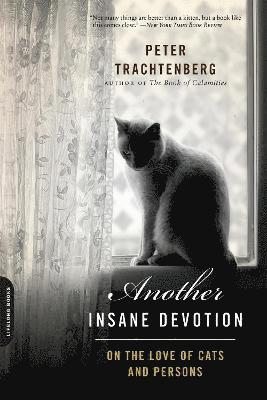
Häftad, Engelska, 2013
230 kr
Skickas inom 5-8 vardagar
From a genuine American Dostoevsky" ( The Washington Post ): a dazzling, funny, bittersweet exploration of the mysteries of relationship, both human and animal. When his favourite cat Biscuit goes missing, Peter Trachtenberg sets out to find her. The journey takes him 700 miles and many years into his past- into the history of his relationships with cats and the history of his relationship with his wife F., who may herself be on the verge of disappearing. What ensues is a work that recalls travel narratives from The Incredible Journey to W. G. Sebald's The Rings of Saturn. Trachtenberg ponders the mysteries of feline intelligence (why do cats score worse on some tests than pigeons?), the origins of their domestication, their terrible treatment during the Middle Ages. He also looks at the riddle of why any of us loves whom we love and all the unforeseen places to which that devotion leads us.
Inbunden, Engelska, 2025
302 kr
Skickas inom 3-6 vardagar
An intimate history of America’s first publicly funded artists’ housing project and its residents that casts light on the precarious place of art-makers in a changing New York.Westbeth Artists Housing was founded in 1970 to provide affordable housing for artists and their families. It occupies a full city block in what back then was one of New York’s less desirable neighborhoods, the desolate far-West Village. Over the next fifty years, the building complex served as a Great Society for bohemians, home at any one time to more than three hundred and eighty creators, who included the pioneering video artist Nam June Paik, jazz great Gil Evans, and the photographer Diane Arbus, who took her life in her apartment in 1971, barely a year after she’d moved in.To its tenants Westbeth offered the possibility of a middle-class life at affordable rents that freed them to walk along the cliff-edge of their art. Barton Lidicé Beneš filled unlikely vessels (a water-gun, a squirting flower) with his HIV-positive blood in a series called “Lethal Weapons.” The actor Black-Eyed Susan played two dozen roles—including the empress of China and the queen of Saturn-- in the legendary Ridiculous Theatrical Company. After her basement studio was flooded during Superstorm Sandy, Karen Santry dove into the noxious water in rented scuba gear to check the condition of her paintings. With the passing of time, Westbeth’s artists watched their neighborhood gentrify and rebrand as the glitzy Meatpacking District, where the average apartment rents for more than $6000 a month. And while some of those artists achieved fame, obscurity drove others to bitterness and despair. The Twilight of Bohemia frames its story with that of the life and tragic death of Gay Milius, a gifted and flamboyantly eccentric painter, flea-market picker, and novelist who moved into the building in 1970 and took his life there in 2006.Sociologists describe Westbeth as a Naturally-Occurring Retirement Community, or NORC; today, a majority of its residents are over 60. But is Westbeth just an arty senior center holding out against the ruthless market forces of late-capitalist New York? Is artmaking a relic of a past way of life or a good that merits our society’s continuing support? The Twilight of Bohemia explores the changing notions of what it means to be a successful artist and the heartbreaking difficulty of surviving as one at our present cultural moment. It’s a book for anyone who loves brilliantly written stories of passion, idealism, ambition and community, for any reader interested in urban social history or the history of art, and for all who still believe in the old bohemian ethos: of living for art.