
Walter Schuster – författare
Visar alla böcker från författaren Walter Schuster. Handla med fri frakt och snabb leverans.
2 produkter
2 produkter
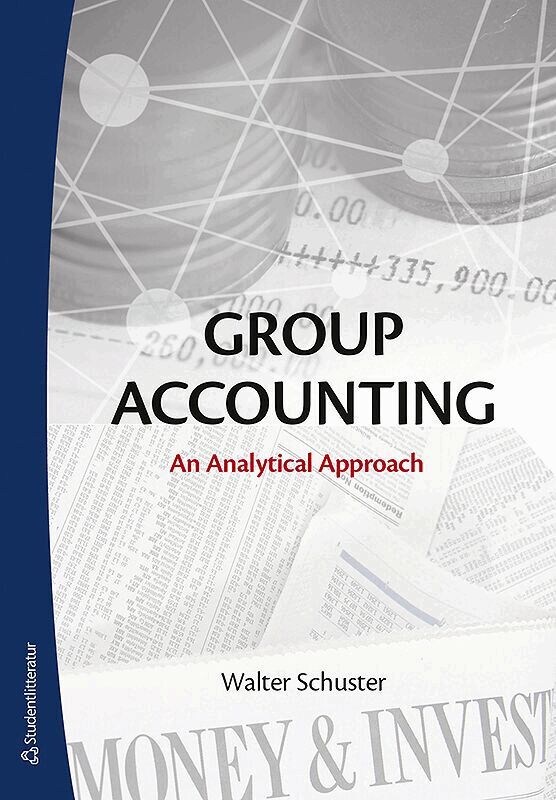
Häftad, Engelska, 2017
421 kr
Skickas
Walter Schuster is professor of accounting and managerial finance at the Stockholm School of Economics (SSE). He has been a teacher on the topic of mergers and acquisitions for many years, both in the bachelor and master programs at SSE and in executive education programs. In parallel to this he has worked with standard-setting as a member of the Swedish national standard-setter and in international groupings, such as the Joint International Group on Performance Reporting of the International Accounting Standards Board and the Financial Accounting Standards Board. Group AccountingAn Analytical ApproachThis book presents an analytical method that helps the user form an opinion about the important consequences of a business combination. Group Accounting – An Analytical Approach has particular focus on the effects on profitability and financial position calculated from consolidated financial statements. Business transactions such as mergers, acquisitions of minority holdings, and disposals are also analysed. In this second edition there are chapters on step acquisitions and disposals and accounting for the cash flow effects of an acquisition. There is also an extended analysis of differences between amortisation of goodwill and impairment testing.The book discusses the most common methods in group accounting. However, the aim is to provide a general exposition of the issues since accounting rules tend to change over time and sometimes differ across jurisdictions. Numerical examples are used and important concepts are illustrated by excerpts from annual reports.Group Accounting – An Analytical Approach is intended for university students in accounting and is instrumental for understanding and analysing group accounting.Second Edition
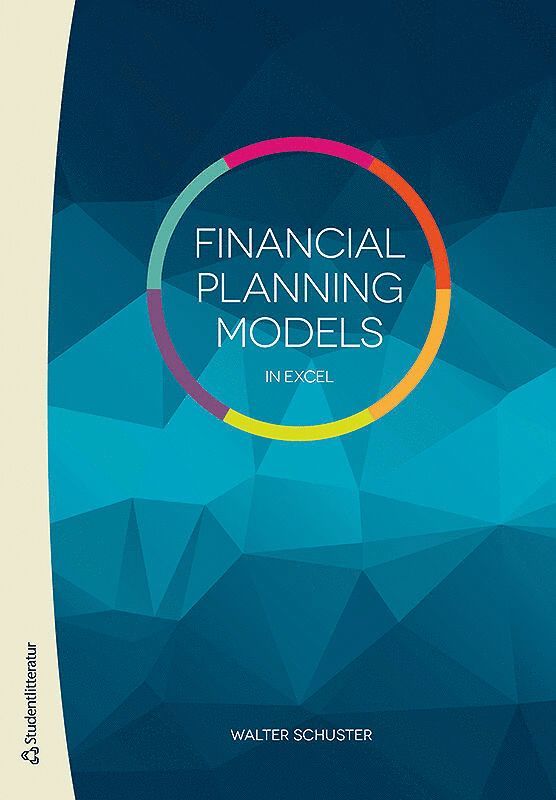
Häftad, Engelska, 2019
298 kr
Skickas
This book presents the construction of a basic but complete financial planning model that may be used as a tool when addressing the strategic and financial challenges of a firm. Financial Planning Models in Excel introduces a model that, in addition to having budgeted statements of income and financial position as output, presents a budgeted cash flow statement. The advantage is that the cash flow consequences of different scenarios are presented in more detail and structured by operating, investing and financing cash flows. Most importantly, this approach provides a check of the model relationships, thus ensuring the reliability of the model. The book presents solutions to the most common problems in relation to model-building and there are specific chapters on developing support modules for revenues, expenses, investments, research and development, liabilities, equity and tax. Focusing on the interpretation of the models, there are also chapters on support modules for calculating financial ratios and company valuation. Although Excel is not the primary focus of the book, there are guidelines on how to construct the model in order to maximise the computer support and instructions for specific issues such as the use of logical tests. Financial Planning Models in Excel is intended for university students in accounting and finance. These types of models constitute useful tools for strategy development and evaluation, as well as for learning accounting.