
Visar resultat för..."Museum of Northern Arizona"
6 produkter
6 produkter
Häftad, Engelska
594 kr
Skickas inom 3-6 vardagar

Häftad, Engelska, 2011
230 kr
Skickas inom 3-6 vardagar
Inbunden, Engelska, 2019
407 kr
Skickas inom 10-15 vardagar
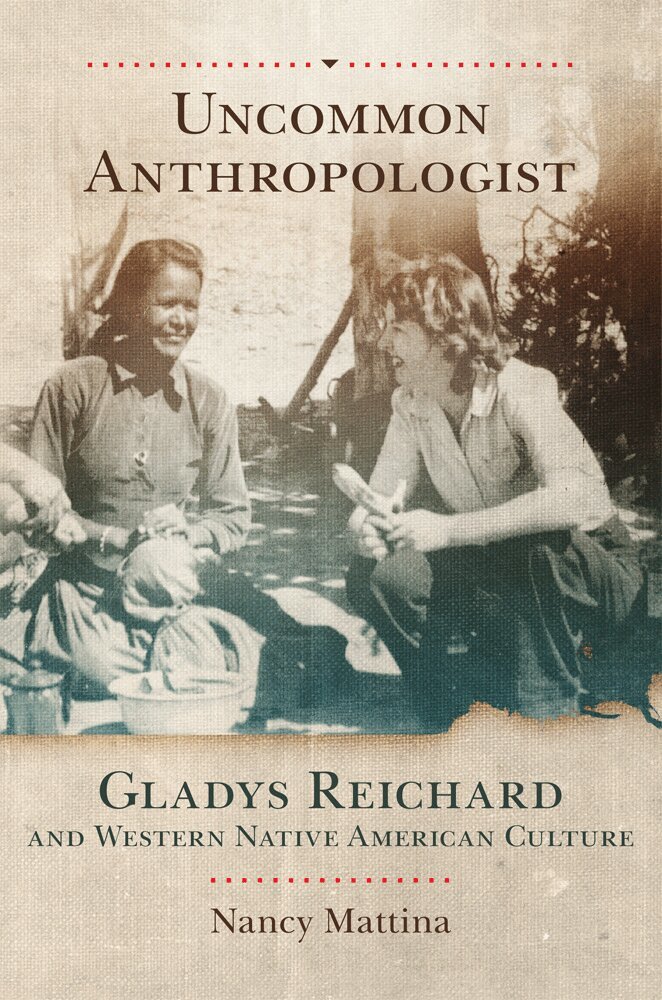
A trailblazer in Native American linguistics and anthropology, Gladys Reichard (1893-1955) is one of America's least appreciated anthropologists. Her accomplishments were obscured in her lifetime by differences in intellectual approach and envy, as well as academic politics and the gender realities of her age. This biography offers the first full account of Reichard's life, her milieu, and, most importantly, her work - establishing, once and for all, her lasting significance in the history of anthropology.In her thirty-two years as the founder and head of Barnard College's groundbreaking anthropology department, Reichard taught that Native languages, written or unwritten, sacred or profane, offered Euro-Americans the least distorted views onto the inner life of North America's first peoples. This unique approach put her at odds with anthropologists such as Edward Sapir, leader of the structuralist movement in American linguistics. Similarly, Reichard's focus on Native psychology as revealed to her by Native artists and storytellers produced a dramatically different style of ethnography from that of Margaret Mead, who relied on western psychological archetypes to ""crack"" alien cultural codes, often at a distance. Despite intense pressure from her peers to conform to their theories, Reichard held firm to her humanitarian principles and methods; the result, as Nancy Mattina makes clear, was pathbreaking work in the ethnography of ritual and mythology; Wiyot, Coeur d'Alene, and Navajo linguistics; folk art, gender, and language - amplified by an exceptional career of teaching, editing, publishing, and mentoring.Drawing on Reichard's own writings and correspondence, this book provides an intimate picture of her small-town upbringing, the professional challenges she faced in male-centered institutions, and her quietly revolutionary contributions to anthropology. Gladys Reichard emerges as she lived and worked - a far-sighted, self-reliant humanist sustained in turbulent times by the generous, egalitarian spirit that called her yearly to the far corners of the American West.
Häftad, Engelska, 2022
263 kr
Skickas inom 10-15 vardagar
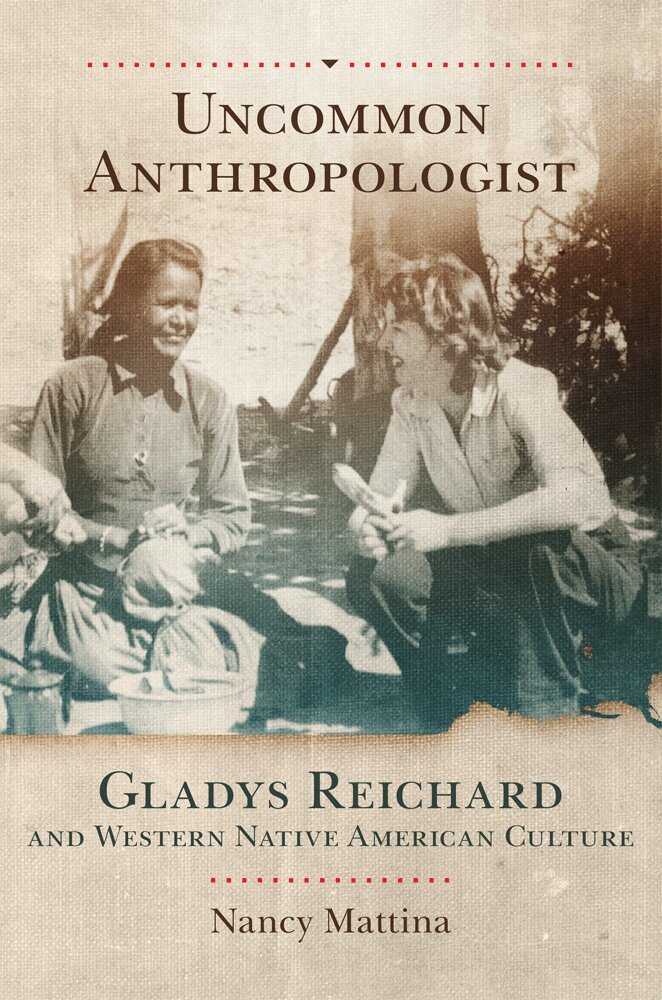
A trailblazer in Native American linguistics and anthropology, Gladys Reichard (1893–1955) is one of America’s least appreciated anthropologists. Her accomplishments were obscured in her lifetime by differences in intellectual approach and envy, as well as academic politics and the gender realities of her age. This biography offers the first full account of Reichard’s life, her milieu, and, most importantly, her work—establishing, once and for all, her lasting significance in the history of anthropology.In her thirty-two years as the founder and head of Barnard College’s groundbreaking anthropology department, Reichard taught that Native languages, written or unwritten, sacred or profane, offered Euro-Americans the least distorted views onto the inner life of North America’s first peoples. This unique approach put her at odds with anthropologists such as Edward Sapir, leader of the structuralist movement in American linguistics. Similarly, Reichard’s focus on Native psychology as revealed to her by Native artists and storytellers produced a dramatically different style of ethnography from that of Margaret Mead, who relied on western psychological archetypes to “crack” alien cultural codes, often at a distance. Despite intense pressure from her peers to conform to their theories, Reichard held firm to her humanitarian principles and methods; the result, as Nancy Mattina makes clear, was pathbreaking work in the ethnography of ritual and mythology; Wiyot, Coeur d’Alene, and Navajo linguistics; folk art, gender, and language—amplified by an exceptional career of teaching, editing, publishing, and mentoring.Drawing on Reichard’s own writings and correspondence, this book provides an intimate picture of her small-town upbringing, the professional challenges she faced in male-centered institutions, and her quietly revolutionary contributions to anthropology. Gladys Reichard emerges as she lived and worked—a far-sighted, self-reliant humanist sustained in turbulent times by the generous, egalitarian spirit that called her yearly to the far corners of the American West.
Häftad, Engelska, 2023
312 kr
Skickas inom 3-6 vardagar
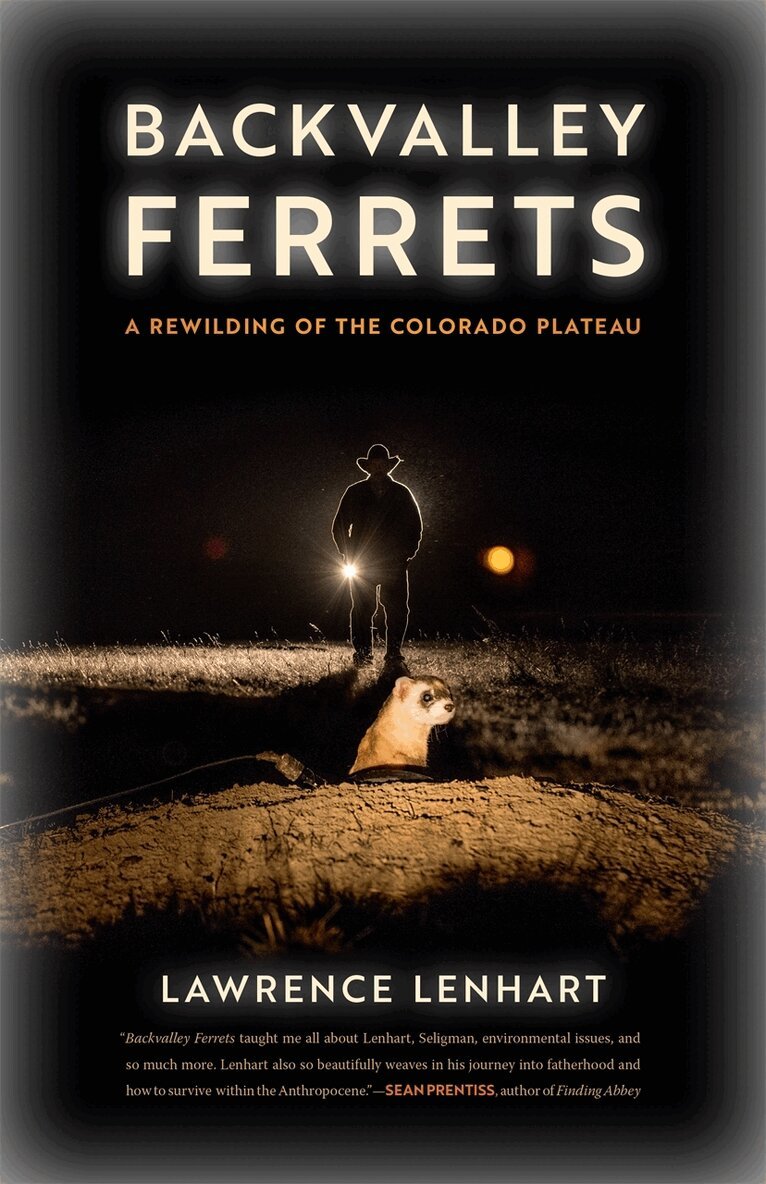
Twice declared extinct, North America’s most endangered mammal species, the black-footed ferret (BFF), is making a comeback thanks to an evolving conservation regimen at more than thirty reintroduction sites across the continent. Lawrence Lenhart lingers at one such site in his proverbial backyard, the Aubrey Valley in northern Arizona. He clocks hundreds of hours behind the wheel, rolling over ranch ruts as he shines a spotlight over dusky sage steppe in the hopes of catching a fleck of emerald eyeshine.The beguiling weasel at the center of this book is more than a charismatic minifauna; it is the covert ambassador of a critical ecosystem that has dwindled to 1 percent of its former size. In a landscape menaced by habitat fragmentation, bacterial plague, settler colonialism, and soil death, a ferret must be resilient. Lenhart investigates the human efforts to sustain the species through monitoring, vaccination, captive breeding, and even cloning.Lenhart balances this lens of environmental witness with personal essaying that captures the parallel story of his wife’s pregnancy as he realizes the ferret’s conservation story is dramatically synchronized with her trimesters. In preparing to raise a child in the Anthropocene, Lenhart takes stock of his own ecosystem and finds something is amiss. Through an ethic of “deeper ecology,” Lenhart must hone his ecological interest in the black-footed ferret to assure it isn’t overshadowed by his own paternal interests.
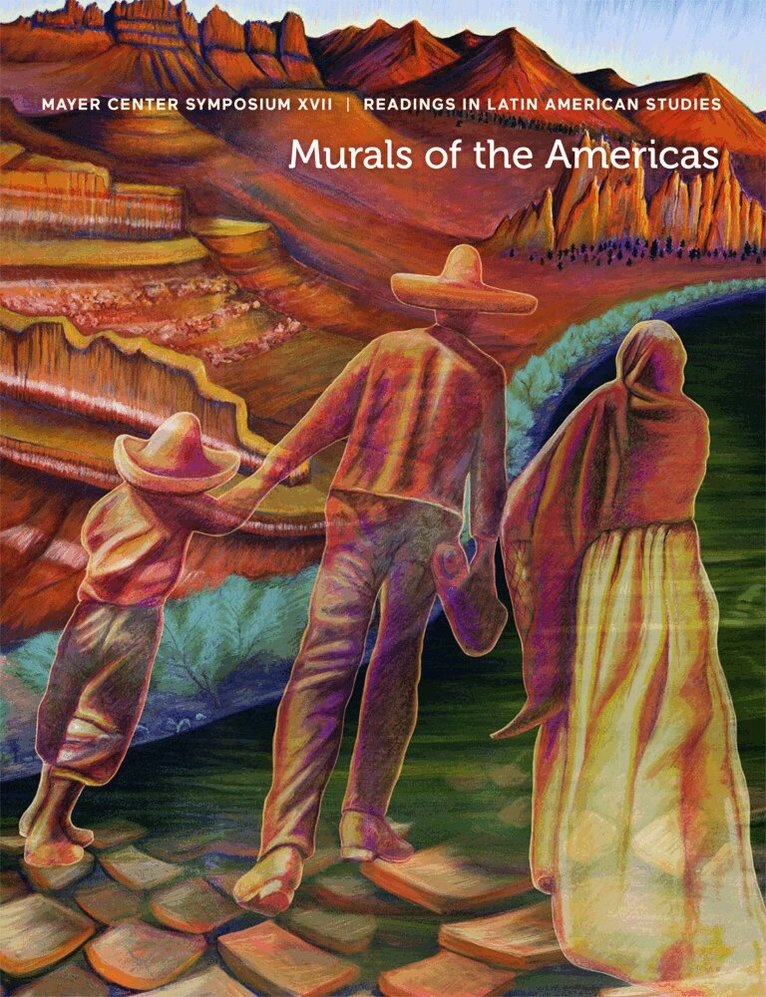
Häftad, Engelska, 2019
322 kr
Skickas inom 5-8 vardagar
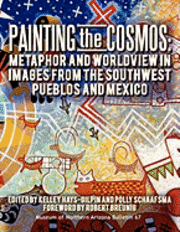
This volume presents the work of ten scholars who shared their research at the Denver Art Museum's 2017 symposium hosted by the Frederick and Jan Mayer Center for Pre-Columbian and Spanish Colonial Art. Centered on the theme of murals, each chapter discusses how this art form functions as a powerful tool for the expression of political, social, or religious ideas across diverse time periods and cultures in the Americas, from the ancient rock cave paintings of Guerrero, Mexico, to the murals of the 1960s Chicano movement. Artist Judy Baca discusses her practice with Jesse Laird Ortega (Denver Art Museum).Claudia Brittenham (University of Chicago) considers the Rainbow Serpent mural from Chichen Itza's Temple of the Chacmool.Severin Fowles (Barnard College) and Lindsay Montgomery (University of Arizona) reevaluate rock art across the American plains and Southwest. Kelley Hays-Gilpin (Northern Arizona University) and Hopi artist Ed Kabotie survey dry fresco mural painting in Hopi, Zuni, Acoma, and Rio Grande Pueblo communities from the fifteenth century to the present.Heather Hurst (Skidmore College) reconstructs the sequence of drawing the Oxtotitlán cave paintings in Guerrero, Mexico, some of the earliest mural paintings in Mesoamerica.Lucha Martinez de Luna (INAH/independent scholar) examines how Chicano artists used mural arts to make statements about identity and cultural heritage in the context of the civil rights movement of the 1960s, with a focus on Denver artists.Franco Rossi (Boston University) provides a detailed examination of the Xultun mural images and texts, which shed light on the training of Classic Maya scribes and the transmission of artistic knowledge.Maria Teresa Uriarte (Universidad Nacional Autónoma de México) brings thirty years' insight to the striking iconography of the murals of Teotihuacan.
Letar du efter digitala böcker?
E-böcker och ljudböcker handlar du än så länge på vår tidigare sajt.