• Fri frakt över 249 kr
  • •
  • Snabba leveranser
  • •
  • Billiga böcker
Kundservice

Du är på sajten för privatpersoner.

Företag, bibliotek eller offentlig verksamhet?

Du handlar på classic.bokus.com, där alla dina funktioner finns intakta.
Till classic.bokus.com
Bokus logotyp. Gå till startsidan.
  • Erbjudanden
  • Student
  • Topplistor
  • Barn & ungdom
  • Bokus Play
  • E-böcker
  • Ljudböcker
  • Pocketböcker
  • Spel och pussel

5% studentrabatt – använd koden KURSBOK27 →

Sidfot

Mina sidor

    Hjälp

    • Kundservice
    • Vanliga frågor och svar
    • Frakt och leverans
    • Retur vid ångerrätt
    • Reklamera vara
    • Betalning
    • Köpvillkor
    • Allmänna villkor
    • Information om webbplatsens tillgänglighet

    Om Bokus

    • Om oss
    • Pressrum
    • För studenter
    • För företag
    • För bibliotek och offentlig verksamhet
    • För leverantörer
    • Hållbarhet

    Populärt

    • Aktuella erbjudanden
    • Presentkort
    • Studentlitteratur
    • Nya böcker
    • Topplistor
    • Signerade böcker
    • Engelska böcker

    Inspiration

    • Boktips
    • BookTok
    • Barnbokskaraktärer
    • Populära författare
    Logotyp för Bokus
    Följ oss på Facebook (extern länk)Följ oss på Instagram (extern länk)Följ oss på YouTube (extern länk)Följ oss på TikTok (extern länk)
    bokus @ CookiesAnpassa cookiesIntegritetspolicyKöpvillkor
    Till Citymail hemsida (extern länk)Till Budbee hemsida (extern länk)Till Postnord hemsida (extern länk)Till Schenker hemsida (extern länk)Till Early Bird hemsida (extern länk)Till Walleys hemsida (extern länk)
    1. Ekonomi och Ledarskap
    2. Nationalekonomi
    3. Internationell ekonomi

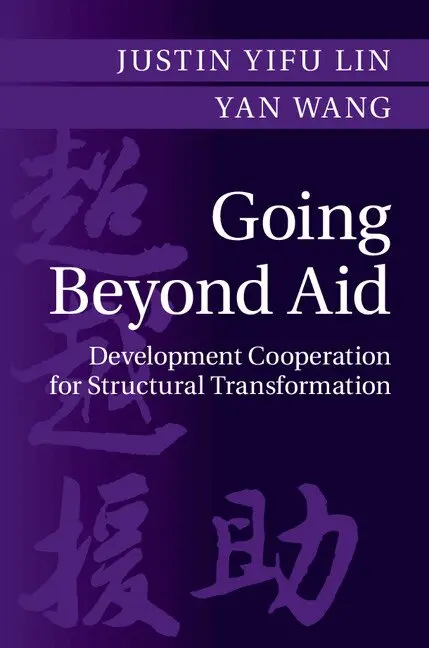
    Going Beyond Aid

    Development Cooperation for Structural Transformation

    AvJustin Yifu Lin,Yan Wang

    Häftad, Engelska, 2017

    390 kr

    Beställningsvara. Skickas inom 7-10 vardagar. Fri frakt över 249 kr.

    Fler format och utgåvor

    Inbunden

    1 002 kr

    Beskrivning

    Developing countries have for decades been trying to catch up with the industrialized high-income countries, but only a few have succeeded. Historically, structural transformation has been a powerful engine of growth and job creation. Traditional development aid is inadequate to address the bottlenecks for structural transformation, and is hence ineffective. In this book, Justin Yifu Lin and Yan Wang use the theoretical foundations of New Structural Economics to examine South-South development aid and cooperation from the angle of structural transformation. By studying the successful economic transformation of countries such as China and South Korea through 'multiple win' solutions based on comparative advantages and economy of scale, and by presenting new ideas and different perspectives from emerging market economies such as Brazil, India and other BRICS countries, they bring a new narrative to broaden the ongoing discussions of post-2015 development aid and cooperation as well as the definitions of aid and cooperation.

    Produktinformation

    • Utgivningsdatum:2017-01-20
    • Mått:150 x 229 x 13 mm
    • Vikt:340 g
    • Format:Häftad
    • Språk:Engelska
    • Antal sidor:232
    • Förlag:Cambridge University Press
    • ISBN:9781316607152

    Utforska kategorier

    • Internationell ekonomi inom Ekonomi och Ledarskap

    Mer om författaren

    Justin Yifu Lin is Professor and Director at the Center for New Structural Economics, and Professor and Honorary Dean at the National School of Development at Peking University, Beijing. He is Vice Chairman of the All-China Federation of Industry and Commerce, and was the Senior Vice President and Chief Economist of the World Bank from 2008–12. Prior to joining the World Bank, Lin served for fifteen years as Founding Director and Professor of the China Centre for Economic Research (CCER) at Peking University. He is the author of twenty-four books, including Against the Consensus: Reflections on the Great Recession (Cambridge, 2013), The Quest for Prosperity: How Developing Economies Can Take Off (2012), New Structural Economics: A Framework for Rethinking Development and Policy (2012), Demystifying the Chinese Economy (Cambridge, 2011), Benti and Changwu: Dialogues on Methodology in Economics (2012), and Economic Development and Transition: Thought, Strategy, and Viability (Cambridge, 2009). Yan Wang is currently a Visiting Professor at George Washington University, Washington DC, and a Senior Fellow at the National School of Development, Peking University, Beijing. She previously worked as Senior Economist and Team Leader in the World Bank for twenty years. She has served as senior consultant for the Asian Development Bank, the United Nations Development Programme, the United Nations Industrial Development Organization and the World Bank. She has authored and co-authored several books and journal publications and received twice the SUN Yefang Award in Economics. Her major joint publications include The Quality of Growth (2000), Corporation Governance (1998), China's Pension System Reform (2003), and Banking Sector Openness (2006). She has been working with Professor Justin Yifu Lin on several papers including China-Africa Cooperation (2014, and 2015), and 'Beyond the Marshall Plan: A Global Structural Transformation Fund' (2013). She received her PhD from Cornell University, New York, and taught economics before joining the World Bank, as well as after retirement.

    Recensioner i media

    'This book is well-written and worth reading by scholars, policy makers, and practitioners of development cooperation as it articulates a new and important aspect of development cooperation, the Chinese involvement. The influence of Chinese development cooperation might open up new opportunities for developing countries where traditional development cooperation has not succeeded.' Youngwan Kim, International Relations of the Asia-Pacific

    Innehållsförteckning

    • Preface; List of figures; List of tables; 1. Introduction and objectives; 2. Structural transformation is key to development; 3. Traditional aid is ineffective for structural transformation; 4. South-South development cooperation helps structural transformation; 5. Using China's comparative advantage to address Africa's infrastructure bottlenecks; 6. China uses its comparative advantage to help Africa in light manufacturing; 7. Effectiveness for transformation: the secret for quick wins; 8. Prospects for development finance; References; Index.