College Art Association Monograph - Böcker
Visar alla böcker i serien College Art Association Monograph. Handla med fri frakt och snabb leverans.
4 produkter
4 produkter
Del 30 - College Art Association Monograph
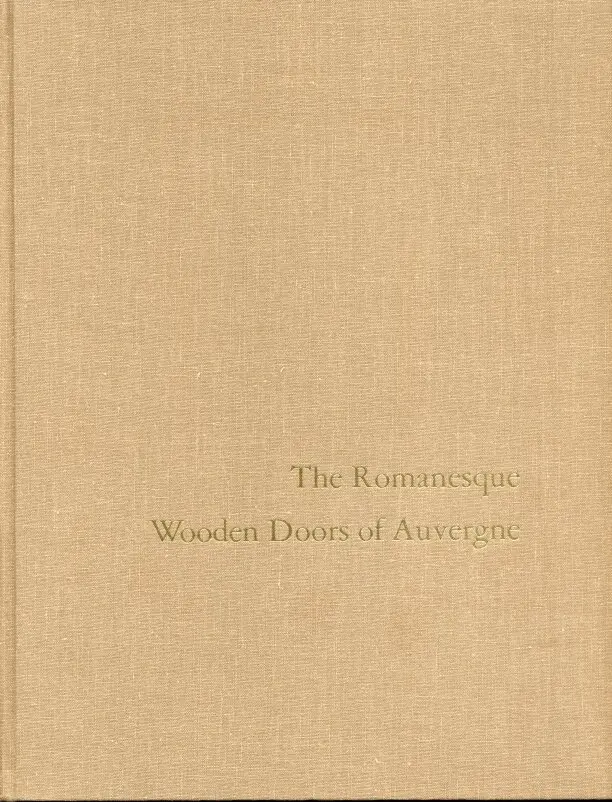
Romanesque Wooden Doors of Auvergne
Inbunden, Engelska, 1990
782 kr
Skickas inom 7-10 vardagar
This volume of the College Art Association Monograph series examines the Romanesque wood doors of Auvergne.
Del 47 - College Art Association Monograph
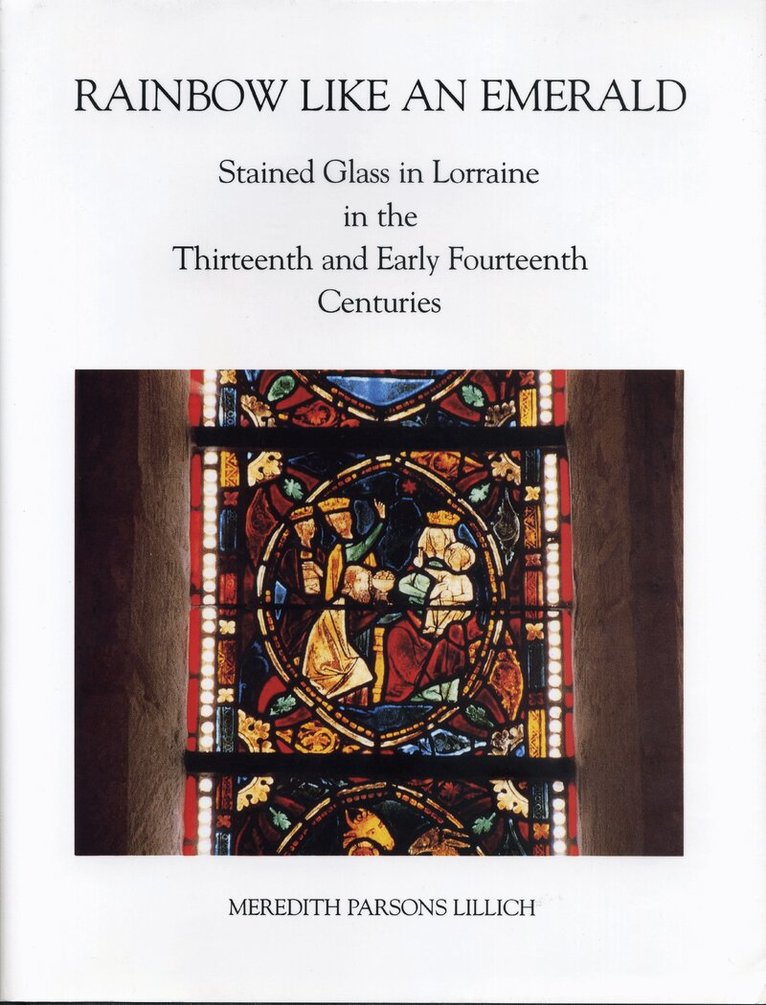
Rainbow Like an Emerald
Stained Glass in Lorraine in the Thirteenth and Early Fourteenth Centuries
Inbunden, Engelska, 1991
1 481 kr
Skickas inom 7-10 vardagar
Rainbow Like an Emerald is the most comprehensive study of Lorraine stained glass as a regional style developed in conjunction with the typical Gothic architecture of the province.Situated between France and Germany, medieval Lorraine increasingly looked to France for it cultural standards. While French in inspiration, however, its Gothic architecture and stained glass quickly developed strong regional and distinctive characteristics. This architecture has only in the last decade been studied, and Lillich's work is the first serious analysis of the windows.Loraine has always been known as a glass-making center, and in the Gothic era it seems to have produced a range of handsome greens. However, the turbulent history of the region has left little glass from the period, and today no glass program survives in it entirety, while some, such as Metz, are now lost beyond retrieval. This book presents all the Gothic stained glass that remains in Lorraine: Toul Cathedral, Saint-Gengoult in Toul, the rural parish of Ménillot (just outside of Toul), Saint-Dié in the Vosges, the pilgrimage church of Avioth on the Belgian border, and the various groups now installed in Metz Cathedral, with appendixes dealing with fragments surviving at Sainte-Ségolène in Metz, Ecrouves near Toul, and the Cistercian abbey of La Chalade.Though many patches of the puzzle remain—and will remain—blank, some of the outlines are strong and some of the precious detail still commands the power to astonish and delight us.
Del 51 - College Art Association Monograph
Degas and the Business of Art
“A Cotton Office in New Orleans”
Inbunden, Engelska, 1994
1 761 kr
Skickas inom 7-10 vardagar
Edgar Degas's painting entitled A Cotton Office in New Orleans is one of the most significant images of nineteenth-century capitalism, in part because it was the first painting by an Impressionist to be purchased by a museum. Drawing upon archival materials, Marilyn R. Brown explores the accumulated social meanings of the work in light of shifting audiences and changing market conditions and assesses the artist's complicated relationship to the business of art.Despite the financial failure of the actual cotton firm he represented, Degas carefully constructed his picture with a particular buyer—a British textile manufacturer—in mind. However, world events, including an international stock market crash and declines in the market for cotton and art, destroyed his hopes for this sale. It was under these circumstances that the canvas was exhibited in the second Impressionist show in Paris in 1876. While it received a more positive response than other works exhibited, its success was with the conservative audience. After considerable difficulty, Degas finally succeeded in selling the painting in 1878 to the newly founded museum in the city of Pau. The painting was probably regarded as an appropriate homage to the old textile manufacturing family who funded its purchase. It also appealed to "progressive" provincial and more cosmopolitan audiences in Pau. The picture's scattered form and atomized figures—in which some interpreters today read evidence of the artist's own ambivalence about capitalism—seemingly contributed to its "innovative" cachet in Pau. But the private and public meanings of the painting had shifted, in discontinuous fashion, between its production and consumption. Under the circumstances, Degas's unfixed and even mixed messages about business became, among other things, his most successful (if unwitting) marketing strategy. The official recognition Degas received in Pau in 1878 heralded the gradual upswing of his own financial status during the 1880s, but his attitudes towards success remained mixed.
Del 50 - College Art Association Monograph
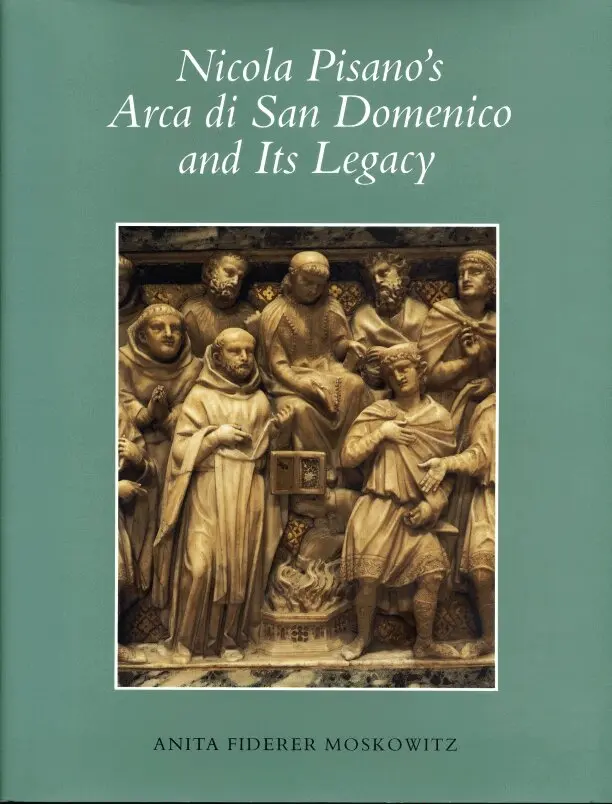
Nicola Pisano's Arca di San Domenico and Its Legacy
Inbunden, Engelska, 1994
1 696 kr
Skickas inom 7-10 vardagar
The remarkable evolution of Italian Gothic and Renaissance sepulchral art was initiated, not by the tomb of a pope or a prince but by one made for a saint, Dominic Guzmàn, founder of the Order of Preachers. The tomb was designed by Nicola Pisano in 1264 and built in San Domenico, Bologna, in 1267. Shortly after its construction, monumental tombs appeared everywhere in Italy, characterized by increasingly large-scale, spatially aggressive, architectonic forms with rich sculptural embellishments. This study analyzes the form and structure of this thirteenth-century monument and explores its meaning to Pisano's contemporaries, patrons as well as the public. Anita Moskowitz's discussions of the two major descendants of the Arca di San Domenico—the Arca di San Pietro Martire in Milan by Giovanni di Balduccio and the Arca di Sant' Agostino in Pavia by a follower of Balduccio—as well as the large number of monuments peripherally related to it, show the profound impact of the Bolognese monument on the subsequent history of tomb sculpture.Moskowitz begins with a brief discussion of the history and concerns of the Dominican Order, particularly during the decades spanning the death of Dominic and the initiation of the Arca project. After describing the form and structure of the original tomb and elucidating the subjects for the reliefs, she investigates the historical context of the tomb's construction, revealing that the unusual components of the tomb can be related to contemporary Dominican concerns and that several themes are linked to specific controversies of the 1250s and 1260s, both in and outside Bologna. Her examination of the concrete manifestations of the tomb's generative power serves to underline further the inventiveness of the design, the purposefulness of the iconography, and the importance of the influence of Nicola Pisano's Arca di San Domenico.