Corpus Avesticum - Böcker
Visar alla böcker i serien Corpus Avesticum. Handla med fri frakt och snabb leverans.
6 produkter
6 produkter
2 939 kr
Skickas inom 5-8 vardagar
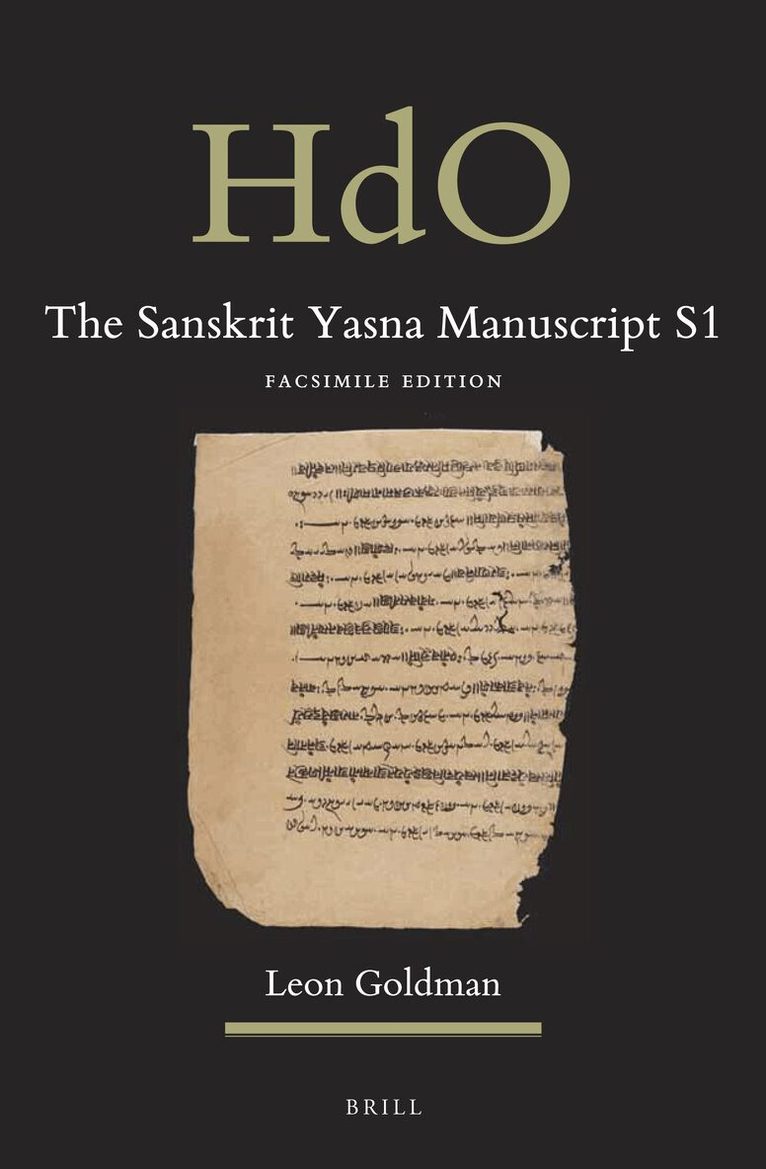
The manuscript S1 is one of the chief witnesses to the Sanskrit Yasna, containing the Avestan text of the Zoroastrian Yasna liturgy to chapter 46.19, together with a Sanskrit translation and commentary. This book contains the complete, full-colour set of facsimile images of S1. An introduction by Leon Goldman provides an overview of the Zoroastrian Sanskrit tradition together with a discussion of the S1 manuscript covering its physical appearance, its age and history, and for the first time, a detailed palaeographic analysis of the Avestan and Sanskrit text.
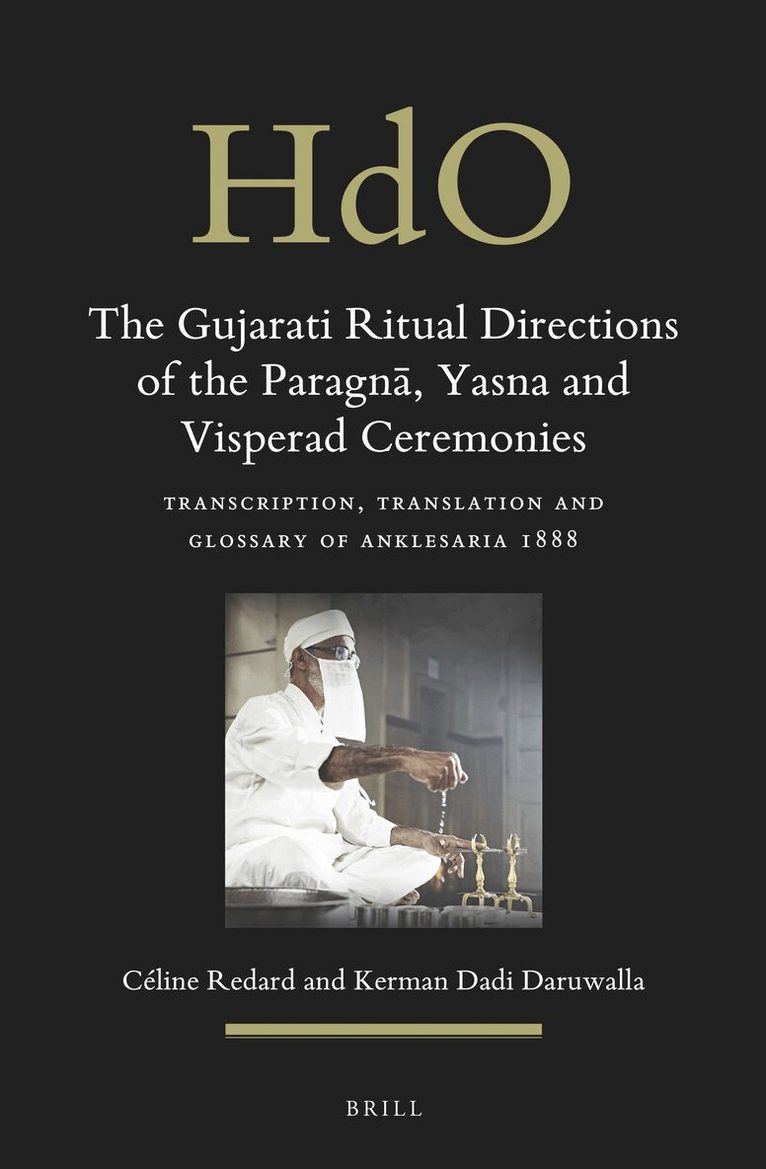
Gujarati Ritual Directions of the Paragnā, Yasna and Visperad Ceremonies
Transcription, Translation and Glossary of Anklesaria 1888
Inbunden, Engelska, 2021
1 452 kr
Skickas inom 5-8 vardagar
This edition gives a transcription of Anklesaria’s text, an English translation, a Gujarati-English glossary, an introduction to Gujarati-language works on ritual directions and a study on the relationship between Anklesaria’s text and the liturgical manuscripts in Yasna 3–8.Unlocking the meaning and performative aspects in this first-ever edition in any European language, of these core Zoroastrian rituals in India, Céline Redard and Kerman Dadi Daruwalla open up the Indian tradition for future research and highlight its importance.
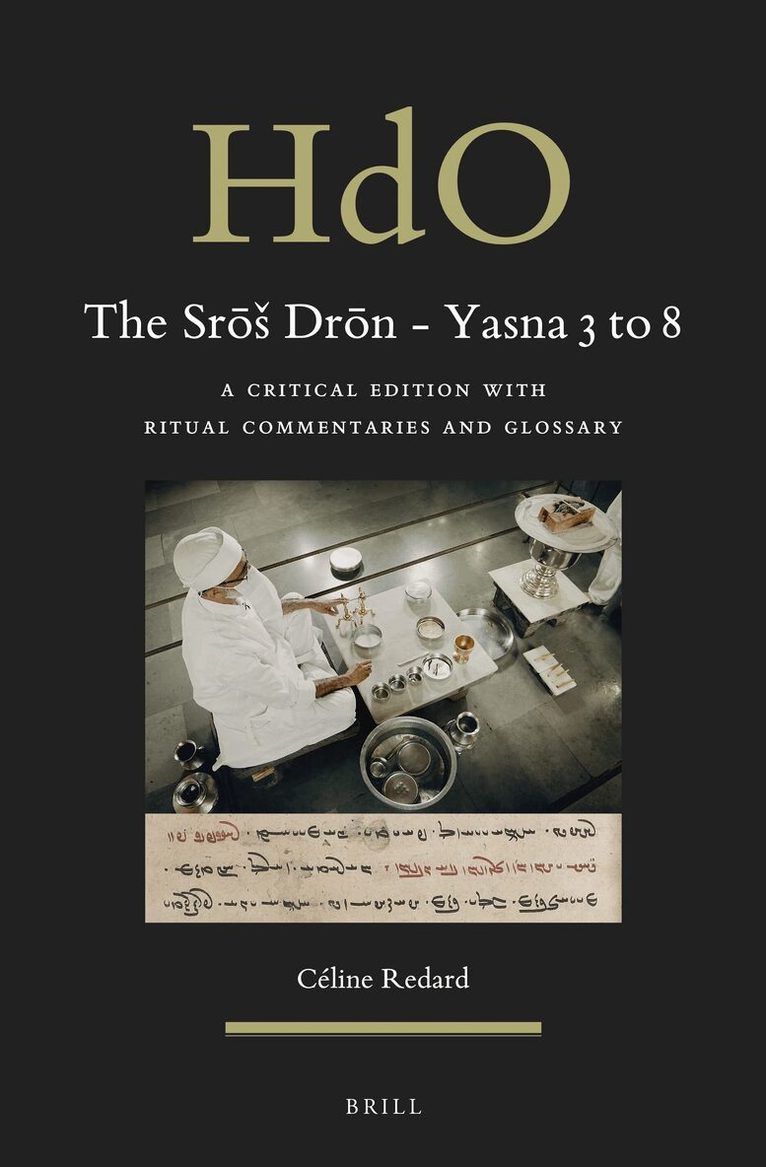
Srōš Drōn - Yasna 3 to 8
A Critical Edition with Ritual Commentaries and Glossary
Inbunden, Engelska, 2021
2 061 kr
Skickas inom 5-8 vardagar
This book is a multi-faceted study of the Srōš Drōn, comprising chapters 3 to 8 of the Yasna ceremony, the core ritual of the Zoroastrian religion. It provides a critical edition produced with the electronic tools of the project The Multimedia Yasna, and a study of the performative aspects of the Srōš Drōn both through the lens of the ritual directions and in comparison with the Drōn Yašt ceremony.By analysing the Srōš Drōn both as a text attested in manuscripts and as a ritual performance, Céline Redard applies a new approach to unlock the meaning of these chapters of the Yasna.
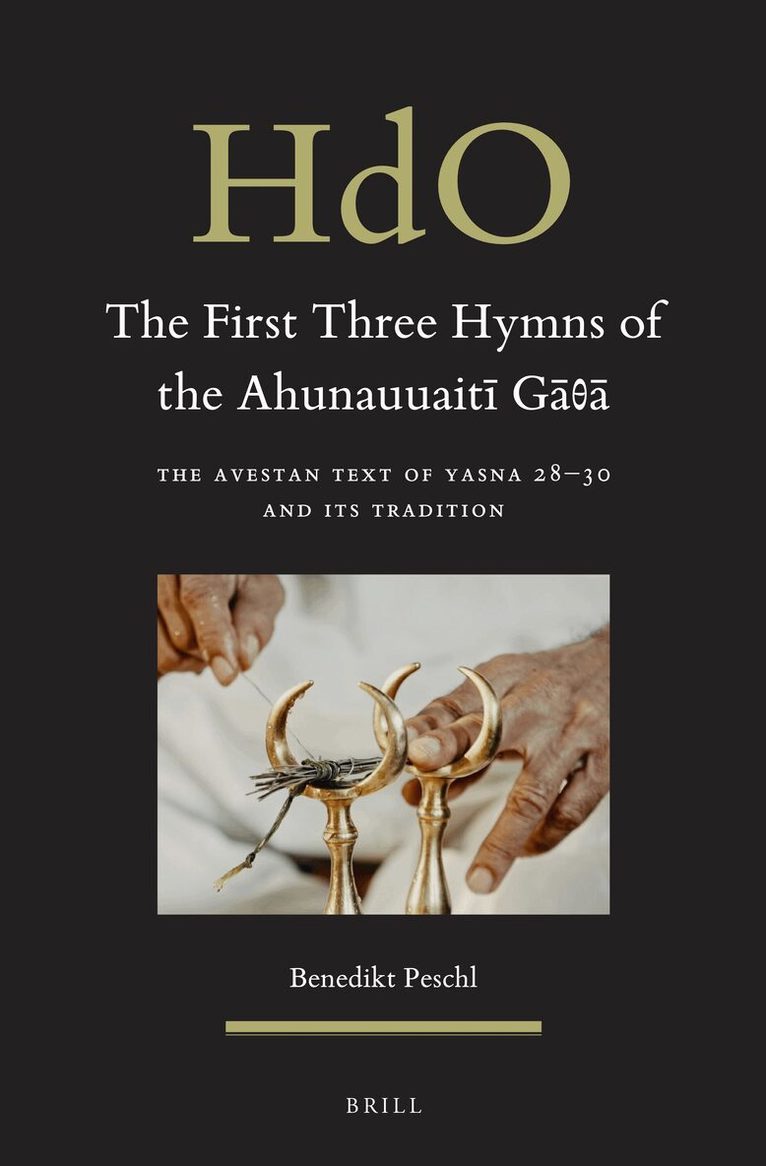
First Three Hymns of the Ahunauuaitī Gāθā
The Avestan Text of Yasna 28–30 and Its Tradition
Inbunden, Engelska, 2022
2 134 kr
Skickas inom 5-8 vardagar
At the center of this book stands a text-critical edition of three chapters of the Gāthās, exemplifying the editorial methodology developed by the “Multimedia Yasna” (MUYA) project and its application to the Old Avestan parts of the Yasna liturgy.Proceeding from this edition, the book explores aspects of the transmission and ritual embedding of the text, and of its late antique exegetical reception in the Middle Persian (Pahlavi) tradition. Drawing also on a contemporary performance of the Yasna that was filmed by MUYA in Mumbai in 2017, the book aims to convey a sense of the Avestan language in its role as a central element of continuity around which the Zoroastrian tradition has evolved from its prehistoric roots up to the modern era.
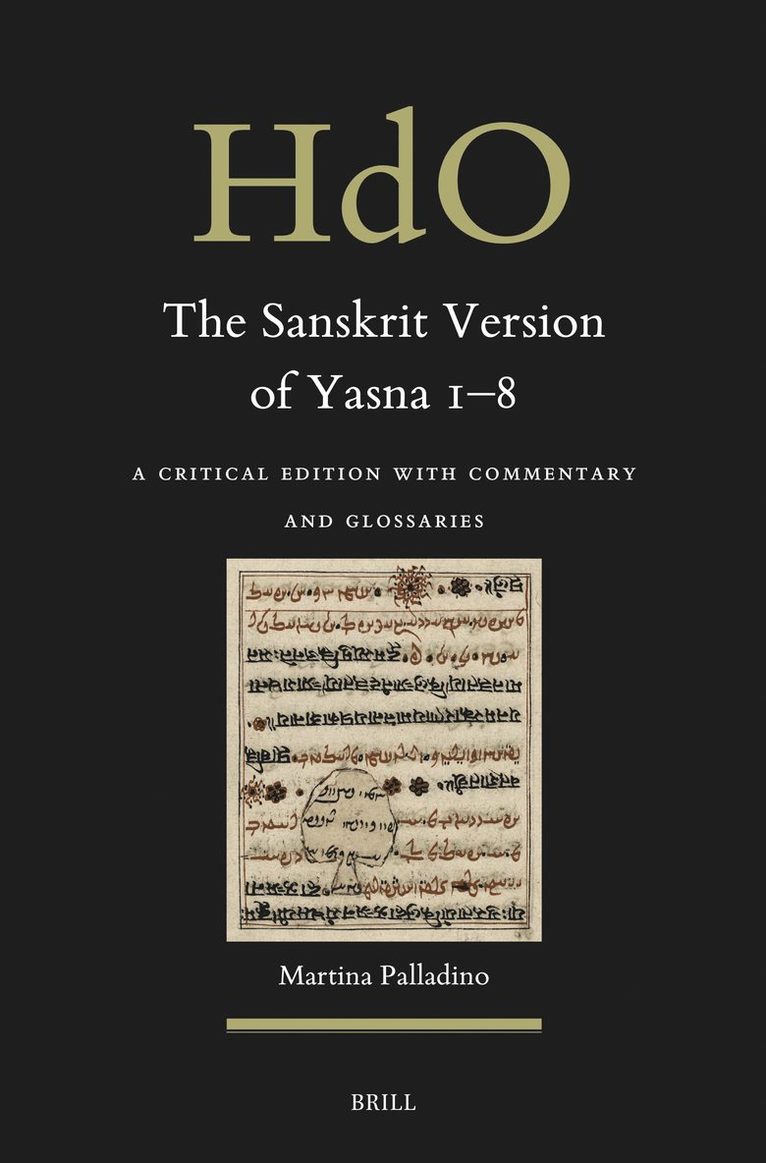
Sanskrit Version of Yasna 1–8
A Critical Edition with Commentary and Glossaries
Inbunden, Engelska, 2025
2 039 kr
Skickas inom 3-6 vardagar
This book contributes to the Multimedia Yasna (MUYA) Project, led by Prof. Almut Hintze of SOAS, by presenting an edition of the first eight chapters of the Sanskrit Yasna. This new edition is accompanied by an English translation and two glossaries. This study aims to provide a framework for Parsi literary production in the Indian context and, at the same time, to relate the Sanskrit text to its Avestan and Pahlavi versions. The special feature of this unique text is that it belongs to the Indian cultural environment while remaining part of the Zoroastrian tradition.
2 303 kr
Skickas inom 3-6 vardagar
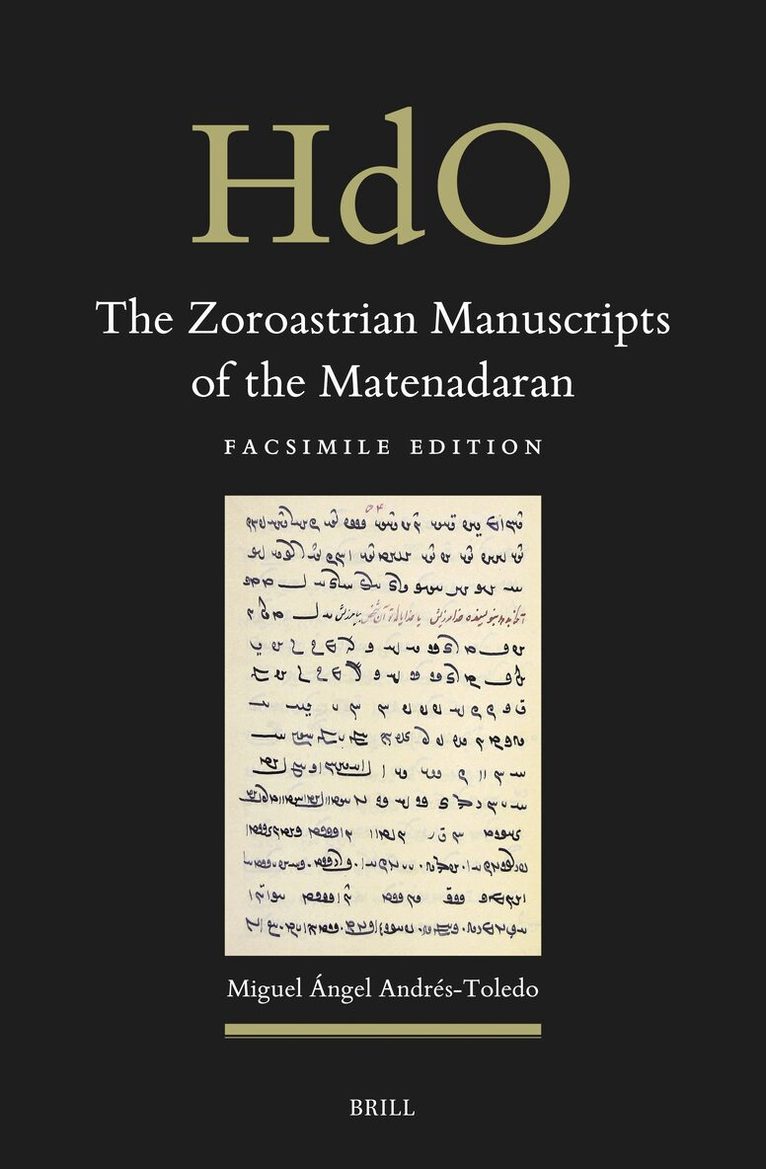
Armenia was a stronghold of the Zoroastrian religion in antiquity and late antiquity. Of the rich Zoroastrian literature that was composed and transmitted in the region, no single text was extant there after long periods of cultural, political and religious changes.The three Zoroastrian manuscripts of this facsimile edition, containing precious copies of texts in the Avestan, Pahlavi and Zoroastrian New Persian languages, are the only exception. Stemming from Iran and now preserved at the Mesrop Mashtots Institute of Ancient Manuscripts (Matenadaran), they are heirs of an ancient Iranian faith that once flourished also in Armenia.