Fast Finishers English - Böcker
Visar alla böcker i serien Fast Finishers English. Handla med fri frakt och snabb leverans.
11 produkter
11 produkter
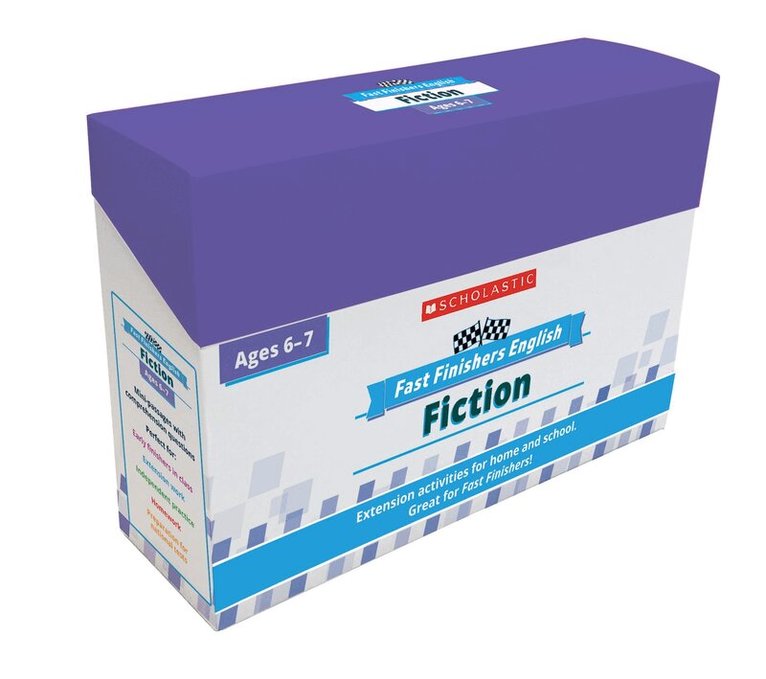
Fiction Ages 6-7
2023
416 kr
Tillfälligt slut
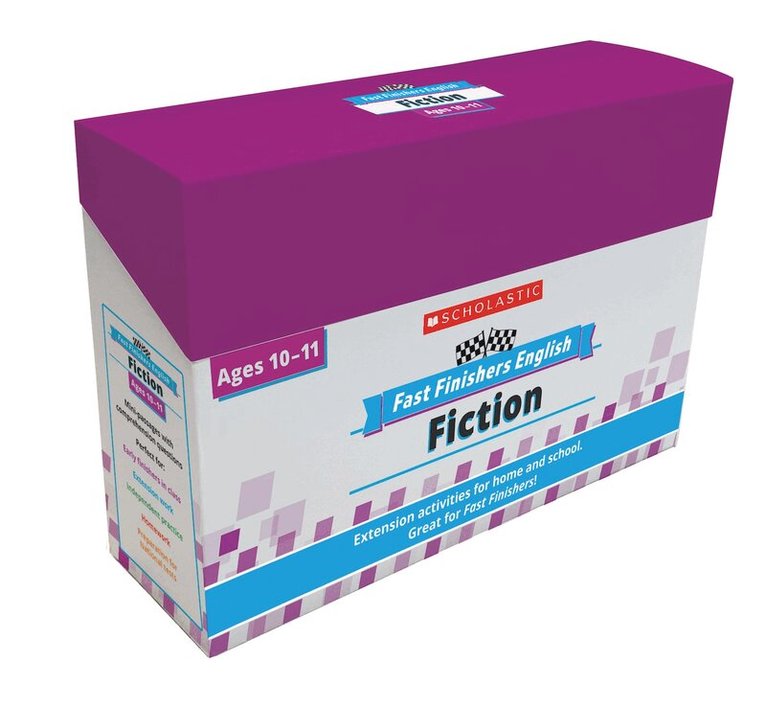
This box of comprehension cards covers:High-interest shortpassages of text along with four comprehension questionsthat prompt students to identify and effectively cite textevidenceA variety of genresComprehension-helpercards that provide kid-friendly definitions, tips,and examples to help students master reading skillsOneach of the 100 text cards there is a passageof age-appropriate text with an illustration and four comprehensionquestions related to the passage. The 10 different questionstypes in this fiction box are: Cause and Effect- Questions focused on an event or action that makes something happenin a story and the result or consequence of that event or action. Character - Questions focused on the characters ofa story Details - Literal questions, which you may rememberfrom reading the text and can answer straight away. Questionsto show that you have read/understood the text.Inference- Questions focused on drawing a conclusion based on clues inthe text and your own background knowledge.Prediction -Questions focused on using what you know from the text to make asensible guess about what will happen later on in a story.Problemand Solution - Questions focused on the main problem ofa story and the solution to, or outcome of, the problem or conflict.Not all resolutions are happy ones.Sequence of Events- Questions focused on the plot and the order of events in aplot (beginning, middle, end)Setting - Questions focusedon the settings of a story. Text Evidence - Questions focusedon exact words, phrases or sentences in a text that provideinformation, answer a question or support a claim. Vocabulary- Questions focused on hints that readers use to work outthe meaning of an unknown word in a text. Context clues can comebefore or after the unknown word. The fourth questionon each card will be a S-T-R-E-T-C-H question, a creativethinking question such as writing sentences using words/phrasesfrom the story, describing something from the story, explainingwhat might happen next, describing a real-life event that's connectedto the story, asking an opinion on the story or characterfrom the story.Age-appropriate helper cards providebackground information to help children respond knowledgeably tothe comprehension questions. There are 11 helper cards inthis box covering: Cause and EffectCharacterDetailsFictionTextInferencePredictionProblemand SolutionSequence of EventsSettingTextEvidenceVocabularyAlsoincludes a Teacher's Booklet to provide ideas on howto use the cards and answers.
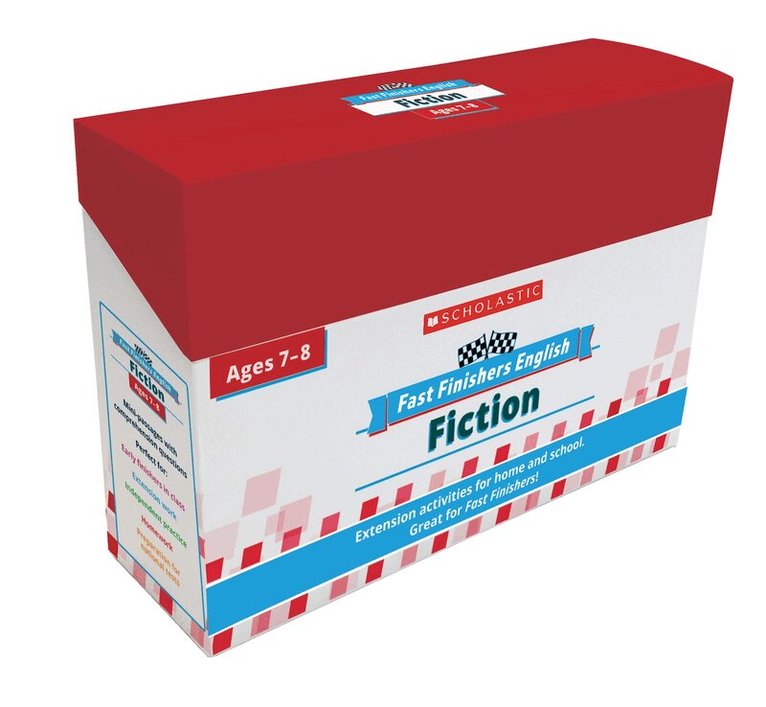
Fiction Ages 7-8
2023
416 kr
Tillfälligt slut
This box of comprehension cards covers:High-interest shortpassages of text along with five comprehension questionsthat prompt students to identify and effectively cite textevidenceA variety of genresComprehension-helpercards that provide kid-friendly definitions, tips,and examples to help students master reading skillsOn each of the 100 text cards there is a passageof age-appropriate text with an illustration and five comprehensionquestions related to the passage. The 10 differentquestions types in this fiction box are:Cause and Effect- Questions focused on an event or action that makes somethinghappen in a story and the result or consequence of that event oraction.Character - Questions focused on the charactersof a story Conflict and Resolution - Questions focused on the main problemof a story and the solution to, or outcome of, the problem orconflict. Not all resolutions are happy ones.FigurativeLanguage - Questions focused on words and phrases that mean somethingdifferent from what the words actually say.Inference- Drawing a conclusion about a story based on clues in the textand your own background knowledge.Prediction - Using whatyou know from the text to make a sensible guess about what willhappen later on in a story.Setting - Questions focusedon the settings of a story.Text Evidence - Questions focusedon exact words, phrases or sentences in a text that provideinformation, answer a question or support a claim.Theme- Questions focused on the big idea or message of a story. A themeis conveyed by title, setting and symbols. It can also be conveyedby how its characters act, learn and change.Vocabulary- Hints that readers use to work out the meaning of an unknownword in a text. Context clues can come before or after the unknownword. The fifth question on each card will be aS-T-R-E-T-C-H question, a creative thinking question suchas writing sentences using words/phrases from the story, describingsomething from the story, explaining what might happen next,describing a real-life event that's connected to the story, askingan opinion on the story or character from the story.Age-appropriatehelper cards provide background information tohelp children respond knowledgeably to the comprehension questions.There are 10 helper cards in this box covering:Causeand EffectCharacterConflict and ResolutionContextCluesFigurative LanguageInferencePredictionSettingTextEvidenceThemeAlso includes a Teacher's Booklet toprovide ideas on how to use the cards and answers.
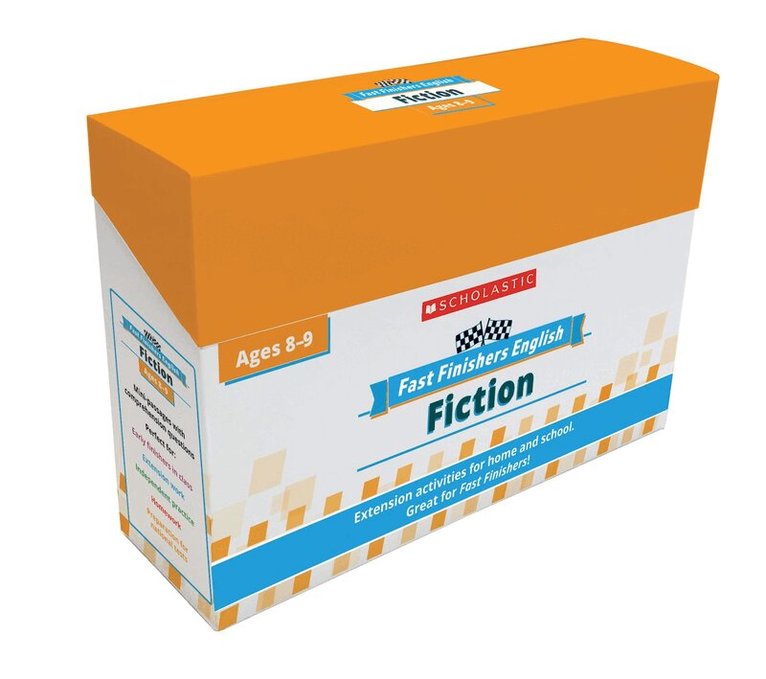
Fiction Ages 8-9
2023
416 kr
Tillfälligt slut
This box of comprehension cards covers:High-interest shortpassages of text along with five comprehension questionsthat prompt students to identify and effectively cite textevidenceA variety of genresComprehension-helpercards that provide kid-friendly definitions, tips,and examples to help students master reading skillsOn each of the 100 text cards there is a passageof age-appropriate text with an illustration and five comprehensionquestions related to the passage. The 10 differentquestions types in this fiction box are:Cause and Effect- Questions focused on an event or action that makes somethinghappen in a story and the result or consequence of that event oraction.Character - Questions focused on the charactersof a story Conflict and Resolution - Questions focused on the main problemof a story and the solution to, or outcome of, the problem orconflict. Not all resolutions are happy ones.FigurativeLanguage - Questions focused on words and phrases that mean somethingdifferent from what the words actually say.Inference- Drawing a conclusion about a story based on clues in the textand your own background knowledge.Prediction - Using whatyou know from the text to make a sensible guess about what willhappen later on in a story.Setting - Questions focusedon the settings of a story.Text Evidence - Questions focusedon exact words, phrases or sentences in a text that provideinformation, answer a question or support a claim.Theme- Questions focused on the big idea or message of a story. A themeis conveyed by title, setting and symbols. It can also be conveyedby how its characters act, learn and change.Vocabulary- Hints that readers use to work out the meaning of an unknownword in a text. Context clues can come before or after the unknownword. The fifth question on each card will be aS-T-R-E-T-C-H question, a creative thinking question suchas writing sentences using words/phrases from the story, describingsomething from the story, explaining what might happen next,describing a real-life event that's connected to the story, askingan opinion on the story or character from the story.Age-appropriatehelper cards provide background information tohelp children respond knowledgeably to the comprehension questions.There are 10 helper cards in this box covering:Causeand EffectCharacterConflict and ResolutionContextCluesFigurative LanguageInferencePredictionSettingTextEvidenceThemeAlso includes a Teacher's Booklet toprovide ideas on how to use the cards and answers.
416 kr
Tillfälligt slut
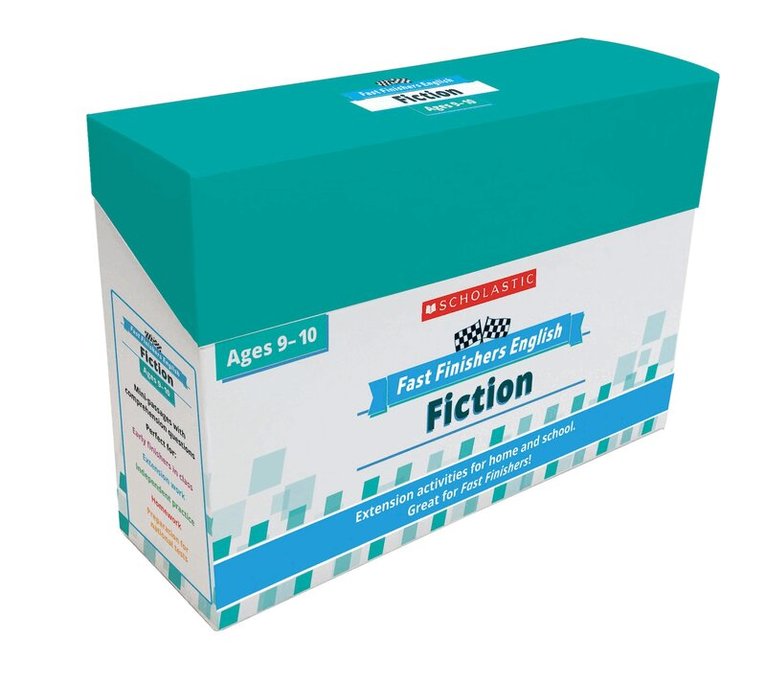
This box of comprehension cards covers:High-interest shortpassages of text along with five comprehension questionsthat prompt students to identify and effectively cite textevidenceA variety of genresComprehension-helpercards that provide kid-friendly definitions, tips,and examples to help students master reading skillsOn each of the 100 text cards there is a passageof age-appropriate text with an illustration and five comprehensionquestions related to the passage. The 10 differentquestions types in this fiction box are:Cause and Effect- Questions focused on an event or action that makes somethinghappen in a story and the result or consequence of that event oraction. Character - Questions focused on the charactersof a story Compare and Contrast - Questions focused onlooking closely at two or more things (characters, settings, plots,etc.) to see how they are similar. And looking closely at twoor more things to see how they are different.Conflictand Resolution - Questions focused on the main problem of a storyand the solution to, or outcome of, the problem or conflict. Notall resolutions are happy ones.Inference - Drawing a conclusionabout a story based on clues in the text and your own backgroundknowledge.Point of view - Questions about the storyperspective i.e. looking at pronouns etc.Prediction- Using what you know from the text to make a sensible guess aboutwhat will happen later on in a story.Setting - Questionsfocused on the settings of a story. Theme - Questionsfocused on the big idea or message of a story. A theme is conveyedby title, setting and symbols. It can also be conveyed by howits characters act, learn and change.Tone - Questions focusedon the way the narrator feels about the events, settings andcharacters in a story.The fifth question on eachcard will be a S-T-R-E-T-C-H question, a creative thinkingquestion such as writing sentences using words/phrases from thestory, describing something from the story, explaining what mighthappen next, describing a real-life event that's connected to thestory, asking an opinion on the story or character from the story.Age-appropriatehelper cards provide backgroundinformation to help children respond knowledgeably to the comprehensionquestions. There are 14 helper cards in this boxcovering: Cause and EffectCharacterCompareand ContrastConflict and ResolutionContextCluesFiction TextFigurative LanguageInferencePointof ViewPredictionSettingTextEvidenceThemeToneAlsoincludes a Teacher's Booklet to provide ideas on how to usethe cards and answers.
416 kr
Tillfälligt slut
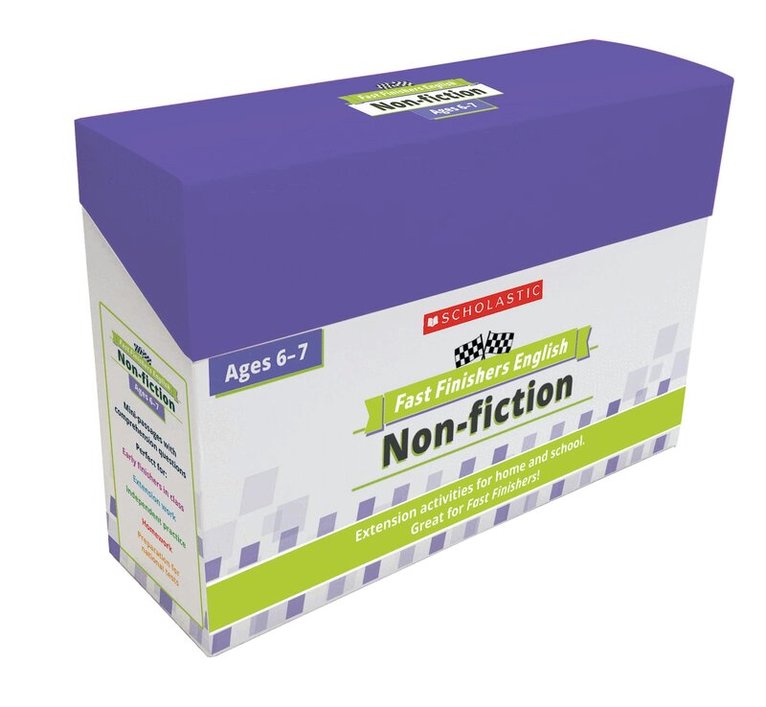
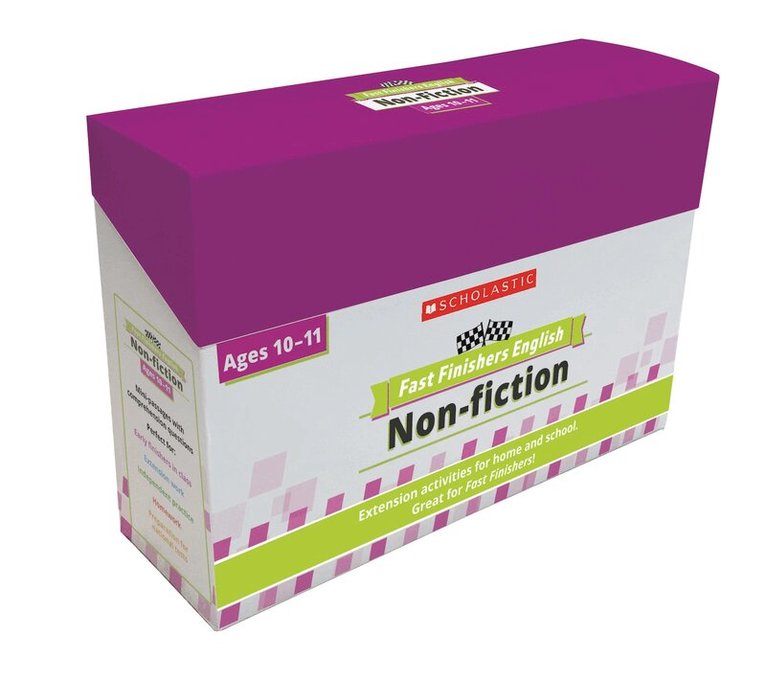
This box of comprehension cards covers:High-interest shortpassages of text along with four comprehension questionsthat prompt students to identify and effectively cite textevidenceA variety of genresComprehension-helpercards that provide kid-friendly definitions, tips,and examples to help students master reading skillsOneach of the 100 text cards there is a passageof age-appropriate text with an illustration and four comprehensionquestions related to the passage. The 10 different questionstypes in this non-fiction box are:Cause and Effect- Questions focused on an event or action that makes somethinghappen in a story and the result or consequence of that event oraction. Description - Questions focused on when words areused to create a 'picture' in the mind.Details - Literalquestions, which you may remember from reading the text andcan answer straight away. Questions to show that you have read/understoodthe text.Main Idea - Questions focused on the bigidea or message of a story. A theme is conveyed by title, settingand symbols. It can also be conveyed by how its characters act,learn and change.Problem and Solution - Questions focusedon the main problem of a story and the solution to, or outcomeof, the problem or conflict. Not all resolutions are happy ones.Questionsyou would ask the author - Questions focusedon the reason the author chose to write a text. Authors may writewith more than one purpose in mind.Sequence of Events- Questions focused on the plot and the order of events in a plot(beginning, middle, end).Similarities and Differences- Questions focused on looking closely at two or more things (characters,settings, plots, etc.) to see how they are similar. Andlooking closely at two or more things to see how they are different.SummariseVocabulary - Questions focused onhints that readers use to work out the meaning of an unknown wordin a text. Context clues can come before or after the unknown word.The fourth question on each card will be a S-T-R-E-T-C-Hquestion, a creative thinking question such as writingsentences using words/phrases from the story, describing somethingfrom the story, explaining what might happen next, describinga real-life event that's connected to the story, asking anopinion on the story or character from the story.Age-appropriatehelper cards provide background information to helpchildren respond knowledgeably to the comprehension questions. Thereare 14 helper cards in this box covering:Causeand effectCompare and contrastContext cluesDebateDescriptionDetailsceInformationtextMain idea and detailsProblemand solutionSequence of eventsSummariseTextevidenceVocabularyAlso includesa Teacher's Booklet to provide ideas on how to use thecards and answers.
416 kr
Tillfälligt slut
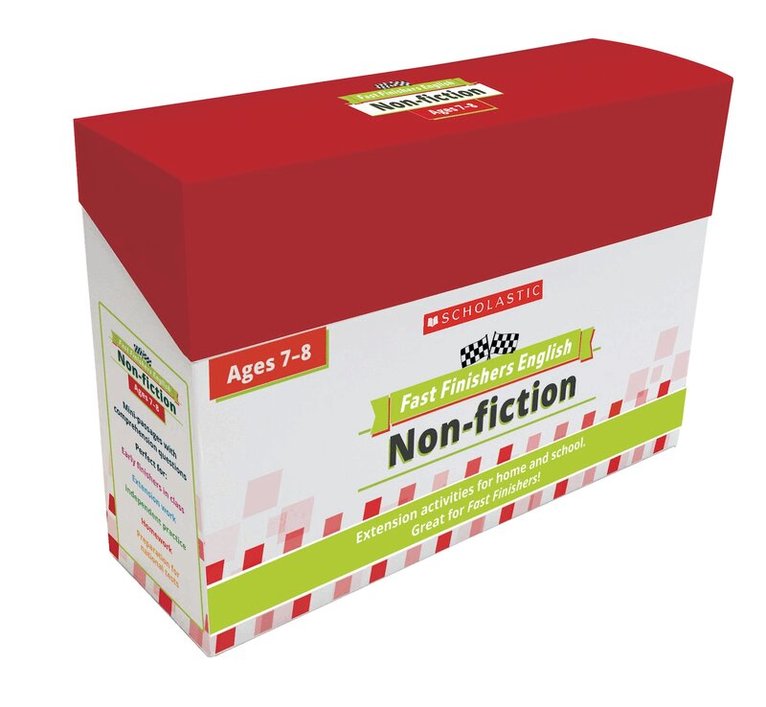
This box of comprehension cards covers:High-interest shortpassages of text along with five comprehension questionsthat prompt students to identify and effectively cite text evidenceAvariety of genresComprehension-helpercards that provide kid-friendly definitions, tips, andexamples to help students master reading skillsOn each of the 100 text cards there is a passageof age-appropriate text with an illustration and five comprehensionquestions related to the passage. The 10 different questionstypes in this non-fiction box are:Author's Purpose- Questions focused on the reason the author chose to writea text. Authors may write with more than one purpose in mind.Causeand Effect - Questions focused on an event or action thatmakes something happen in a story and the result or consequenceof that event or action.Compare and Contrast - Questionsfocused on looking closely at two or more things (characters,settings, plots, etc.) to see how they are similar. And lookingclosely at two or more things to see how they are different.Debate- Questions focused on a discussion between two (or more)sides with different views.Description - Questionsfocused on When words are used to create a 'picture' in the mind.Factand Opinion - Questions focused on Facts, informationthat is true and doesn't vary And Opinions, personal beliefs orfeelings. Opinions do vary.Main Idea and Details - A literalquestion, one which you may remember from reading the textand can answer straight away. One to show that you have read/understoodthe text. A direct quotation is not required.Problemand Solution - Questions focused on the main problem of a storyand the solution to, or outcome of, the problem or conflict.Not all resolutions are happy ones.Sequence of events -Questions focused on the plot and the order of events in a plot (beginning,middle, end)Summarise - Questions focused oncreating a brief statement about a text using only the most importantdetails.The fifth question on each card will bea S-T-R-E-T-C-H question, a creative thinking question suchas writing sentences using words/phrases from the story, describingsomething from the story, explaining what might happen next,describing a real-life event that's connected to the story, askingan opinion on the story or character from the story.Age-appropriatehelper cards provide background informationto help children respond knowledgeably to the comprehension questions.There are 14 helper cards in this box covering:Author'spurposeCause and EffectCompare andContrastContext CluesDebateDescriptionFactand opinionInferenceInformationTextMain Idea and DetailsProblem and SolutionSequenceof EventsSummariseText EvidenceAlsoincludes a Teacher's Booklet to provideideas on how to use the cards and answers.
416 kr
Tillfälligt slut
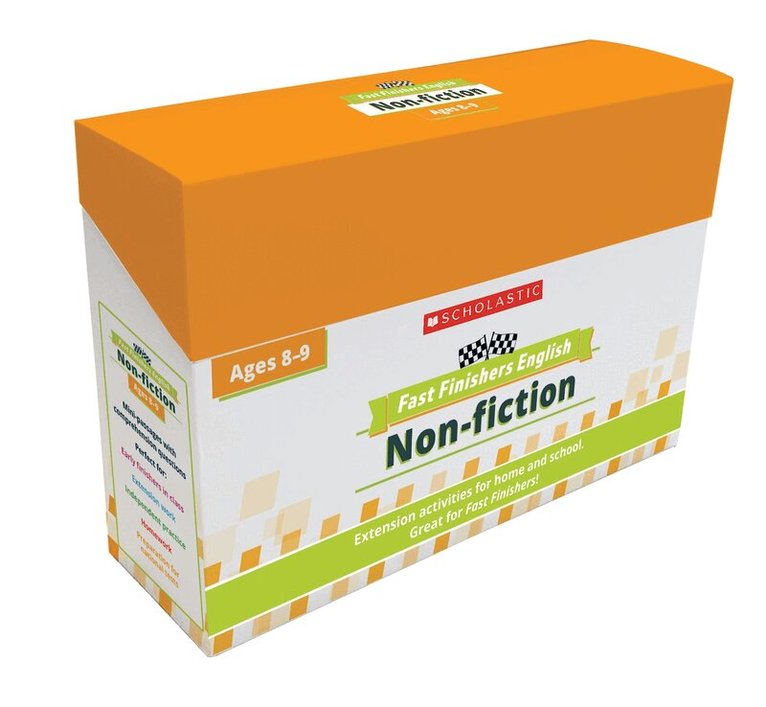
This box of comprehension cards covers:High-interest shortpassages of text along with five comprehension questionsthat prompt students to identify and effectively cite text evidenceAvariety of genresComprehension-helpercards that provide kid-friendly definitions, tips, andexamples to help students master reading skillsOn each of the 100 text cards there is a passageof age-appropriate text with an illustration and five comprehensionquestions related to the passage. The 10 different questionstypes in this non-fiction box are:Author's Purpose- Questions focused on the reason the author chose to writea text. Authors may write with more than one purpose in mind.Causeand Effect - Questions focused on an event or action thatmakes something happen in a story and the result or consequenceof that event or action.Compare and Contrast - Questionsfocused on looking closely at two or more things (characters,settings, plots, etc.) to see how they are similar. And lookingclosely at two or more things to see how they are different.Debate- Questions focused on a discussion between two (or more)sides with different views.Description - Questionsfocused on When words are used to create a 'picture' in the mind.Factand Opinion - Questions focused on Facts, informationthat is true and doesn't vary And Opinions, personal beliefs orfeelings. Opinions do vary.Main Idea and Details - A literalquestion, one which you may remember from reading the textand can answer straight away. One to show that you have read/understoodthe text. A direct quotation is not required.Problemand Solution - Questions focused on the main problem of a storyand the solution to, or outcome of, the problem or conflict.Not all resolutions are happy ones.Sequence of events -Questions focused on the plot and the order of events in a plot (beginning,middle, end)Summarise - Questions focused oncreating a brief statement about a text using only the most importantdetails.The fifth question on each card will bea S-T-R-E-T-C-H question, a creative thinking question suchas writing sentences using words/phrases from the story, describingsomething from the story, explaining what might happen next,describing a real-life event that's connected to the story, askingan opinion on the story or character from the story.Age-appropriatehelper cards provide background informationto help children respond knowledgeably to the comprehension questions.There are 14 helper cards in this box covering:Author'spurposeCause and EffectCompare andContrastContext CluesDebateDescriptionFactand opinionInferenceInformationTextMain Idea and DetailsProblem and SolutionSequenceof EventsSummariseText EvidenceAlsoincludes a Teacher's Booklet to provideideas on how to use the cards and answers.
416 kr
Tillfälligt slut
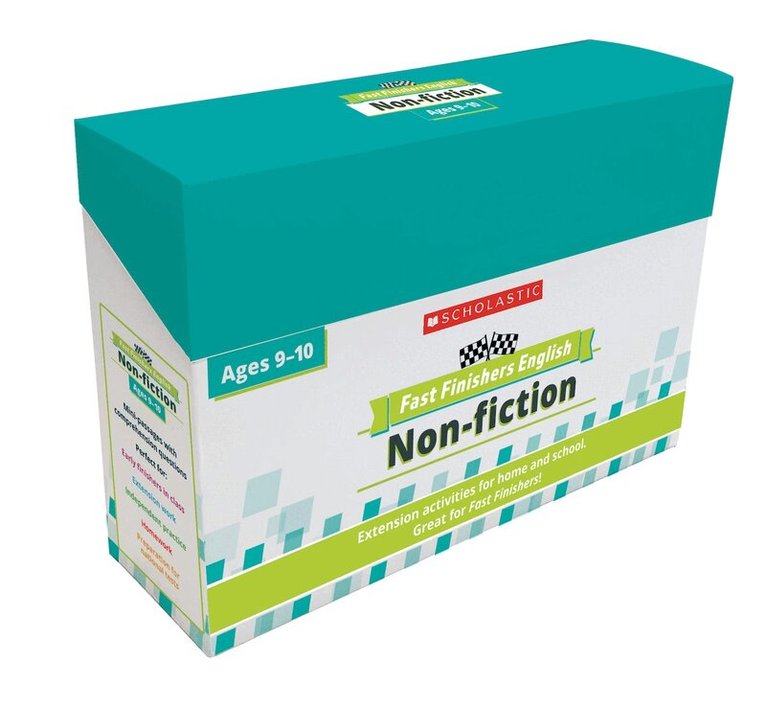
This box of comprehension cards covers:High-interest shortpassages of text along with five comprehension questionsthat prompt students to identify and effectively cite textevidenceA variety of genresComprehension-helpercards that provide kid-friendly definitions, tips,and examples to help students master reading skillsOn each of the 100 text cards there is a passageof age-appropriate text with an illustration and five comprehensionquestions related to the passage. The 10 differentquestions types in this non-fiction box are:Author'sPurpose - Questions focused on the reason the author chose to writea text. Authors may write with more than one purpose in mind.Causeand Effect - Questions focused on an event or actionthat makes something happen in a story and the result or consequenceof that event or action. Compare and Contrast - Questionsfocused on looking closely at two or more things (characters,settings, plots, etc.) to see how they are similar. And lookingclosely at two or more things to see how they are different.Debate- Questions focused on a discussion between two (ormore) sides with different views.Description - Questionsfocused on When words are used to create a 'picture' in the mind.Factand Opinion - Questions focused on Facts, informationthat is true and doesn't vary And Opinions, personal beliefsor feelings. Opinions do vary.Main Idea and Details -A literal question, one which you may remember from reading thetext and can answer straight away. One to show that you have read/understoodthe text. A direct quotation is not required. Problemand Solution - Questions focused on the main problem ofa story and the solution to, or outcome of, the problem or conflict.Not all resolutions are happy ones.Sequence of events- Questions focused on the plot and the order of events in a plot(beginning, middle, end)Summarise - Questions focusedon creating a brief statement about a text using only the mostimportant details.The fifth question on each card willbe a S-T-R-E-T-C-H question, a creative thinking questionsuch as writing sentences using words/phrases from the story,describing something from the story, explaining what might happennext, describing a real-life event that's connected to the story,asking an opinion on the story or character from the story.Age-appropriatehelper cards provide background informationto help children respond knowledgeably to the comprehensionquestions. There are 14 helper cards in this box covering: Author's purposeCause and EffectCompareand ContrastContext CluesDebateDescriptionFactand opinionInferenceInformationTextMain Idea and DetailsProblem and SolutionSequence of EventsSummariseTextEvidenceAlso includes a Teacher'sBooklet to provide ideas on how to use the cards and answers.
363 kr
Tillfälligt slut
This box of comprehension cards covers:High-interest shortpassages of text along with five comprehension questionsthat prompt students to identify and effectively cite textevidenceA variety of genresComprehension-helpercards that provide kid-friendly definitions, tips,and examples to help students master reading skillsOn each of the 100 text cards there is a passageof age-appropriate text with an illustration and five comprehensionquestions related to the passage. The 10 differentquestions types in this fiction box are:Cause and Effect- Questions focused on an event or action that makes somethinghappen in a story and the result or consequence of that eventor action. Character - Questions focused on the characters of a story Compare and Contrast - Questions focused on looking closelyat two or more things (characters, settings, plots, etc.) to seehow they are similar. And looking closely at two or more thingsto see how they are different.Conflict and Resolution- Questions focused on the main problem of a story and the solutionto, or outcome of, the problem or conflict. Not all resolutionsare happy ones.Inference - Questions focused on drawinga conclusion based on clues in the text and your own backgroundknowledge.Point of view - Questions about the story perspectivei.e. looking at pronouns etc.Prediction - Questionsfocused on using what you know from the text to make a sensibleguess about what will happen later on in a story.Setting- Questions focused on the settings of a story. Theme- Questions focused on the big idea or message of a story. Atheme is conveyed by title, setting and symbols. It can also be conveyedby how its characters act, learn and change.Tone- Questions focused on the way the narrator feels about the events,settings and characters in a story.The fifth questionon each card will be a S-T-R-E-T-C-H question, a creativethinking question such as writing sentences using words/phrasesfrom the story, describing something from the story, explainingwhat might happen next, describing a real-life event that'sconnected to the story, asking an opinion on the story or characterfrom the story.Age-appropriate helper cards providebackground information to help children respond knowledgeablyto the comprehension questions. There are 14 helper cardsin this box covering: Cause and EffectCharacterCompareand ContrastConflict and ResolutionContextCluesFiction TextFigurative LanguageInferencePointof ViewPredictionSettingTextEvidenceThemeToneAlsoincludes a Teacher's Booklet to provide ideason how to use the cards and answers.
363 kr
Tillfälligt slut
This box of comprehension cards covers:High-interest shortpassages of text along with five comprehension questionsthat prompt students to identify and effectively cite textevidenceA variety of genresComprehension-helpercards that provide kid-friendly definitions, tips,and examples to help students master reading skillsOn each of the 100 text cards there is a passageof age-appropriate text with an illustration and five comprehensionquestions related to the passage. The 10 differentquestions types in this non-fiction box are:Author'sPurpose - Questions focused on the reason the author chose to writea text. Authors may write with more than one purpose in mind.Causeand Effect - Questions focused on an event or actionthat makes something happen in a story and the result or consequenceof that event or action. Compare and Contrast - Questionsfocused on looking closely at two or more things (characters,settings, plots, etc.) to see how they are similar. And lookingclosely at two or more things to see how they are different.Debate- Questions focused on a discussion between two (ormore) sides with different views.Description - Questionsfocused on When words are used to create a 'picture' in the mind.Factand Opinion - Questions focused on Facts, informationthat is true and doesn't vary And Opinions, personal beliefsor feelings. Opinions do vary.Main Idea and Details -A literal question, one which you may remember from reading thetext and can answer straight away. One to show that you have read/understoodthe text. A direct quotation is not required. Problemand Solution - Questions focused on the main problem ofa story and the solution to, or outcome of, the problem or conflict.Not all resolutions are happy ones.Sequence of events- Questions focused on the plot and the order of events in a plot(beginning, middle, end)Summarise - Questions focusedon creating a brief statement about a text using only the mostimportant details.The fifth question on each card willbe a S-T-R-E-T-C-H question, a creative thinking questionsuch as writing sentences using words/phrases from the story,describing something from the story, explaining what might happennext, describing a real-life event that's connected to the story,asking an opinion on the story or character from the story.Age-appropriatehelper cards provide background informationto help children respond knowledgeably to the comprehensionquestions. There are 14 helper cards in this box covering: Author's purposeCause and EffectCompareand ContrastContext CluesDebateDescriptionFactand opinionInferenceInformationTextMain Idea and DetailsProblem and SolutionSequenceof EventsSummariseText EvidenceAlsoincludes a Teacher's Booklet to provideideas on how to use the cards and answers.
363 kr
Tillfälligt slut
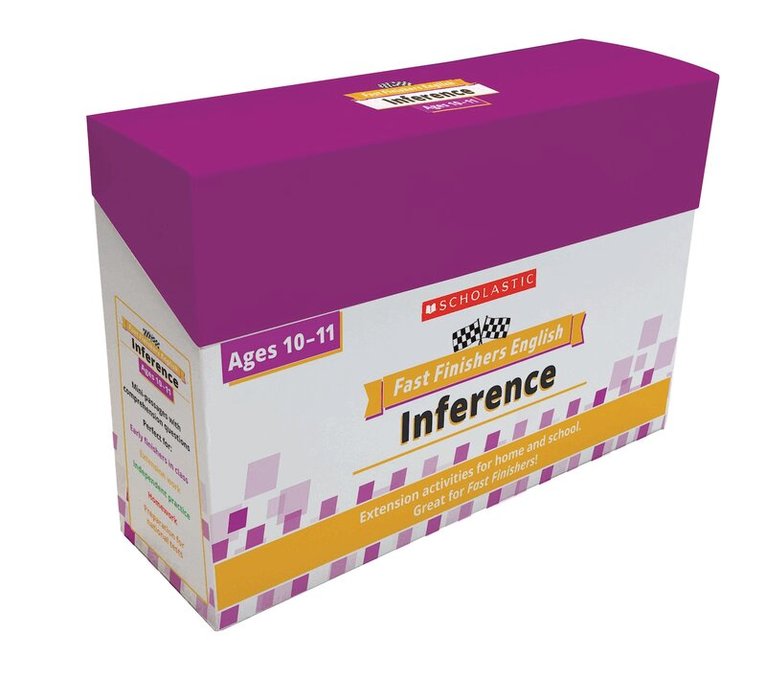
This box of 100 comprehension cards covers:High-interestshort passages of text along with five comprehension questionsthat prompt students to identify and effectively citetext evidenceA variety of genresComprehension-helpercards that provide kid-friendly definitions,tips, and examples to help students master reading skillsOn each of the 100 text cards there is a passage of age-appropriatetext with an illustration and five comprehensionquestions related to the passage. The fifth question on eachcard will be a S-T-R-E-T-C-H question, a creative thinkingquestion such as writing sentences using words/phrases from thestory, describing something from the story, explaining what mighthappen next, describing a real-life event that's connected to thestory, asking an opinion on the story or character from the story.Age-appropriatehelper cards provide backgroundinformation to help children respond knowledgeably to the comprehensionquestions.Also includes a Teacher's Bookletto provide ideas on how to use the cards and answers.