Future Schools - Böcker
Visar alla böcker i serien Future Schools. Handla med fri frakt och snabb leverans.
4 produkter
4 produkter
Shaping a New Educational Landscape
Exploring possibilities for education in the 21st century
Häftad, Engelska, 2010
578 kr
Skickas inom 10-15 vardagar
Against the backdrop of a rapidly changing world, formal schooling is frequently following rather than leading. The impression is given by central government that the education system serves as a ‘thermostat' restoring society's settings in areas such as productivity, citizenship, health, sexual mores and behaviour. Educational reform over the last twenty years has clarified an existing educational process, reformatted the financial management of schools and resuscitated the inspection system. It has not, however, laid the foundations of a world-class future responsive educational system. Shaping a New Educational Landscape brings together writers considering a wide range of possibilities for future development in education and society from different perspectives. Exploring alternative scenarios and strategies, they are not engaged in making accurate predictions but in unsettling present thinking and stimulating discussion. Together they form a fascinating contribution to the growing debate about how we might generate an educational process that will sponsor new economic paradigms and create a bold participative society on the new global stage.
Regenerating Schools
Leading transformation of standards and services through community engagement
Häftad, Engelska, 2008
591 kr
Skickas inom 10-15 vardagar
Schools acting alone cannot achieve the greatest possible improvement and transformation under the conditions that currently prevail. There is a growing appetite among senior leaders in schools for fresh approaches and fresh thinking around the national schools agenda - linking standards, future visions, community engagement and the implications for leadership.This practical book aims to help senior leaders re-imagine and transform the partnership between their school and its community, and develop the capacity to lead that change. There is now the need for a step-change in emphasis from the school as an institution with sole focus on institutional improvement to the school as an agency able to lead community transformation.By focusing on and improving relationships, schools can begin making a significant contribution to developing the entire community's capacity to learn, including those for whom it has a statutory responsibility. The purpose of this book is to explore what this means in practice, how those benefits could be achieved without losing focus on the need to raise attainment for all and what the implications are for school leaders now and in the future.Central to this approach is a concept of schools as agents of regeneration for themselves and for their communities."The Future Schools" series explores the ways in which schools' needs for the future are differing from the traditional, largely Victorian approach still adopted by the majority of British schools today. The series focuses on innovation in schools, both in terms of the school environment and pedagogical approach. A major factor in this is the Building Schools for the Future (BSF) program, which is the biggest single UK government investment in improving school buildings for over 50 years.The aim is to rebuild or renew every secondary school in England over a 10-15 year period. This includes significant investment in ICT to support the government's educational reform agenda. As well as improving school buildings, the aim of the agenda is to promote a step-change in the quality of provision.Schools are starting to follow a range of innovative practice in terms of their links with communities around them, as part of the Every Child Matters and extended schools agenda, their structure and organization and, not least, the organization and approach of the leadership and senior management team. Books in this series will provide either an overview of transformation with specific case studies from around the UK and worldwide, or focus more specifically on one or a small collection of schools to show examples of good practice at a local community level.
591 kr
Skickas inom 10-15 vardagar
This book will address the leadership challenge of creating an environment for the development needs of 21st century students. These students need to be globally aware, flexible in approach, and to develop transferable, multi-skills across a wide spectrum of employment opportunities. They also need to be numerate, have highly defined social and communication skills and have an Information and Communication Technology skill base embedded within all that they do. In order to create the appropriate learning environment, every organisation must address as a first priority the way it is led. Schools must second guess needs for the future and put robust structures in place to facilitate those needs. This book will show how such a culture change is possible, note the barriers encountered and the successes achieved, both within schools and other organisations. Schools are one member of a group partnership with parents, employers, society and the students themselves - all of whom are charged with making this change happen. For this reason, the book looks at a number of business organisations to see what leadership lessons can be learned by both sides in this process of transformation.
578 kr
Skickas inom 10-15 vardagar
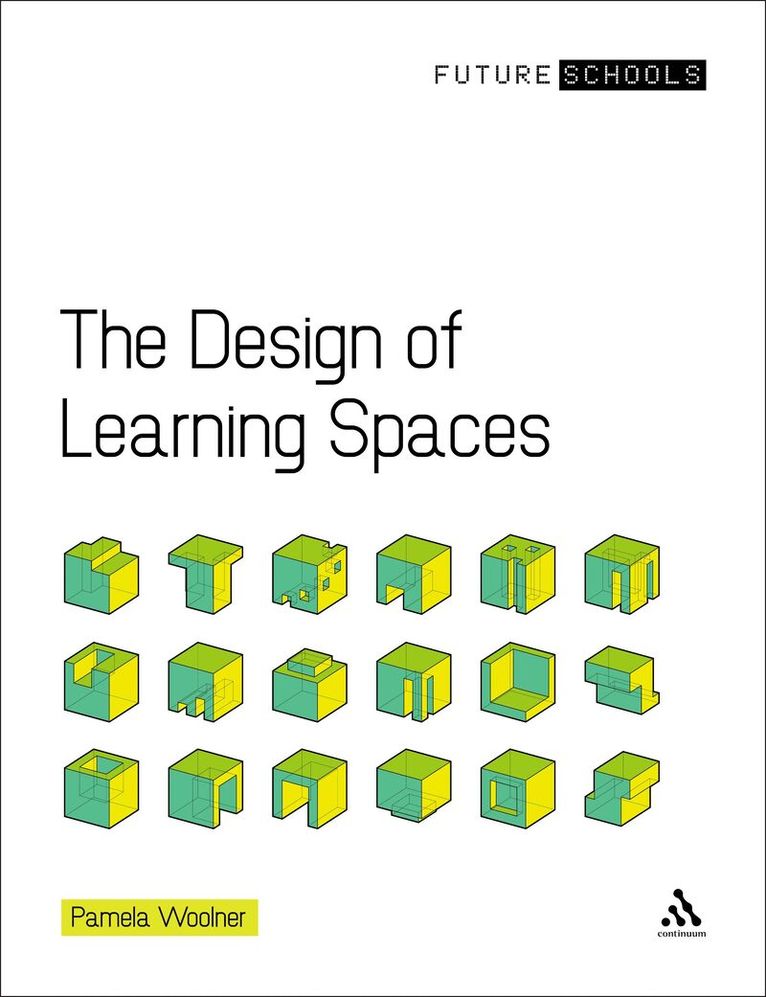
This title introduces key issues in the design of learning spaces with case studies and guidance on refurbishment and new building projects. Learning can take place anywhere. So does the detail of the physical surroundings provided by schools matter? After many years of minimal investment in school premises, schools in the UK are in the midst of a wave of planning, building and using new schools. This includes all English secondary schools, being renewed through Building Schools for the Future (BSF), as well as schemes for English primaries and programmes of school construction in Scotland and Wales. Starting from an educational perspective, and building on work in architectural design, Pamela Woolner gives an overview of current issues in the design of learning environments, covering the physical design of spaces and how that design impacts on the organization of people in schools, their relationships and their teaching and learning.Filling the gap in understanding and knowledge between the worlds of architecture and education, this is essential reading for school leaders and all those engaged in thinking about how school design might be planned and arranged to facilitate learning and teaching. "The Future Schools Series" explores the ways in which schools' needs for the future are differing from the traditional, largely Victorian approach still adopted by the majority of British schools today. The series focuses on innovation in schools, both in terms of the school environment and pedagogical approach. A major factor in this is the Building Schools for the Future (BSF) programme, which is the biggest single UK government investment in improving school buildings for over 50 years. The aim is to rebuild or renew every secondary school in England over a 10-15 year period. This includes significant investment in ICT to support the government's educational reform agenda. As well as improving school buildings, the aim of the agenda is to promote a step-change in the quality of provision.Schools are starting to follow a range of innovative practice in terms of their links with communities around them, as part of the Every Child Matters and extended schools agenda, their structure and organization and, not least, the organization and approach of the leadership and senior management team. Books in this series will provide either an overview of transformation with specific case studies from around the UK and worldwide, or focus more specifically on one or a small collection of schools to show examples of good practice at a local community level.