GIS in Action - Böcker
Visar alla böcker i serien GIS in Action. Handla med fri frakt och snabb leverans.
4 produkter
4 produkter
1 428 kr
Skickas inom 10-15 vardagar
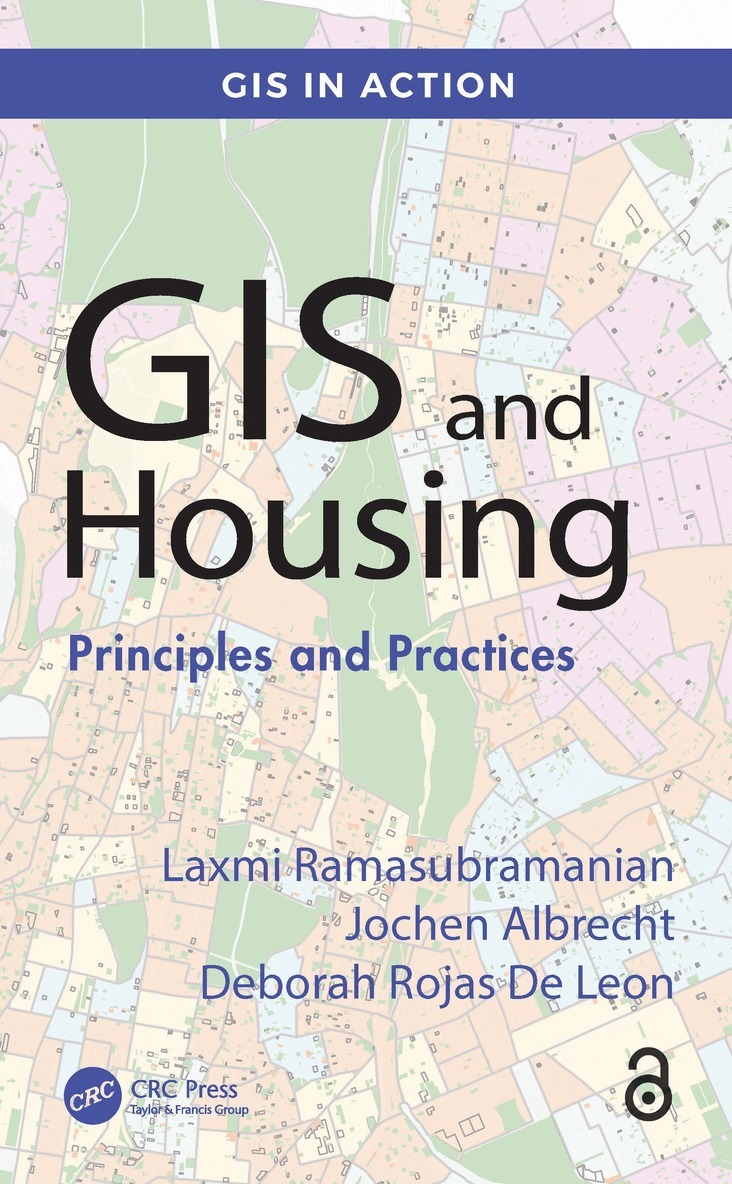
GIS and Housing: Principles and Practices discusses one of the challenges that has not been addressed by Geographic Information Science thus far: how can we use GIS to deal with the complex issues underlying the housing crisis? This book provides GIS technicians and analysts with an overview of US housing challenges and examples of how to effectively integrate spatial thinking to address housing policy questions, while simultaneously introducing housing policy analysts to advanced GIS concepts and techniques to create livable neighborhoods that include housing alternatives beyond the single family. Through numerous examples, the authors advocate for a collaborative approach that encourages professionals, policymakers, and analysts, across different ideological and political perspectives, to confront the multifaceted housing crisis.Features:Examines the historical aspects of housing provision, societal attitudes, demographic shifts, and government policiesBridges the gaps between housing professionals and GIS experts, facilitating an interdisciplinary approach to address the housing crisisExplores different challenges that are facing urban, suburban, and rural neighborhoods in different US regionsProvides professionals with the necessary tools for informed decision-makingProposes solutions that leverage the integrative capacity of GIS to address established housing issues.Advocates for denser housing alternatives to address issues of affordability, supply shortages, and homelessnessThis book is intended for graduate students and professionals in housing, community development, urban planning, architecture, and GIS, and anyone curious about learning more about the American housing crisis.
1 314 kr
Kommande
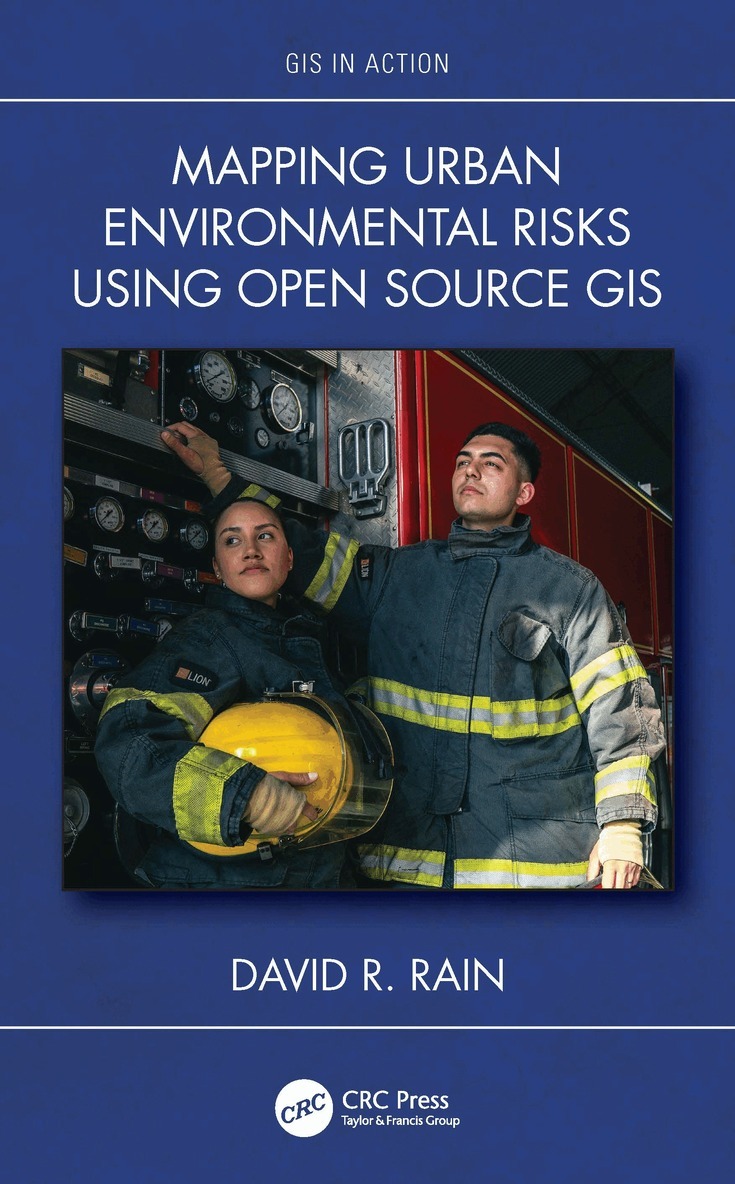
Cities across the world are facing a convergence of environmental risks, from flooding and extreme heat events to air pollution and water scarcity. These threats are increasingly uneven in their impacts and deeply shaped by local geography. This book offers a practical, accessible guide to understanding and responding to these threats using open-source geographic information systems (GIS) and freely available spatial data. Through real world case studies, the author discusses each risk separately to meet the needs of decision-making when urban threats happen.FeaturesFocuses on mapping specific urban threats such as water scarcity, flood risk, fire, urban heat islands, and more.Takes a risk-by-risk approach grounded in the everyday realities of each city and using geospatial tools to support action.Shows how to analyze urban threats using open tools like QGIS, freely accessible satellite imagery, and public datasets.Emphasizes concepts and decision-making rather than software mastery, making it suitable for a variety of readers.By demystifying geospatial analysis and emphasizing hands-on, place-based projects, this book empowers readers, such as students, city planners, journalists, community advocates, and public health officials alike to investigate environmental risks in their own neighborhoods and use maps to support smarter, more equitable action.
666 kr
Skickas inom 10-15 vardagar
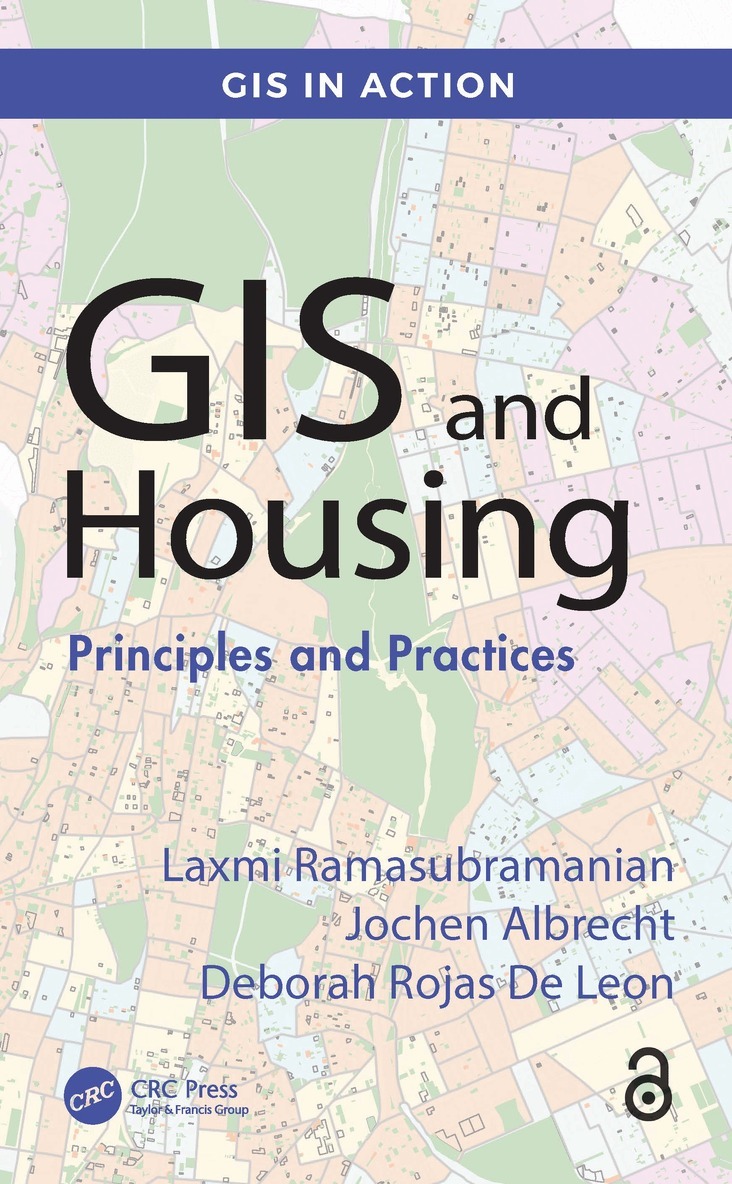
GIS and Housing: Principles and Practices discusses one of the challenges that has not been addressed by Geographic Information Science thus far: how can we use GIS to deal with the complex issues underlying the housing crisis? This book provides GIS technicians and analysts with an overview of US housing challenges and examples of how to effectively integrate spatial thinking to address housing policy questions, while simultaneously introducing housing policy analysts to advanced GIS concepts and techniques to create livable neighborhoods that include housing alternatives beyond the single family. Through numerous examples, the authors advocate for a collaborative approach that encourages professionals, policymakers, and analysts, across different ideological and political perspectives, to confront the multifaceted housing crisis.Features:Examines the historical aspects of housing provision, societal attitudes, demographic shifts, and government policiesBridges the gaps between housing professionals and GIS experts, facilitating an interdisciplinary approach to address the housing crisisExplores different challenges that are facing urban, suburban, and rural neighborhoods in different US regionsProvides professionals with the necessary tools for informed decision-makingProposes solutions that leverage the integrative capacity of GIS to address established housing issues.Advocates for denser housing alternatives to address issues of affordability, supply shortages, and homelessnessThis book is intended for graduate students and professionals in housing, community development, urban planning, architecture, and GIS, and anyone curious about learning more about the American housing crisis.
1 766 kr
Skickas inom 10-15 vardagar
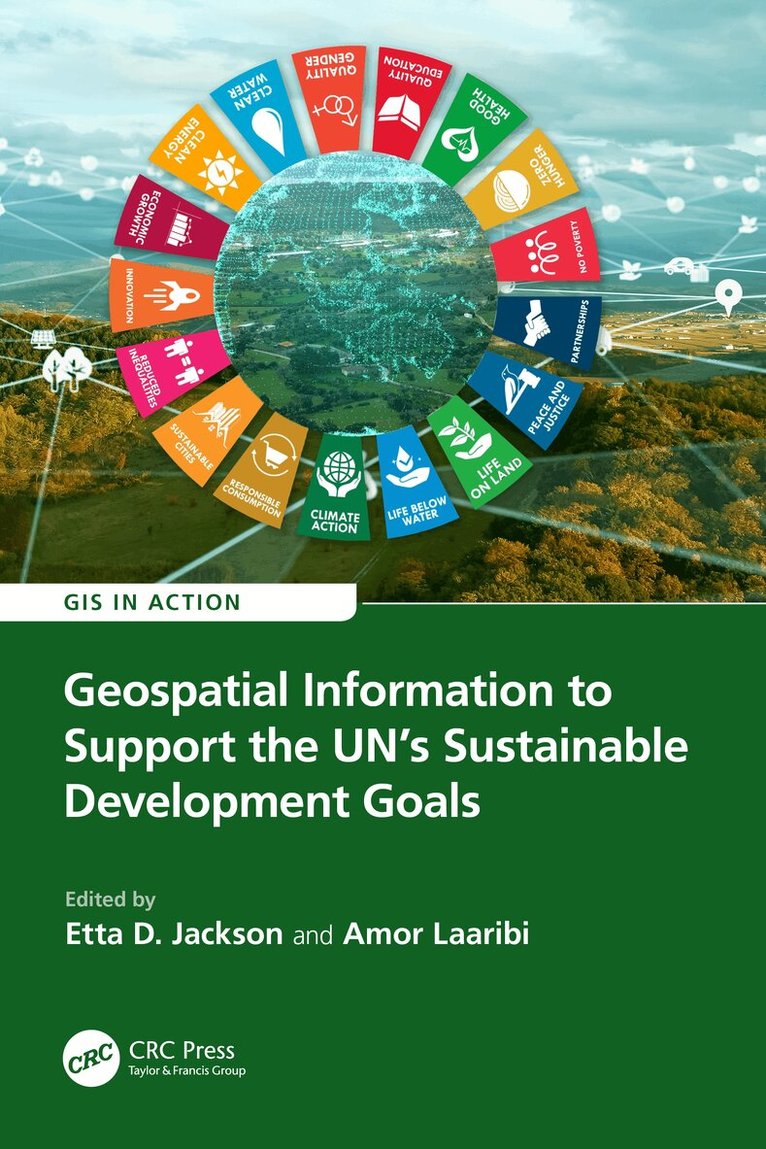
This unique book investigates the 2030 Agenda for Sustainable Development through geospatial information lenses, making the case that geospatial information is central to the SDGs and is imperative to understand the place, location, communities, and the people to identify where the root of the problem lies. Combined with other layers of information, it supports advanced analysis and visualizations and explains how SDG indicators can be interpreted and measured either through direct use of geospatial data itself or through integration with other statistical data. International case studies and coverage of all the SDGs help users evaluate impacts and monitor progress to achieve the SDGs.FeaturesDemonstrates how geospatial information can be used to assess SDG targets and indicators.Provides 16 applications and real-world case studies of SDGs and their related indicators where geospatial information contributes significantly to the implementation and monitoring.Addresses practical and technological issues related to geospatial information, data acquisition, and integration approaches.Illustrates the integration of geospatial information with statistical and other development informationDiscusses the impact that applications have on policy and society to make informed decisions and implement better policies.This book is for professionals, researchers, senior undergraduates and graduate students, working on or studying projects focused on specific GIS applications in support of sustainable development. It is also an excellent resource for policymakers and NGOs involved with UN SDGs.