IFAC Proceedings Volumes – serie
1 165 kr
Skickas inom 5-8 vardagar
970 kr
Skickas inom 5-8 vardagar
3 366 kr
Skickas inom 10-15 vardagar
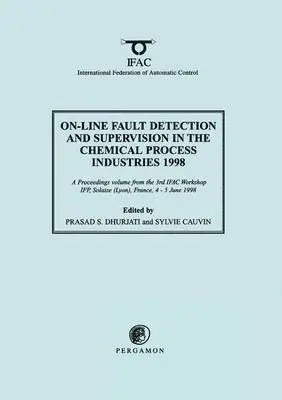
The goal of the symposium was to bring together experts from different fields to give an overview of the state-of-the-art, present new research results and show future developments. In addition, there was special emphasis on industrial requirements for FDI (fault detection and isolation) and a new session on the human factors aspects of system monitoring and safety that reflects the growing interest in this area.
These proceedings contain the 209 papers presented at the symposium and comprise: plenary overviews; state-of-the-art reviews and surveys; the very latest results; and tutorial papers.
740 kr
Skickas inom 10-15 vardagar
1 200 kr
Skickas inom 5-8 vardagar
1 612 kr

Skickas inom 5-8 vardagar
2 526 kr
Skickas inom 10-15 vardagar
These two volumes contain the Proceedings of the 9th IFAC symposium on Information Control in Manufacturing which took place in Nancy and Metz, France, between 24-26 June, 1998.
This INCOM'98 program had six main themes which focused on the role of information for automating manufacturing operations; the role of information for integrating and distributing automated manufacturing activities in the whole Enterprise and; the role of information for enhancing synergies between humans and machines.
This year's symposium drew attention from more than 35 countries, and the number of the papers presented was over 200. The scientific relevance of this symposium was sponsored by three International Scientific Societies: IFAC with 6 Technical Committees, IFIP and CIRP, and two National Scientific Institutions: CNRS and INRIA. The industrial relevance of this symposium produced sponsorship by more than 10 companies who actively participated in this event.
839 kr
Skickas inom 5-8 vardagar
The objective of this workshop was to provide an international forum for the discussion of recent developments and advances in the fields of singular control problems, impulsive control, singular perturbations technique in control systems, computational problems and others.
The Workshop was devoted both to theoretical and applicative aspects of the so-called "nonclassical" problems in the area of control theory, such as problems with singular perturbations, impulse and generalized controls. These problems arise in various areas of applications, including mechanics, information processing, medicine and economy. At the same time they stimulate the development of new mathematical tools in the classical theory of control and differential equations.
All papers included in this volume are given in the form presented by the authors.
770 kr
Skickas inom 5-8 vardagar
The IFAC Workshop series on Distributed Computer Control Systems (DCCS) focuses on design requirements and fundamental principles encountered in such systems and highlights and traces the growth of key concepts at their various stages of development. Theoretical and application-oriented viewpoints receive equal emphasis. These Workshops also provide an excellent forum for the exchange of information on recent technological advances and practices in the distributed computer control field.
The 1997 DCCS Workshop was notable for the attention given to practical implementations of ideas that have been under discussion for decades and maintained the high technical standard set by previous Workshops in the series - the policy of concentrating on a specific topic, inviting a number of key authors and of accepting only a limited number of papers paid dividends.
1 354 kr
Skickas inom 5-8 vardagar
954 kr
Skickas inom 10-15 vardagar
IMS'97, the fourth in the series of IFAC Workshops on Intelligent Manufacturing Systems, was held in Seoul, Korea, on July 21-23, 1997. It was sponsored by the IFAC Technical Committee on Advanced Manufacturing Technology and organized by the Engineering Research Center for Advance Control and Instrumentation at Seoul National University on behalf of the Institute of Control, Automation and Systems Engineers in Korea.
Rapid progress in the area of modern manufacturing is probably most evident through the developments in intelligent manufacturing systems. The same fast advancements have made the objective of achieving a balanced technical program a challenging task. The International Program Committee (IPC) wanted the Workshop to include the most notable and recent results, but still to reflect the versatility of maturing IMS technologies.
In the Workshop, the importance of intelligence in modern manufacturing has gained considerable recognition from engineers and researchers due to today's unforeseen manufacturing environment change. This Workshop focused on the issue "intelligent manufacturing," especially, with two intriguing keynote speeches, a special invited session on the worldwide IMS Project and two tutorial programs as well as the 64 papers from 16 countries worldwide. We do hope that this event has provided the excellent opportunity to identify the future trends as well as exchange and learn ideas and experiences in intelligent manufacturing.
2 221 kr
Skickas inom 10-15 vardagar
Held from 3-5 September 1997 in Nantes, France, this was the fifth of the IFAC series of triennial Symposia on Robot Control. The final selection lead to 126 papers (from 200 submissions) in the Technical Program. This consisted of 33 sessions disposed in 3 parallel tracks and brought together contributions from 298 leading researchers.
The papers covered a range of topics relevant to the field of robot control, including modelling and identification, force and compliance control, robot control techniques, vision control, grasp control, flexible robots, non holonomic robotic systems, walking robots, control design and architectures, teleoperation, and underwater robots.
The Symposium featured three invited plenary speakers: Professor Steven Dubowsky, from Massachusetts Institute of Technology presented a lecture entitled 'A perspective of the advancement of robotic systems during the past 15 years'; Professor Shanakr Sastry, from the University of California, presented a lecture entitled 'Air Traffic Management Systems: at the intersection of Control Theory and Robotics'; and Professor Friedrich Pfeiffer, from the Technical University of M�nchen, presented a lecture entitled 'Robots with unilateral constraints'.
891 kr
Skickas inom 5-8 vardagar
These proceedings present papers covering various processes in the steel industry, such as cold rolling, hot stripping, continuous casting, sintering, tube making and welding. New technologies with a strong potential for application to the steel industry, such as fuzzy control, AI techniques, neural networks, robust control, predictive control, and instrumentation and measurement are also covered.
1 381 kr
Skickas inom 10-15 vardagar
Automatic machines or smart robots are interconnected with distributed knowledge bases by nation- or world wide digital networks. They are supporting human life in various places, at the same time saving energy and resources. Technology and economic development are effecting rapid changes depending on the fields, regions and culture to the way people interact with the systems, while sometimes keeping, otherwise forsaking their own traditions. Man machine systems have to create new interaction styles between human and machine intelligence, support cooperation among different organizations and enhance situation understanding for the long and short term, or remote and local activities regarding performance, safety, security and satisfaction.
The seventh IFAC/IFIP/IFORS/IEA symposium on Analysis, Design and Evaluation of Man-Machine Systems was held in Kyoto on September 16-18, 1998. At the symposium, 99 papers were presented including four plenary papers among 131 submissions.
2 908 kr
Skickas inom 10-15 vardagar
1 877 kr
Skickas
1 045 kr
Skickas inom 5-8 vardagar
This conference which was originally planned as workshop took place on October 19 to 22, 1998 in St-Hubert, Montr�al. The idea of a conference devoted to Space Robotics matured when two IFAC Technical Committees, Aerospace Control and Robotics decided to co-sponsor such an event. The final decision converged with technological maturity of Space Robotics itself. It became obvious that robotics is a unique but viable technology that can be used in Space exploration.
Robotics is the intelligent connection of perception to action. This broad definition of robotics encompasses both science and technology. In the early days, the changing technology in manufacturing was driving the development in robotics. New manufacturing technology required new, economical and efficient methods of production. Development was geared towards robots in the form of manipulators. In later years, the development was driven by demand in service industry, military and special applications. One of those special applications is related to Space and its exploration. The rapid development in Space related technologies brought forward questions about the need for automation technologies that would allow for operations in Space in an efficient and safe way. Some Space operations could not have possibly been done without extensive use of automation and especially robotics. There are numerous robotics meetings and conferences across the world but it became obvious that the meetings addressing particular problems in space robotics would be useful and helpful.
The Program Committee tried to include in conference presentations all specific fields of robotics that are important in Space applications. On manipulators' side, kinematics, manipulation, dexterity, sensors and control systems have been covered. On mobile robots' side new control techniques, telerobotics, nonholonomic systems, and trajectory planning have been considered. Also, applications and Space operations have been reviewed.
Altogether 30 papers were selected and accepted by the International Organizing Committee. Papers were presented in 8 sessions in three days. There were also three keynote speeches presented by invited speakers and three distinguished speakers to present keynote lectures on three separate occasions. Speakers were chosen in order to give a broad overview of space robotics activities in all involved countries. Participants came from Belgium, Canada, France, Germany, Italy, Japan, Netherlands, Poland, United Kingdom and the USA.
In day 1, eight papers were presented in two sessions. Session 1 was related to Dextrous Robots and Session 2 to Mobile Robots (Part 1 and 2). Day 2 included a keynote speech on the topic of "Robotics and On-Board Autonomy: For What and How Far Can We Go?", followed by Session 3: Robot Controllers and Session 4: Vision Systems and Control. Day 3 consisted of 5 sessions, Session 5: Manipulation Control, Session 6: Kinematics, Session 7: Nonholonomic Systems, Session 8: Space Operation (Part 1 and Part 2).
1 560 kr
Skickas inom 5-8 vardagar
1 612 kr
Skickas inom 5-8 vardagar
1 973 kr
Skickas inom 5-8 vardagar
954 kr
Skickas inom 10-15 vardagar
This symposium was the seventh in a very successful series in this field. Since the beginning of the series, there have been a number of very positive developments in the topical area of 'Intelligent Control'. In particular, the area referred to as 'situated control' has stimulated the formation of new perspectives towards real-time intelligent systems. The performances of such artificial species as walking cockroaches, maze-negotiating mice, coke-can collecting robots and the like have encouraged the exploration of yet more adaptive control perspectives.
In this symposium, there was a strong wind of change bringing more consideration of the roles of learning, evolution, hybrid systems and so on under many diverse labels and for many different systems and circumstances.
2 068 kr
Skickas inom 10-15 vardagar
The two volumes contain the Proceedings of the 5th IFAC DYCOPS Symposium that took place in Corfu, Greece between June 8-10, 1998. The Symposium was a continuation of the very successful series that used to be called DYCORD+, the last of which (DYCORD+ '95) took place in Denmark in 1995. It was sponsored by the IFAC Technical Committee on Chemical Process Control.
The Symposium embraced the topic of Integration of Design and Control that had previously occurred as a separate IFAC workshop. The theme of "Technology Push vs. Technology Pull in the 21st Century" aimed to bring together researchers and developers of new methodologies (Technology Push) as well as users of these methodologies (Technology Pull).
The major areas of interest were organized in the following categories: i) Reacting Process Systems, ii) Separation Process Systems, iii) Batch Process Systems, iv) Complex and Industrial Process Systems, and v) Interaction of Design and Control.
788 kr
Skickas inom 5-8 vardagar
This conference, the sixth event in the SWIIS series, continued the tradition set in the earlier five SWIIS meetings. The goal was the beneficial application of systems engineering methods onto description of conditions, in which nations or groups interact with one another. Scientists from other fields such as political science, economics, social science, and international studies also had a platform to present and discuss their ideas.
In the technical program of this conference, 2 survey papers and 19 regular papers - grouped into 8 sessions - were presented. Papers were given in the following areas: Methodological analysis; Investigation of development: stability, sustainable development; Modelling of stability; Application of control principles to international stability; International policy co-operation; Cultural and educational aspects in international stability; East/West/North/South relationships; Global development - regional impact; and Negotiation and mediation in conflict.
1 122 kr
Skickas inom 10-15 vardagar
The main objective of ICV'98 was to bring together specialists on components and instruments for automotive systems, mobile robots and vehicles in general to enhance the value of their experience in both hardware and software intelligent components.
Future vehicles will deal more and more with autonomous functions to improve safety and traffic management and to reduce consumption and pollution. Numerous on-board decision systems will replace the driver in critical running phases. The problems and solutions experienced, by adopting this new technology, will bring out many common points with other transportation systems and mobile robots.
Research and Developments on Mobile Robotics have produced many components for perception, control and planning that can be used in vehicles for collision detection and avoidance, position estimation, guidance and manoeuvering aids for drivers, advanced teleoperation, and other applications.
The topics of the Workshop are in an emerging field in which the research is quickly being converted into industrial products. Several applications in the automotive domain, marine vehicles, agricultural and others were included in the program.
In addition to the presentation of the papers, ICV also included a plenary talk and a round table about intelligent components for future vehicles with the participation of several industrial companies.
1 165 kr
Skickas inom 5-8 vardagar
There are several trends that make the topic of this workshop especially relevant in today's world. The first is the tremendous advances made in automation and information technology that can potentially bring in an ever-increasing amount of information on to computer screens in the operating room of a plant. Avoiding problems of information overload and converting plant data to "on-line useful knowledge" is a key challenge. In some respects, one can draw parallels here to biological evolution where, over billions of years, human beings have evolved "mental models" to interpret the huge amount of information received through their senses. In the absence of the time advantage that evolution has had, we have to rely on methodologies such as those presented in this workshop to provide assistance to operators and engineers in interpreting plant information.
A second trend that makes this field relevant in today's world is the increasing emphasis on environment and safety. Community activism and accidents such as those in Bhopal, India have caused media spotlights to be turned on the smallest of toxic releases or loss of life due to chemical accidents. The negative publicity generated by such events as well as the need to maintain the image of an environmentally conscious company make industry more sensitive to the issues of early detection of faults.
The third trend that makes this field very relevant is that of the globalization of the world economy. Increasing globalization of the chemical process industry puts pressure on economic competitiveness and higher productivity. This implies reduced down-time due to faults, quick and flexible response of production to supply and demand changes, increasing reliance on automation and reduced personnel.
898 kr
Skickas inom 5-8 vardagar
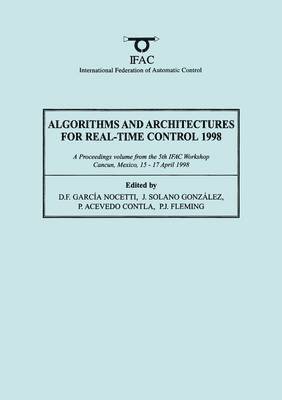
The 5th IFAC Workshop on Algorithms and Architectures for Real-Time Control (AARTC '98) was organized under the auspices of the IFAC Technical Committee. This Committee is concerned with the use of emerging software and hardware developments in real-time control.
The AARTC '98 Technical Programme consisted of seventeen sessions, covering major areas of software, hardware and applications for real-time control, namely robotics, modeling and control, software design tools and methodologies, industrial process control and manufacturing systems, parallel and distributed systems, non-linear control systems, neural networks, parallel and distributed algorithms for real-time signal processing and control, transport applications, algorithms, fault tolerant systems and fuzzy control.
The contributions were selected from a large number of high-quality full draft papers and late breaking paper contributions presenting very recent research work.
839 kr
Skickas inom 5-8 vardagar
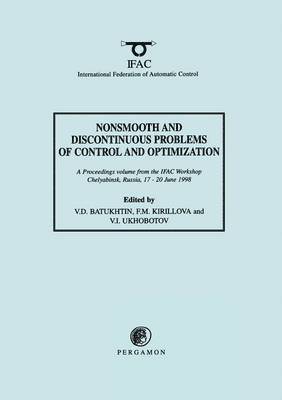
The section on optimal control contains papers on differential gains; synthesis evaluation and system control under conditions of uncertain information; stability; and qualitative optimal control problems.
The second section describes problems of finite measures under extreme conditions and numerical methods for solving such problems for non-smooth and discontinous functions.
The third section contains applications.
1 079 kr
Skickas inom 5-8 vardagar
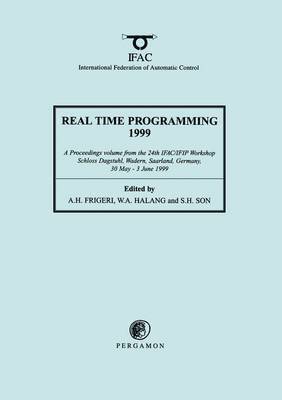
The annual Workshop on Real Time Programming and the bi-annual Workshop on Active and Real-time Databases Systems are intended as meetings of relatively small numbers of experts in their fields taking place as truly international events. The 1999 Workshop maintained the outstanding quality of both series, providing an opportunity to assess the state-of-the-art, to present new results, and to discuss possible lines of future developments. Primarily, it focused on software development for real time systems, real time operating systems and active and real time database systems.
In particular, the technical programme of the Workshop covered latest research and developments in requirements engineering, software engineering, active and real time database systems, communication and clock synchronisation, embedded systems, formal methods, operating systems and scheduling. Out of 58 submissions from 19 countries, the International Programme Committee selected 26 regular papers and 8 reserve papers for presentation at the Workshop. Contributions come from Europe, North America, Australia, and the Far East. In addition to these, the programme also featured two world renowned keynote speakers, and a discussion panel about the state-of-the-art in the field of active real time database systems.
1 595 kr
Skickas inom 5-8 vardagar
The present-day structure of PID controllers is quite different from the original analog PID controllers. Now the implementation of the PID is based on digital design, these digital PIDs include many algorithms such as anti-wind-up, auto-tuning, adaptive, and fuzzy fine tuning to improve their performances, but the basic actions remain the same.
During the last two decades, the general reluctance of researchers to use PID controllers has begun to disappear. Many of the new capabilities of digital PID controllers have been introduced by the research community. The industrial control users apply these innovations easily, even enthusiastically. PID control has become one of the most important ways for the scientific specialist in control and the users of industrial control to work together.
This workshop was organized so that the scientific world and the industrial control world could meet and discuss the present and future use of PID controllers - the successes and failures of their use and how to determine the limits of performances. This workshop was also useful for learning about control history, since the origin and evolution of PID control can provide us with keys for new development and designs.
942 kr
Skickas inom 5-8 vardagar