Pezcoller Foundation Symposia - Böcker
Visar alla böcker i serien Pezcoller Foundation Symposia. Handla med fri frakt och snabb leverans.
9 produkter
9 produkter
1 640 kr
Skickas inom 10-15 vardagar
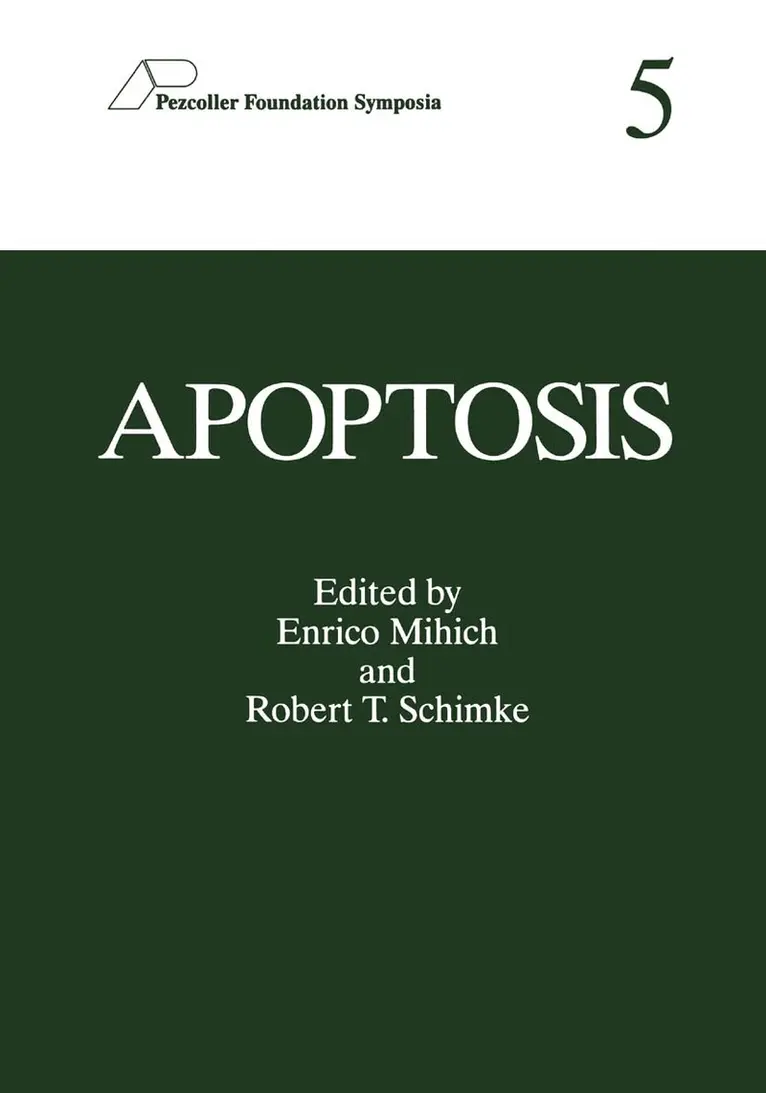
The fifth Annual Pezcoller Symposium entitled, Apoptosis, was held in Trento, Italy, June 9-1I, 1993 and was focused on the specific phenomena leading to Programmed Cell Death (PCD) or Apoptosis, and the mechanisms involved. With presentations at the cutting edge of progress and stimulating discussions, this Symposium addressed the genetics and molecular mechanisms determining PCD and the role of this suicidal process in cancer and the immune system. The functions of pS3, c myc and bel 2 in affecting apoptosis in different cell types and the role of ions and intracellular pH changes and that of intranuelear endonueleases are given particular emphasis as are the effects of anticancer agents, hormone imbalances and growth factors. The role of pS3, a tumor suppressor gene, in inducing PCD is discussed in detail as pertinent to hematological and non-hernatological tumors. The requirement of pS3 for the induction ofapoptosis by ionizing radiation or adenovirus oncoproteins is outlined. Decision points during the cell cyele affecting the cascade ofevents leading to PCD are discussed as is their role as "switches" under the control of c-myc and bel-2 proteins or the influence of cyele specific drugs. The concurrent requirement of multiple signals in determining apoptosis is emphasized. The examples of the role of PCD in the regulation of hematopoiesis, and in the generation of antigen-specific immune repertoire are illustrated.
Del 8 - Pezcoller Foundation Symposia
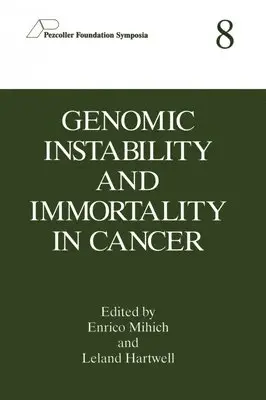
Genomic Instability and Immortality in Cancer
Proceedings of the Eighth Annual Pezcoller Symposium Held in Trento, Italy, June 17-19, 1996
Inbunden, Engelska, 1997
878 kr
Skickas inom 10-15 vardagar
2 185 kr
Skickas inom 10-15 vardagar
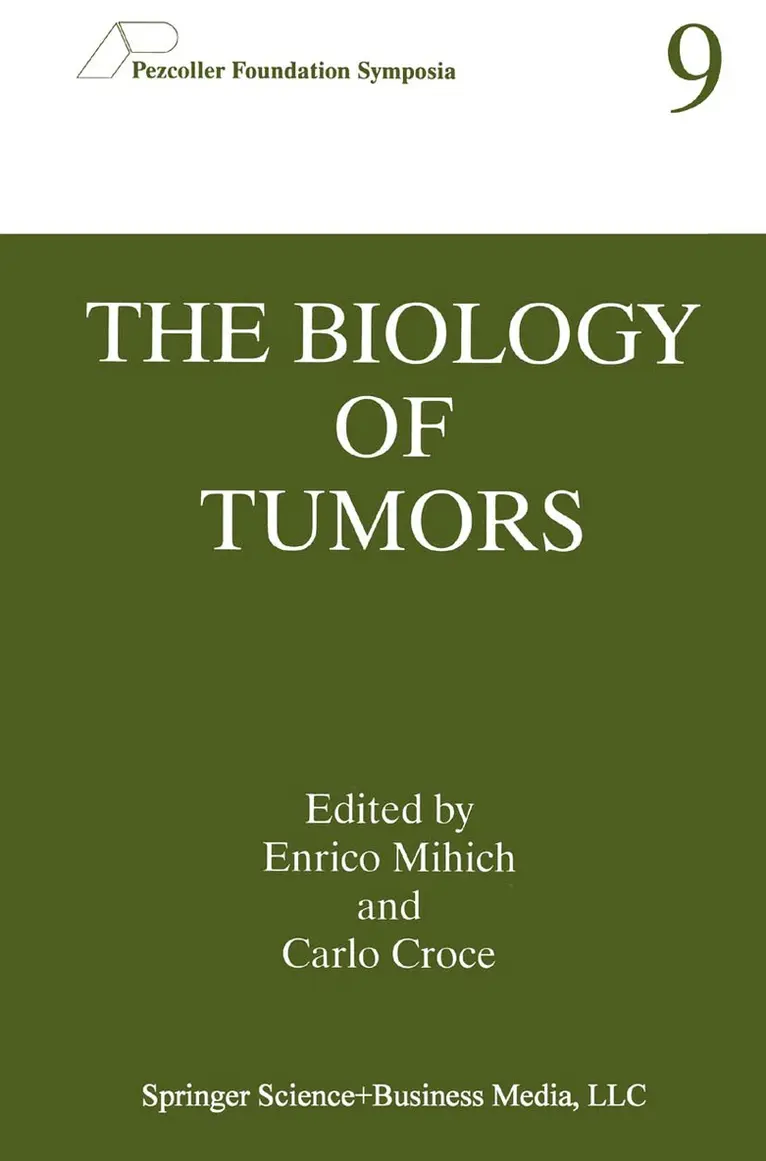
The Ninth Annual Pezcoller Symposium entitled "The Biology of Tumors" was held in Rovereto, Italy, June 4-7, 1997. It focused on the genetic mechanisms underlying het erogeneity of tumor cell populations and tumor cell differentiation, on interactions be tween tumor cells and cells of host defenses, and the mechanisms of angiogenesis. With presentations at the cutting edge of progress and stimulating discussions, this symposium addressed issues related to phenomena concerned with cell regulation and cell interactions as determined by activated genes through the appropriate and timely media tion of gene products. Important methodologies that would allow scientists to measure dif ferentially genes and gene products and thus validate many of the mechanisms of control currently proposed were considered, as were the molecular basis of tumor recognition by the immune system, interactions between cells and molecular mechanisms of cell regula tion as they are affected by or implemented through these interactions. The molecular and cellular mechanisms of tumor vascularization were also discussed. It was recognized that angiogenesis provides a potential site of therapeutic intervention and this makes it even more important to understand the mechanisms underlying it. We wish to thank the participants in the symposium for their substantial contribu tions and their participation in the spirited discussions that followed. We would also like to thank Drs.
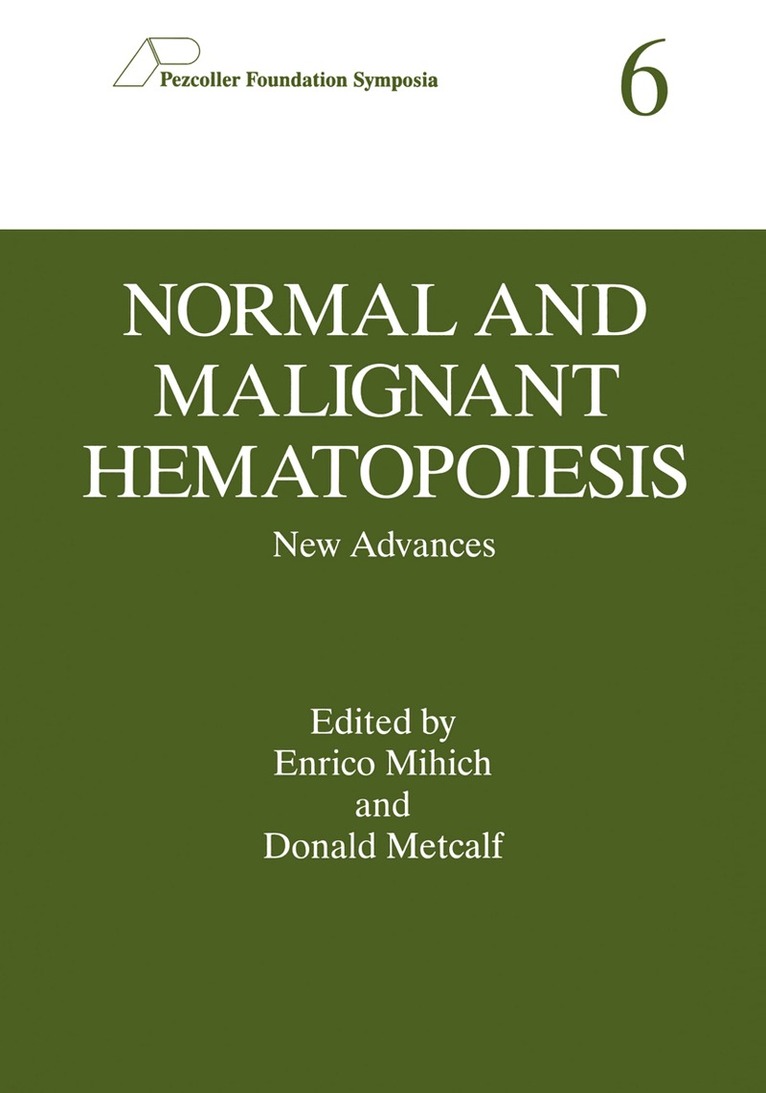
Del 6 - Pezcoller Foundation Symposia
Normal and Malignant Hematopoiesis
New Advances
Häftad, Engelska, 2012
552 kr
Skickas inom 10-15 vardagar
''An exciting glance at key issues in contemporary hematopoiesis.'' -The Quarterly Review of Biology
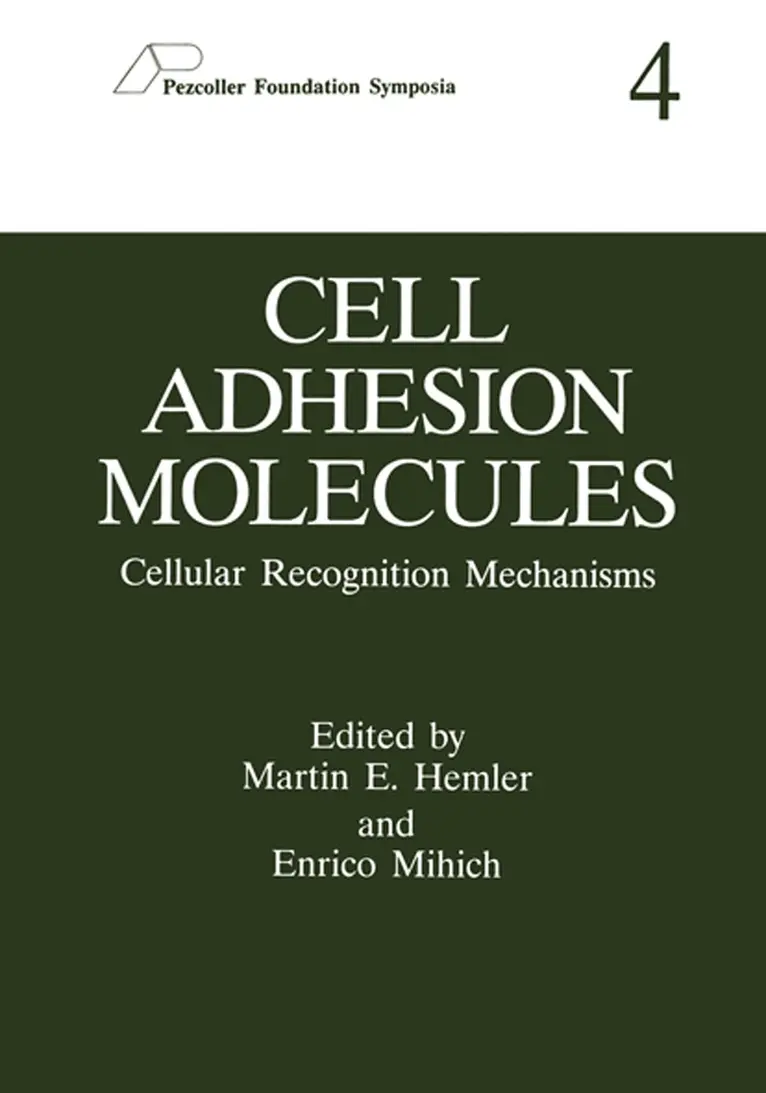
Del 4 - Pezcoller Foundation Symposia
Cell Adhesion Molecules
Cellular Recognition Mechanisms
Häftad, Engelska, 2013
552 kr
Skickas inom 10-15 vardagar
The Fourth Annual Pezcoller Symposium entitled Adhesion Molecules: Cellular Recognition Mechanisms was held in Rovereto, Italy, June 24-26, 1992 and was focussed on the detailed mechanisms whereby cells utilize certain integral membrane proteins to perceive their surrounding environment and interact with it. With timely presentations and stimulating discussions this Symposium addressed the genetics and biochemistry of adhesion molecules, the regulation of their functions and their role in cancer and the immune system. Emphasis was given to adhesion proteins in the integrin family because of the widespread distribution of this group of molecules and its important role in essentially all eukaryotic biological systems. The regulation of integrin genes and their expression are discussed in detail, as are specific aspects of the genetics of fibronectin. The molecular basis for the regulation of certain integrins, the function of these proteins in determining cell adhesion, and the consequences of this adhesion for the function of the cells involved are discussed. The role of certain integrins in stimulating signal transduction, the essential involvement of integrins in conditioning the function of T and NK cells function, the heterogeneity of integrins and its biological consequences, and the role of cell adhesion molecules in tumor cells invasion and metastases are all extensively analyzed. New information was presented on the role of CD44 and splice variants in normal differentiation and tumor progression.
Del 8 - Pezcoller Foundation Symposia
Genomic Instability and Immortality in Cancer
Häftad, Engelska, 2012
552 kr
Skickas inom 10-15 vardagar
The eighth Annual Pezcoller Symposium, entitled Genomic Instability and Immor- tality in Cancer, was held in Trento, Italy, June 17-19, 1996 and was focused on the clari- fication of the mechanisms of genetic instability, a characteristic of neoplastic cells which also determines tumor progression, and immortality consequent to the lack of susceptibil- ity to mechanisms of maturations, senescence and/or apoptosis. With presentations at the cutting edge of progress and stimulating discussions, this symposium addressed issues related to mutational lability, changes in DNA repair capa- bilities, gene recombination processes, cell cycle checkpoints and apoptosis, the signifi- cance of telomerases in cell immortalization and senescence, and the clinical relevance and exploitation of the phenomena considered. We wish to thank the participants in the symposium for their substantial contribu- tions and their participation in the spirited discussions that followed. We would also like to thank Drs. Carol Greider, Garth Anderson, Margherita Bignami, and David Livingston, for their essential input as members of the Program Committee, and Ms. A. Toscani for her invaluable assistance.The aid of the Savings Bank Cassa di Risparmio di Trento e Ro- vereto, and the Municipal, Provincial, and Regional Administrations in supporting this Symposium through the Pezcoller Foundation are also acknowledged with deep apprecia- tion. Finally, we wish to thank the staff of Plenum Publishing Corporation for their effi- cient cooperation in the production of these proceedings.
552 kr
Skickas inom 10-15 vardagar
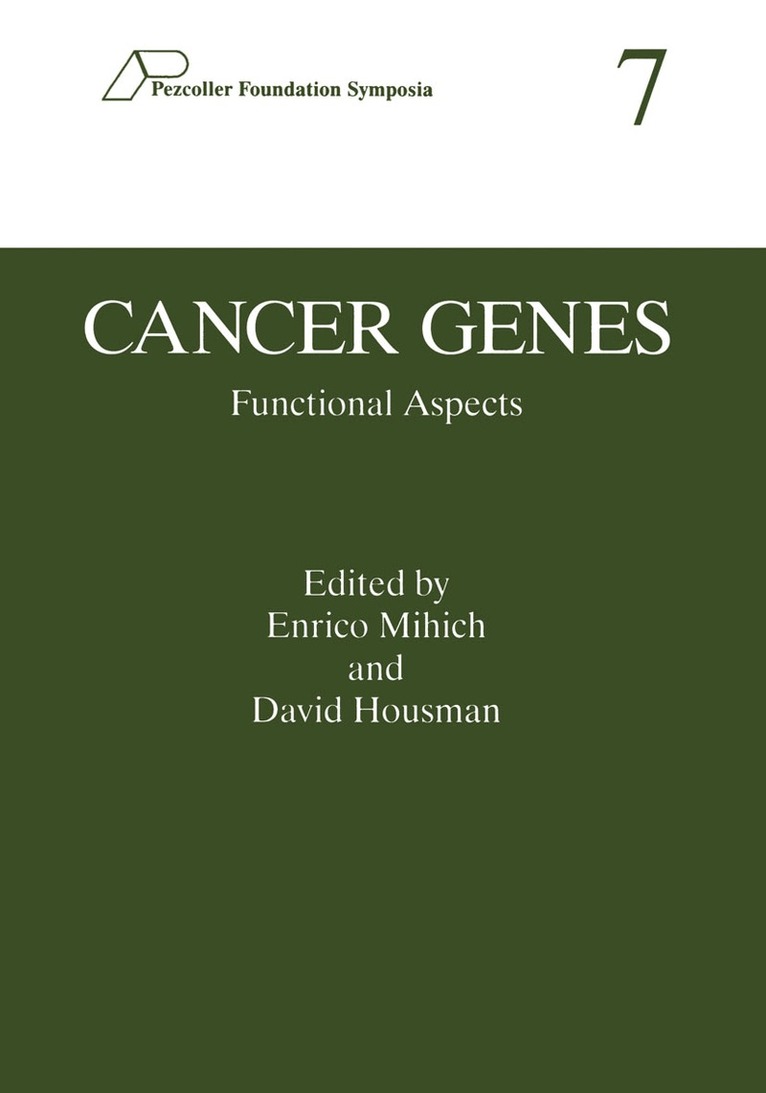
The seventh Annual Pezcoller Symposium entitled, Cancer Genes: Functional As- pects, was held in Trento, Italy, June 14-16, 1995 and was focused on oncogenes func- tion, tumor suppressor gene function, transcription regulation, cell cycle progression regulation and apoptosis, and the clinical implications of oncogene function and regula- tion for prevention and therapy of cancer. With presentations at the cutting edge of pro- gress and stimulating discussions, this Symposium addressed issues related to the mechanisms of control of cell growth and death by certain genes such as c-myc, src, fyns, bcl2, the function of cdk inhibitors, the functions of p53 and WTI, the mechanisms of transcriptional activation of specific oncogenes, the genetic characterization of certain he- matological malignancies, the interference with specific sites along signal transduction and the genetic alterations of tumor immunity. We wish to thank the participants in the Symposium for their substantial contribu- tions and their participation in the spirited discussions which followed. We would also like to thank Drs. Jane Azizkhan, Paolo Comoglio, Giulio Draetta~ David M.Livingston and Alex Matter for their essential input as members of the Program Committee, and Ms. A. Toscani for her invaluable assistance. The aid of the Bank Cassa di Risparmio di Trento and Rovereto, and the Municipal, Provincial and Regional Administrations in sup- porting this Symposium through the Pezcoller Foundation are also acknowledged with deep appreciation. Finally, we wish to thank the staff of Plenum Publishing Corporation for their efficient cooperation in the production of these Proceedings.
1 640 kr
Skickas inom 10-15 vardagar
The fifth Annual Pezcoller Symposium entitled, Apoptosis, was held in Trento, Italy, June 9-1I, 1993 and was focused on the specific phenomena leading to Programmed Cell Death (PCD) or Apoptosis, and the mechanisms involved.
2 185 kr
Skickas inom 10-15 vardagar
The Ninth Annual Pezcoller Symposium entitled "The Biology of Tumors" was held in Rovereto, Italy, June 4-7, 1997. It focused on the genetic mechanisms underlying het erogeneity of tumor cell populations and tumor cell differentiation, on interactions be tween tumor cells and cells of host defenses, and the mechanisms of angiogenesis. With presentations at the cutting edge of progress and stimulating discussions, this symposium addressed issues related to phenomena concerned with cell regulation and cell interactions as determined by activated genes through the appropriate and timely media tion of gene products. Important methodologies that would allow scientists to measure dif ferentially genes and gene products and thus validate many of the mechanisms of control currently proposed were considered, as were the molecular basis of tumor recognition by the immune system, interactions between cells and molecular mechanisms of cell regula tion as they are affected by or implemented through these interactions. The molecular and cellular mechanisms of tumor vascularization were also discussed. It was recognized that angiogenesis provides a potential site of therapeutic intervention and this makes it even more important to understand the mechanisms underlying it. We wish to thank the participants in the symposium for their substantial contribu tions and their participation in the spirited discussions that followed. We would also like to thank Drs.