Practical Networking – serie
Visar alla böcker i serien Practical Networking. Handla med fri frakt och snabb leverans.
4 produkter
4 produkter
Inbunden, Engelska, 2021
1 849 kr
Skickas inom 10-15 vardagar
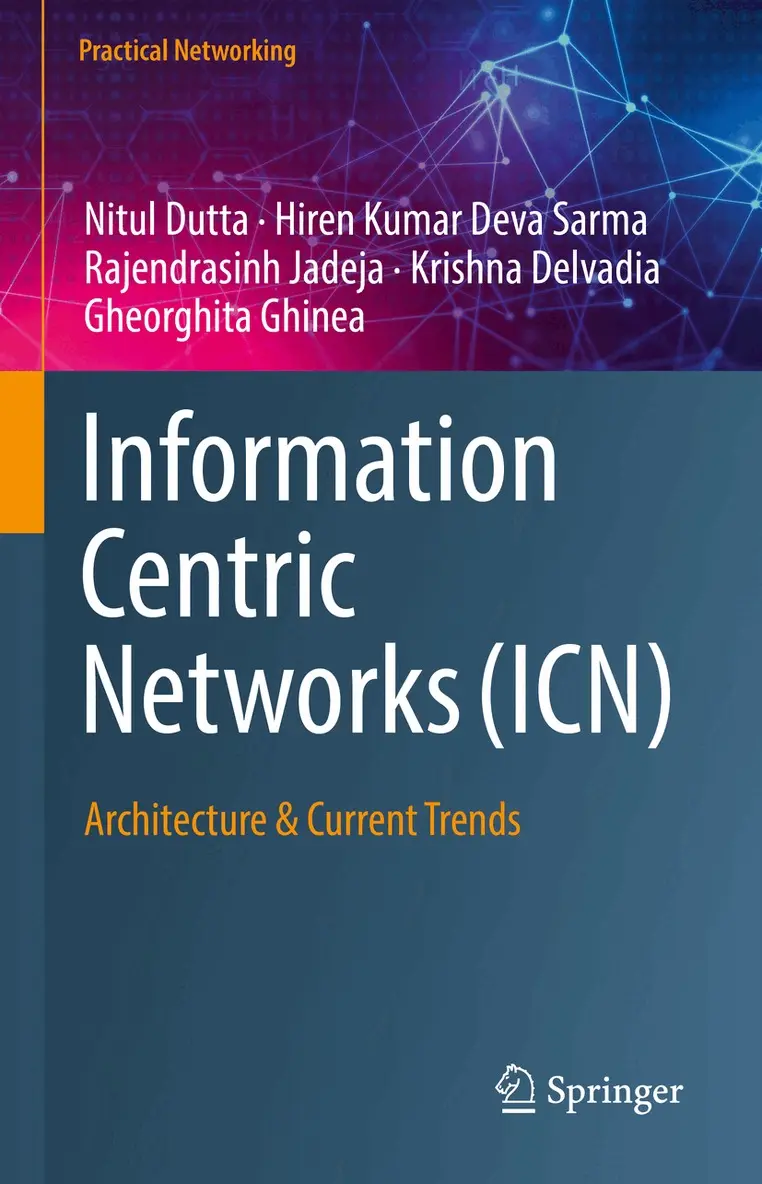
This book aimed at bringing an insight to the ICN network, particularly various architectures, issues and challenges in the new networking paradigm. The book starts with an introduction to the new promising concept of ICN and its origin along with the reason behind this interesting innovation. Different architectures proposed so far in support of implementing the ICN is also discussed in details. Few of the challenges of ICN implementation are enlisted as caching, naming, routing, and security. Each of these challenges with recent development is covered in individual chapters. Moreover, integration of current trends in communication and computing like software defined networking and machine learning approach are another area that this book is focusing. All these chapters highlight the recent developments reported in the area and also discusses the future trends. The book provides an overview of the recent developments in future internet technologies, bringing together the advancements that have been made in ICN. The book includes three unique chapters in the field of ICN research. The first, is the SDN framework for implementing ICN by decoupling data and control plan. The machine learning models for predicting future trends in network traffic and other management activities is another important chapter. This chapter includes the possibilities of using machine learning models for trend prediction to help network administrators and service providers to take care of unexpected sudden change traffic pattern and user behaviour. The third most vital chapter is the security issues in ICN. This chapter includes various facts that influences the security of ICN. Issues involved in naming, caching and routing are discussed separately along with few recent works in these areas. Various types of attacks in ICN are also part of the discussion. The stated book would be useful for researchers in this area and will work as a reference for future work. Moreover, the content of the book would also be suitable as a supporting material for undergraduate and graduate level courses in computer science and electrical engineering.
Häftad, Engelska, 2022
1 849 kr
Skickas inom 10-15 vardagar
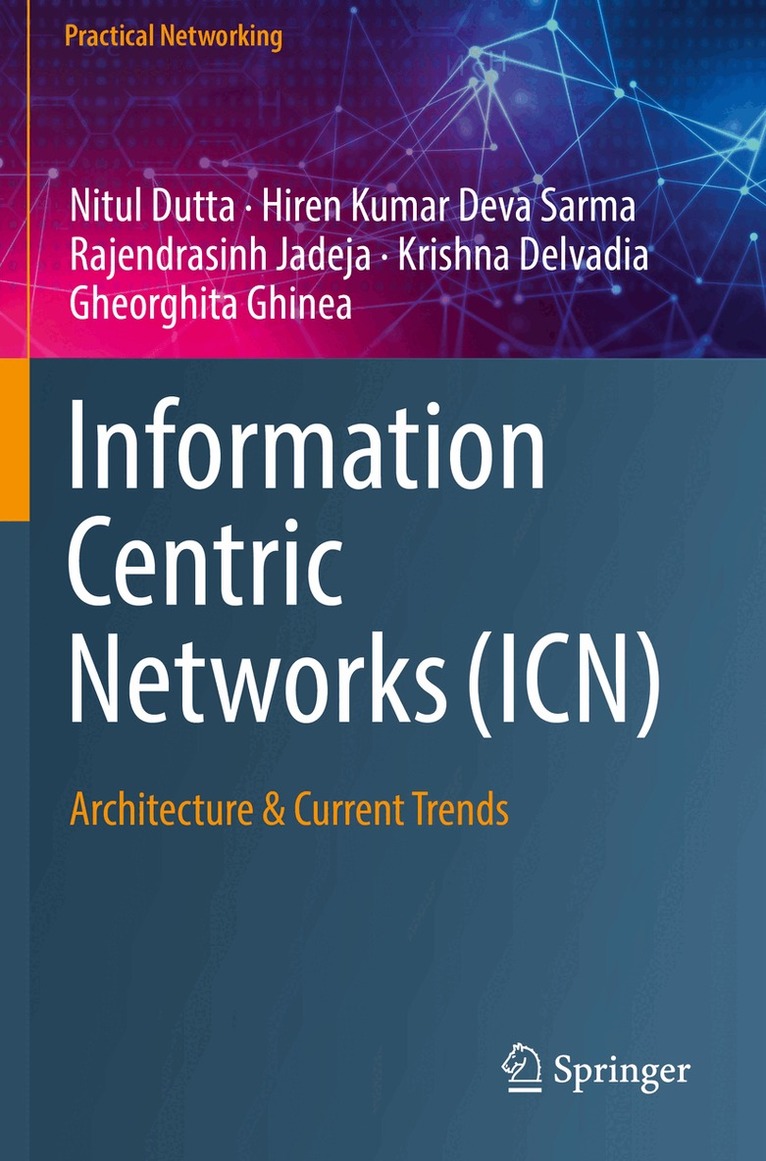
This book aimed at bringing an insight to the ICN network, particularly various architectures, issues and challenges in the new networking paradigm. The book starts with an introduction to the new promising concept of ICN and its origin along with the reason behind this interesting innovation. Different architectures proposed so far in support of implementing the ICN is also discussed in details. Few of the challenges of ICN implementation are enlisted as caching, naming, routing, and security. Each of these challenges with recent development is covered in individual chapters. Moreover, integration of current trends in communication and computing like software defined networking and machine learning approach are another area that this book is focusing. All these chapters highlight the recent developments reported in the area and also discusses the future trends. The book provides an overview of the recent developments in future internet technologies, bringing together the advancements that have been made in ICN. The book includes three unique chapters in the field of ICN research. The first, is the SDN framework for implementing ICN by decoupling data and control plan. The machine learning models for predicting future trends in network traffic and other management activities is another important chapter. This chapter includes the possibilities of using machine learning models for trend prediction to help network administrators and service providers to take care of unexpected sudden change traffic pattern and user behaviour. The third most vital chapter is the security issues in ICN. This chapter includes various facts that influences the security of ICN. Issues involved in naming, caching and routing are discussed separately along with few recent works in these areas. Various types of attacks in ICN are also part of the discussion. The stated book would be useful for researchers in this area and will work as a reference for future work. Moreover, the content of the book would also be suitable as a supporting material for undergraduate and graduate level courses in computer science and electrical engineering.
Inbunden, Engelska, 2022
874 kr
Skickas inom 10-15 vardagar
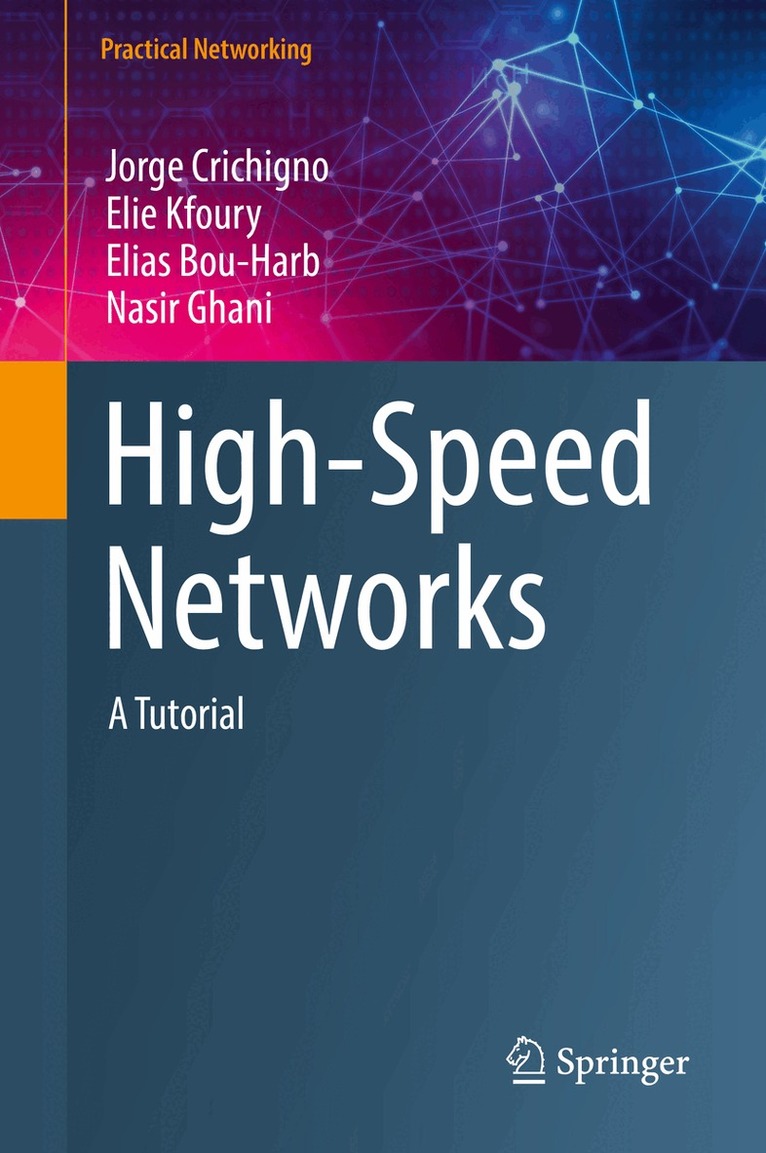
This book provides practical knowledge and skills on high-speed networks, emphasizing on Science Demilitarized Zones (Science DMZs). The Science DMZ is a high-speed network designed to facilitate the transfer of big science data which is presented in this book. These networks are increasingly important, as large data sets are now often transferred across sites. This book starts by describing the limitations of general-purpose networks which are designed for transferring basic data but face numerous challenges when transferring terabyte- and petabyte-scale data. This book follows a bottom-up approach by presenting an overview of Science DMZs and how they overcome the limitations of general-purpose networks. It also covers topics that have considerable impact on the performance of large data transfers at all layers: link layer (layer-2) and network layer (layer-3) topics such as maximum transmission unit (MTU), switch architectures, and router’s buffer size; transport layer (layer-4) topics including TCP features, congestion control algorithms for high-throughput high-latency networks, flow control, and pacing; applications (layer-5) used for large data transfers and for maintenance and operation of Science DMZs; and security considerations. Most chapters incorporate virtual laboratory experiments, which are conducted using network appliances running real protocol stacks. Students in computer science, information technology and similar programs, who are interested in learning fundamental concepts related to high-speed networks and corresponding implementations will find this book useful as a textbook. This book assumes minimal familiarity with networking, typically covered in an introductory networking course. It is appropriate for an upper-level undergraduate course and for a first-year graduate course. Industry professionals working in this field will also want to purchase this book.
Häftad, Engelska, 2023
657 kr
Skickas inom 10-15 vardagar
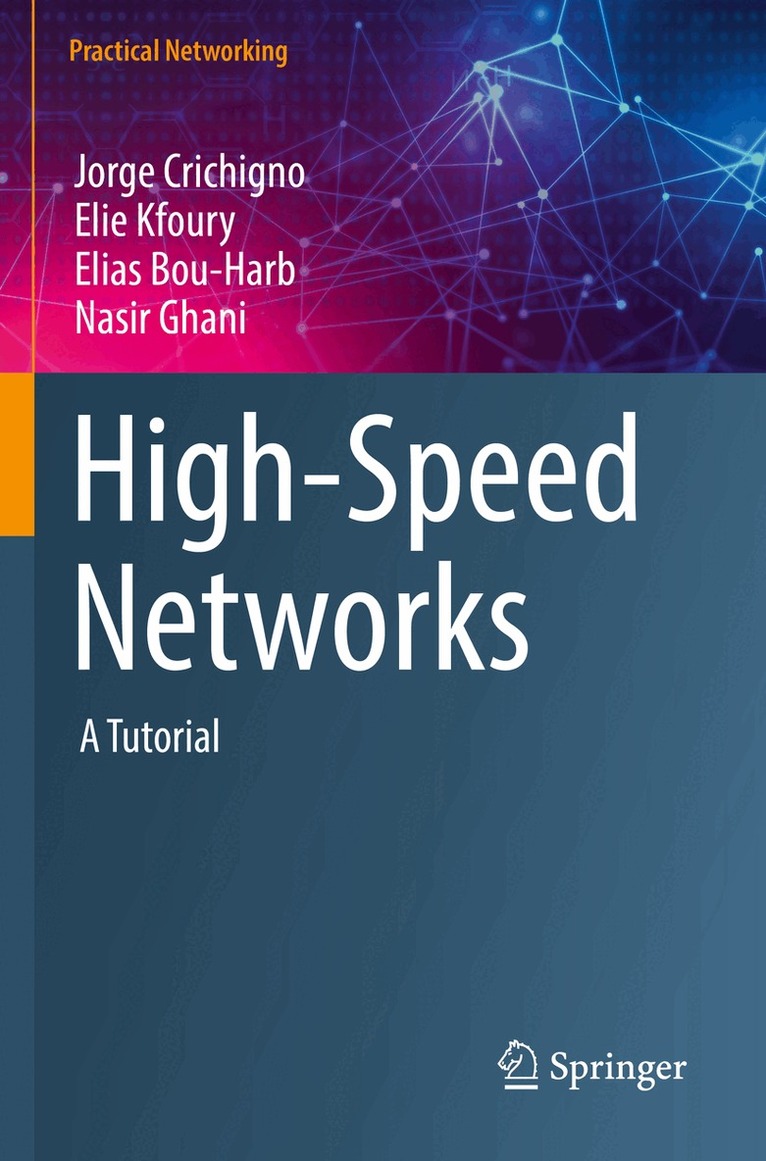
This book provides practical knowledge and skills on high-speed networks, emphasizing on Science Demilitarized Zones (Science DMZs). The Science DMZ is a high-speed network designed to facilitate the transfer of big science data which is presented in this book. These networks are increasingly important, as large data sets are now often transferred across sites. This book starts by describing the limitations of general-purpose networks which are designed for transferring basic data but face numerous challenges when transferring terabyte- and petabyte-scale data. This book follows a bottom-up approach by presenting an overview of Science DMZs and how they overcome the limitations of general-purpose networks. It also covers topics that have considerable impact on the performance of large data transfers at all layers: link layer (layer-2) and network layer (layer-3) topics such as maximum transmission unit (MTU), switch architectures, and router’s buffer size; transport layer (layer-4) topics including TCP features, congestion control algorithms for high-throughput high-latency networks, flow control, and pacing; applications (layer-5) used for large data transfers and for maintenance and operation of Science DMZs; and security considerations. Most chapters incorporate virtual laboratory experiments, which are conducted using network appliances running real protocol stacks. Students in computer science, information technology and similar programs, who are interested in learning fundamental concepts related to high-speed networks and corresponding implementations will find this book useful as a textbook. This book assumes minimal familiarity with networking, typically covered in an introductory networking course. It is appropriate for an upper-level undergraduate course and for a first-year graduate course. Industry professionals working in this field will also want to purchase this book.