Sage Handbooks of Modern China – serie
1 757 kr
Skickas inom 5-8 vardagar
The Sage Handbook of Interpreting Chinese History offers an in-depth exploration of the evolution of historical narratives in China over the past century. Bringing together some of the world’s leading scholars, this handbook provides both depth and breadth to our understanding of how Chinese leaders, intellectuals, and the public conceive of their place in the world. It examines the dramatic shifts in historical interpretation, documenting both the creative use and disastrous abuse of the Chinese past.
China's growing global influence has led to increased interest in its historical perspectives. Understanding contemporary Chinese conceptions of international politics and intercultural relations requires a deep dive into how history is interpreted and taught in China. This handbook aims to "look under the hood" at the motivations and methods behind historical storytelling, the role of historical knowledge in social and political stability, and the deployment of key terms and images in politics and social life.
The handbook is organized into several key sections. The first section provides an overview of key ideas such as the “tributary system” and constitutionalism, alongside critical analyses of intellectual history and Sino-foreign relations. The subsequent sections delve into how history was written and historical narratives disseminated and deployed in four different eras of modern Chinese history: the late-Qing period, the Republican era, the Maoist era, and the Reform era. Each era is examined through the lens of official and popular history, exploring the relationship between history and memory. The final section introduces perspectives on historical narratives from Chinese border regions, as well as Sinophone narratives produced outside the PRC state system, highlighting the diversity of views on Chinese history.
The Sage Handbook of Interpreting Chinese History is an essential resource for scholars, practitioners, and students seeking to understand the complexities of historical interpretation in modern China. It provides a comprehensive and nuanced exploration of the field, equipping readers to engage with the theoretical and practical aspects of Chinese historical narratives.
Part I: Overviews and Framing ChaptersPart II: History in the Late-Qing EraPart III: History in the Republican EraPart IV: History in the Maoist EraPart V: History in the Reform EraPart VI: Border Histories
1 757 kr
Skickas inom 5-8 vardagar
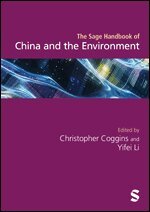
The Sage Handbook of China and the Environment offers a comprehensive exploration of China's environment through a multidisciplinary and transdisciplinary lens. This volume presents China's environment as a series of interconnected temporal and spatial processes involving human agency and more-than-human dynamics. Contributions from leading scholars in social science, environmental science, and humanities focus on long-term environmental change, shifts in environmental perception, and the dynamic adaptations that have shaped China as both a nation and a mosaic of distinctive socio-ecological networks.
The handbook delves into the processes of human-environment relations that have shaped contemporary landscapes, ecosystems, and livelihoods within China's territorial boundaries, as well as global industrial and commercial processes affecting climate change and geopolitics worldwide. Each section of the book includes chapters that summarize key contributions to specific fields of environmental research, assess prevailing paradigms, and chart a course for future work, including calls for activist research that encourages collaborative engagement with the dynamic political, economic, ecological, and cultural processes shaping China's environment and policy.
Organized into four main sections, the handbook covers the long-term ecological transformation of China, biodiversity conservation and the social construction of nature, pressing environmental concerns in urbanizing China, and China's role in global sustainability. It provides a nuanced understanding of China's environmental challenges and achievements, emphasizing the need for multidisciplinary, interdisciplinary, and transdisciplinary approaches to address the complexities of China's environment.
The Sage Handbook of China and the Environment is an essential resource for scholars, practitioners, and students seeking to understand the intricate processes shaping China's environment and its global impact.
Part 1: Past as Prelude: The Long Journey Toward Understanding China's Long-term Ecological TransformationPart 2: Biodiversity and Wild Landscapes: Conservation and the Social Construction of Nature in Contemporary ChinaPart 3: Pressing Environmental Concerns in Urbanizing ChinaPart 4: Global China, the Biosphere, and Planetary Sustainability
1 706 kr
Skickas inom 5-8 vardagar
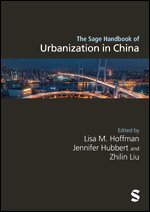
The Sage Handbook of Urbanization in China is a pioneering handbook that reframes our understanding of China's extraordinary urban transformation—a demographic shift of unprecedented scale and speed that has seen two-thirds of its population becoming urban dwellers. Moving beyond conventional narratives, editors Hoffman, Hubbert, and Liu develop an innovative conceptual approach that emphasizes distinctiveness without exceptionalism, global connections without universalism, and complex interrelationships beyond binary oppositions.
Through twenty-eight meticulously researched chapters of critical literature reviews, leading scholars explore China's cities and urbanism not simply through top-down state directives but also through intricate negotiations among diverse actors, interests, and histories. Deploying the concept of "accompaniment," the editors argue the chapters reveal how state socialism and market mechanisms, rural traditions and urban aspirations coexist in dynamic tension rather than stark opposition.
From historic preservation to smart city technologies, from migrant experiences to environmental initiatives, from land use and architecture to housing and labor, this volume demonstrates how urbanization in China is simultaneously localized and worlded—connected to global currents while producing distinctive outcomes. By focusing on human experiences alongside institutional arrangements, the contributors illuminate how diverse actors actively shape urban spaces through their everyday decisions, creative adaptations, and sometimes resistance.
The Sage Handbook of Urbanization in China is essential reading for urban studies scholars, development practitioners, policy makers, and China specialists, this volume provides both literature reviews by scholarly experts and conceptual and analytical tools applicable far beyond China's borders, contributing to global urban theory while respecting local specificity.
Part One: Setting the StagePart Two: Land MattersPart Three: Configuring BelongingPart Four: The Creative and the DisruptivePart Five: Negotiating IdentitiesPart Six: Generating New Geographies
1 757 kr
Skickas inom 5-8 vardagar
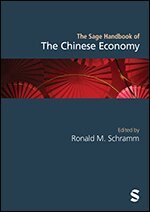
The Sage Handbook of the Chinese Economy is a comprehensive resource that delves into the complexities of China's economic and financial systems. Bringing together some of the world’s leading scholars, this handbook brings both depth and breadth to our understanding of China. It examines specific industries and issues, ranging from real estate to total factor productivity, while also covering China’s domestic economy and its global impact.
China's tremendous economic progress over the past five decades is well known, but understanding whether this growth can continue requires a deeper look beyond the headlines. This handbook aims to "look under the hood" at specific industries and sectors to better understand the accomplishments and impediments to sustainable growth. At a time when China is experiencing significant economic challenges, including supply constraints, demand declines, and frayed trade relations, this volume offers insights into the direction China might take as it navigates these issues.
The handbook is organized into five key sections. The section on key industries provides the "state-of-play" in critical sectors, highlighting how industries are transforming in response to global forces, government policies, innovation, and competition. The financial markets section examines the government's dominant role and the opportunities for improving capital allocation to promote future growth. The section on human capital addresses the challenges of a shrinking labor force and the urban/rural divide, while the macroeconomics section explores the unique challenges of managing China's segmented economy. Finally, the section on China and the globe presents a picture of China's significant global presence and the potential future developments in its international economic relations.
The Sage Handbook of the Chinese Economy is an essential guide for scholars, practitioners, and students seeking to understand the intricacies of China's economy. It provides a comprehensive and nuanced exploration of the field, equipping readers to engage with the theoretical and practical aspects of China's economic landscape.
Part 1: Key IndustriesPart 2: Financial MarketsPart 3: Human CapitalPart 4: MacroeconomicsPart 5: China and the Globe
1 706 kr
Skickas inom 5-8 vardagar
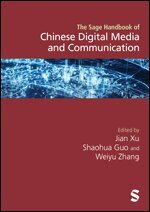
The Sage Handbook of Chinese Digital Media and Communication is the first comprehensive reference work dedicated to the fast-evolving field of digital media and communication in China. Marking three decades since China’s official connection to the internet, this landmark volume brings together leading scholars from across the globe to examine the profound transformations digital technologies have brought to Chinese society, politics, culture, and economy.Spanning activism, governance, labor, industry, everyday life, and research methods, the handbook offers a critical and interdisciplinary survey of the field. It explores how the internet and digital media have reshaped political participation, civil society, and national identity; how state regulation and surveillance intersect with innovation and platformization; and how digital labor, fandom, gaming, and e-commerce are redefining cultural production, consumption and economy. It also reflects on the lived experiences of users, from parenting and diaspora to queer communities and mobile rituals.Structured across five thematic parts, the volume not only maps the current landscape of Chinese digital media and communication but also interrogates the knowledge production that has shaped the field. It invites dialogue with global digital media scholarship and offers a timely reflection on the past, present, and future of China’s digital transformation.The Sage Handbook of Chinese Digital Media and Communication is an indispensable resource for scholars, researchers, and students seeking a comprehensive understanding of the multifaceted landscape of Chinese digital media and communication. By examining past achievements, current trends, and future prospects, this collective effort establishes a foundation for advancing knowledge and fostering meaningful dialogues in this rapidly evolving field.Part 1: Activism, Civil Society and PoliticsPart 2: Technology, Regulation and GovernancePart 3: Platform, Labor and IndustryPart 4: User, Culture and Everyday LifePart 5: Method, Approach and Reflections