SIGS: Managing Object Technology - Böcker
Visar alla böcker i serien SIGS: Managing Object Technology. Handla med fri frakt och snabb leverans.
5 produkter
5 produkter
Del 16 - SIGS: Managing Object Technology
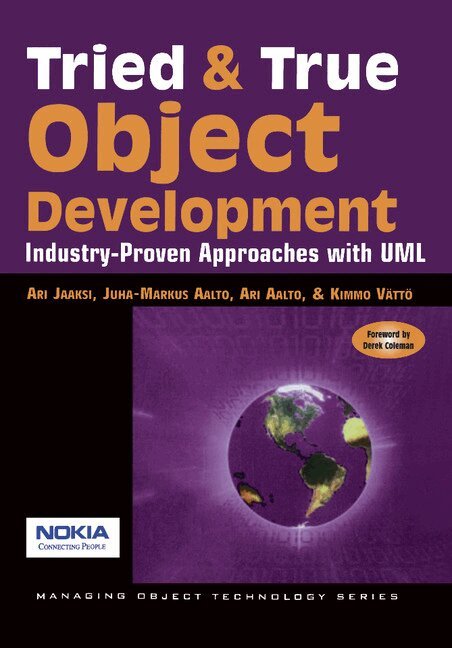
Tried and True Object Development
Industry-Proven Approaches with UML
Häftad, Engelska, 1998
837 kr
Skickas inom 7-10 vardagar
Written by four experienced Nokia Telecommunications software developers, this is a practical book about object-based and component-based software development. The book concentrates on the most important issues in real-life software development, such as the development process itself, software architecture, the development of user interfaces, data management, and the development of large commercial software products. The book exemplifies the presented practices by using the Unified Modeling Language (UML).
837 kr
Skickas inom 7-10 vardagar
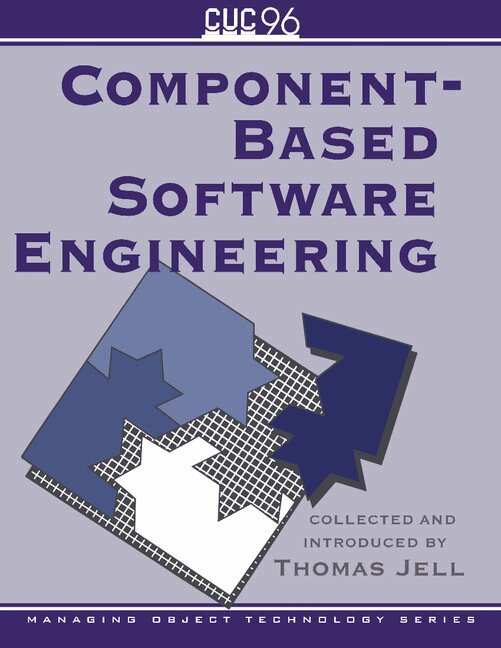
This book, first published in 1997, covers the most important topics in ComponentWare(TM) technology, based in large part on the first Component Users Conference. It addresses such issues as ComponentWare platforms, component design and architecture, distributed object computing, ComponentWare languages, patterns and frameworks, interoperability, and debugging and testing.
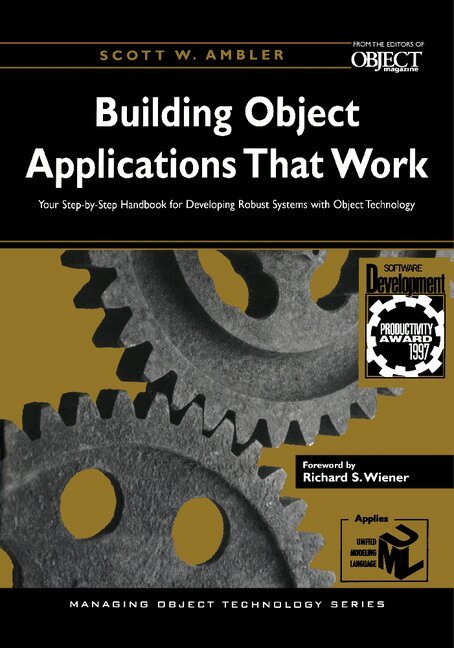
Building Object Applications that Work
Your Step-by-Step Handbook for Developing Robust Systems with Object Technology
Häftad, Engelska, 1998
928 kr
Skickas inom 7-10 vardagar
Written by internationally acclaimed trainer and developer Scott Ambler, this book is a must-have resource for designers, programmers and testers of today's OO applications. The author takes you through the entire process of building object applications, from analyzing the project (so you know what you need to build), to designing a user-friendly interface, to testing your approaches to make sure your applications work properly. Building Object Applications That Work includes sections on: • how to use the Unified Modeling Language effectively • analysis, so you know what you need to build • design techniques, so that you know how you are going to build your application • collecting the right metrics to improve your development approach • applying OO patterns to improve the quality of your applications • creating applications for stand-alone, client/server and distributed environments • using both relational and object-oriented databases to make your objects persistent • architecting your applications so they are maintainable and extensible.
Del 13 - SIGS: Managing Object Technology
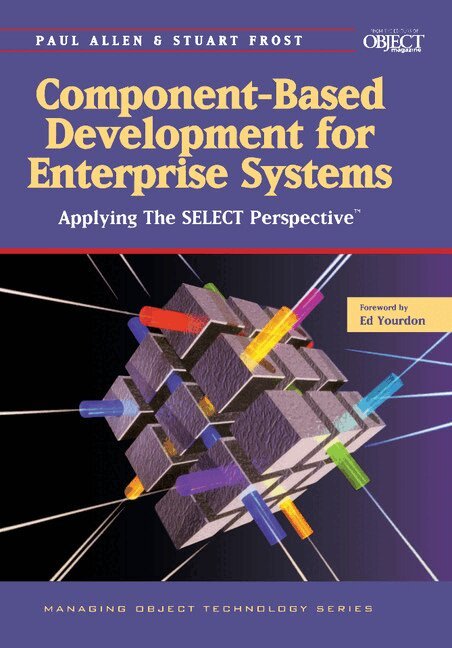
Component-Based Development for Enterprise Systems
Applying the SELECT Perspective
Häftad, Engelska, 1998
759 kr
Skickas inom 7-10 vardagar
This ground-breaking book distills the experience of the author in dealing with problems in industry that can be solved by using the SELECT Perspective. A pragmatic component-based approach for the development of enterprise systems, the SELECT Perspective comprises a unique blend of techniques, architecture, and process. Enterprise software development presents challenges of sheer scale and complexity that continue to accelerate at a terrific pace. Businesses are becoming increasingly adaptive and are calling for software that is more and more flexible. Component technology holds the promise of solving these problems, but there are some complications. For example, many organizations continue to struggle with the challenge of integrating their legacy systems with the newer technology. The approach in this book offers a streamlined set of modeling techniques based on the Unified Modeling Language (UML); uses a serviced-based architecture that provides an overall design philosophy for reusable software that addresses the needs of the business, not the technology; and is a clearly defined software process that provides guidance on how to employ the knowledge base of available techniques.
Del 23 - SIGS: Managing Object Technology
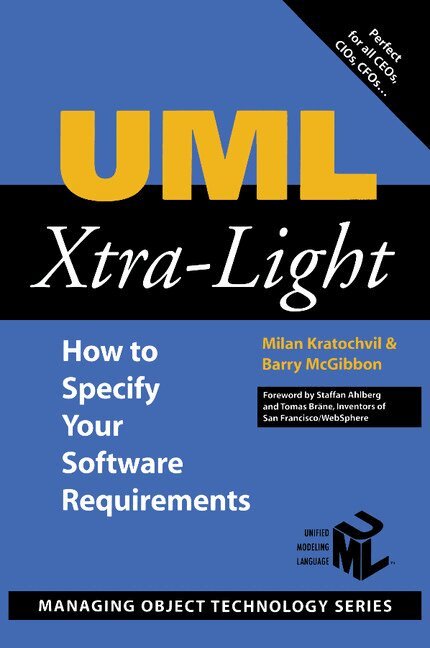
UML Xtra-Light
How to Specify your Software Requirements
Häftad, Engelska, 2002
448 kr
Skickas inom 7-10 vardagar
If you are a non-technical person with a stake in the success of a software project, this book is for you. Business managers often find it impossible to communicate business objectives and specify their software requirements to technical members of staff. This beginner's guide teaches readers to communicate with software developers in a more focused, effective way. It describes the basic diagrams of the UML modeling notation and shows how they are used to specify requirements in an unambiguous way. When used on project, the risk of failure through unclear requirements is removed.