Society and the Environment – serie
Visar alla böcker i serien Society and the Environment. Handla med fri frakt och snabb leverans.
12 produkter
12 produkter
Inbunden, Engelska, 2021
2 070 kr
Skickas inom 3-6 vardagar
Communities around the United States face the threat of being underwater. This is not only a matter of rising waters reaching the doorstep. It is also the threat of being financially underwater, owning assets worth less than the money borrowed to obtain them. Many areas around the country may become economically uninhabitable before they become physically unlivable.In Underwater, Rebecca Elliott explores how families, communities, and governments confront problems of loss as the climate changes. She offers the first in-depth account of the politics and social effects of the U.S. National Flood Insurance Program (NFIP), which provides flood insurance protection for virtually all homes and small businesses that require it. In doing so, the NFIP turns the risk of flooding into an immediate economic reality, shaping who lives on the waterfront, on what terms, and at what cost.Drawing on archival, interview, ethnographic, and other documentary data, Elliott follows controversies over the NFIP from its establishment in the 1960s to the present, from local backlash over flood maps to Congressional debates over insurance reform. Though flood insurance is often portrayed as a rational solution for managing risk, it has ignited recurring fights over what is fair and valuable, what needs protecting and what should be let go, who deserves assistance and on what terms, and whose expectations of future losses are used to govern the present. An incisive and comprehensive consideration of the fundamental dilemmas of moral economy underlying insurance, Underwater sheds new light on how Americans cope with loss as the water rises.
Häftad, Engelska, 2021
298 kr
Skickas inom 5-8 vardagar
Communities around the United States face the threat of being underwater. This is not only a matter of rising waters reaching the doorstep. It is also the threat of being financially underwater, owning assets worth less than the money borrowed to obtain them. Many areas around the country may become economically uninhabitable before they become physically unlivable.In Underwater, Rebecca Elliott explores how families, communities, and governments confront problems of loss as the climate changes. She offers the first in-depth account of the politics and social effects of the U.S. National Flood Insurance Program (NFIP), which provides flood insurance protection for virtually all homes and small businesses that require it. In doing so, the NFIP turns the risk of flooding into an immediate economic reality, shaping who lives on the waterfront, on what terms, and at what cost.Drawing on archival, interview, ethnographic, and other documentary data, Elliott follows controversies over the NFIP from its establishment in the 1960s to the present, from local backlash over flood maps to Congressional debates over insurance reform. Though flood insurance is often portrayed as a rational solution for managing risk, it has ignited recurring fights over what is fair and valuable, what needs protecting and what should be let go, who deserves assistance and on what terms, and whose expectations of future losses are used to govern the present. An incisive and comprehensive consideration of the fundamental dilemmas of moral economy underlying insurance, Underwater sheds new light on how Americans cope with loss as the water rises.
Inbunden, Engelska, 2020
1 172 kr
Skickas inom 5-8 vardagar
Power plants are essential to achieving the standard of living that modern societies demand and the social and economic infrastructure on which they depend. Yet their indispensability has allowed them to evade responsibility for their vast carbon emissions. Fossil-fueled power plants are the single largest sites of anthropogenic greenhouse gases, making them one of the greatest threats to our planet’s climate. Significant as they are, we lack a comprehensive understanding of the social causes that enable power plant emissions and continue to delay their reduction.Super Polluters offers a groundbreaking global analysis of carbon pollution caused by the generation of electricity, pinpointing who bears the most responsibility for the energy sector’s vast emissions and what can be done about them. The sociologists Don Grant, Andrew Jorgenson, and Wesley Longhofer analyze a novel dataset on the carbon dioxide emissions and structural attributes of thousands of fossil-fueled power plants around the world, identifying which plants discharge the most carbon. They investigate the global, organizational, and political conditions that explain these hyper-emitting facilities’ behavior and call into question the claim that improvements in technical efficiency will always reduce emissions. Grant, Jorgenson, and Longhofer demonstrate which energy and climate policies are most effective at abating power-plant pollution, emphasizing how mobilized citizen activism shapes those outcomes. A comprehensive account of who bears the blame for our warming planet, Super Polluters points to more feasible and effective emission reduction strategies that target the world’s most profligate polluters.
Häftad, Engelska, 2020
298 kr
Skickas inom 5-8 vardagar
Power plants are essential to achieving the standard of living that modern societies demand and the social and economic infrastructure on which they depend. Yet their indispensability has allowed them to evade responsibility for their vast carbon emissions. Fossil-fueled power plants are the single largest sites of anthropogenic greenhouse gases, making them one of the greatest threats to our planet’s climate. Significant as they are, we lack a comprehensive understanding of the social causes that enable power plant emissions and continue to delay their reduction.Super Polluters offers a groundbreaking global analysis of carbon pollution caused by the generation of electricity, pinpointing who bears the most responsibility for the energy sector’s vast emissions and what can be done about them. The sociologists Don Grant, Andrew Jorgenson, and Wesley Longhofer analyze a novel dataset on the carbon dioxide emissions and structural attributes of thousands of fossil-fueled power plants around the world, identifying which plants discharge the most carbon. They investigate the global, organizational, and political conditions that explain these hyper-emitting facilities’ behavior and call into question the claim that improvements in technical efficiency will always reduce emissions. Grant, Jorgenson, and Longhofer demonstrate which energy and climate policies are most effective at abating power-plant pollution, emphasizing how mobilized citizen activism shapes those outcomes. A comprehensive account of who bears the blame for our warming planet, Super Polluters points to more feasible and effective emission reduction strategies that target the world’s most profligate polluters.
Inbunden, Engelska, 2026
1 172 kr
Skickas inom 5-8 vardagar
As national governments and global institutions fail to address climate change, an increasing number of cities have committed to major sustainability and climate strategies. Why do some cities take bold action while others remain on the sidelines?Christof Brandtner shows that city climate action is not simply a matter of political will: It is an organizational problem. Cities do not act alone. They are embedded within both a broad institutional superstructure of professional networks and peer cities as well as a deep organizational infrastructure of civil society organizations, public agencies, and socially responsible firms. This dual embeddedness shapes cities’ capacity to plan, learn, lead, and scale sustainability solutions. Drawing on comparative research spanning fifteen years and thousands of cities around the world, Brandtner traces how environmental strategies, sustainability practices, and green building initiatives emerge, diffuse, and take hold. He uncovers the structural conditions that enable and inhibit meaningful climate action, revealing why it varies so widely across cities.By combining lenses from urban theory and organizational sociology, Cities in Action sheds light on how cities navigate their social and institutional environments to meet the climate challenge. This book offers a novel perspective for scholars, policy makers, and practitioners seeking not just to explain but also to empower city action.
Häftad, Engelska, 2026
298 kr
Skickas inom 5-8 vardagar
As national governments and global institutions fail to address climate change, an increasing number of cities have committed to major sustainability and climate strategies. Why do some cities take bold action while others remain on the sidelines?Christof Brandtner shows that city climate action is not simply a matter of political will: It is an organizational problem. Cities do not act alone. They are embedded within both a broad institutional superstructure of professional networks and peer cities as well as a deep organizational infrastructure of civil society organizations, public agencies, and socially responsible firms. This dual embeddedness shapes cities’ capacity to plan, learn, lead, and scale sustainability solutions. Drawing on comparative research spanning fifteen years and thousands of cities around the world, Brandtner traces how environmental strategies, sustainability practices, and green building initiatives emerge, diffuse, and take hold. He uncovers the structural conditions that enable and inhibit meaningful climate action, revealing why it varies so widely across cities.By combining lenses from urban theory and organizational sociology, Cities in Action sheds light on how cities navigate their social and institutional environments to meet the climate challenge. This book offers a novel perspective for scholars, policy makers, and practitioners seeking not just to explain but also to empower city action.
Inbunden, Engelska, 2024
173 kr
Skickas inom 5-8 vardagar
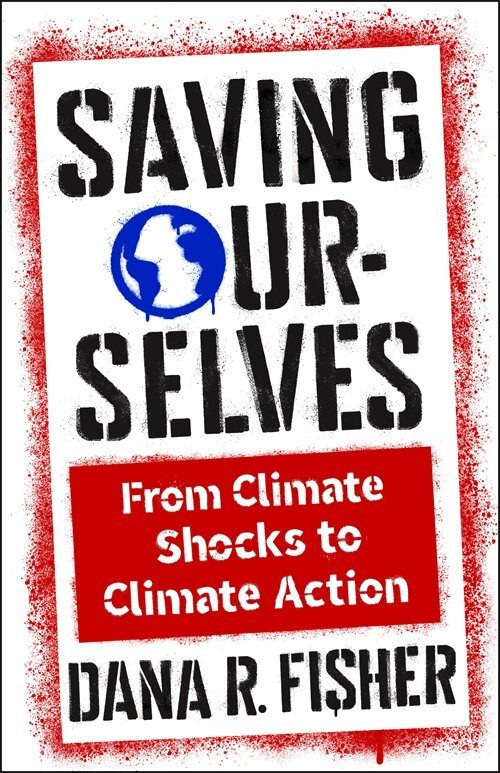
We've known for decades that climate change is an existential crisis. For just as long, we've seen the complete failure of our institutions to rise to the challenge. Governments have struggled to meet even modest goals. Fossil fuel interests maintain a stranglehold on political and economic power. Even though we have seen growing concern from everyday people, civil society has succeeded only in pressuring decision makers to adopt watered-down policies. All the while, the climate crisis worsens. Is there any hope of achieving the systemic change we need?Dana R. Fisher argues that there is a realistic path forward for climate action—but only through mass mobilization that responds to the growing severity and frequency of disastrous events. She assesses the current state of affairs and shows why public policy and private-sector efforts have been ineffective. Spurred by this lack of progress, climate activism has become increasingly confrontational. Fisher examines the radical flank of the climate movement: its emergence and growth, its use of direct action, and how it might evolve as the climate crisis worsens. She considers when and how activism is most successful, identifying the importance of creating community, capitalizing on shocking moments, and cultivating resilience. Clear-eyed yet optimistic, Saving Ourselves offers timely insights on how social movements can take power back from deeply entrenched interests and open windows of opportunity for transformative climate action.
Inbunden, Engelska, 2023
1 172 kr
Skickas inom 5-8 vardagar
Forests offer a natural solution to the climate crisis. Conserving and expanding them not only removes carbon from the atmosphere but also protects and fosters biodiversity. Yet the results of elite-driven reforestation initiatives have been disappointing, and in many world regions deforestation continues relentlessly.Thomas K. Rudel examines a wide range of conservation and reforestation efforts to shed new light on the social factors that lead to success. He details effective coalition-building strategies and organizational models that have protected, restored, and expanded forests around the world. Rudel argues that successful reforestation projects bring together diverse groups of people with a stake in the land and a commitment to collective decision making. They give voice to different economic and social interests, including small farmers, Indigenous peoples, loggers, ranchers, government officials, NGO personnel, international donors, and climate activists. These varied coalition members each make commitments to promote forests. Farmers limit the extent of lands under cultivation, governments protect land tenure for smallholders, and wealthy donors make payments for environmental protections.Timely and accessible, Reforesting the Earth offers a guide to scaling up local efforts to sequester carbon and makes a powerful case for a global reforestation movement.
Häftad, Engelska, 2023
298 kr
Skickas inom 5-8 vardagar
Forests offer a natural solution to the climate crisis. Conserving and expanding them not only removes carbon from the atmosphere but also protects and fosters biodiversity. Yet the results of elite-driven reforestation initiatives have been disappointing, and in many world regions deforestation continues relentlessly.Thomas K. Rudel examines a wide range of conservation and reforestation efforts to shed new light on the social factors that lead to success. He details effective coalition-building strategies and organizational models that have protected, restored, and expanded forests around the world. Rudel argues that successful reforestation projects bring together diverse groups of people with a stake in the land and a commitment to collective decision making. They give voice to different economic and social interests, including small farmers, Indigenous peoples, loggers, ranchers, government officials, NGO personnel, international donors, and climate activists. These varied coalition members each make commitments to promote forests. Farmers limit the extent of lands under cultivation, governments protect land tenure for smallholders, and wealthy donors make payments for environmental protections.Timely and accessible, Reforesting the Earth offers a guide to scaling up local efforts to sequester carbon and makes a powerful case for a global reforestation movement.
Inbunden, Engelska, 2026
1 414 kr
Kommande
Belize is often described as a “pristine” ecotourism destination with a landscape that is “naturally” valuable. Yet for much of the twentieth century, British Honduras—as the country was known under colonial rule—was seen as lacking value, an unprofitable backwater. Valuing Nature at the Ends of the World explores how Belize’s precarious coastal environment has become a site for a new kind of capitalist value production, in which landscapes and ecosystems derive worth from their vulnerability or looming destruction in the era of climate change.Drawing on a decade of ethnographic research, Patrick M. Gallagher offers a critical account of market-oriented conservation in the Caribbean that ranges across everyday coastal life, emergent ecological science, and climate policy spaces. He shows how the long material and social histories of racialized colonialism shape the making of technocratic tools for valuing nature. Gallagher traces how new forms of capitalist value emerge from the interaction among colonial pasts, contemporary conservation practices, and vivid scenarios of imminent climate change–driven disaster and loss. He also examines how people and policymakers in Belize imagine and create new ways of life in a changing environment. Ethnographically grounded and rich in theoretical insight, this book illuminates how the Anthropocene environment, newly visible and valuable at the moment of its presumed disappearance, came into being in Belize and around the world.
Häftad, Engelska, 2026
368 kr
Kommande
Belize is often described as a “pristine” ecotourism destination with a landscape that is “naturally” valuable. Yet for much of the twentieth century, British Honduras—as the country was known under colonial rule—was seen as lacking value, an unprofitable backwater. Valuing Nature at the Ends of the World explores how Belize’s precarious coastal environment has become a site for a new kind of capitalist value production, in which landscapes and ecosystems derive worth from their vulnerability or looming destruction in the era of climate change.Drawing on a decade of ethnographic research, Patrick M. Gallagher offers a critical account of market-oriented conservation in the Caribbean that ranges across everyday coastal life, emergent ecological science, and climate policy spaces. He shows how the long material and social histories of racialized colonialism shape the making of technocratic tools for valuing nature. Gallagher traces how new forms of capitalist value emerge from the interaction among colonial pasts, contemporary conservation practices, and vivid scenarios of imminent climate change–driven disaster and loss. He also examines how people and policymakers in Belize imagine and create new ways of life in a changing environment. Ethnographically grounded and rich in theoretical insight, this book illuminates how the Anthropocene environment, newly visible and valuable at the moment of its presumed disappearance, came into being in Belize and around the world.
Häftad, Engelska, 2025
157 kr
Skickas inom 5-8 vardagar
We've known for decades that climate change is an existential crisis. For just as long, we've seen the complete failure of our institutions to rise to the challenge. Governments have struggled to meet even modest goals. Fossil fuel interests maintain a stranglehold on political and economic power. Even though we have seen growing concern from everyday people, civil society has succeeded only in pressuring decision makers to adopt watered-down policies. All the while, the climate crisis worsens. Is there any hope of achieving the systemic change we need?Dana R. Fisher argues that there is a realistic path forward for climate action—but only through mass mobilization that responds to the growing severity and frequency of disastrous events. She assesses the current state of affairs and shows why public policy and private-sector efforts have been ineffective. Spurred by this lack of progress, climate activism has become increasingly confrontational. Fisher examines the radical flank of the climate movement: its emergence and growth, its use of direct action, and how it might evolve as the climate crisis worsens. She considers when and how activism is most successful, identifying the importance of creating community, capitalizing on shocking moments, and cultivating resilience. Clear-eyed yet optimistic, Saving Ourselves offers timely insights on how social movements can take power back from deeply entrenched interests and open windows of opportunity for transformative climate action.