Systematic Philosophical Theology - Böcker
Visar alla böcker i serien Systematic Philosophical Theology. Handla med fri frakt och snabb leverans.
6 produkter
6 produkter
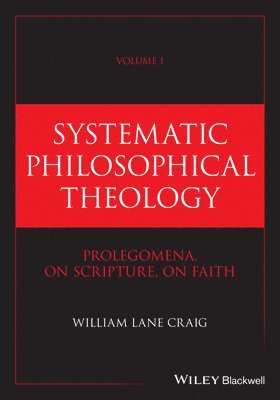
Systematic Philosophical Theology, Volume 1
Prolegomena, On Scripture, On Faith
Inbunden, Engelska, 2025
639 kr
Skickas inom 7-10 vardagar
"[...] the culmination of an impressive career in philosophy and theology. ... Craig's work will be highly valued and a great achievement, meriting significant attention."—Charles Taliaferro, Professor Emeritus of Philosophy, St. Olaf College"William Lane Craig's landmark treatise on systematic philosophical theology is a major contribution to our understanding of the relation of philosophy and Christian doctrine and will be an essential reference point for future discussions."—Alister McGrath, Emeritus Idreos Professor of Science and Religion, Oxford UniversityA transformative journey through Christian doctrine, Volume I: On Scripture, On FaithWilliam Lane Craig's Systematic Philosophical Theology is a multi-volume explication of Christian doctrine in the classic Protestant tradition of the loci communes as seen through the lens of contemporary analytic philosophy. Uniquely blending the disciplines of biblical theology, historical theology, and analytic theology, these volumes aim to provide readers with a biblical and philosophically coherent articulation of a wide range of Christian doctrines.In the first volume of the series, Prolegomena, On Scripture, On Faith, Craig begins by introducing his conception of systematic philosophical theology, describing how it relates to biblical theology, dogmatics, fundamental theology, apologetics, and especially philosophy of religion. The chapters that follow defend the divine authority of Scripture, address the nature of faith, and discuss the rational justification for Christian faith. Throughout the text, Craig tackles cutting edge philosophical questions that arise naturally from Christian doctrine, such as the compatibility of biblical inspiration and human freedom and whether faith implies belief.
668 kr
Skickas inom 7-10 vardagar
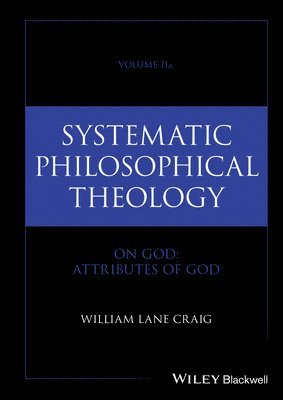
"These volumes are chock full of arguments in a way that stands out in this field. . . . This is a remarkable, generational work that will become the resource in philosophical theology."—J.P. Moreland, Distinguished Professor of Philosophy, Biola University"An enormous undertaking. However, Craig's past record indicates that he can and will carry it through to completion. Furthermore, his established reputation. . . guarantees that the work will attract wide interest and will have a ready readership."—William Hasker, Emeritus Professor of Philosophy, Huntington UniversityA transformative journey through Christian doctrine, Volume IIa. On God: Attributes of GodWilliam Lane Craig’s Systematic Philosophical Theology is a multi-volume explication of Christian doctrine in the classic Protestant tradition of the loci communes as seen through the lens of contemporary analytic philosophy. Uniquely blending the disciplines of biblical theology, historical theology, and analytic theology, these volumes aim to provide readers with a biblical and philosophically coherent articulation of a wide range of Christian doctrines.Volume II treats the locus On God in two parts. The first part, Volume IIa. Attributes of God, explores the coherence of theism. Conceiving of God as an infinite and personal being of maximal greatness, Craig carefully defines and explicates the divine attributes of incorporeality, necessity, aseity, simplicity, eternality, omnipresence, omniscience, omnipotence, and goodness.In the second part, Volume IIb. Excursus on Natural theology, The Trinity, Craig examines six arguments for God&'s existence, including the argument from contingency, the kalâm cosmological argument, the argument from the applicability of mathematics, the argument from cosmic fine-tuning, the moral argument, and the ontological argument, along with the problem of evil. Following the excursus, he transitions to an articulation and defence of Christian theism, formulating a biblical doctrine of the Trinity and offering a model of God as a tripersonal soul.
698 kr
Kommande
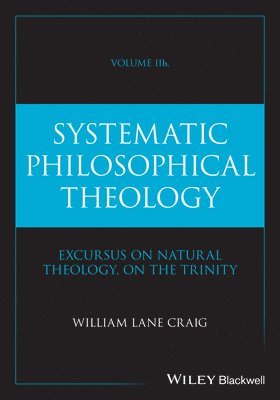
Presents a transformative journey through Christian doctrine William Lane Craig's Systematic Philosophical Theology is a multi-volume explication of Christian doctrine in the classic Protestant tradition of the loci communes as seen through the lens of contemporary analytic philosophy. Uniquely blending the disciplines of biblical theology, historical theology, and analytic theology, these volumes aim to provide readers with a biblical and philosophically coherent articulation of a wide range of Christian doctrines. Volume II treats the locus On God in two parts. The first part, Volume IIa: Attributes of God, explores the coherence of theism. Conceiving of God as an infinite and personal being of maximal greatness, Craig carefully defines and explicates the divine attributes of incorporeality, necessity, aseity, simplicity, eternality, omnipresence, omniscience, omnipotence, and goodness. In the second part, Volume IIb: Excursus on Natural Theology, On the Trinity, Craig examines six arguments for God's existence, including the argument from contingency, the kalām cosmological argument, the argument from the applicability of mathematics, the argument from cosmic fine-tuning, the moral argument, and the ontological argument, along with the problem of evil. Following the excursus, he transitions to an articulation and defense of Christian theism, formulating a biblical doctrine of the Trinity and offering a model of God as a tripersonal soul. Contributes to a diverse theological landscape with fresh perspectives on traditional conceptsIntegrates insights from authoritative Scriptures and diverse secular disciplinesProvides a synoptic worldview that bridges the gap between religious and scientific knowledgeEngages with deep philosophical questions surrounding Christian doctrinePresents unique formulations of Christian doctrines, such as God's temporality, Molinism, and a social model of the TrinityOffering a clear and structured exposition of complex theological and philosophical topics, Systematic Philosophical Theology, Volume IIb: Excursus on Natural Theology, On the Trinity, is ideal for graduate and advanced undergraduate students studying philosophy of religion, theology, or apologetics. It serves as a core or supplementary text for courses in systematic theology, philosophical theology, and Christian doctrine, and is an invaluable reference for scholars, theologians, and religious philosophers seeking a deeper understanding of the rational foundations of Christian theism.
346 kr
Kommande
Presents a transformative journey through Christian doctrine William Lane Craig's Systematic Philosophical Theology is a multi-volume explication of Christian doctrine in the classic Protestant tradition of the loci communes as seen through the lens of contemporary analytic philosophy. Uniquely blending the disciplines of biblical theology, historical theology, and analytic theology, these volumes aim to provide readers with a biblical and philosophically coherent articulation of a wide range of Christian doctrines. Volume II treats the locus On God in two parts. The first part, Volume IIa: Attributes of God, explores the coherence of theism. Conceiving of God as an infinite and personal being of maximal greatness, Craig carefully defines and explicates the divine attributes of incorporeality, necessity, aseity, simplicity, eternality, omnipresence, omniscience, omnipotence, and goodness. In the second part, Volume IIb: Excursus on Natural Theology, On the Trinity, Craig examines six arguments for God's existence, including the argument from contingency, the kalām cosmological argument, the argument from the applicability of mathematics, the argument from cosmic fine-tuning, the moral argument, and the ontological argument, along with the problem of evil. Following the excursus, he transitions to an articulation and defense of Christian theism, formulating a biblical doctrine of the Trinity and offering a model of God as a tripersonal soul. Contributes to a diverse theological landscape with fresh perspectives on traditional conceptsIntegrates insights from authoritative Scriptures and diverse secular disciplinesProvides a synoptic worldview that bridges the gap between religious and scientific knowledgeEngages with deep philosophical questions surrounding Christian doctrinePresents unique formulations of Christian doctrines, such as God's temporality, Molinism, and a social model of the TrinityOffering a clear and structured exposition of complex theological and philosophical topics, Systematic Philosophical Theology, Volume IIb: Excursus on Natural Theology, On the Trinity, is ideal for graduate and advanced undergraduate students studying philosophy of religion, theology, or apologetics. It serves as a core or supplementary text for courses in systematic theology, philosophical theology, and Christian doctrine, and is an invaluable reference for scholars, theologians, and religious philosophers seeking a deeper understanding of the rational foundations of Christian theism.
698 kr
Kommande
Presents a transformative journey through Christian doctrine William Lane Craig's Systematic Philosophical Theology is a multi-volume explication of Christian doctrine in the classic Protestant tradition of the loci communes as seen through the lens of contemporary analytic philosophy. Uniquely blending the disciplines of biblical theology, historical theology, and analytic theology, these volumes aim to provide readers with a biblical and philosophically coherent articulation of a wide range of Christian doctrines. In Volume III, Craig continues his ambitious project of constructing a comprehensive, interdisciplinary theological system by exploring the doctrines of creation and humanity. Building on the metaphysical groundwork laid in the preceding volume concerning the existence and nature of God, Volume III investigates the implications of divine reality for everything that exists apart from God—particularly creation and human nature. Here, theology is not approached in isolation but in dialogue with contemporary philosophical reflection and cutting-edge scientific research, resulting in a work that speaks both to traditional theological concerns and modern intellectual contexts. Volume III is distinctive in its integration of theological loci—De creation and De homine—with insights from disciplines often underrepresented in systematic theology, including organic chemistry, evolutionary biology, neurology, and paleoanthropology. The treatment of topics such as divine providence, human origins, and the Imago Dei is shaped not only by philosophical rigor and biblical exegesis but also by a robust Molinist framework. Promotes a synoptic Christian worldview that speaks to both faith and reasonBridges the gap between historical theological method and modern empirical inquiryContributes to a diverse theological landscape with fresh perspectives on traditional conceptsProvides a unique resource for theologians, philosophers, and scholars interested in science-faith integrationIncludes excursuses on the origin and evolution of life and the historical AdamOffering a clear and structured exposition of complex theological and philosophical topics, Systematic Philosophical Theology, Volume III, is ideal for graduate and advanced undergraduate students studying philosophy of religion, theology, or apologetics. It serves as a core or supplementary text for courses in systematic theology, philosophical theology, and Christian doctrine, and is an invaluable reference for scholars, theologians, and religious philosophers seeking a deeper understanding of the rational foundations of Christian theism.
346 kr
Kommande
Presents a transformative journey through Christian doctrine William Lane Craig's Systematic Philosophical Theology is a multi-volume explication of Christian doctrine in the classic Protestant tradition of the loci communes as seen through the lens of contemporary analytic philosophy. Uniquely blending the disciplines of biblical theology, historical theology, and analytic theology, these volumes aim to provide readers with a biblical and philosophically coherent articulation of a wide range of Christian doctrines. In Volume III, Craig continues his ambitious project of constructing a comprehensive, interdisciplinary theological system by exploring the doctrines of creation and humanity. Building on the metaphysical groundwork laid in the preceding volume concerning the existence and nature of God, Volume III investigates the implications of divine reality for everything that exists apart from God—particularly creation and human nature. Here, theology is not approached in isolation but in dialogue with contemporary philosophical reflection and cutting-edge scientific research, resulting in a work that speaks both to traditional theological concerns and modern intellectual contexts. Volume III is distinctive in its integration of theological loci—De creation and De homine—with insights from disciplines often underrepresented in systematic theology, including organic chemistry, evolutionary biology, neurology, and paleoanthropology. The treatment of topics such as divine providence, human origins, and the Imago Dei is shaped not only by philosophical rigor and biblical exegesis but also by a robust Molinist framework. Promotes a synoptic Christian worldview that speaks to both faith and reasonBridges the gap between historical theological method and modern empirical inquiryContributes to a diverse theological landscape with fresh perspectives on traditional conceptsProvides a unique resource for theologians, philosophers, and scholars interested in science-faith integrationIncludes excursuses on the origin and evolution of life and the historical AdamOffering a clear and structured exposition of complex theological and philosophical topics, Systematic Philosophical Theology, Volume III, is ideal for graduate and advanced undergraduate students studying philosophy of religion, theology, or apologetics. It serves as a core or supplementary text for courses in systematic theology, philosophical theology, and Christian doctrine, and is an invaluable reference for scholars, theologians, and religious philosophers seeking a deeper understanding of the rational foundations of Christian theism.