
Wiley - ISA Press Technician Series – serie
Visar alla böcker i serien Wiley - ISA Press Technician Series. Handla med fri frakt och snabb leverans.
2 produkter
2 produkter
Inbunden, Engelska, 2026
1 110 kr
Skickas inom 5-8 vardagar
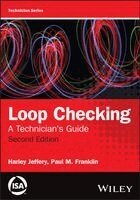
Execute reliable loop checks aligned with current ISA standards Verifying control loop functionality requires a systematic methodology and knowledge of current standards. Loop Checking: A Technician’s Guide, now in its Second Edition, delivers practical procedures for technicians responsible for control loop maintenance and performance across diverse process industries. Written by professionals with over 80 years of combined experience in industrial process controls, this guide provides standard methodology for executing loop checks. In addition to traditional loop checking, which is covered in the ANSI/ISA-62382-2026/IEC 62382:2024 standard, this edition covers factory acceptance testing, wiring verification, performance benchmarking, and sustaining long-term performance. Each chapter includes questions with explained answers to reinforce understanding. The guide applies to new and existing analog, distributed, and digital control systems across multiple industries. Key topics include: Standard methodology for loop checking aligned with ANSI/ISA-62382-2012 requirements for automation systems in process industry applicationsFactory acceptance testing procedures covering sensors, transmitters, controllers, and final control element verification and validationWiring verification techniques that ensure all control loop components are correctly connected and functioning as designedPerformance benchmarking methods for establishing baseline measurements and ongoing monitoring programs for control loop optimizationChapter questions with explained answers to reinforce practical understanding of loop checking concepts and proceduresIndustrial technicians, instrument supervisors, maintenance engineers, and reliability professionals will find this guide directly applicable to their daily responsibilities. Whether commissioning new systems or maintaining existing installations, Loop Checking provides the standards-aligned procedures needed for effective control loop verification.
Inbunden, Engelska, 2026
1 099 kr
Kommande
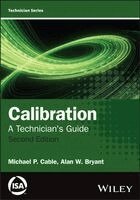
Perform reliable instrument calibrations with proven techniques and ISA standards Process instrument calibration requires precision, documentation, and adherence to established standards. Calibration: A Technician's Guide, Second Edition, delivers systematic procedures for the calibration tasks technicians perform most frequently. Written by experienced control system professionals with backgrounds spanning pharmaceutical, oil and gas, and cell therapy industries, this updated edition aligns with the ISA-RP105.00.01-2017 recommendations. This edition covers terminology, bench versus field calibration, loop versus individual instrument calibration, instrument classification systems, and documentation requirements. Specific techniques address temperature, pressure, level, flow, final control, and analytical instrumentation. Each chapter includes questions and answers to reinforce the concepts presented and prepare readers for ISA Certified Control Systems Technician® (CCST®) certification at all three levels. The book also includes: Sample P&IDs, loop diagrams, specification sheets, and calibration procedures in an extensive appendix for immediate referenceConversion tables and reference data that are essential for accurate calculations during field and bench calibration proceduresA structured learning format with chapter questions supporting CCST certification preparation at Levels I, II, and IIICoverage of instrument classification systems and documentation practices aligned with ISA-RP105.00.01-2017Techniques for calibrating temperature, pressure, level, flow, final control, and analytical instruments used in process facilitiesWhether you perform calibrations, supervise technicians, or are preparing for CCST certification, this book provides the procedural foundation and reference materials you need. Students studying instrumentation will find it equally valuable as a classroom resource covering industry-standard calibration practices.