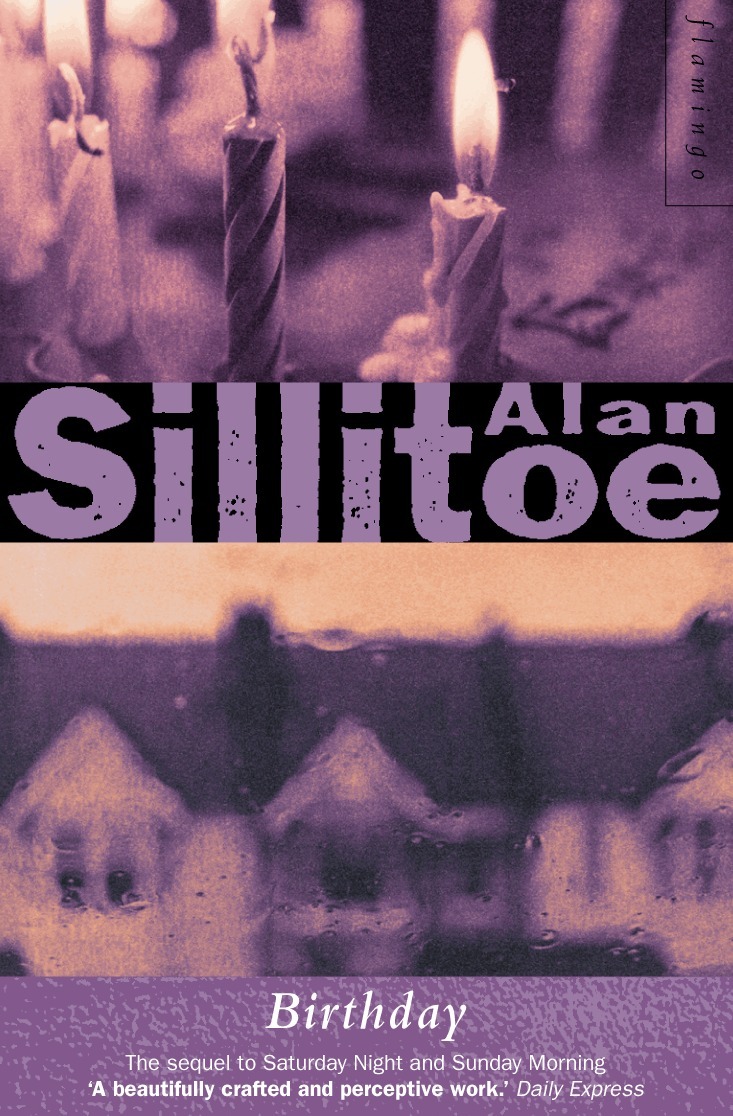
'Sillitoe remains the most physical of writers, spontaneous of language yet resolutely protective of its values. Sharing common territory with the late novels of Kingsley Amis, "Birthday" represents a carefully textured work by an old devil, still spiky after all these years.' Independent 'A beautifully crafted and perceptive work.' Daily Express 'Many people will certainly be in tune with the Seatons' stoically nostalgic outlook, and the occasional flash of recognition that the present may not be as bleak as it is painted, and the past not as golden. Sillitoe does not make the process of growing old look particularly enjoyable, but he logs the details -- the day-to-day difficulties; the growing isolation; the dying friends and family, slowly but surely removed from an ever-decreasing social circle -- with a devastatingly accurate eye. Sillitoe's insight is acute.' Scotland on Sunday 'There are parallels here with Kingsley Amis's "The Old Devils" -- another old man's book about old age. But it is well worth reading, both for its evocation of a vanished way of working-class life, and for its steadfast depiction of the horrors of old age and the valour and comradeship that can, in part at least, redeem it.' Daily Telegraph 'It too, is a love story, far less infused with angry energy than Sillitoe's first big hurrah. It is less vociferous, more romantic, the language still bracing, with knockabout moments, still shorn of all trace of sentimentality. And, despite its almost continuous rear-view-mirror take on the lives and times of its characters, it is not in the slightest nostalgic. Sillitoe handles their encounters with all his old masterful aplomb. Even without its distinguished predecessor, Birthday stands justifiably within Sillitoe's solid body of forceful fictions. It is warm, compassionate, gladsome and full of the sap of lives truthfully, and well. Do not rely on a feature movie, with Albert Finney, to wring out its heart. Go read it now.' Scotsman 'Alan Sillitoe's latest novel asks to be considered as a sequel to his first, Saturday Night and Sunday Morning, first published in 1958. Yet Birthday does more than simply continue the story of Arthur Seaton, the working-class rebel hero whose initial appearance might be said to have made Sillitoe's name. The forty-year hiatus between the action of Saturday Night and that of Birthday allows the author to bring a fresh and wiser perspective to the events of the earlier book. Sillitoe betrays his literary roots when two of the characters sit down and start discussing D H Lawrence's Sons and Lovers. There is, I think, a serious case for saying that Sillitoe's own fiction belongs firmly in the radical tradition of Lawrence's early writing; and, like Lawrence, Sillitoe is deeply concerned with the questions of social class and masculinity. There are few writers around who can rival Sillitoe when it comes to the complicated business of noticing things. What remains undiminished is Sillitoe's ability to make good, persuasive and enduring fiction out of his raw material.' Literary Review 'With Birthday, his writing comes full circle to revisit the cocky young protagonist of Saturday Night, Arthur Seaton, now an old man. Sillitoe is as much himself as ever (not many writers could fit the words "French letters" and "bike factory" so snugly in the same sentence), but Arthur's world is radically changed. Sillitoe's unfailing "us and them" chippiness is complemented by the pugnacity of his Bash Street Kids imagination. Sillitoe's slightly absurd taste for mayhem is the uglier side of an admirable hardness of spirit. Birthday shows a stoicism towards more universal themes of ageing, sickness and death, as well as the attitude that Sillitoe's work has always had towards class and authority.' Sunday Times 'Birthday is comparable to Philip Roth's recent American Pastoral, and just as enjoyable.' The Times 'In its depiction of brotherly love, it achieves much that is touching and unexpected.' Guardian 'It is just like life, and, such is Sillitoe's gift for evocative detail, the just observation, it is also, unlike so many novels that might be described as being "just like life", every bit as alive as life. It is a humane book, often funny; an affirmation of the -- provincial? -- values of hard work, decency, respect for others, honesty between people. It is delightful and persuasive.' Spectator 'The instinctive warmth and generosity of the writing imbue the characters with a humanity that belies Sillitoe's confident craftsmanship. The vivid precision of his insight into intimacy between the aging brothers forms the heart of a wonderful story.' IQ Magazine (Ireland)