1 212 kr
Beställningsvara. Skickas inom 3-6 vardagar. Fri frakt över 249 kr.
Beskrivning
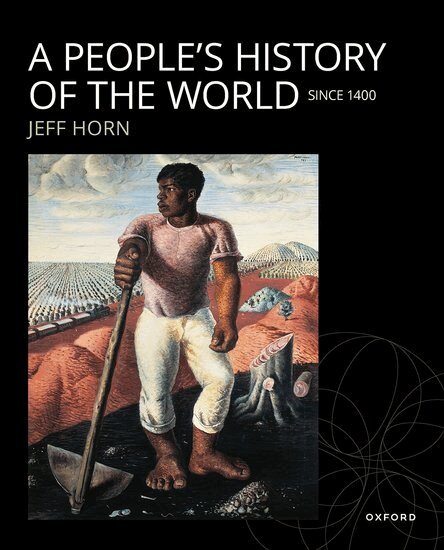
A People's History of the World offers a rethinking of who should be the focus of the tales we tell about the past . Taking a bold, new approach to understanding the nature of change over time on a global scale, the three temporal approaches in A People's History structure the analysis and reveal patterns, conjunctures, and tipping points, facilitating a thorough integration of social and economic history. The result is a text that more than any other shows how "the people" lived and acted.
Produktinformation
- Utgivningsdatum:2022-12-24
- Mått:191 x 235 x undefined mm
- Format:Häftad
- Språk:Engelska
- Antal sidor:768
- Förlag:Oxford University Press Inc
- ISBN:9780190640606
Utforska kategorier
Mer om författaren
Jeff Horn is Professor of History at Manhattan College.
Recensioner i media
A People's History of the World gives long-overdue attention to the most significant part of world history-everyday people and their connections."- Arunima Datta, Idaho State University
Innehållsförteckning
- List of MapsList of Figures and TablesList of Features Acknowledgements Dedication About the Author An Introduction to A People's History of the World Chapter 1. Isolation, Regionalism, and Exploration: The World in 1400 Connecting Regions: By Sea Connecting Regions: By Land Ecological Migration Conclusion: A People's History? Be An Historian: How Do We Know What We Know? Using Primary Sources Chapter 2. Religious Practice in the Modern World The Basis of Religious Authority Comparative Theology: Patterns and Praxis Ritual and the Making of Meaning Conversion and Attitudes Toward Other Faiths Conclusion: Skepticism, Belief, and the Protection of Religious Belief Be An Historian: Religious ArtDebate: Conversion: Individual or Collective Decision? Chapter 3. Imperialism and the Evolution of Empire, 1500-1800 Conquest, Conversion, and Cooptation: Old Tactics in a New Era Imperial Models The Columbian Exchange Conclusion: Coincidence, Accidents and Structures -The Timing of Imperial ExpansionBe An Historian: Differing Accounts of the Same Event Chapter 4. The Emergence and Spread of Gunpowder Empires: Political Change, 1500-1650 China and Japan Turn Inward Islamic Conquest and Consolidation in South Asia The Fragmentation of Africa Polities Religious Warfare in Europe Adaptation, Avoidance, and Recovery in the Western Hemisphere Conclusion: Gunpowder Politics and the Military Revolution Be An Historian: The Architecture of the Great Wall of China-The Secret Ingredient is the Sticky RiceDebate: Religious Motivations for Political Action Chapter 5. Life in Common: Community in the Modern World Village Life and the Division of Labor Marriage and Domestic Life Parenthood and Childrearing Conclusion: Living Together in the Twenty-First CenturyBe An Historian: The Meaning of a Marriage ContractDebate: The Double Standard Chapter 6. The Exchange of Goods and Services: Trade Necessities and Luxuries Transportation State Policies Freeing Trade Growing Volumes: Local, Regional, Global Conclusion: Trade, the Engine of Growth and Globalization, and Its Discontents Debate: Adam Smith: Theorist or Historian? Chapter 7. Humans as Property: Slavery The Experience of Slavery: Masters and Slaves Europeans, Americans, and the Practice of Slavery Getting Them There: Slave Trades Liberation and Its Limitations Conclusion: IT IS NOT ENOUGH Debate: Did Europe Underdevelop Africa? Chapter 8. Jockeying for Position: Political Change, 1650-1775 Retrenchment in the Islamic World Adapting to a Wider World in Africa and the Americas Centralization and the Impact of Colonization in Asia Dynastic Struggle and Internal Development in Europe Conclusion: Putting Early-Modern Politics in Perspective Be An Historian: Treaties can be TrickyDebate: What is the Basis of International Relations in a Monarchial System? Chapter 9. Manufacturing a New World Economy, 1750-1914 Capital: Human and Financial Technological Pathways and Worlds of Production Exploitation and Profit-Taking The Role of the State Power Relations and Deindustrialization Conclusion: Manufacturing Power and Popular Resistance Debate: Was the Exploitation of Labor Necessary to a European Industrial Revolution? Chapter 10. From Scarcity to Surplus: Modern Agriculture Systems, Traditions, and Innovation Technique, Technology, the Emergence of Industrial Agriculture, and Beyond Labor and Land Tenure Entrepreneurship and State Action Conclusion: The New Constraints Be An Historian: Evaluating Competing ClaimsDebate: Benefits and Consequences of the Green Revolution Chapter 11. Creation and Collapse: Revolutions and Political Change, 1775-1860 Reform, Revolution, and Reaction in Europe Liberty and Equality in the Americas New Patterns of Power Arise in Africa Isolation and Integration in Asia Conclusion: The Benefits to the People of the Age of Revolution: Short-term vs. Long-termBe An Historian: Constitutional Rhetoric vs. Political RealityDebate: Did the Enlightenment Cause the Age of Revolutions? Chapter 12. "Haves" and "Have Not's": Power Relations and Imperialism, 1800-Present Technologies of PowerGunsResistance Along the Nile Scramble for Africa Subjects, Citizens, Colonists, Colonized Conclusion: Imperialism in the Twentieth Century Debate: Are Imperialists Poor Historians? Chapter 13. New Forms of Control: Decolonization and Economic Dominance, 1775-1914 New Ideologies and their Limitations: Revolutions as Decolonization Slavery's Declining Impact A New Political Economy of Empire Decolonization and Nationalism: The Slow Disintegration of the Ottoman Empire Conclusion: Decolonization in an Age of Imperialism Debate: Is Decolonization a Revolution? Chapter 14. Privation and Powerlessness in an Age of Plenty: Political Change, 1860-1945 Africa and Asia Under European Domination Economic Integration and Political Isolation in the Americas: Myths and Realities of the American Dream Europe: From the Heights to the Depths The Human Cost of Total Wars Conclusion: Learning from Your Mistakes Be An Historian: Is Seeing Believing?Debate: Why was Socialism so Popular? Chapter 15. "Machines as the Measure of Men"?: The Changing Basis of Industrial Power, 1914-Present The Apogee of the Second Industrial Revolution (1914-45) The New Model: Soviet-Style Industrialization Corporate Management of Production: Capital and Labor after 1945 Manufacturing and the Information Economy Conclusion: Industry 4.0?Be An Historian: News is a First Rough-Draft of History Chapter 16. Paying for it All: Taxation and the Making of the Modern World The Growing Power of the State to Extract Revenue Beyond the Central State: Supporting Communities and Institutions The Political Economy of the Evolution of the Tax Burden Conclusion: The Legacy of Tax Cuts-Debt and Inequality Be An Historian: Cadastres and the Making of the Modern StateDebate: Do High Taxes Prevent Rapid Economic Growth? Chapter 17. The Age of the Superpowers: Political Change, 1945-2001 The Politics of Rivalry: The Superpowers and Europe Consequences of the End of a Bipolar World Nationalism, Socialism, and Capitalism in Asia Searching for Stability in the Global South: Latin America, Africa, and Constraints on the Voices of the People International Institutions and Missed Opportunities Conclusion: Missed OpportunitiesBe An Historian: Music MatteredDebate: Why Was 1968 Not a Year of Revolution? Chapter 18. Left in the Lurch: Decolonization, 1914-Present International Agreements and the End of Empire A Double-Edged Sword: Communism and Decolonization The Political Economy of Twentieth-Century Decolonization New Nationalisms and the Search for Modernity Colonization: Decolonization and Experiments in Nation-Building Be An Historian: Authorship Matters! : Biography vs. Autobiography Chapter 19. Anxieties and Opportunities in the Twenty-First Century Powerlessness and the Perpetuation of Inequality The Environment in Crisis Disease and Globalization's Challenge to Public Health Protest in the Arab World Populism, Nationalism, and the Drift Toward Authoritarianism Conclusion: Inequality in the Twenty-First Century Debate: Thinking About the Future Further Reading CreditsIndex
Hoppa över listan


Mer från samma författare
Reconceptualizing the Industrial Revolution
Jeff Horn, Leonard N Rosenband, Merritt Roe Smith
Häftad
531 kr
Hoppa över listan


Du kanske också är intresserad av
Reconceptualizing the Industrial Revolution
Jeff Horn, Leonard N Rosenband, Merritt Roe Smith
Häftad
531 kr