• Fri frakt över 249 kr
  • •
  • Snabba leveranser
  • •
  • Billiga böcker
Kundservice

Du är på sajten för privatpersoner.

Företag, bibliotek eller offentlig verksamhet?

Du handlar på classic.bokus.com, där alla dina funktioner finns intakta.
Till classic.bokus.com
Bokus logotyp. Gå till startsidan.
  • Erbjudanden
  • Student
  • Topplistor
  • Barn & ungdom
  • Bokus Play
  • E-böcker
  • Ljudböcker
  • Pocketböcker
  • Spel och pussel

5% studentrabatt – använd koden KURSBOK27 →

Sidfot

Mina sidor

    Hjälp

    • Kundservice
    • Vanliga frågor och svar
    • Frakt och leverans
    • Retur vid ångerrätt
    • Reklamera vara
    • Betalning
    • Köpvillkor
    • Allmänna villkor
    • Information om webbplatsens tillgänglighet

    Om Bokus

    • Om oss
    • Pressrum
    • För studenter
    • För företag
    • För bibliotek och offentlig verksamhet
    • För leverantörer
    • Hållbarhet

    Populärt

    • Aktuella erbjudanden
    • Presentkort
    • Studentlitteratur
    • Nya böcker
    • Topplistor
    • Signerade böcker
    • Engelska böcker

    Inspiration

    • Boktips
    • BookTok
    • Barnbokskaraktärer
    • Populära författare
    Logotyp för Bokus
    Följ oss på Facebook (extern länk)Följ oss på Instagram (extern länk)Följ oss på YouTube (extern länk)Följ oss på TikTok (extern länk)
    bokus @ CookiesAnpassa cookiesIntegritetspolicyKöpvillkor
    Till Citymail hemsida (extern länk)Till Budbee hemsida (extern länk)Till Postnord hemsida (extern länk)Till Schenker hemsida (extern länk)Till Early Bird hemsida (extern länk)Till Walleys hemsida (extern länk)
    1. Ekonomi och Ledarskap
    2. Nationalekonomi
    3. Internationell ekonomi

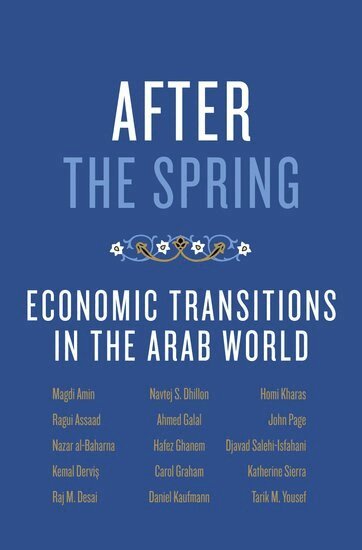
    After the Spring

    Economic Transitions in the Arab World

    AvMagdi Amin,Ragui Assaad

    Inbunden, Engelska, 2012

    844 kr

    Beställningsvara. Skickas inom 5-8 vardagar. Fri frakt över 249 kr.

    Beskrivning

    The Arab Spring constitutes perhaps the most far-reaching political and economic transition since the end of communism in Europe. For too long, the economic aspirations of the people in the region, especially young people, have been ignored by leaders in Arab countries and abroad. Competing views as to how best to meet these aspirations are now being debated in the region. The outcome will shape Arab societies for generations to come.The authors of this book argue that significant economic reforms must accompany the major political transitions that are underway. Although each country has a different economic structure and history and must make its own way forward, there are spill-overs from trade and investment linkages, the contagion of news cycles, interaction of people and sharing of expectations that are too great to ignore. Some common foundation of the new Arab economies is needed. Towards that end, this volume addresses four central challenges of economic reform in the Arab world. First, with two-thirds of the population under the age of 30, the disproportionate burdens of unemployment and poor education can no longer be heaped on youth. Second, while some government policies may have improved the living standards of Arab citizens in the past, they have also entrenched cronies, enriched a small elite, and become unaffordable. Third, if Arab economies are to compete in the 21st century they cannot depend solely on oil and gas money, remittances, and tourism, but will require active, independent private sectors. And finally, the relative isolation of Arab economies--both from each other and from the world--must end.Rather than providing specific lists of recommendations, this book sets forth a set of guidelines and priorities for reformers who will begin creating new opportunities for youth, rebuilding the institutions of the state, diversifying the private sector, and cooperating with each other and integrating with the world economy.

    Produktinformation

    • Utgivningsdatum:2012-05-03
    • Mått:236 x 155 x 20 mm
    • Vikt:408 g
    • Format:Inbunden
    • Språk:Engelska
    • Antal sidor:190
    • Förlag:OUP USA
    • ISBN:9780199924929

    Utforska kategorier

    • Internationell ekonomi inom Ekonomi och Ledarskap
    • Internationella relationer inom Samhälle och politik
    • Mellanösterns historia inom Historia och arkeologi

    Mer om författaren

    Magdi Amin, Lead Economist, International Finance CorporationRagui Assaad, Professor of Planning and Public Affairs, Minnesota UniversityNazar al-Baharna, former Minister of State for Foreign Affairs of BahrainKemal Dervis, Vice President, Brookings InstitutionRaj M. Desai, Associate Professor of International Development, Georgetown University and Non-Resident Senior Fellow, Brookings InstitutionNavtej S. Dhillon, former director, Middle East Youth Initiative, Wolfensohn Center for Development, Brookings InstitutionAhmed Galal, Managing Director, Economic Research ForumHafez Ghanem, Assistant Director-General, Food and Agriculture OrganizationCarol Graham, Senior Fellow, Brookings Institution Daniel Kaufmann, Senior Fellow, Brookings InstitutionHomi Kharas, Senior Fellow, Brookings InstitutionJohn Page, Senior Fellow, Brookings InstitutionDjavad Salehi-Isfahani, Professor of Economics, Virginia Tech University and Non-Resident Senior Fellow, Brookings InstitutionKatherine Sierra, Senior Fellow, Brookings InstitutionTarik M. Yousef, CEO, Silatech and Non-Resident Senior Fellow, Brookings Institution

    Recensioner i media

    Required reading.

    Innehållsförteckning

    • 1 INTRODUCTION ; Remaking the Arab Economies ; What Kind of Reform? ; New Transitions, New Directions: Outline of the Volume ; What Next?: Stability, Confidence and Credibility ; 2 THE ORIGINS OF THE ARAB SPRING ; The Unraveling Arab Social Contract ; The Legacy of the Arab Polity ; Partial Reform and International Experiences ; Myths and Realities in Transition ; 3 OPPORTUNITIES FOR YOUNG PEOPLE ; Basic Demographic Trends ; Employment: Young and Waiting ; Education - Right Intentions, Wrong Outcomes ; Transition Challenge: Evening out the Burden of Adjustment ; 4 BUILDING A MODERN STATE ; Fiscal Reform ; Public Sector Employment ; Getting Good Government ; 5 TRANSFORMING THE PRIVATE SECTOR ; A Structural Deficit in the Non-Oil Sector ; Can the Arab World Compete? ; Moving Forward with Private Sector Reform ; Strategic Choices in Private Sector Reform ; 6 NEW REGIONAL AND GLOBAL STRATEGIES ; Integrating with the Region and the World ; Regional Infrastructure Cooperation ; A Role for International Actors?