Häftad, Engelska, 2023
Higher Alcohols Production Platforms
Av Hamid Amiri, Meisam Tabatabaei, Abdul-Sattar Nizami
1675 kr
Skickas inom 10-15 vardagar
Beskrivning
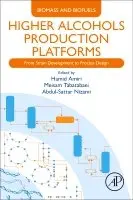
Higher Alcohols Production Platforms: From Strain Development to Process Design comprehensively covers the production of higher alcohols, from the fundamentals to the latest research. Bringing together experts from industry and academia, the book sheds light on the practical aspects of higher alcohol production and offers a roadmap for researchers to follow. In addition to the fundamentals of higher alcohol production, readers are presented with detailed information on up and downstream processes, including microbial processes and the various production pathways available. A discussion of metabolic pathways has a dedicated chapter, as do C2, C3-C8, and C4 sugar fermentation platforms.
A lifecycle assessment is also presented, addressing the energy, environmental, social and economic factors in the sustainability of higher alcohol production. Readers will find this to be a unique and comprehensive reference on the production of higher alcohols that will be of interest to students, researchers and industry professionals involved in bioenergy and renewable energy, and more.
- Provides comprehensive coverage of the energy, environmental and economic aspects of higher alcohols biofuels
- Presents a rational basis for assessing alcoholic products that can be used as a roadmap for their further developments
- Analyzes and synthesizes the latest research and developments on the production of higher alcohols as biofuels for audiences in academia and industry
Produktinformation
- Utgivningsdatum: 2023-09-26
- Mått: 191 x 235 x 20 mm
- Vikt: 450 g
- Format: Häftad
- Språk: Engelska
- Antal sidor: 348
- Förlag: Elsevier Science
- Serie: Biomass and Biofuels
- ISBN: 9780323917568
Utforska kategorier
Betyg & recensioner
0 recensioner
Inga recensioner tillgängliga.