• Fri frakt över 249 kr
  • •
  • Snabba leveranser
  • •
  • Billiga böcker
Kundservice

Du är på sajten för privatpersoner.

Företag, bibliotek eller offentlig verksamhet?

Du handlar på classic.bokus.com, där alla dina funktioner finns intakta.
Till classic.bokus.com
Bokus logotyp. Gå till startsidan.
  • Erbjudanden
  • Nyheter
  • Student
  • Topplistor
  • Barn & ungdom
  • Bokus Play
  • E-böcker
  • Pocketböcker
  • Spel & pussel

10% rabatt på allt med kod NYSTART10 →

Sidfot

Mina sidor

    Hjälp

    • Kundservice
    • Vanliga frågor och svar
    • Frakt och leverans
    • Retur vid ångerrätt
    • Reklamera vara
    • Betalning
    • Köpvillkor
    • Allmänna villkor
    • Information om webbplatsens tillgänglighet

    Om Bokus

    • Om oss
    • Pressrum
    • För studenter
    • För företag
    • För bibliotek och offentlig verksamhet
    • För leverantörer
    • Hållbarhet

    Populärt

    • Aktuella erbjudanden
    • Presentkort
    • Studentlitteratur
    • Nya böcker
    • Topplistor
    • Signerade böcker
    • Engelska böcker

    Inspiration

    • Boktips
    • BookTok
    • Populära bokserier
    • Barnbokskaraktärer
    • Populära författare
    Logotyp för Bokus
    Följ oss på Facebook (extern länk)Följ oss på Instagram (extern länk)Följ oss på YouTube (extern länk)Följ oss på TikTok (extern länk)
    bokus @ CookiesAnpassa cookiesIntegritetspolicyKöpvillkor
    Till Citymail hemsida (extern länk)Till Budbee hemsida (extern länk)Till Postnord hemsida (extern länk)Till Schenker hemsida (extern länk)Till Early Bird hemsida (extern länk)Till Walleys hemsida (extern länk)
    1. Djur och Natur
    2. Naturböcker
    3. Växtböcker
    • Nyhet

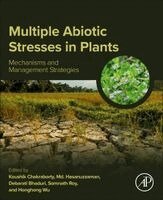
    Multiple Abiotic Stresses in Plants

    Mechanisms and Management Strategies

    AvKoushik Chakraborty,Md. Hasanuzzaman

    Häftad, Engelska, 2026

    1 970 kr

    Beställningsvara. Skickas inom 10-15 vardagar. Fri frakt över 249 kr.

    Beskrivning

    Driven by the realities of global climate change, compound stress events-such as drought, salinity, extreme temperatures, and flooding-now frequently affect crops within a single season, posing significant risks to global food security and agricultural sustainability. Multiple Abiotic Stresses in Plants: Mechanisms and Management Strategies examines how plants coordinate distinct physiological, biochemical, and molecular pathways to adapt under complex stress conditions, contrasting these mechanisms with those triggered by individual stress factors.

    Chapters cover key processes including redox regulation, hormonal signaling, transcriptional control, ion transport, and metabolic adjustments. The volume also highlights advances in breeding and biotechnology-from marker-assisted selection and genome editing to nanotechnology and multi-omics approaches-alongside practical strategies for improved stress management, such as optimized nutrient use, microbial interventions, and climate-adaptive agronomy.

    Comprehensive in scope and multidisciplinary in approach, this reference book serves as a valuable resource for researchers, students, plant scientists, and agricultural professionals by offering the strategic insight needed to anticipate, rather than react to, the evolving challenges of plant-environment interactions.

    • Explores adaptive changes in plant structure and anatomy under combined stress conditions, enabling readers to link morphological traits with functional outcomes in real-world crop systems
    • Demonstrates how nutrient dynamics, soil amendments, and beneficial elements contribute to stress alleviation, elucidating actionable pathways for improving plant performance under multiple stress conditions
    • Highlights the integration of Internet of Things-enabled sensor networks for early detection and mitigation of multiple abiotic stresses in plants

    Produktinformation

    • Utgivningsdatum:2026-08-13
    • Mått:216 x 276 x undefined mm
    • Vikt:450 g
    • Format:Häftad
    • Språk:Engelska
    • Antal sidor:480
    • Förlag:Elsevier Science
    • ISBN:9780443274244

    Utforska kategorier

    • Växtböcker inom Djur och Natur
    • Botanik inom Naturvetenskap och teknik
    • Agronomi och lantbruk inom Naturvetenskap och teknik

    Mer om författaren

    Dr. Koushik Chakraborty is a senior scientist at the Division of Crop Physiology and Biochemistry, ICAR–Central Rice Research Institute, Cuttack, in India. His areas of specialization is are in abiotic stress physiology (salinity, submergence & waterlogging), molecular plant physiology (salinity tolerance mechanism, oxidative stress tolerance), membrane ion transport, and electro-physiology. He has served as a reviewer for international scientific journals, and has published over 56 scientific papers, authored/edited five books, and 27 book chapters. Professor in the Department of Agronomy at Sher-e-Bangla Agricultural University, Dhaka, Bangladesh. My research areas include Plant Stress Physiology and Agronomy. I am interested in the physiological, morphological, biochemical, and molecular mechanisms of different biotic (virus, fungus) and abiotic stress tolerance (salinity, drought, waterlogged, heavy metals) on crops. Debarati Bhaduri is a senior scientist at ICAR–Central Rice Research Institute, Cuttack, India. A soil scientist, she has made significant contributions in quantifying soil quality by integrating soil physical-chemical-biological indicators under long-term rice-wheat system of Indo-Gangetic plain. She has proposed an alternate management of crop residues to subside burning and mitigate climate change. Her other research focuses on alteration in agronomic management for submergence tolerance in rice, optimization of agrochemicals’ doses for sustaining soil ecological health, refinement of management options for saline coastal soil with nutrient balances in soil and plants, and intervention of new-generation management to improve NUE and WUE. Somnath Roy is a senior scientist at the Central Rainfed Upland Rice Research Station, ICAR-National Rice Research Institute, Hazaribag, in India. His research focuses on rice breeding, plant genetic resource management, population genetics, and natural genetic variation for abiotic stress tolerance. He has published over 56 papers in international scientific journals, authored/edited one book, and 10 book chapters. Honghong Wu is a professor at Huazhong Agricultural University, China. He specializes in nano-enabled agriculture, nanozymes, nanosensors, nano-systems to deliver biomolecules, plant salt tolerance mechanisms, photosynthesis, ion transport across membrane, ROS homeostasis. Dr. Wu has served as editor and reviewer for internationally renowned journals, and has published over 50 articles.

    Innehållsförteckning

    • SECTION A. Multiple abiotic stresses in crop plants: A global climate change perspective1. Incidence of multiple abiotic stresses in crop plants and their implications for global food security2. Plant genetic resources and their potential use to combat multiple abiotic stressesSECTION B. Physiological and molecular bases of multiple abiotic stress tolerance in plants3. Morphological, biochemical, and anatomical adaptations of plants to multiple abiotic stresses4. Photosynthetic and stomatal regulation to multiple abiotic stresses in plants5. Plant signaling and signal transduction cascades in response to multiple abiotic stresses6. Regulatory networks and redox homeostasis in plant responses to multiple abiotic stresses7. Modulation of ion transport and uptake dynamics in plants under multiple abiotic stresses8. Transcription factors and their role in multiple abiotic stress tolerance in plants9. Role of phytohormones and plant growth regulators in multiple abiotic stress tolerance in plants10. Secondary metabolites, metallothioneins, and phytochelatins in combating multiple abiotic stresses in plantsSECTION C. Approaches for improving multiple stress tolerance in plants11. Conventional and marker-assisted breeding approaches to improve multiple abiotic stress tolerance in plants12. Genomic breeding empowered by next-generation sequencing and generative artificial intelligence for multiple abiotic stress tolerance in plants13. Role of phenomics and precision phenotyping in breeding strategies to develop multiple abiotic stress-tolerant crops14. Use of nanobiotechnology to improve multiple abiotic stress tolerance in plants15. Transgenic and genome editing-based approaches for improving multiple abiotic stress tolerance in plants16. Multiomics-based approaches for developing multiple abiotic stress-tolerant cropsSECTION D. Management strategies to overcome multiple abiotic stresses in plants17. Management of multiple abiotic stresses through improved agronomic practices18. Adoption of climate-smart agricultural practices to mitigate multiple abiotic stresses in crops19. Alleviation of multiple abiotic stresses by improving macro- and micronutrient management20. Role of beneficial elements in mediating tolerance to multiple abiotic stresses in plants21. Soil management strategies for improving multiple abiotic stress tolerance in plants22. Importance of beneficial microbes in improving multiple abiotic stress tolerance of plants: special reference to plant growth-promoting rhizobacteria and arbuscular mycorrhizal fungi23. Detection and monitoring of abiotic stresses in crops: recent technological applications