• Fri frakt över 249 kr
  • •
  • Snabba leveranser
  • •
  • Billiga böcker
Kundservice

Du är på sajten för privatpersoner.

Företag, bibliotek eller offentlig verksamhet?

Du handlar på classic.bokus.com, där alla dina funktioner finns intakta.
Till classic.bokus.com
Bokus logotyp. Gå till startsidan.
  • Erbjudanden
  • Nyheter
  • Student
  • Topplistor
  • Barn & ungdom
  • Bokus Play
  • E-böcker
  • Pocketböcker
  • Spel & pussel

Må bättre, för mindre! Upp till 50% rabatt på hälsoböcker

Sidfot

Mina sidor

    Hjälp

    • Kundservice
    • Vanliga frågor och svar
    • Frakt och leverans
    • Retur vid ångerrätt
    • Reklamera vara
    • Betalning
    • Köpvillkor
    • Allmänna villkor
    • Information om webbplatsens tillgänglighet

    Om Bokus

    • Om oss
    • Pressrum
    • För studenter
    • För företag
    • För bibliotek och offentlig verksamhet
    • För leverantörer
    • Hållbarhet

    Populärt

    • Aktuella erbjudanden
    • Presentkort
    • Studentlitteratur
    • Nya böcker
    • Topplistor
    • Signerade böcker
    • Engelska böcker

    Inspiration

    • Boktips
    • BookTok
    • Populära bokserier
    • Barnbokskaraktärer
    • Populära författare
    Logotyp för Bokus
    Följ oss på Facebook (extern länk)Följ oss på Instagram (extern länk)Följ oss på YouTube (extern länk)Följ oss på TikTok (extern länk)
    bokus @ CookiesAnpassa cookiesIntegritetspolicyKöpvillkor
    Till Citymail hemsida (extern länk)Till Budbee hemsida (extern länk)Till Postnord hemsida (extern länk)Till Schenker hemsida (extern länk)Till Early Bird hemsida (extern länk)Till Walleys hemsida (extern länk)
    1. Ekonomi och Ledarskap
    2. Nationalekonomi
    3. Ekonomisk politik

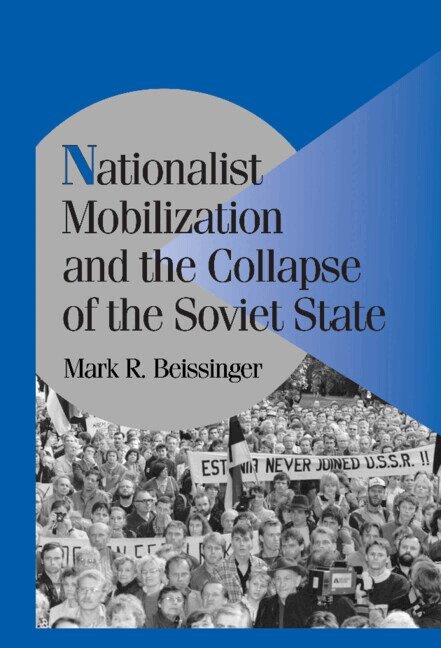
    Nationalist Mobilization and the Collapse of the Soviet State

    AvMark R. Beissinger,Peter Lange

    Häftad, Engelska, 2002

    Del i serien Cambridge Studies in Comparative Politics

    509 kr

    Beställningsvara. Skickas inom 10-15 vardagar. Fri frakt över 249 kr.

    Fler format och utgåvor

    Inbunden

    1 389 kr

    Beskrivning

    This 2002 study examines the process by which the seemingly impossible in 1987 - the disintegration of the Soviet state - became the seemingly inevitable by 1991, providing an original interpretation not only of the Soviet collapse, but also of the phenomenon of nationalism more generally. Probing the role of nationalist action as both cause and effect, Beissinger utilizes data and case studies from across the USSR during its final years to elicit the shifting relationship between pre-existing structural conditions, institutional constraints, and event-generated influences in the nationalist explosions that brought about the collapse of the Soviet Union. As Beissinger demonstrates, the 'tidal' context of nationalism - i.e., the transnational influence of one nationalism upon another - is critical to an explanation of the success and failure of particular nationalisms, why some nationalisms turn violent, and how a crescendo of events can overwhelm states, periodically evoking large-scale structural change in the character of the state system.

    Produktinformation

    • Utgivningsdatum:2002-02-04
    • Mått:152 x 228 x 27 mm
    • Vikt:706 g
    • Format:Häftad
    • Språk:Engelska
    • Serie:Cambridge Studies in Comparative Politics
    • Antal sidor:522
    • Förlag:Cambridge University Press
    • ISBN:9780521001489

    Utforska kategorier

    • Ekonomisk politik inom Ekonomi och Ledarskap

    Recensioner i media

    '… a very serious analytical work, which, no doubt, will attract the attention of many political scientists, especially those studying political processes in Russia and in the post-Soviet area … important for the understanding of nationalism as a social and political phenomenon.' e-Extreme

    Innehållsförteckning

    • 1. From the impossible to the inevitable; 2. The tide and the mobilizational cycle; 3. Structuring nationalism; 4. 'Thickened' history and the mobilization of identity; 5. Tides and the failure of nationalist mobilization; 6. Violence and tides of nationalism; 7. The transcendence of regimes of repression; 8. Russian mobilization and the accumulating 'inevitability' of Soviet collapse; 9. Conclusion: nationhood and event.